Healthy banana bread earns its place in the kitchen because it stays tender without tasting like a compromise. The crumb is a little heartier from the whole wheat flour, the sweetness comes from ripe bananas and honey, and the top bakes up deeply golden with just enough structure to slice cleanly once it cools. It tastes like the kind of loaf you’d actually want for breakfast, not a recipe that’s trying to apologize for itself.
The biggest difference here is balance. Whole wheat flour brings nutty flavor and a sturdier texture, but it can turn dry if you pack in too much or overmix the batter. Using a mix of whole wheat and all-purpose flour keeps the loaf soft while still giving it that wholesome bite. Honey or maple syrup also adds moisture, which is why this bread feels rich even without refined sugar.
Below, I’ve included the small details that matter most: how ripe the bananas should be, why the batter should look a little rough before it goes in the pan, and what changes if you want to make it fully whole wheat or dairy-free.
The loaf came out moist with a really nice, hearty crumb, and the honey made it sweet enough without being heavy. I also liked that it sliced cleanly after cooling — no gummy middle at all.
Save this healthy banana bread for the ripe-bananas-on-the-counter days when you want a naturally sweet, sliceable loaf.
The Reason Healthy Banana Bread Stays Moist Instead of Turning Dry
The mistake most people make with healthy banana bread is treating whole wheat flour like a straight swap with no other changes. Whole wheat absorbs more liquid than white flour, so if you pile it in or stir the batter too long, the loaf turns tight and dry before the center has a chance to set. The other trap is underbaking a loaf that looks done on top but still has a damp line in the middle. Banana bread needs that deep golden color and a clean toothpick from the center, not just a tan surface.
The bananas do more than sweeten the loaf. They also carry moisture and help the bread stay tender for a couple of days, especially when the loaf cools completely before slicing. If you cut into it too soon, the starches haven’t settled and the texture reads gummy instead of soft. That cooling time isn’t optional here. It’s part of the recipe.
- Whole wheat flour gives the bread its nutty backbone, but too much of it can make the loaf heavy. Keep the ratio balanced or use all-purpose for part of the flour if you want a softer crumb.
- Honey or maple syrup adds moisture as well as sweetness. Granulated sugar doesn’t behave the same way, so swapping it in will change the texture and make the loaf less plush.
- Very ripe bananas should be heavily speckled or nearly black. Pale bananas won’t mash as smoothly or contribute the same sweetness, and the bread will taste flatter.
- Coconut oil or olive oil keeps the loaf tender after it cools. Olive oil brings a slightly more savory note; coconut oil stays more neutral if you want the banana flavor front and center.
What Each Ingredient Is Actually Doing in This Loaf
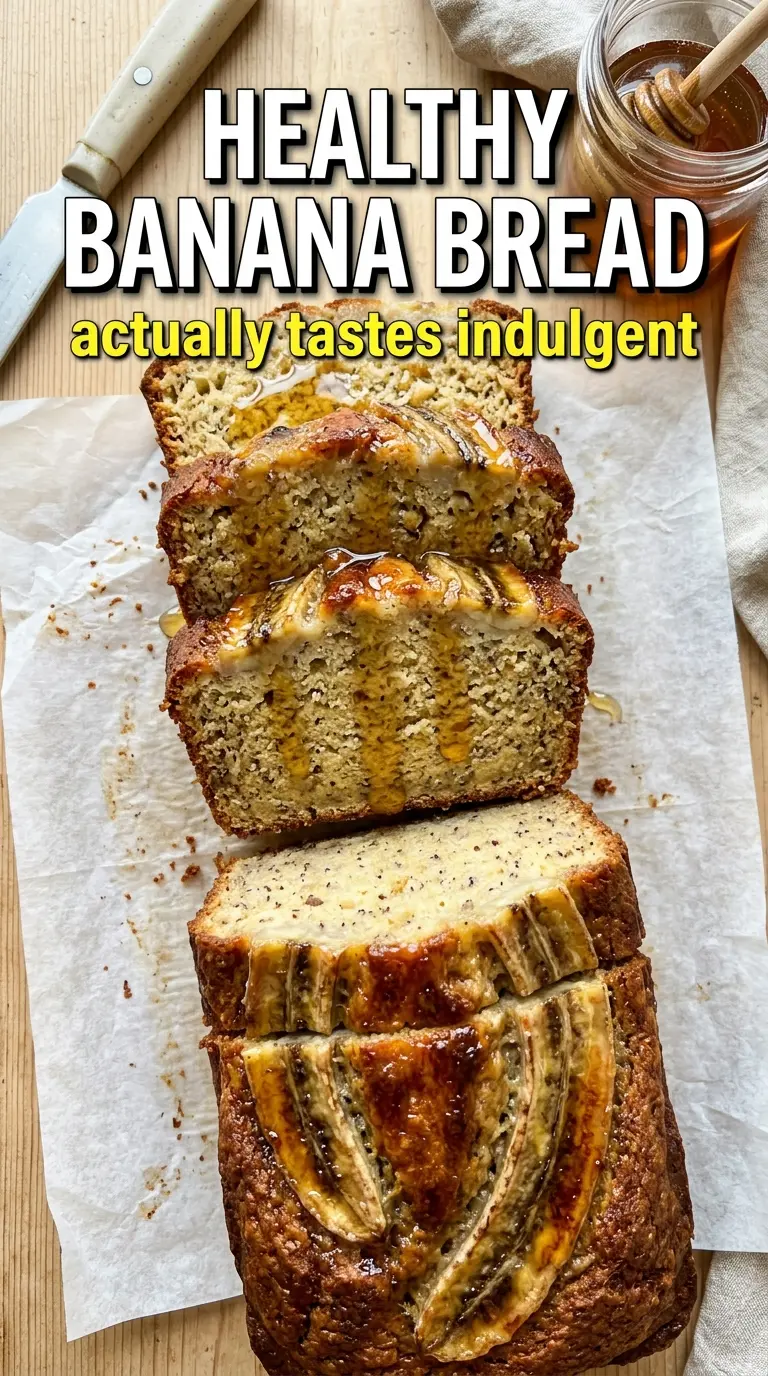
The ingredient list is short, which means each part has to pull its weight. The bananas, honey, and oil are there for moisture. The eggs give the loaf enough structure to rise without feeling cakey. The leaveners work together to lift the heavier whole wheat flour so the bread doesn’t bake up dense.
- Very ripe bananas are the base of the recipe. Mash them until mostly smooth, but a few small lumps are fine and help the loaf stay textured.
- Honey or maple syrup both work. Honey gives a slightly deeper, more rounded sweetness; maple keeps the flavor a little lighter. Use whichever you have, but stick with a liquid sweetener so the batter stays moist.
- Coconut oil or olive oil both keep the crumb soft. If you use coconut oil, melt it first and let it cool a bit so it doesn’t scramble the eggs. Olive oil is the easiest option if you want a loaf that stays soft straight from the fridge.
- Whole wheat flour brings the hearty texture this loaf is known for. If you want a less rustic bite, use half all-purpose flour or substitute white whole wheat flour for a gentler flavor.
- Walnuts or almonds are optional, but they add crunch and help the bread feel more substantial. Chop them fairly small so they scatter through the loaf instead of sinking.
The Batter Stage That Decides the Final Texture
Building the Banana Base
Start by whisking the mashed bananas with the honey, oil, eggs, and vanilla until the mixture looks glossy and even. The goal is a batter base that feels loose and well blended, not streaky or separated. If the oil is too hot, the eggs can curdle slightly, so let it cool after melting before it goes in. A few tiny banana lumps are fine.
Adding the Dry Ingredients Without Overworking the Loaf
Fold in the flours, baking soda, baking powder, cinnamon, and salt just until the flour disappears. Stop as soon as you no longer see dry patches. If you keep stirring, the gluten in the flour tightens up and the loaf bakes with a tougher crumb. The batter should look thick and a little rough, not smooth like cake batter.
Baking Until the Center Is Set
Scrape the batter into a greased 9×5 loaf pan and bake at 350°F until the top is deeply golden and a toothpick inserted in the center comes out clean or with a few moist crumbs. If the top browns too quickly, tent it loosely with foil during the last 15 minutes. Don’t pull it early because the edges look done; banana bread needs the center fully set or it sinks as it cools.
Cooling for a Cleaner Slice
Let the loaf cool completely in the pan before slicing. That sounds like a patience test, but it’s the difference between a tidy, tender slice and a gummy one that smears on the knife. As it cools, the crumb firms up and the banana flavor settles into place. If you want neat slices, wait.
Three Ways to Make This Banana Bread Fit Your Kitchen
Make It Fully Whole Wheat
Use 1 1/2 cups whole wheat flour instead of the flour blend. The loaf will taste a little nuttier and feel slightly denser, but it still stays moist because the bananas and honey carry the moisture through. If the batter feels very thick, let it rest for 5 minutes before baking so the flour can hydrate.
Go Dairy-Free Without Changing Anything Else
This loaf is already dairy-free as written if you use oil, which is one of the reasons it works so well. Olive oil gives a slightly richer, more savory finish; coconut oil keeps the flavor softer and more neutral. No other changes are needed.
Add Nuts for More Texture
Fold in chopped walnuts or almonds right at the end so they stay evenly distributed. The nuts bring crunch and a little extra richness, which works well with the soft banana crumb. Toasting them first gives even more flavor if you have a few extra minutes.
Storage and Reheating
- Refrigerator: Store covered for up to 5 days. The crumb firms up a bit in the fridge, but the flavor stays good.
- Freezer: This loaf freezes well. Slice it first, wrap the slices tightly, and freeze for up to 3 months so you can thaw only what you need.
- Reheating: Warm slices in the toaster oven or microwave for a few seconds until just heated through. If you overheat it, the bread dries out fast, especially because whole wheat flour keeps absorbing moisture as it sits.
Answers to the Questions Worth Asking
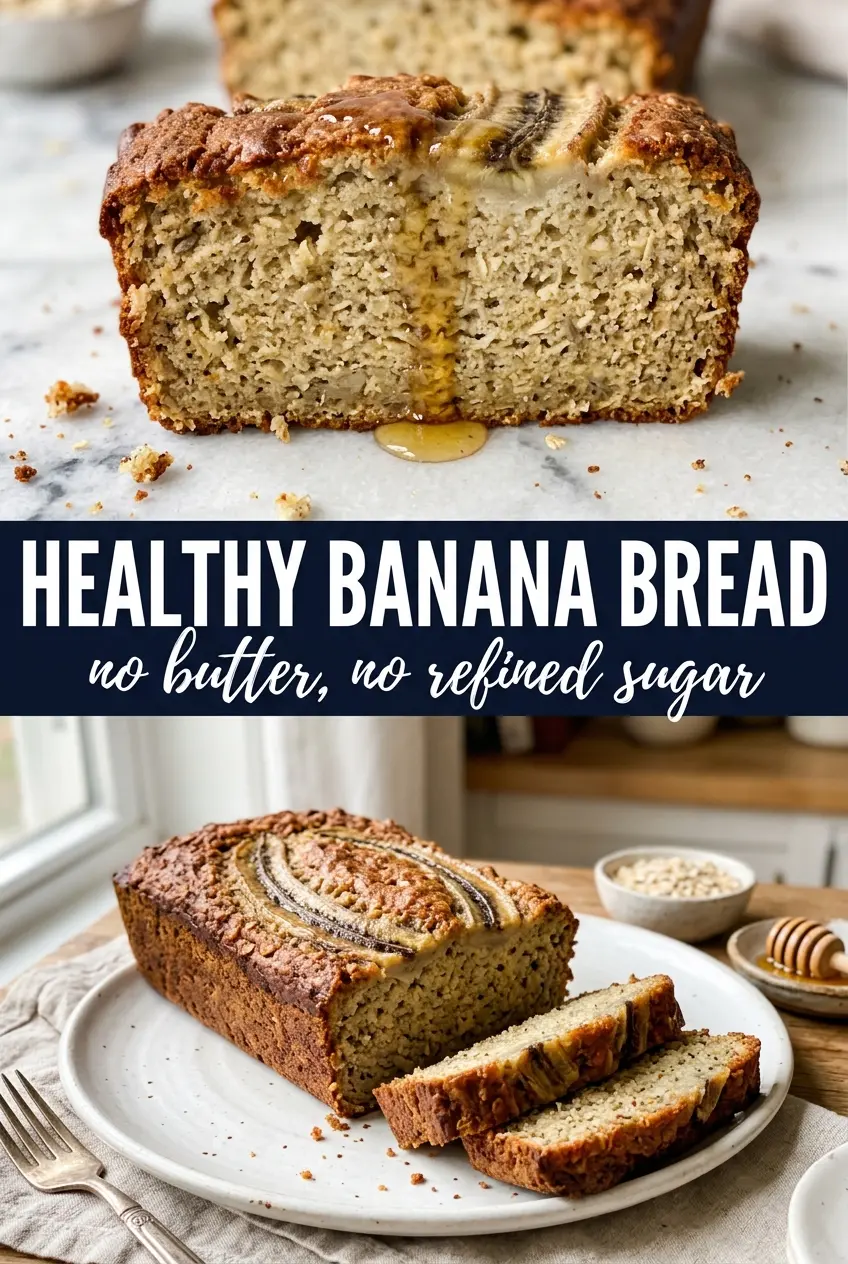
Healthy Banana Bread
Ingredients
Equipment
Method
- Preheat the oven to 350°F and grease a 9x5 loaf pan.
- Whisk the melted oil, honey or maple syrup, eggs, and vanilla into the mashed bananas until smooth and fully combined.
- Fold in the whole wheat flour, all-purpose flour, baking soda, baking powder, cinnamon, and salt until just combined—do not overmix.
- Fold in the chopped walnuts or almonds if using.
- Pour the batter into the prepared loaf pan and bake for 55–65 minutes at 350°F until deeply golden and a toothpick comes out clean.
- Cool the banana bread completely in the pan before slicing so the texture sets up and improves.