Hobo dinner foil packets earn their place because they turn a handful of basic ingredients into a complete meal with almost no cleanup. The potatoes come out tender, the carrots pick up the beef drippings, and the onion softens into sweet, savory layers under the meat. When the packets are sealed tightly and cooked over steady heat, everything steams and roasts at the same time, which is what gives this old camping classic its appeal.
The trick is in the layering and the packet seal. Put the vegetables underneath so they have direct contact with the hot foil and the butter, then keep the beef shaped thin enough to cook through in the same amount of time. Heavy-duty foil matters here because thin foil can tear when you flip the packets or when the steam builds inside. A little garlic powder does more than you’d think, since it seasons the vegetables as well as the meat.
Below you’ll find the exact layering order, the heat level that keeps the packets from scorching, and a few smart swaps if you’re cooking at home instead of over a campfire.
The potatoes were tender in the middle and the butter kept everything from drying out. I flipped the packets at 15 minutes like you said and the beef came out cooked through without overdoing the vegetables.
Save these campfire hobo dinner foil packets for a no-fuss all-in-one meal with tender potatoes, buttery vegetables, and juicy beef.
The Packet Seal That Keeps the Beef Juicy and the Vegetables Tender
The biggest mistake with foil packets is packing them too tightly or sealing them loosely. Too tight, and the vegetables stay cramped without enough steam movement; too loose, and the juices escape before the potatoes have time to soften. You want a secure crimp all the way around with a little room inside the packet so the butter can melt and the steam can circulate.
Another common problem is uneven cooking. Thin-sliced potatoes and carrots matter here because they cook in the same window as the beef patties. If the slices are thick, the meat will be done before the vegetables are tender, and that leaves you with a good-looking packet that eats like two different meals.
What Each Ingredient Is Actually Doing in This Campfire Dinner
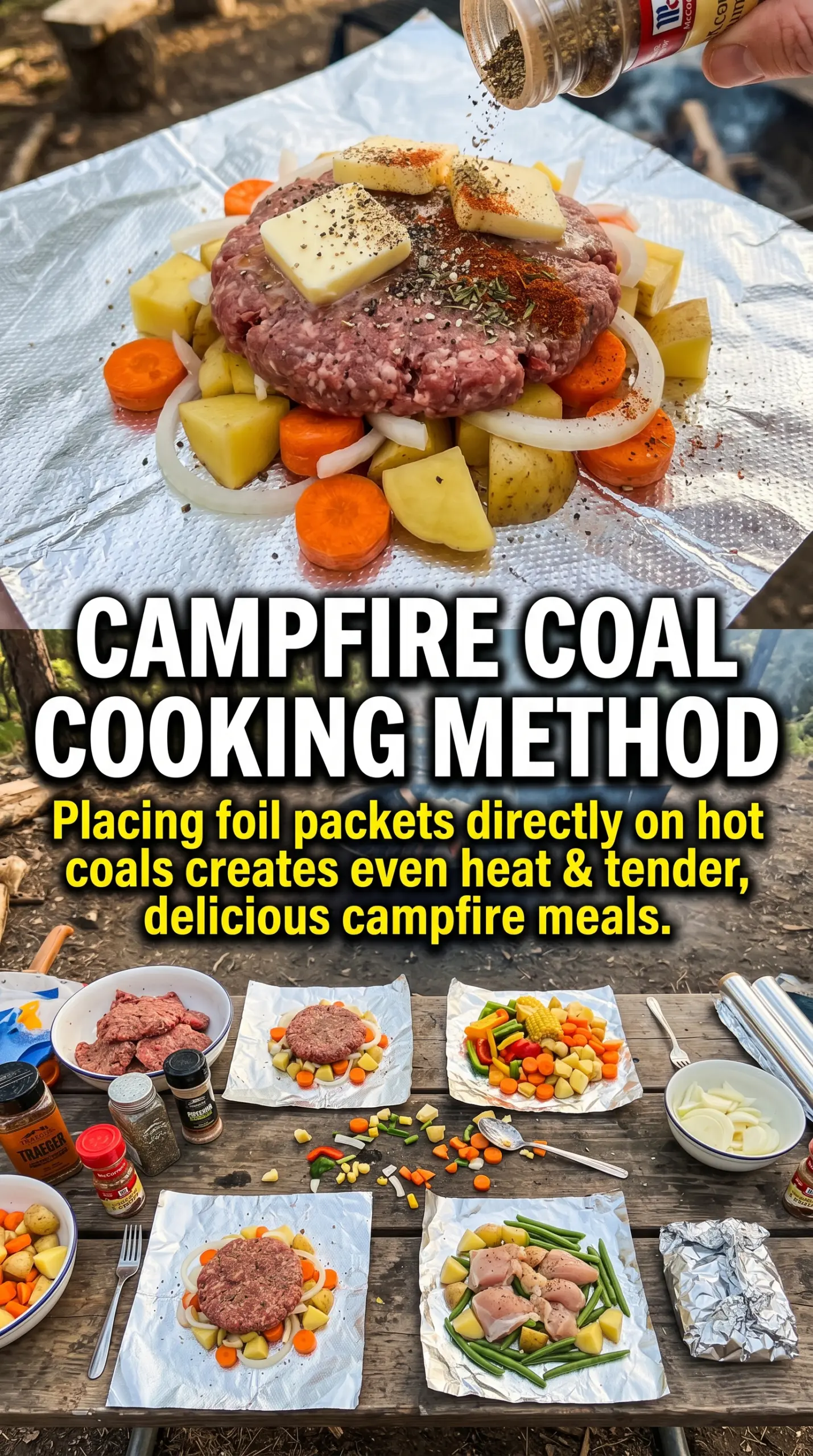
- Ground beef — The beef is the main source of flavor and the fat that seasons the vegetables as it cooks. Choose an 80/20 blend if you can; leaner beef works, but the packets won’t taste as rich. Shape it into thin patties so it cooks through before the potatoes turn mushy.
- Potatoes — Potatoes do the heavy lifting on texture and bulk. Slice them thin enough to soften in 25 to 30 minutes; thicker rounds need a much longer cook and usually end up underdone. Yukon Golds give a creamier bite, while russets turn fluffier.
- Carrots and onion — These add sweetness and balance the savory beef. Cut the carrots into thin coins so they cook at the same pace as the potatoes, and slice the onion so it melts down instead of staying sharp and crunchy.
- Butter — Butter keeps the packet from tasting dry and helps carry the seasoning through the vegetables. One tablespoon per packet is enough, but if you’re using very lean beef, the extra fat keeps the whole thing from eating flat.
- Heavy-duty foil — This isn’t the place for thin kitchen foil. Heavy-duty foil stands up to direct heat, steam pressure, and flipping without tearing, which is what keeps all those good juices where they belong.
Building the Packets So Everything Finishes at the Same Time
Layer the vegetables first
Start with the potatoes, then add the carrots and onions on each sheet of foil. That order gives the densest vegetables the most direct heat and keeps the beef from sitting in the hottest spot the entire time. If you pile the meat on the bottom, it can overcook before the vegetables soften.
Season before sealing
Salt, pepper, and garlic powder should go on before the packet closes so the seasoning can spread as the butter melts. A light hand works better than dumping it all in one spot, because the steam carries flavor through the whole packet. The butter goes on top of the beef so it melts down through the layers.
Cook over steady medium heat
Place the packets on a grate over medium heat and flip them halfway through the cook. If the fire is too hot, the foil can scorch before the vegetables are tender, and if the heat is too low, the potatoes stay firm long after the beef is done. Open one packet carefully near the end; steam will rush out hard.
Rest before serving
Let the packets sit for 5 minutes before opening or serving. That short rest settles the steam and keeps the juices from flooding out the second you tear the foil. It also gives the vegetables a final minute to finish softening.
How to Adapt These Foil Packets for the Oven, the Grill, or a Meatless Version
Oven-Baked Hobo Dinner Foil Packets
Bake the sealed packets on a sheet pan at 400°F for about 35 to 40 minutes. The oven gives you gentler, more even heat than a campfire, so it’s a good option when you want the same packet dinner without babysitting the fire. The vegetables still need to be sliced thin, or they’ll lag behind the beef.
Grill Version with Extra Browning
Cook the packets over medium grill heat for the same timing, flipping once. The grill adds a little more browning around the edges of the foil, which gives the vegetables a deeper, roasted note. Watch for flare-ups if the packets leak, since dripping butter can hit the flames.
Dairy-Free Swap
Use olive oil or a plant-based butter instead of regular butter. You’ll lose a little of the classic richness, but the packets still cook up tender and satisfying if you keep the seasoning generous. A drizzle of oil also helps prevent lean beef from tasting dry.
Vegetarian Packet Dinner
Swap the beef for thick-sliced mushrooms or a plant-based ground meat and add a little extra butter or oil. Mushrooms bring a meaty texture and plenty of savory juice, while plant-based crumbles give you the closest texture match to the original. Either version cooks a touch faster, so start checking for tenderness early.
Storage and Reheating
- Refrigerator: Store leftovers in an airtight container for up to 3 days. The potatoes soften a bit more after chilling, but the flavor holds up well.
- Freezer: Freeze after cooking if you need to, but the potatoes can turn a little grainy when thawed. Wrap tightly, then thaw in the refrigerator before reheating.
- Reheating: Warm in a covered skillet over low heat or in a 350°F oven until hot. High heat dries out the beef and breaks the potatoes down too far, so slow reheating gives the best texture.
Answers to the Questions Worth Asking
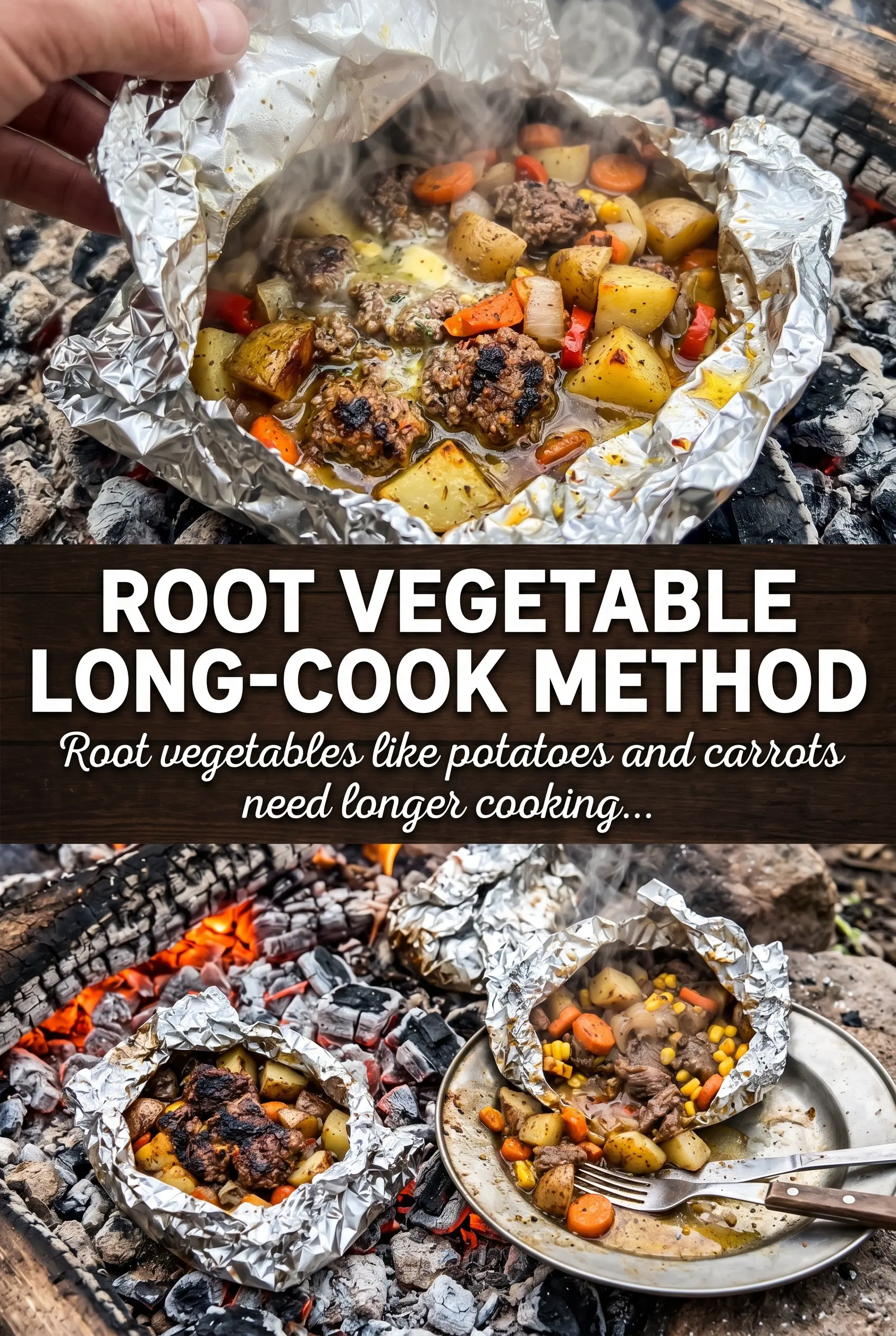
Hobo Dinner Foil Packets
Ingredients
Equipment
Method
- Divide the ground beef into 4 portions and shape each into a thin patty.
- Slice the potatoes, carrots, and onion so you have even layers for steady cooking.
- Place 1 foil sheet down and layer sliced potatoes, carrots, and onions in order.
- Set a ground beef patty on top of the vegetable layer for each packet.
- Season each packet with salt, pepper, and garlic powder, then dot with 1 tablespoon butter.
- Fold the foil into sealed packets and crimp the edges tightly to prevent leaks.
- Place packets on a campfire grate over medium heat for 25-30 minutes, flipping halfway through for even browning.
- Carefully open the packets (watch for steam) and check that the beef is cooked through and the vegetables are tender.
- Let the packets cool for 5 minutes before serving directly from the foil.