Honey butter skillet corn lands on the table with glossy, blistered kernels and just enough caramelized sweetness to make it hard to stop at one serving. The cast iron gives the corn those browned edges that taste almost nutty, while the honey butter clings to every kernel instead of pooling in the pan. It’s the kind of side dish that tastes like you put in a lot more effort than you did.
The key is heat. Start with a hot skillet and leave the corn alone long enough to brown; stirring too early traps steam and the kernels turn soft instead of toasty. Once the butter and honey go in, the pan only needs a minute more for the coating to thicken and turn glossy. Garlic powder keeps the sweetness in check, and a little black pepper adds the faintest bite.
Below, I’ve included the one trick that keeps this corn from going watery, plus a few swaps that work when you only have frozen corn or need to stretch the dish for a crowd.
The corn actually browned instead of steaming, and the honey butter turned into this shiny glaze that coated every kernel. I made it with frozen corn and it still tasted fresh and sweet.
Save this honey butter skillet corn for the nights when you want a fast side dish with blistered kernels and a glossy sweet-salty finish.
The Fastest Way to Get Corn That Browns Instead of Steams
Skillet corn goes wrong when the pan isn’t hot enough or the corn gets stirred too soon. If the kernels hit a lukewarm pan, they release moisture before they have a chance to color, and you end up with soft, pale corn instead of those browned, blistered spots that make this dish worth making. Cast iron helps because it holds heat well, which means the pan stays hot even after the corn goes in.
Use a single layer if you can. Crowding the skillet traps steam, and steam is the enemy here. Frozen corn works fine, but it needs to go in straight from the freezer and into a hot pan; thawed corn tends to weep too much liquid.
What the Butter, Honey, and Chives Are Doing Here
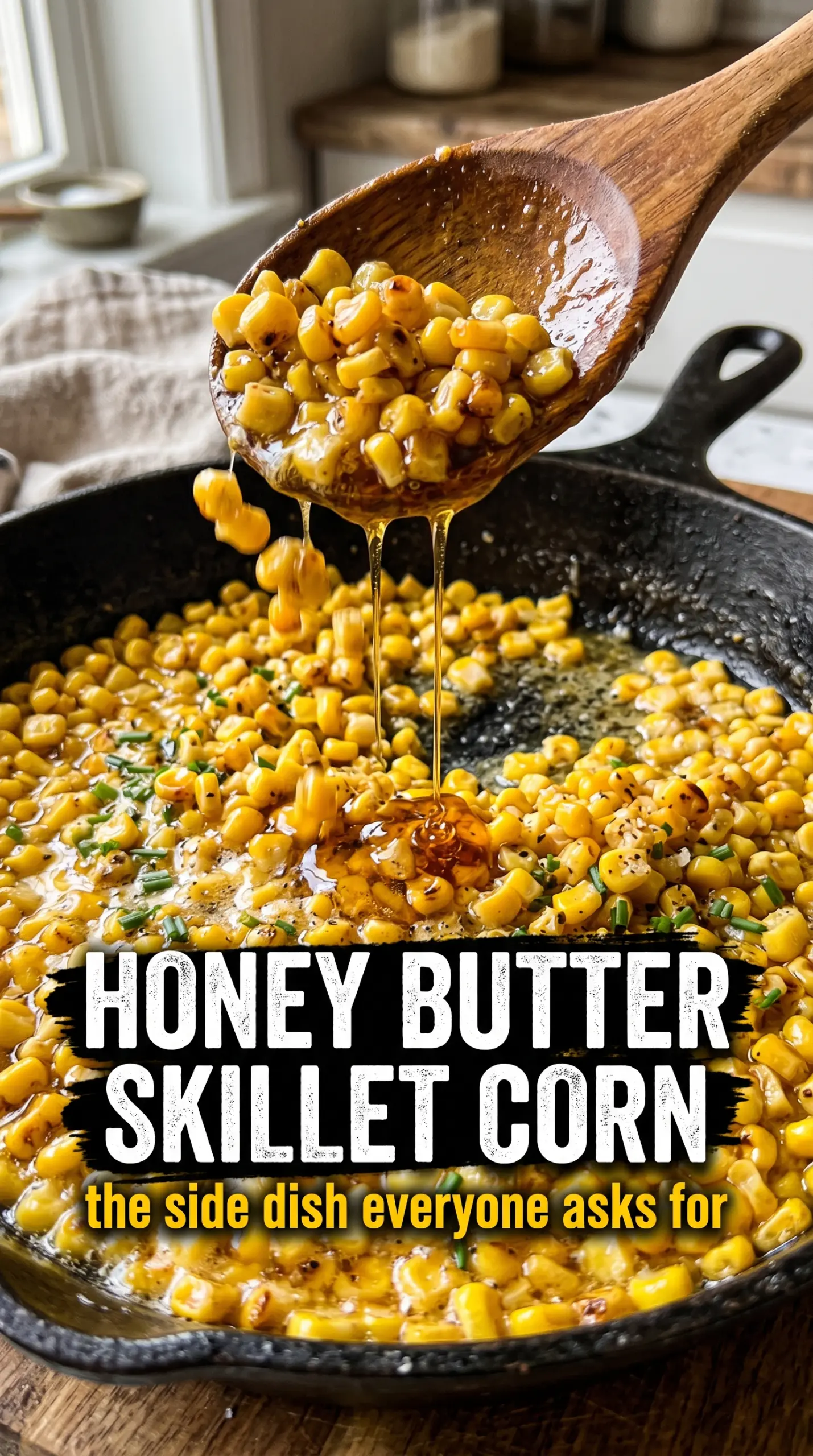
- Corn kernels — Fresh corn gives the sweetest flavor and the best pop, but frozen kernels are a smart backup and still brown well if the pan is hot enough. If you use frozen, don’t thaw them first.
- Unsalted butter — Butter carries the honey and helps it cling to the corn. Unsalted is the right choice here because the salt level is easier to control at the end.
- Honey — This is what turns the butter into a glossy coating instead of just a plain sauté. Maple syrup can work in a pinch, but it tastes heavier and less cleanly sweet.
- Garlic powder — Fresh garlic would brown too quickly in this short cook time, but garlic powder seasons the whole pan without burning. It keeps the sweet corn from tasting flat.
- Chives or parsley — This is the fresh finish that wakes everything up. Chives give a mild onion note; parsley keeps it brighter and cleaner.
How to Build the Glaze Without Turning the Corn Watery
Preheat the Skillet First
Set the cast iron over medium-high heat and let it get properly hot before any butter goes in. You’re looking for a pan that makes the butter foam on contact, not one that slowly melts it. That first blast of heat is what gives the kernels their browned spots before they start to soften.
Brown the Corn in Layers
Add one tablespoon of butter, then spread the corn in a single layer and leave it alone for 3 to 4 minutes. The kernels should sizzle and pick up deep gold color on the side touching the pan. If you stir too early, the moisture releases all at once and you lose the caramelized edges.
Finish With Honey at Lower Heat
Once the corn has charred in spots, reduce the heat to medium and add the remaining butter and honey. Toss until every kernel looks lacquered, then season with garlic powder, salt, and pepper. Let it cook for one more minute so the honey tightens slightly; if you leave it on high heat, the honey can scorch and turn bitter.
Herbs Go on Last
Take the pan off the heat and scatter the chives or parsley over the top. Fresh herbs lose their color and punch if they sit in the hot glaze too long. Added at the end, they stay bright and give the corn a clean finish against the butter and honey.
Three Useful Ways to Change the Dish Without Losing What Makes It Good
Make It Dairy-Free
Use a good dairy-free butter substitute that browns well in a skillet. The flavor will be a little less rich, but the honey glaze and browned corn still carry the dish. Avoid coconut oil here unless you don’t mind a faint coconut note.
Turn It Into a Spicy-Sweet Side
Add a pinch of cayenne or crushed red pepper when the honey goes in. The heat cuts through the sweetness and gives the glaze a little edge without changing the texture. Start light; the corn should still taste like corn first.
Use Frozen Corn Without the Soggy Result
Cook frozen kernels straight from the bag in a hot skillet and give them extra time to release their moisture before adding the honey. They won’t get quite as deeply blistered as fresh corn, but the flavor stays sweet and the glaze still coats beautifully. Don’t cover the pan; that traps steam and softens the corn.
Stretch It for a Bigger Crowd
Double the recipe, but brown the corn in two batches so the skillet doesn’t cool down. If you pile everything in at once, the corn steams and the glaze turns thin. Combine the batches at the end with the butter and honey so the coating stays shiny.
Storage and Reheating
- Refrigerator: Store in an airtight container for up to 3 days. The glaze will thicken and the kernels will soften a bit, but the flavor holds well.
- Freezer: Freezing isn’t ideal because the corn loses some of its crisp edges and the honey butter can separate after thawing.
- Reheating: Rewarm in a skillet over medium heat with a tiny knob of butter, just until hot. Microwave reheating tends to make the corn watery and mutes the browned flavor.
Questions I Get Asked About This Recipe
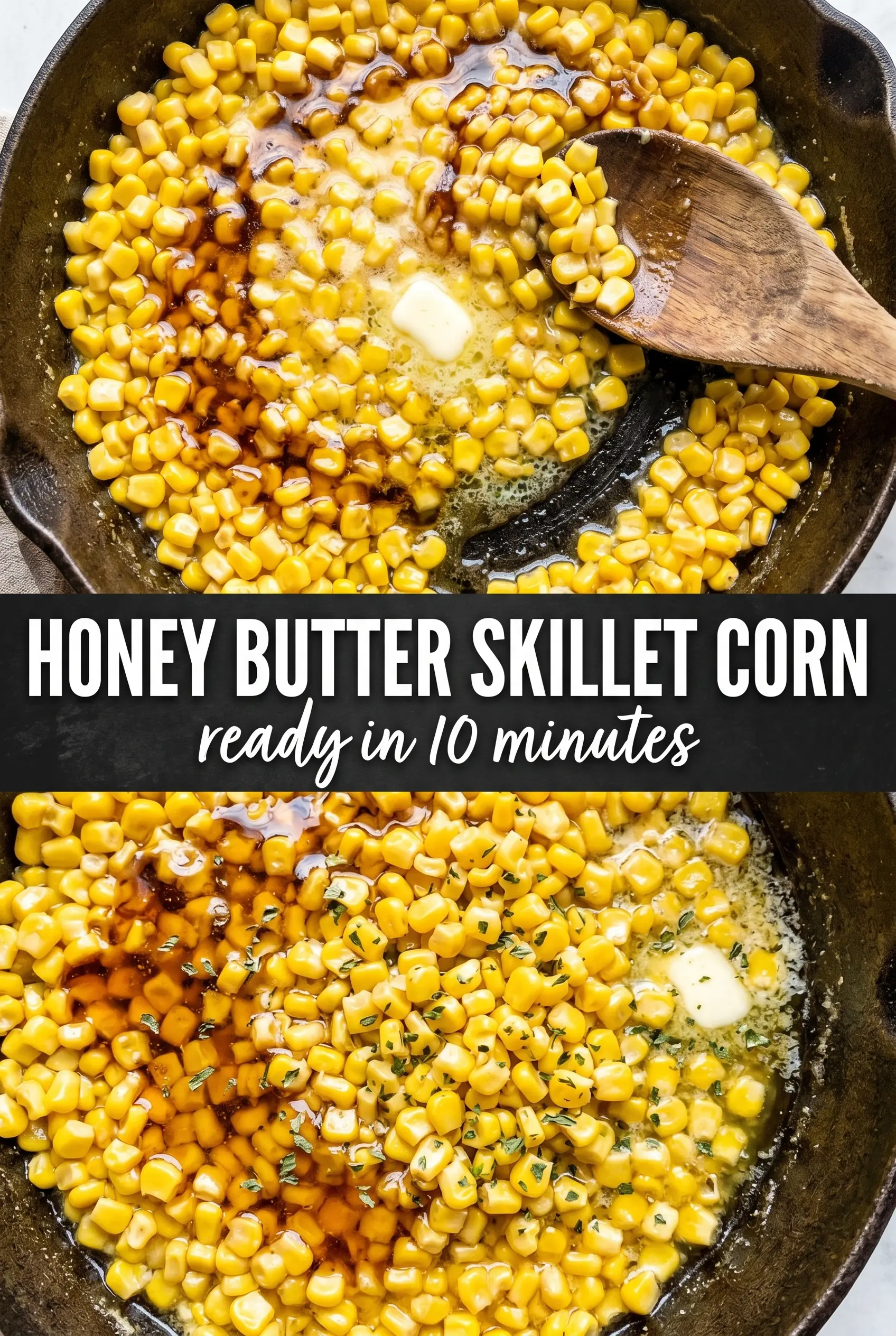
Honey Butter Skillet Corn
Ingredients
Equipment
Method
- Heat a large cast iron skillet over medium-high heat until very hot.
- Add 1 tablespoon of butter and let it melt and foam.
- Add corn kernels in a single layer and cook undisturbed for 3–4 minutes until blistered and golden on one side.
- Stir and cook for another 3–4 minutes until kernels are charred in spots throughout.
- Reduce heat to medium and add remaining butter and honey, tossing to coat.
- Season with garlic powder, salt, and pepper, and cook for 1 more minute until the honey caramelizes slightly.
- Garnish with fresh chives and serve.