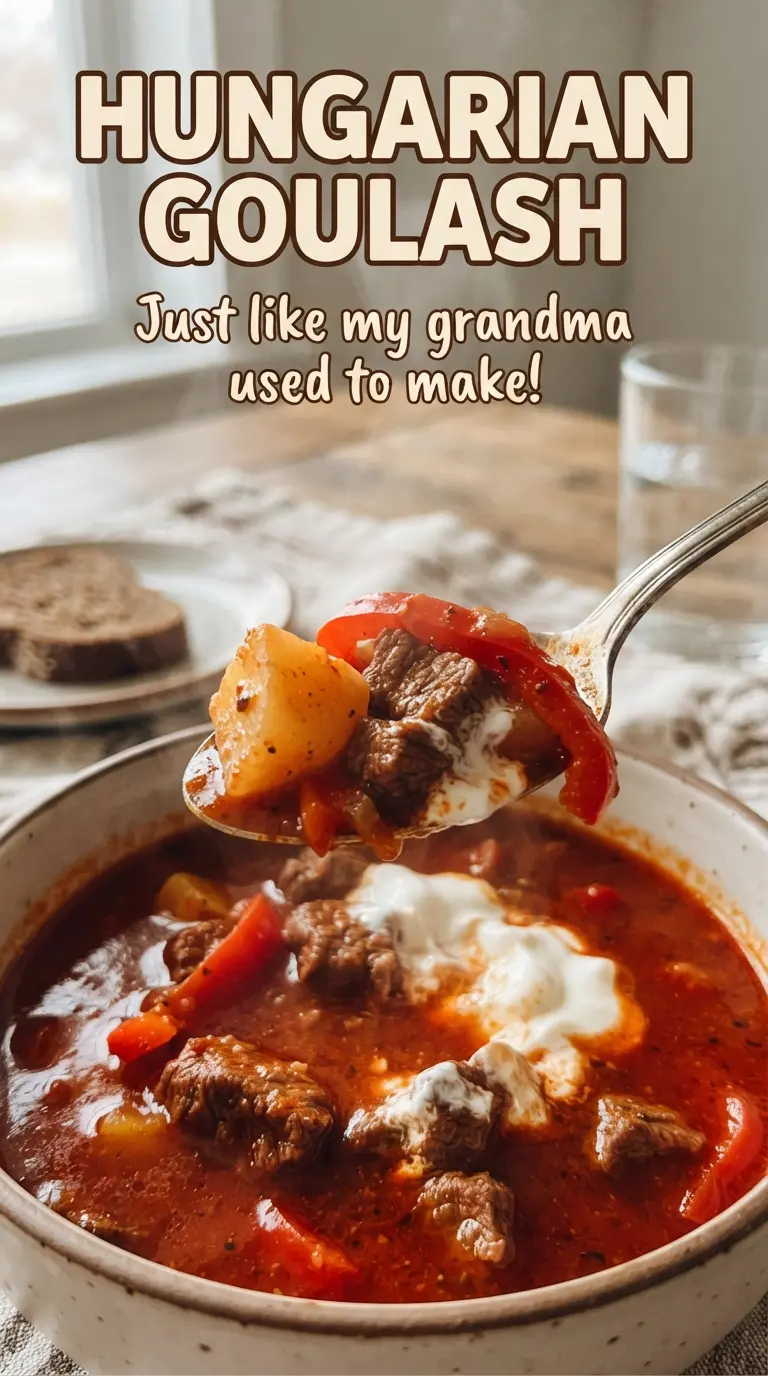
Deep red Hungarian goulash earns its place at the table because the broth turns rich and paprika-scented while the beef cooks down into tender, spoonable chunks. The onions melt into the base, the peppers soften just enough to hold their shape, and the potatoes catch all that savory broth in every bite. It’s the kind of stew that tastes even better after it rests for a few minutes, when the paprika has fully bloomed and the pot settles into something round and balanced.
The part that matters most is the paprika step. Take the pot off the heat before stirring it in, because sweet Hungarian paprika can go bitter fast if it scorches. The same goes for the onions: letting them cook until golden gives the goulash a deeper, sweeter backbone than you get from rushing straight to the liquid.
Below, I’ve laid out the little decisions that keep this from tasting flat or muddy, plus a few smart swaps if you need to work around what’s in the kitchen. If you’ve ever had goulash that was good but not quite full-bodied, the difference is usually in those first 15 minutes.
The paprika flavor came through beautifully and the beef was fall-apart tender after the full simmer. I also loved that the potatoes held their shape instead of turning mushy.
Hungarian goulash like this is worth pinning for cold nights when you want deep paprika flavor, tender beef, and a broth that tastes like it simmered all afternoon.
The Difference Between Bloomed Paprika and Bitter Paprika
Paprika is the soul of this dish, but it’s also the ingredient most likely to betray you. If it hits direct heat for too long, the flavor turns dusty and bitter instead of sweet and rounded. That’s why the pot comes off the burner before the paprika goes in. The residual heat is enough to wake it up without burning it.
The other thing that matters is the onion base. Ten minutes of slow cooking sounds minor, but it changes the whole pot. You’re building a sweet, savory foundation before the broth ever goes in, and that’s what keeps the finished goulash from tasting thin.
- Beef chuck — This cut has enough connective tissue to turn tender during the long simmer. Lean stew meat can work, but it usually dries out before the broth has time to develop.
- Sweet Hungarian paprika — Use the real thing if you can. Generic paprika won’t give you the same warmth or depth, and smoked paprika changes the dish into something else entirely.
- Lard or vegetable oil — Lard adds a traditional richness, but oil works fine. What matters is that you have enough fat to soften the onions and carry the paprika evenly through the pot.
- Potatoes and carrots — Add them later so they keep their shape. If they go in at the beginning, they break down and muddy the broth before the beef is tender.
Building the Goulash in the Right Order
Cook the onions first and don’t rush them. You want them soft, golden, and sweet, not browned at the edges from high heat. Stir in the garlic for just a minute so it loses its raw bite without taking on color.
Blooming the Paprika and Caraway
Take the pot off the heat before adding the paprika and caraway seeds. Stir them through the onions until the mixture looks brick-red and fragrant, almost like the whole pot has deepened in color. If the paprika starts to darken aggressively or smell sharp, it has gone too far and the stew will taste harsh.
Coating the Beef Before the Simmer
Add the beef and stir until every piece is stained red and glossy. This gives the meat a head start on flavor before the broth goes in. Once the liquid is added, bring it back to a gentle simmer rather than a hard boil; a furious boil tightens the beef instead of softening it.
Finishing with the Vegetables
Let the beef cook first, then add the potatoes and carrots later so they finish tender at the same time as the meat. The goal is a spoon-tender cube of potato that still holds its edges. When the beef gives easily to a fork and the potatoes are cooked through, pull the bay leaf and serve right away with sour cream.
How to Adapt This Pot for Different Kitchens
Dairy-Free Serving
Skip the sour cream or use a plain dairy-free version. The stew itself is naturally dairy-free, so you won’t lose anything in the pot. What you lose is the cool, tangy finish, so add a little extra black pepper or a squeeze of lemon if you want that same contrast at the table.
Make It Thicker and More Spoonable
If you want a heartier stew, simmer uncovered for the last 15 to 20 minutes so some of the broth cooks off. That gives you a richer, clingier sauce without adding flour. Don’t start with less broth unless you’re certain your pot runs cool, because the beef still needs enough liquid to stay tender.
Vegetable-Forward Version
You can replace half the beef with mushrooms if you want a lighter pot with the same savory backbone. Brown the mushrooms in the fat first so they actually taste meaty instead of watery. The broth will be less rich, but the paprika and onions still carry the dish.
Storage and Reheating
- Refrigerator: Keeps for 4 days. The broth thickens and the paprika gets even more pronounced after a night in the fridge.
- Freezer: Freezes well for up to 3 months. Cool it completely first and portion it into containers so the potatoes don’t get smashed when you thaw it.
- Reheating: Warm it slowly over medium-low heat with a splash of broth if needed. A hard boil can turn the beef stringy and the potatoes grainy, so go gentle and stir often.
Questions I Get Asked About This Recipe

Hungarian Goulash
Ingredients
Equipment
Method
- In a Dutch oven, cook the onions in lard or vegetable oil for 10 minutes, stirring often, until golden with translucent edges. Keep the heat at medium so the onions soften rather than scorch.
- Stir in the minced garlic and cook for 1 minute until fragrant, then reduce the risk of burning by staying attentive. You should see the garlic slightly soften but not brown.
- Remove the pot from the heat, then stir in the sweet Hungarian paprika and caraway seeds so the spices don’t burn. The mixture should look like a thick, fragrant paste coating the onions.
- Add the beef chuck cubes and stir to coat in the paprika-onion mixture, then return the pot to medium heat. Cook for 5 minutes until the beef is lightly browned on the surface.
- Stir in the tomato paste, diced red bell pepper, diced green bell pepper, beef broth, salt, black pepper, and bay leaf, then cover. Bring it to a simmer, then let it simmer for 1 hour so the flavors meld.
- Add the cubed potatoes and sliced carrots, then cover and simmer for 45 minutes, stirring once or twice. The beef and potatoes should be tender and the broth should look lightly thickened.
- Remove the bay leaf and serve the goulash hot, spooning it into bowls. Top each serving with sour cream for a creamy contrast.