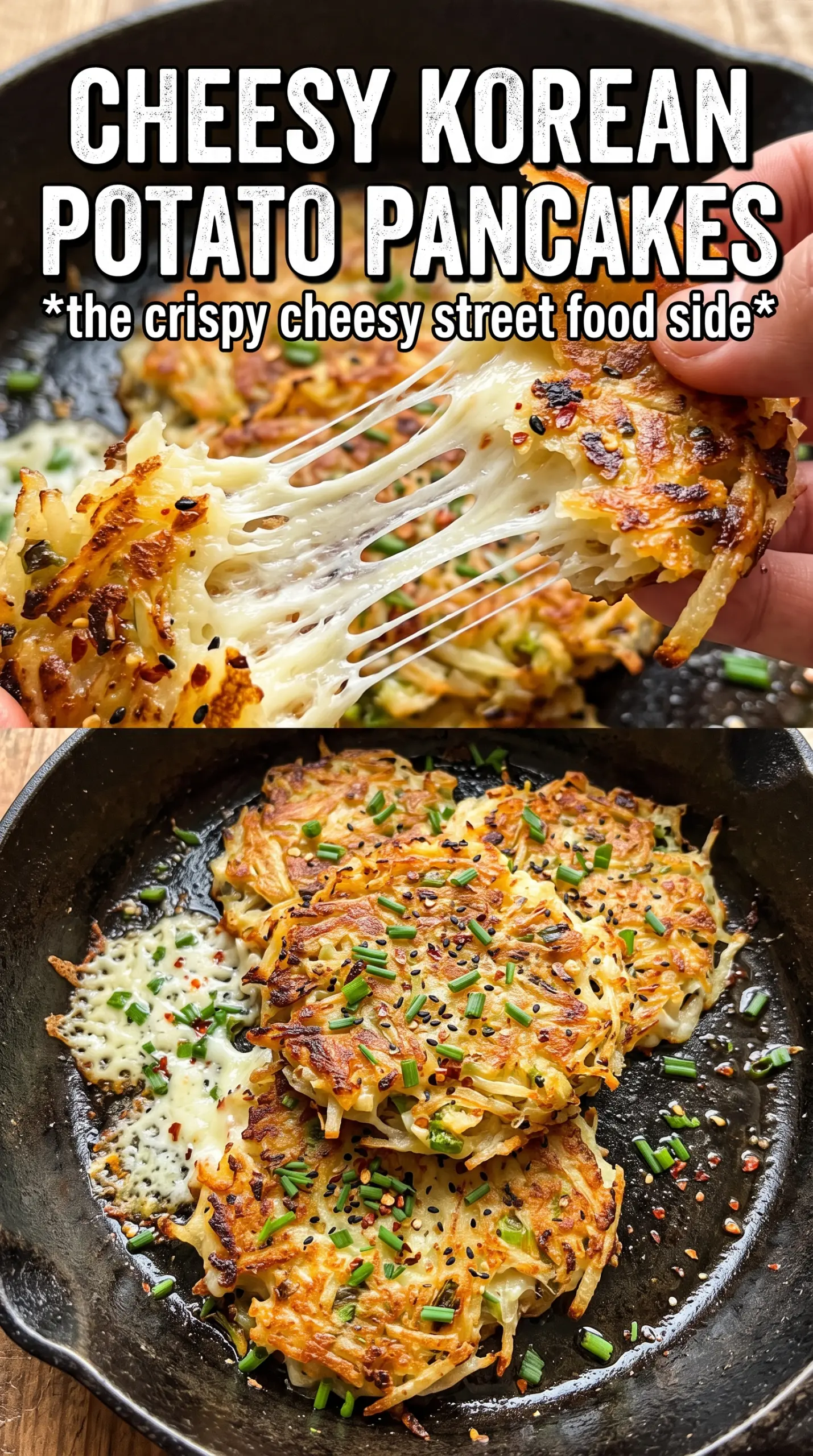
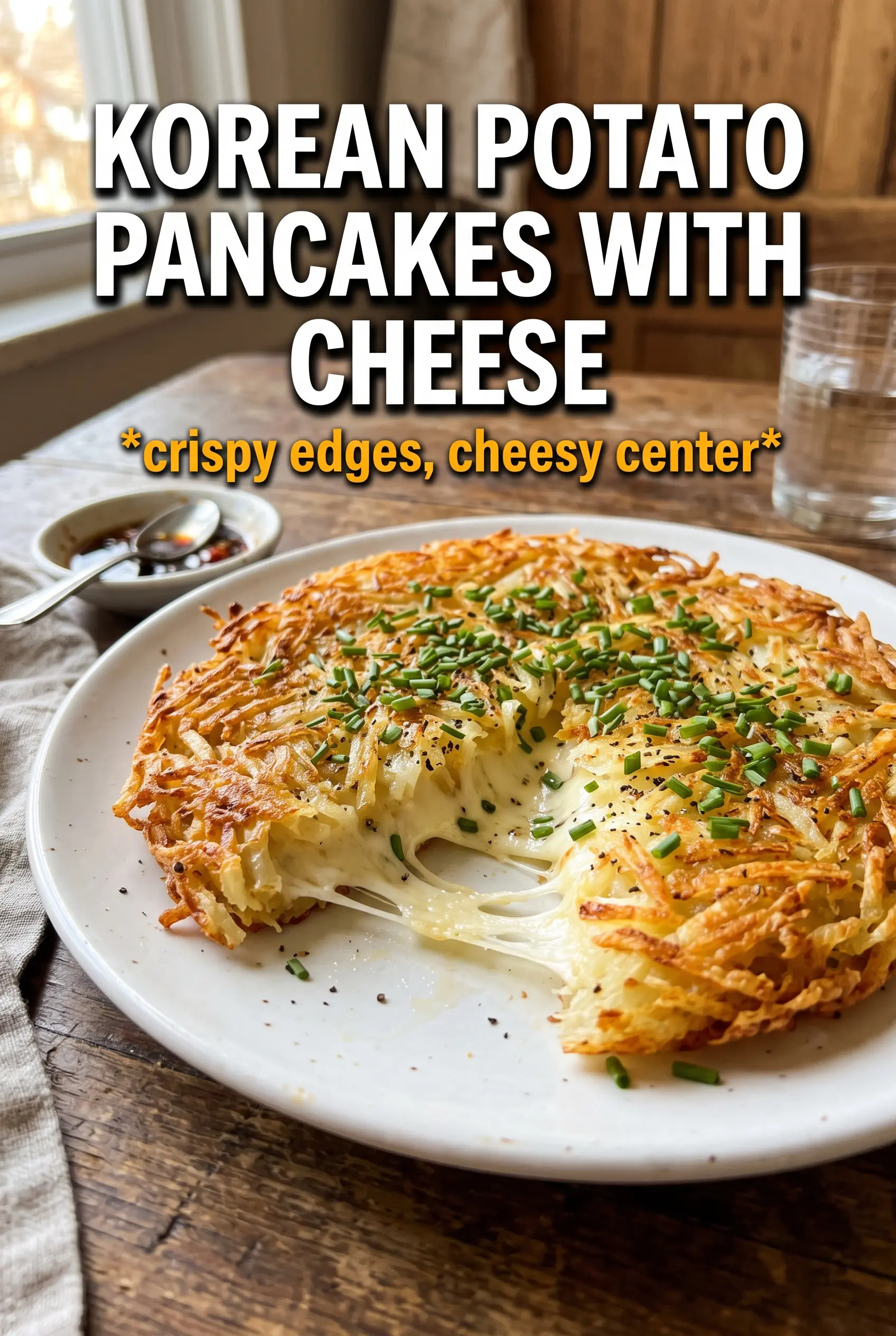
Thin Korean potato pancakes turn shatter-crisp at the edges, stay tender in the middle, and hide little pockets of melted mozzarella that stretch when you pull them apart. That contrast is what makes them worth repeating. They eat like a snack, but they land on the table with the kind of texture that keeps people hovering by the stove for “just one more.”
The trick is treating the potatoes like the main event, not a binder that needs help from flour. Grating them fine and squeezing out the liquid gives you a mixture that fries instead of steaming. Potato starch locks in that structure, while a small amount of cheese melts into the pancake and helps the center stay soft without turning heavy. If you skip the squeeze, the pan fills with water and you lose the crisp edges that make gamja jeon so good.
Below you’ll find the exact pan cues I use for a deep golden crust, plus the simplest way to keep the pancakes crisp while you finish the batch. The dipping sauce matters too. It cuts through the richness and gives each bite that salty, tangy finish these pancakes need.
I squeezed the potatoes until my hands ached, and it paid off — the pancakes came out crisp around the edges and the mozzarella melted into little pockets instead of leaking all over the pan. The dipping sauce was spot on with the salty-sour balance.
Crispy Korean potato pancakes with cheese deserve a spot in your saved recipes for the nights when you want a golden snack with melted mozzarella and a punchy dipping sauce.
The One Step That Decides Whether These Pancakes Fry or Steam
The difference between crisp Korean potato pancakes and soggy ones comes down to moisture. Potatoes carry a lot of water, and if that water stays in the mixture, the pan has to evaporate it before anything browns. That means pale, soft pancakes instead of the lacy edges you want.
Squeezing the grated potatoes hard changes the whole outcome. It concentrates the starch, which helps the pancake hold together, and it lets the oil work directly on the surface of the potato instead of fighting steam. If the mixture looks damp in the bowl, it will act damp in the pan.
The other thing that matters here is heat. Medium-high oil gives you that fast sizzle at the edges without burning the garlic before the center cooks through. If the pancake sits there quietly, the oil isn’t hot enough. If it darkens before four minutes, the pan is too hot and the cheese will over-brown before the potatoes crisp.
What Each Ingredient Is Actually Doing in This Dish
- Russet potatoes — These are the best choice because they’re starchy and dry out into a crisp shell much better than waxy potatoes. If you only have Yukon Golds, they’ll work, but the texture will be a little softer and less shattery.
- Mozzarella — Use shredded low-moisture mozzarella so it melts into the pancake instead of watering it down. Fresh mozzarella is too wet for this job.
- Potato starch or cornstarch — This tightens the mixture and helps the pancakes hold together in the pan. Potato starch gives the cleanest crisp edge, but cornstarch does a good enough job if that’s what you have.
- Egg — One egg adds just enough binding to keep the mixture cohesive without making it bready. More than one starts to push the texture toward omelet territory.
- Green onions and garlic — These keep the pancakes from tasting flat. Chop them small so they distribute evenly and don’t tear through the thin pancakes when you press them into the pan.
Building the Pancake So the Center Stays Soft and the Outside Gets Lacy
Draining the Potatoes
Grate the potatoes, then squeeze them in a clean towel or your hands until no more liquid drips out. Don’t stop at a light press; the drier the potatoes, the crisper the final pancake. Let the starchy liquid sit for a minute if you want to be precise, then pour off the water and add the starch from the bottom back into the bowl.
Mixing the Batter
Stir the drained potatoes with the mozzarella, egg, starch, salt, garlic, and green onions until everything looks evenly coated. The mixture should clump when squeezed but still look shaggy, not paste-like. If it seems loose, it usually means the potatoes weren’t drained enough rather than that you need more flour or starch.
Frying to a Deep Golden Edge
Heat a generous layer of oil in a skillet over medium-high heat, then drop in about 1/4 cup of the mixture and press it flat. You’re looking for a loud, steady sizzle and edges that start to turn lacy within a minute or two. Flip only when the bottom is deeply golden; if you turn too soon, the pancake can stick and tear before the crust has set.
Serving While the Cheese Is Still Stretchy
Drain the finished pancakes on a rack or paper towels, then keep them warm in a low oven while you fry the rest. They’re at their best the moment the cheese is melted and the edges are still brittle. Serve with the dipping sauce while the pancakes are hot enough to make the mozzarella pull in long strands.
How to Adapt These Korean Potato Pancakes for Different Needs
Dairy-Free Version Without the Cheese Pull
Leave out the mozzarella and add a little extra potato starch for structure. You lose the stretchy center, but the pancakes get even crisper and let the potato flavor come through more clearly.
Gluten-Free by Default
This recipe is naturally gluten-free if you use potato starch or cornstarch and a gluten-free soy sauce in the dipping sauce. The texture stays just as crisp, so there’s no sacrifice on the pancake itself.
No Potato Starch on Hand
Cornstarch works in the same amount and still gives you a firm crust. Potato starch gives a slightly lighter crunch, but cornstarch is close enough that you won’t miss the difference in a finished pancake.
Make-Ahead and Reheat Later
You can fry the pancakes, cool them completely, and reheat them in a hot skillet or oven. The microwave softens the crust fast, which is the one mistake that turns a crisp pancake floppy.
Storage and Reheating
- Refrigerator: Store in an airtight container for up to 3 days. The crust softens a little, but the flavor holds up well.
- Freezer: Freeze cooked pancakes in a single layer, then move them to a bag once solid. They freeze well, though the texture is best within a month.
- Reheating: Reheat in a 400°F oven or a dry skillet until hot and crisp again. Skip the microwave if you want the edges to stay snappy.
Answers to the Questions Worth Asking
Korean Potato Pancakes with Cheese (Gamja Jeon with Mozzarella)
Ingredients
Equipment
Method
- Grate the peeled russet potatoes and squeeze out as much liquid as possible, since this step is essential for crispiness.
- In a bowl, mix the drained grated potato with shredded mozzarella, egg, potato starch, salt, minced garlic, and chopped green onions until evenly combined.
- Heat a generous layer of vegetable oil in a cast iron skillet over medium-high heat.
- Spread about 1/4 cup of the potato mixture into the pan and press flat.
- Cook for 4–5 minutes, until the pancake is deeply golden and crispy.
- Flip and cook for an additional 4–5 minutes, until the second side is deeply golden and crispy.
- Work in batches and keep the finished pancakes warm in the oven as you cook the remaining batter.
- Mix the soy sauce, rice vinegar, sesame oil, sugar, and red pepper flakes until the sugar dissolves.
- Serve the hot, crispy Korean potato pancakes with the dipping sauce alongside.