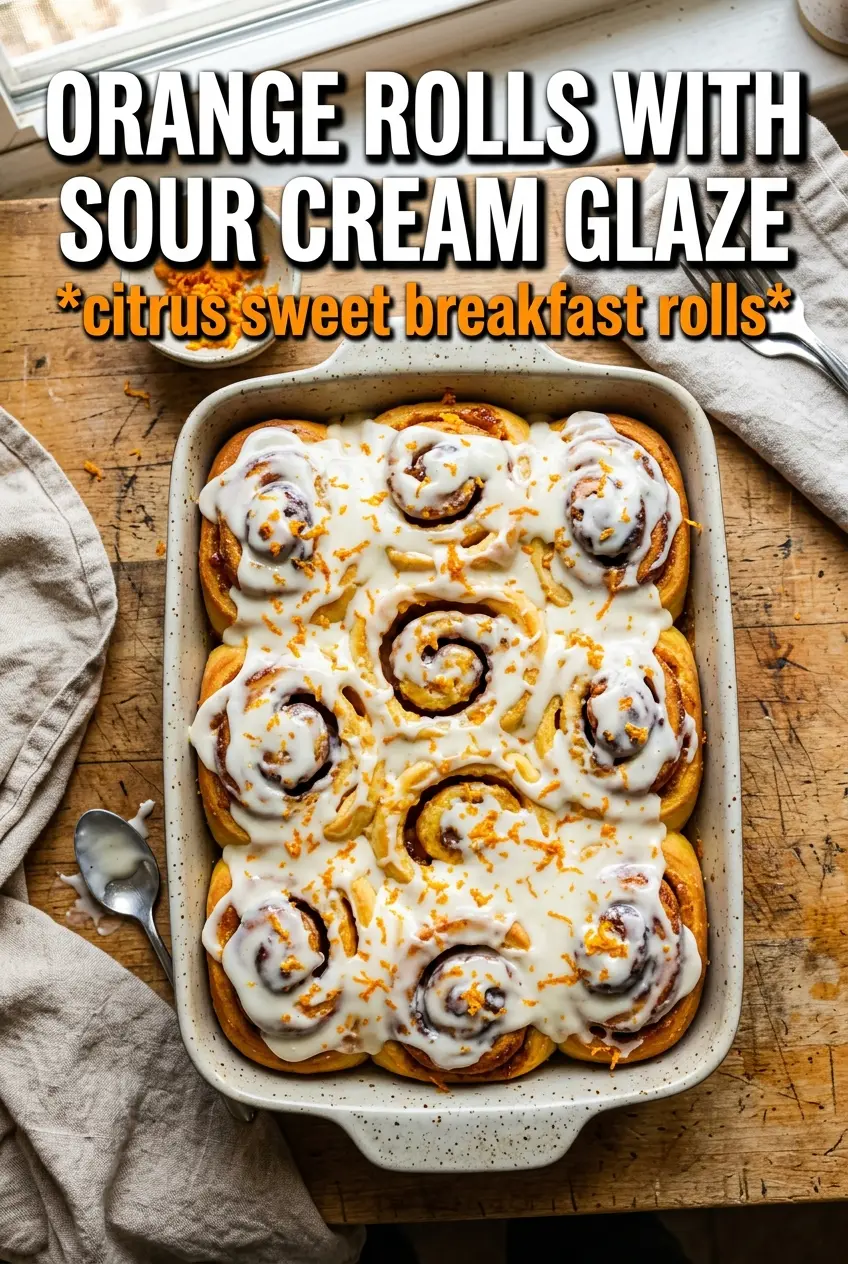
Soft orange rolls with a tangy sour cream butter glaze hit that sweet spot between breakfast pastry and dessert, and the best ones come out plush, fragrant, and glossy enough that the glaze sinks into every swirl. The orange zest gives the dough a bright, almost floral edge, while the warm butter glaze melts into the rolls instead of sitting on top like frosting. You get tender layers, a little chew at the edges, and that fresh citrus smell that fills the kitchen before the pan even comes out of the oven.
What makes this version work is the balance. The dough stays simple and enriched, so it rises tender without getting heavy, and the filling leans on zest instead of juice, which gives you bold orange flavor without adding extra liquid that can leak out and make the swirl greasy. The sour cream in the glaze is the move that keeps it from tasting flat; it adds a quiet tang that cuts the sweetness and makes the whole pan taste more finished.
Below, I’ll walk through the small details that matter: how warm the liquid should feel, why the rolls go into the pan with a short rest before baking, and the exact moment to glaze them so the topping melts into those golden crevices instead of clumping on top.
The dough rose beautifully and the sour cream glaze melted right into the swirls instead of just sitting on top. The orange zest made them taste fresh, and my pan disappeared before they were even completely cool.
Like these orange rolls with sour cream butter glaze? Save them to Pinterest for the mornings when you want soft citrus swirls and a glaze that soaks into every layer.
The Secret to Rolls That Stay Soft Instead of Drying Out
Orange rolls can go dry fast if the dough gets too stiff or the pan bakes too long. The goal is a soft enriched dough that feels tacky at first, then turns smooth after kneading. If the dough looks tight and bounces back hard when you press it, it usually needs a few more minutes of kneading or a splash more warm liquid.
The other place people lose moisture is in the oven. These rolls should come out when the tops are golden and the center rolls are puffed, not when the whole pan looks deeply browned. Carryover heat finishes the center, and the glaze adds another layer of softness as soon as it goes on.
- Instant yeast keeps the rise moving without proofing separately, which is handy here because the dough is enriched with butter, egg, and sugar. If you only have active dry yeast, it still works; dissolve it in the warm milk and water first and give the rise a little extra time.
- Orange zest carries the real citrus flavor. Juice alone tastes thin in the filling and adds too much moisture, while zest perfumes the dough and stays bright after baking.
- Sour cream is what makes the glaze taste balanced instead of just sweet. Greek yogurt can stand in if that’s what you have, but the glaze will taste a little tangier and less rich.
- Softened butter matters in both the filling and the glaze. Cold butter won’t blend smoothly, and melted butter makes the filling run. Soft butter spreads cleanly and holds the sugar and zest where it belongs.
How to Build the Swirl So the Filling Stays Inside
The dough comes together quickly once the warm milk, water, egg, and softened butter hit the flour. Knead until the dough looks smooth and elastic and only lightly sticks to your fingers. If it tears when you stretch it, keep kneading; underworked dough gives you dense rolls with weak layers.
Spread the orange filling all the way to the edges in a thin, even layer. Roll the dough up tightly so the spiral holds, then use a sharp knife or unflavored dental floss to cut clean slices without squashing them. If the log is loose, the filling squeezes out in the pan instead of staying in the swirl.
After the rolls go into the greased 9×13 dish, let them rest again before baking. That second rest gives the cut rolls time to puff back up so they bake into each other instead of standing up like separate pinwheels.
Mixing the Dough
Stir the flour, yeast, sugar, and salt together first so the yeast and salt distribute evenly. Add the warm milk, water, egg, and softened butter, then knead until the dough turns smooth and elastic. The dough should feel soft and a little springy, not stiff and dry; that texture is what gives you tender rolls after baking.
Making the Orange Filling
Work the butter, sugar, and orange zest together until the mixture looks fluffy and scented. The zest needs to be rubbed into the sugar and butter so it releases its oils instead of clumping in one spot. If you skip that step, the orange flavor stays uneven and gets lost once the rolls bake.
Shaping and Cutting
Roll the dough into a rectangle with even thickness so the spirals bake at the same rate. Spread the filling close to the edges, then roll it up tightly from the long side. Slice into 12 equal rolls and place them cut side up in the pan; that exposes the layers and helps them rise into soft, defined swirls.
Baking and Glazing
Bake at 375°F until the tops are golden and the centers look set but still soft when nudged. The glaze should be beaten until smooth, then poured over the rolls while they’re warm. That timing matters because warm rolls pull the glaze into the creases, which is how you get that glossy, soaked-in finish.
Three Smart Ways to Adapt These Orange Rolls
Dairy-Free Orange Rolls
Use a plant-based butter that bakes well and swap the milk for an unsweetened non-dairy milk. The texture stays soft, but the glaze will taste a little less rich unless you add a tiny pinch more salt to sharpen it.
Make-Ahead Overnight Rolls
Shape the rolls, place them in the pan, cover tightly, and refrigerate overnight instead of doing the final rise on the counter. In the morning, let them sit at room temperature until puffy before baking; cold dough straight from the fridge usually bakes unevenly in the center.
Extra Bright Citrus Version
Add a little orange zest to the glaze and use the juice from a fresh orange rather than bottled juice. That gives the rolls a stronger citrus finish, but keep the juice amount measured so the glaze still stays thick enough to sink into the swirls.
Smaller Batch for Brunch
Bake the rolls in two smaller pans if you want to split them between breakfast and later snacking. The rolls bake a little faster in smaller pans, so start checking a few minutes early for golden tops and set centers.
Storage and Reheating
- Refrigerator: Store covered for up to 4 days. The rolls stay soft, though the glaze will soak in more by day two.
- Freezer: Freeze the baked rolls without glaze for up to 2 months, wrapped well. Thaw overnight in the fridge, then warm and glaze after reheating for the best texture.
- Reheating: Warm individual rolls in the microwave for 15 to 20 seconds or cover the whole pan and heat at 300°F until just heated through. High heat dries out the edges before the center gets warm.
Questions I Get Asked About This Recipe
Orange Rolls with Sour Cream Butter Glaze
Ingredients
Equipment
Method
- Mix all-purpose flour, instant yeast, sugar, and salt until evenly combined, then add warm milk, warm water, egg, and softened butter and knead until smooth, glossy, and elastic.
- Place the dough in a covered bowl and let rise for 1 hour until doubled in size.
- Stir softened butter, sugar, and orange zest together until spreadable and aromatic.
- Roll the dough into a rectangle, spread the orange filling evenly, roll up tightly, and slice into 12 rolls.
- Place the rolls in a greased 9x13 dish and let rest 20 minutes, until slightly puffy.
- Bake at 375°F for 20–25 minutes until the tops are golden.
- Beat powdered sugar, sour cream, softened butter, fresh orange juice, and vanilla extract together until smooth.
- Pour the glaze over the warm rolls immediately so it seeps into every crevice; let stand briefly for the glaze to set.