Pimento cheese hash brown casserole comes out with the kind of scoopable, cheesy center that disappears fast at brunches, potlucks, and Sunday suppers. The top bakes into a deep golden crust while the middle stays creamy and rich, with little pops of pimento and sharp cheddar in every bite. It’s the sort of side dish people go back for before they’ve finished the first helping.
What makes this version work is the balance of fat, moisture, and seasoning. Sour cream and cream of chicken soup create the base, while mayonnaise adds body without making the casserole heavy or greasy. Grated onion melts into the filling so you get flavor without crunchy bits, and the cayenne keeps the cheese from tasting flat.
The short rest after baking matters more than it sounds like it should. It lets the casserole settle so the first scoop holds together instead of running across the plate. Below, I’ll walk through the ingredients that actually matter, the baking cues that tell you it’s done, and a few ways to adjust it for your table.
The top got perfectly crisp and the middle stayed creamy without turning soupy. I was worried about the hash browns being soggy, but letting it rest after baking fixed that, and the pimentos gave it such a good little tang.
Save this pimento cheese hash brown casserole for the potluck side everyone asks about second helpings for.
The Secret to Keeping Hash Brown Casserole Creamy, Not Watery
The biggest mistake with hash brown casserole is treating the potatoes like they can absorb anything you throw at them. They can’t. Frozen shredded hash browns hold onto moisture, and if you don’t thaw them fully and fold them in gently, that extra water ends up pooling in the pan and softening the whole top.
The other trap is overbaking until the edges dry out before the center sets. You want the casserole bubbling at the sides and deeply golden on top, but still creamy underneath. That 10-minute rest after it comes out of the oven is part of the process, not an optional pause.
What Each Ingredient Is Actually Doing in This Dish
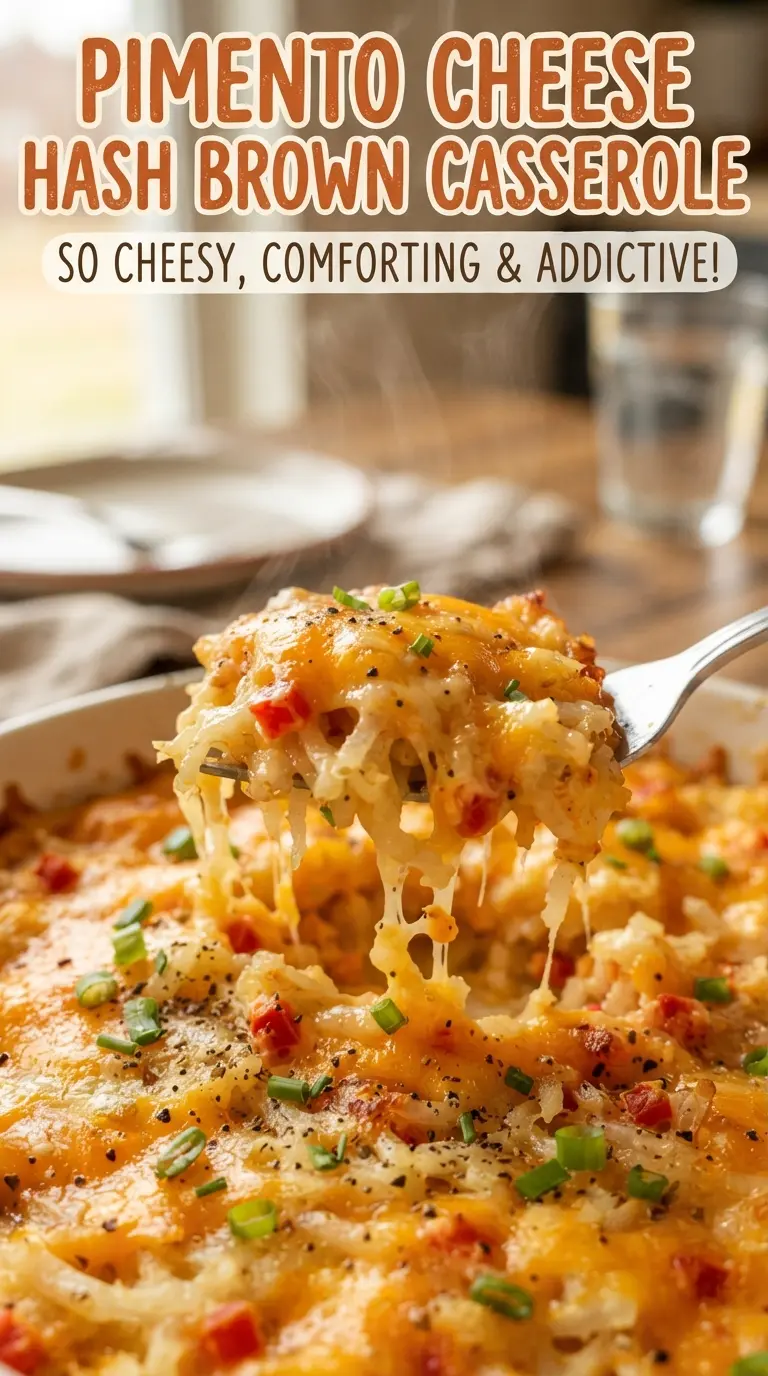
- Frozen shredded hash browns — These give the casserole its structure and that classic shredded-potato texture. Thaw them first so they bake evenly; if you add them icy, the casserole can turn watery in the middle before the top browns.
- Sour cream — This brings tang and keeps the filling lush. Full-fat works best here because low-fat sour cream can bake up thinner and less stable.
- Cream of chicken soup — It adds salt, body, and the old-school casserole texture that holds everything together. If you need a substitution, cream of mushroom works, but it changes the flavor in a more earthy direction.
- Butter and mayonnaise — These add richness from two different angles. Butter gives the casserole that baked, comforting finish, while mayo helps the filling stay creamy without turning gluey.
- Pimentos — Drain them well. They’re there for little bursts of sweet acidity, not extra liquid, so a wet jar can throw off the texture.
- Sharp cheddar — Sharp cheddar matters more than mild cheese because it stands up to the potatoes and dairy. Save some for the top so you get that bronzed, cheesy crust.
- Grated onion — Grating the onion lets it melt into the casserole instead of giving you raw chunks. It seasons the whole dish from the inside out.
- Cayenne — You don’t taste heat in a loud way; it just sharpens the cheese flavor. Leave it out and the casserole still works, but it tastes flatter.
Building the Casserole So the Top Browns and the Center Stays Creamy
Mix the Base Before the Potatoes Go In
Stir the sour cream, soup, melted butter, mayonnaise, pimentos, cheddar, onion, salt, pepper, and cayenne together first. You want a thick, cohesive mixture before the potatoes are added, because once the hash browns go in, overmixing can break them up and make the casserole dense. The filling should look creamy and spoonable, not loose.
Fold in the Hash Browns Gently
Add the thawed hash browns and turn them through the sauce until every shred is coated. Don’t beat the mixture or press it down in the bowl; the shreds need some space so the casserole bakes up with a tender texture instead of compacting into a heavy slab. If the potatoes are still clumped together, keep folding until they separate.
Bake Until the Edges Bubble
Spread the mixture into a greased 9×13-inch dish and top with the remaining cheddar. Bake at 350°F until the edges are actively bubbling and the top is deeply golden, about 50 to 55 minutes. If the center still looks pale but the edges are browning, give it a few more minutes and cover loosely with foil if needed to protect the top.
Let It Rest Before Serving
Give the casserole 10 minutes on the counter before scooping. That short rest helps the cheese settle and the starches firm up just enough to hold a clean spoonful. If you cut into it immediately, it will still taste good, but it will slide apart and look looser on the plate.
How to Adapt This for Different Tables
Make It Ahead for a Busy Morning
Assemble the casserole up to a day in advance, cover it tightly, and refrigerate it unbaked. Let it sit on the counter while the oven preheats so the dish isn’t going in ice-cold, which can stretch the bake time and dry out the top before the middle is hot.
Dairy-Free Version
Use a dairy-free sour cream, plant-based butter, and a shredded dairy-free cheddar-style cheese. The texture will still be creamy, but the flavor will lean less rich and a little less sharp, so a pinch more salt helps the casserole taste balanced.
Swap the Soup if You Don’t Use Chicken
Cream of mushroom works well if you want a vegetarian-leaning flavor, though it adds more earthiness than the original. The casserole stays creamy, but the taste is deeper and less classic Southern-pimento-cheese in style.
Add Heat Without Changing the Texture
Increase the cayenne a little at a time or add a spoonful of diced pickled jalapeños, drained well. The jalapeños bring a brighter heat than cayenne alone, but too much liquid will thin the filling, so blot them dry first.
Storage and Reheating
- Refrigerator: Store leftovers covered for up to 4 days. The texture firms up as it chills, but the flavor stays strong.
- Freezer: This freezes well after baking. Cool completely, wrap tightly, and freeze in portions or the whole dish for up to 2 months. Thaw overnight in the refrigerator before reheating.
- Reheating: Warm covered in a 325°F oven until hot through, or microwave single portions in short bursts. The common mistake is blasting it on high heat, which dries the cheese and makes the potatoes rubbery.
Answers to the Questions Worth Asking
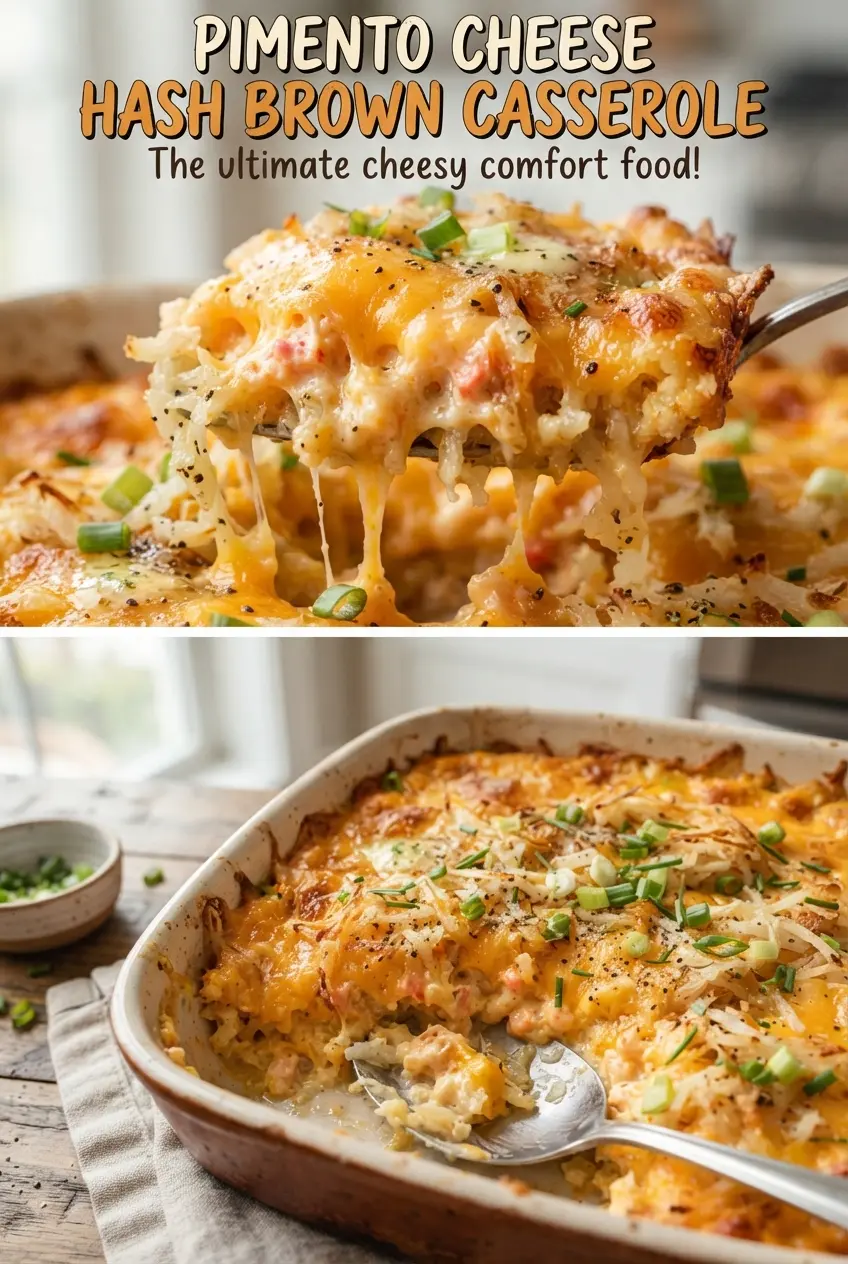
Pimento Cheese Hash Brown Casserole
Ingredients
Equipment
Method
- Preheat the oven to 350F and grease a 9x13-inch baking dish. Aim for even coverage so the casserole releases cleanly.
- In a large mixing bowl, combine sour cream, cream of chicken soup, melted butter, mayonnaise, diced pimentos, 2 cups shredded cheddar, grated onion, salt, black pepper, and cayenne pepper. Stir until the mixture looks thick and evenly speckled.
- Fold in the thawed frozen shredded hash browns until every potato strand is coated. Keep mixing just until no dry shreds remain.
- Spread the mixture into the greased dish and top with the remaining shredded cheddar. Ensure the cheddar sits as an even layer over the surface.
- Bake at 350F for 50-55 minutes until golden and bubbling at the edges. Watch for a set center with active bubbles around the perimeter.
- Rest the casserole for 10 minutes before serving. This helps the cheesy center thicken so it scoops rather than slides.