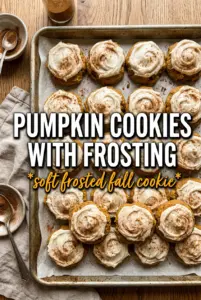
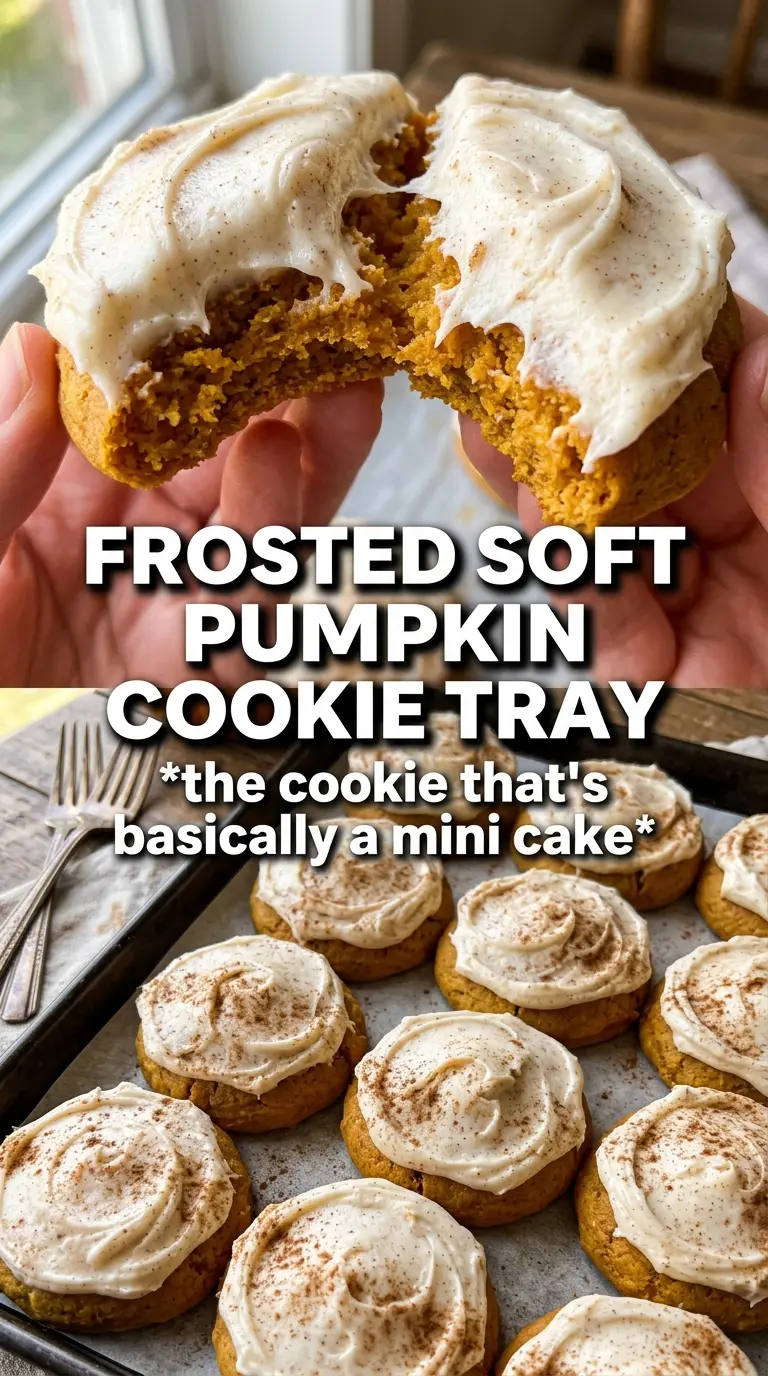
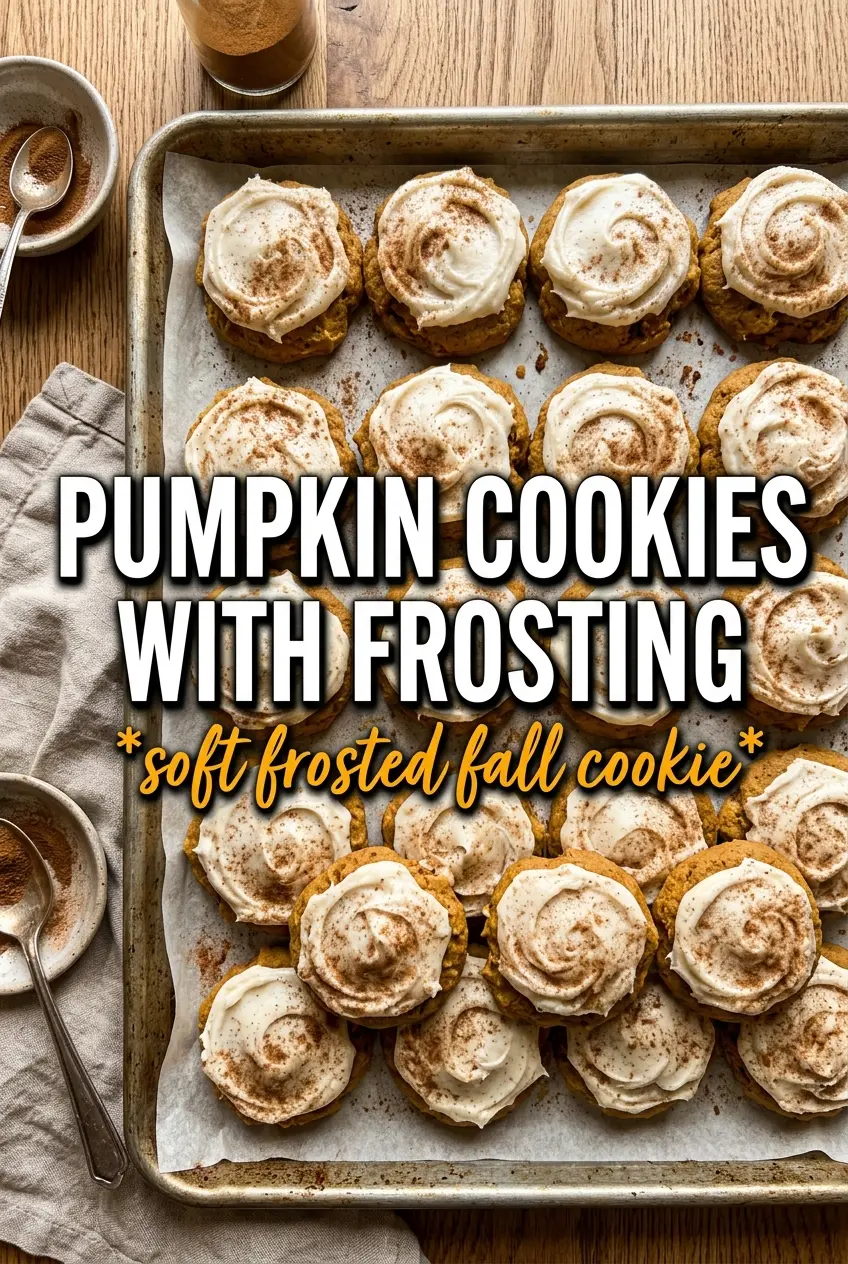
Soft pumpkin cookies topped with cream cheese frosting have that sweet spot texture I keep coming back to: pillowy in the middle, lightly set at the edges, and fragrant with cinnamon the second they come out of the oven. The frosting adds a cool tang that keeps the cookies from tasting flat or overly sweet, and the whole pecan on top gives each one a little crunch that makes them feel finished, not fussy.
This version works because the dough stays tender without turning gummy. Pumpkin puree brings moisture, so the flour blend and the short bake time have to do the work of setting the cookies without drying them out. I also like that the spice mix leans warm instead of aggressive; pumpkin needs enough spice to read clearly, but not so much that it starts tasting like pie filling in cookie form.
Below, you’ll find the small details that matter here: how to keep the cookies soft without spreading too much, when to frost so the topping stays neat, and what to change if you want a slightly less sweet finish.
The cookies baked up soft and cakey with no raw center, and the frosting set just enough to stay neat without getting crusty. My kids picked off the pecans first and then asked for the rest of the batch the next day.
Soft pumpkin cookies with tangy cream cheese frosting are the kind of treat you’ll want to keep bookmarked for fall baking and weekend dessert trays.
The Difference Between Soft Pumpkin Cookies and Pumpkin Puddles
Pumpkin cookies fail for one of two reasons: the dough is too wet, or the bake time is too long. Pumpkin puree brings a lot of moisture, and if the flour isn’t balanced against it, the cookies spread into flat, under-set rounds. If you pull them too late, the tops dry out and the texture turns tight instead of soft.
This dough is meant to be cake-like and spoonable. That is a good thing here. The batter should drop cleanly from a spoon but still look a little loose before baking; it firms up in the oven as the flour hydrates and the leaveners do their work. The cookies are done when the tops no longer look glossy and the centers spring back lightly when touched.
What Each Ingredient Is Doing in This Batch
- All-purpose flour — This gives the cookies their structure without making them dense. The amount matters here because pumpkin adds moisture; too little flour and the cookies bake up fragile, too much and they lose that soft, cakey bite.
- Pumpkin puree — Use plain pumpkin puree, not pumpkin pie filling. Pie filling is already sweetened and spiced, which throws off both the flavor and the texture.
- Butter and sugars — The butter creates tenderness, while the mix of granulated and brown sugar gives the cookies a little lift and a deeper, molasses-like note. The brown sugar is doing more than sweetening; it helps keep the crumb moist.
- Pumpkin pie spice and cinnamon — These two carry the warm spice flavor through the whole cookie. If your spice blend is old, the cookies will taste muted, so fresh spices matter more here than in a strongly frosted dessert.
- Cream cheese — Full-fat cream cheese gives the frosting its tang and body. Lower-fat versions can work in a pinch, but they usually make the frosting looser and less rich.
How to Keep the Cookies Soft and the Frosting Smooth
Building the Dough
Start by whisking the dry ingredients together so the baking soda, baking powder, and spices are evenly distributed. Beat the butter with both sugars until the mixture looks fluffy and a little lighter in color, then add the pumpkin, egg, and vanilla. The dough will look soft and almost scoopable like a thick cake batter. That texture is normal; if it seems pourable, the butter was too warm or the flour was under-measured.
Portioning for Even Baking
Drop the dough by roughly 2-tablespoon portions onto parchment-lined sheets. Keep the mounds spaced apart, because these cookies spread just enough to need room, and crowded pans trap steam that softens the edges. If you want uniformly shaped cookies, use a cookie scoop and level it off each time. They should bake until the tops look set and the centers are no longer wet-shiny, usually 10 to 12 minutes.
Cooling Before the Frosting Goes On
Let the cookies cool completely on a rack before frosting. If they are even a little warm, the cream cheese frosting softens and slides, which makes the top look messy instead of generous. A fully cooled cookie will hold the frosting in a thick swirl, and that gives you the best texture contrast when you bite into it.
Whipping the Frosting
Beat the cream cheese and butter first until the mixture is smooth with no lumps, then add the powdered sugar, vanilla, and cinnamon. If the frosting looks grainy, the cream cheese was too cold; if it looks loose, give it a minute in the fridge before spreading. Frost the cookies generously, then finish with a light dusting of cinnamon and a pecan pressed gently into the top.
Three Ways to Adjust These Pumpkin Cookies Without Losing the Good Part
Dairy-Free Version
Use a plant-based butter that is meant for baking in both the cookies and the frosting, then swap in a dairy-free cream cheese with a firmer texture. The cookies stay soft, but the frosting may be slightly looser, so chill it for 10 to 15 minutes before spreading.
Less Sweet, More Spiced
Cut the frosting sugar back by about 1/2 cup and add a pinch more cinnamon. You lose a little of the thick bakery-style swirl, but the tang from the cream cheese comes forward and the cookies taste less like dessert overload.
Skip the Pecans
Leave the pecans off if you need a nut-free cookie or just want a cleaner finish. The cookies still hold up beautifully, and the cinnamon dusting gives enough visual contrast that they don’t look bare.
Storage and Reheating
- Refrigerator: Store frosted cookies in an airtight container for up to 4 days. The frosting stays best when the cookies are kept in a single layer or separated with parchment.
- Freezer: Freeze the unfrosted cookies for up to 2 months. Frosting can be made ahead and chilled separately, but fully frosted cookies don’t freeze as cleanly because the cream cheese topping can turn a little loose after thawing.
- Reheating: These cookies are best served at room temperature, not warmed. If they have been chilled, let them sit out for 20 to 30 minutes so the frosting softens and the spice flavor comes back.
Answers to the Questions Worth Asking
Pumpkin Cookies With Cream Cheese Frosting
Ingredients
Equipment
Method
- Preheat oven to 350F and line baking sheets with parchment so the bottoms bake evenly without sticking.
- Whisk together flour, baking soda, baking powder, pumpkin pie spice, cinnamon, and salt until the mixture looks uniform and evenly speckled.
- Beat butter with granulated sugar and brown sugar until fluffy, about 2–3 minutes, then scrape the bowl once if needed.
- Add pumpkin puree, egg, and vanilla extract, and beat just until combined and glossy.
- Fold in the flour mixture until no dry streaks remain; the dough should be soft and cake-like.
- Drop dough in 2-tablespoon portions onto the prepared baking sheets, spacing them apart for spreading.
- Bake at 350F for 10–12 minutes until the cookies look set around the edges and no longer look wet in the centers.
- Cool cookies completely on a rack so the frosting won’t melt or slide off.
- Beat cream cheese frosting ingredients until smooth, pausing to scrape the bowl for a creamy, lump-free texture.
- Frost each cookie generously with a thick swirl so the top is fully covered.
- Dust the frosted cookies with cinnamon and press a pecan into the top so it adheres as the surface sets.