Thick pumpkin cottage cheese pancakes land on the plate with a soft, custardy middle and a deep golden crust that holds up under maple syrup. The cottage cheese blends right into the batter, so you get extra protein and a tender crumb without a savory tang taking over. They taste like a proper breakfast stack, not a compromise.
The trick is blending the batter until it’s completely smooth, then letting it sit for a few minutes so the oats hydrate and the pancakes cook up evenly. Medium-low heat matters here. Pumpkin batter can brown before the center sets if the pan runs too hot, and this version works because the eggs and cottage cheese set the structure while the oats keep everything from turning gummy.
Below, I’ve included the one heat adjustment that keeps these fluffy instead of dense, plus a few swaps that make them work with what’s already in your kitchen.
The batter was silky after blending, and the pancakes cooked up fluffy with crisp edges instead of getting dense like some protein pancakes do. My kids didn’t even notice the cottage cheese.
Save these fluffy pumpkin cottage cheese pancakes for the mornings when you want a tall, syrup-ready stack with extra protein.
The Batter Needs to Be Smooth Before It Hits the Pan
Pumpkin pancake batter can go wrong in two directions: lumpy and heavy, or thin and fragile. Blending the cottage cheese, pumpkin, eggs, and oats until completely smooth fixes both problems at once. You want the batter to look thick but pourable, almost like a loose muffin batter. If you can still see curds of cottage cheese, they’ll show up in the finished pancakes as wet pockets instead of disappearing into the structure.
The rest matters too. A five-minute rest gives the oats time to absorb moisture, which helps the pancakes hold their shape when you flip them. Skip that rest and the first batch usually spreads wider, cooks unevenly, and turns a little pasty in the middle.
- Blending fully — This is what turns cottage cheese from obvious to seamless.
- Resting the batter — It thickens the mixture just enough to keep the pancakes tall.
- Medium-low heat — It gives the center time to set before the outside gets too dark.
What Each Ingredient Is Actually Doing in This Stack
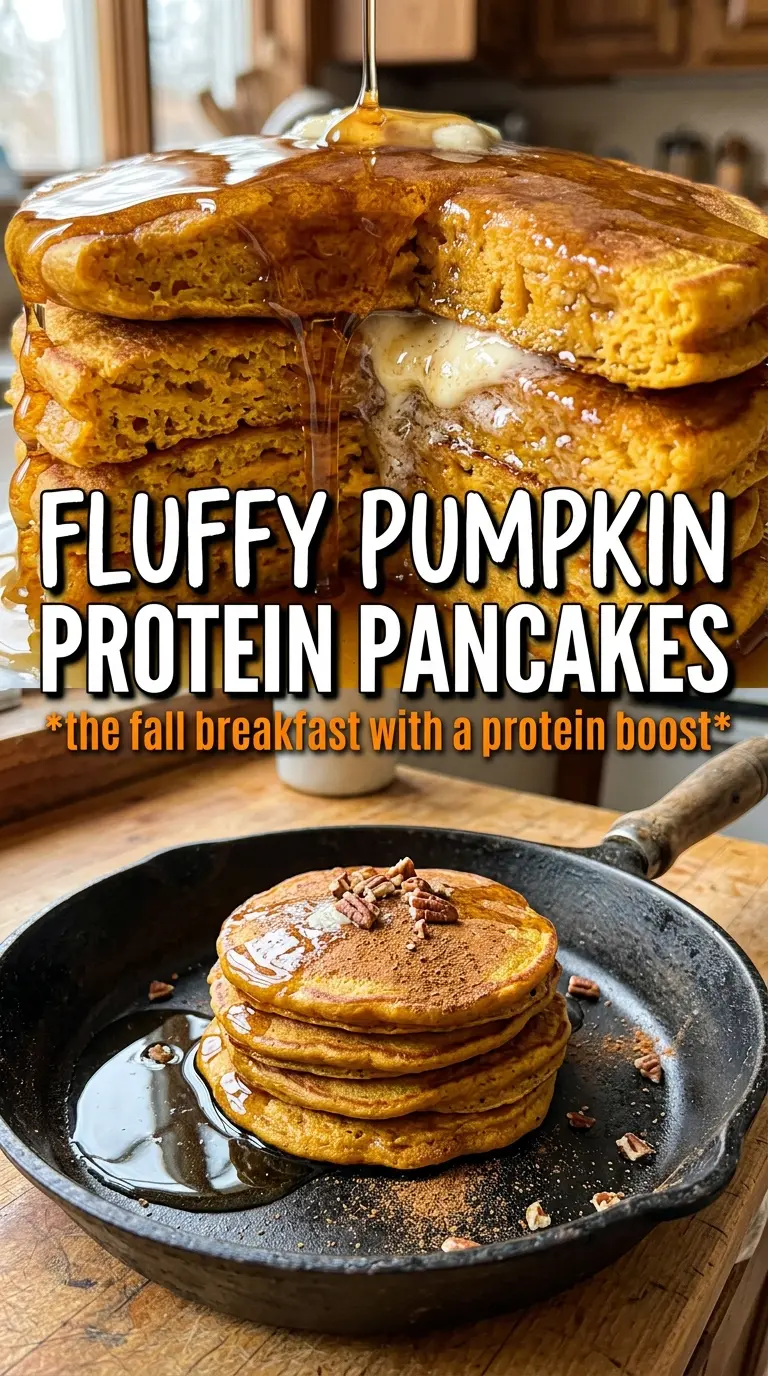
- Canned pumpkin puree — Use pure pumpkin, not pumpkin pie filling. It gives the pancakes their color, moisture, and earthy sweetness without extra sugar or spices getting in the way.
- Full-fat cottage cheese — This is the protein backbone and the reason the pancakes stay tender. Full-fat works best because it blends smoother and tastes richer; low-fat will work, but the texture is a little less plush.
- Rolled oats or oat flour — Oats thicken the batter and help the pancakes set. Oat flour gives the smoothest texture, while rolled oats need a good blender to disappear completely.
- Eggs — Three eggs hold the batter together and help these pancakes rise just enough to stay fluffy. This is not the place to reduce them unless you’re okay with a softer, more fragile pancake.
- Pumpkin pie spice and cinnamon — The spice blend gives the batter depth, while extra cinnamon sharpens the pumpkin flavor. If your pumpkin pie spice is old, the pancakes taste flat, so use a fresh jar if you have one.
- Maple syrup — Just a tablespoon goes into the batter to round out the pumpkin and spice. The rest belongs on top, where you can taste it.
How to Cook Them So They Stay Tall and Golden
Blend the batter until it looks like cream
Add everything to the blender and run it long enough that the cottage cheese curds disappear. The batter should look uniform, with no grainy bits around the edges of the blender jar. If it seems too thick to pour, loosen it with a tablespoon of water or milk, but only enough to make it move. Too much liquid turns these into crepes with ambition.
Let the oats do their job before cooking
Rest the batter for 5 minutes while the griddle heats over medium-low. That pause is what gives the oats time to absorb moisture and keep the pancakes from spreading too fast. A hot pan at this stage is a mistake; the outside will color before the center has a chance to firm up.
Watch for set edges, not a dry top
Use butter on the griddle and pour about 1/4 cup for each pancake. When bubbles start to form and the edges look set, slide a spatula underneath and flip with confidence. The first side should be a deep golden brown. If it’s dark before the edges set, the heat is too high.
Finish the second side gently
Cook the flipped pancakes for 2 to 3 minutes until the second side is golden and the center springs back lightly when pressed. Don’t keep pressing them down with the spatula; that squeezes out the air and flattens the stack. Serve them right away with butter, maple syrup, and pecans while the crust is still crisp.
Three Ways to Adjust the Recipe Without Losing the Texture
Gluten-Free Version
Use certified gluten-free oats or oat flour and nothing else has to change. Oat flour gives a smoother batter and a slightly more tender pancake, while rolled oats make the texture a little heartier.
Dairy-Free Swap
Replace the cottage cheese with a thick dairy-free yogurt or a dairy-free ricotta-style alternative. The pancakes won’t have quite the same protein level or tang, but the texture still stays soft if the replacement is thick enough to blend smoothly.
Extra Protein, Less Sweet
Skip the maple syrup in the batter and lean on the topping instead. The pancakes will taste a little less rounded on their own, but the pumpkin and spice still carry the flavor, and the stack works well for anyone who wants breakfast without much added sugar.
Freezer-Friendly Batch
Cook the pancakes a shade lighter than you would for serving fresh. They’ll finish warming in the toaster or skillet later, and that prevents them from drying out during reheating.
Storage and Reheating
- Refrigerator: Store in an airtight container for up to 4 days. They soften a little in the fridge, but the texture comes back once reheated.
- Freezer: Freeze in a single layer, then move to a freezer bag for up to 2 months. Separate layers with parchment if you want to pull out just a few at a time.
- Reheating: Warm in a toaster oven or skillet over low heat until heated through. The biggest mistake is blasting them in the microwave, which makes the centers rubbery and the edges limp.
Answers to the Questions Worth Asking
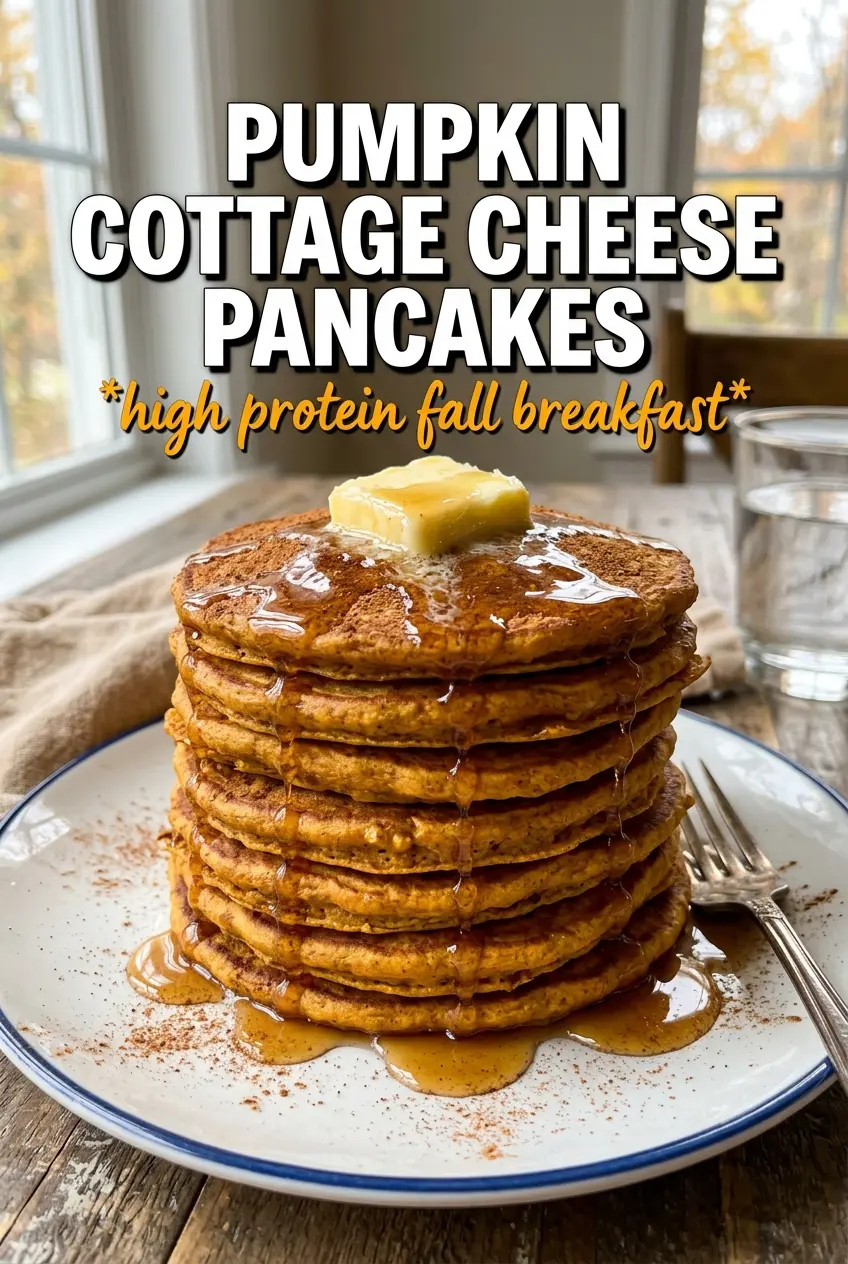
Pumpkin Cottage Cheese Pancakes
Ingredients
Equipment
Method
- Blend canned pumpkin puree, full-fat cottage cheese, large eggs, vanilla extract, rolled oats, pumpkin pie spice, cinnamon, baking powder, maple syrup, and salt until smooth.
- Let the batter rest for 5 minutes while the griddle heats over medium-low heat, so it thickens slightly.
- Grease the griddle with butter and pour 1/4 cup batter per pancake.
- Cook for 3–4 minutes until bubbles form and the edges look set, then flip.
- Cook for 2–3 more minutes until golden.
- Serve the pancakes stacked tall with maple syrup, a pat of butter, and chopped pecans.