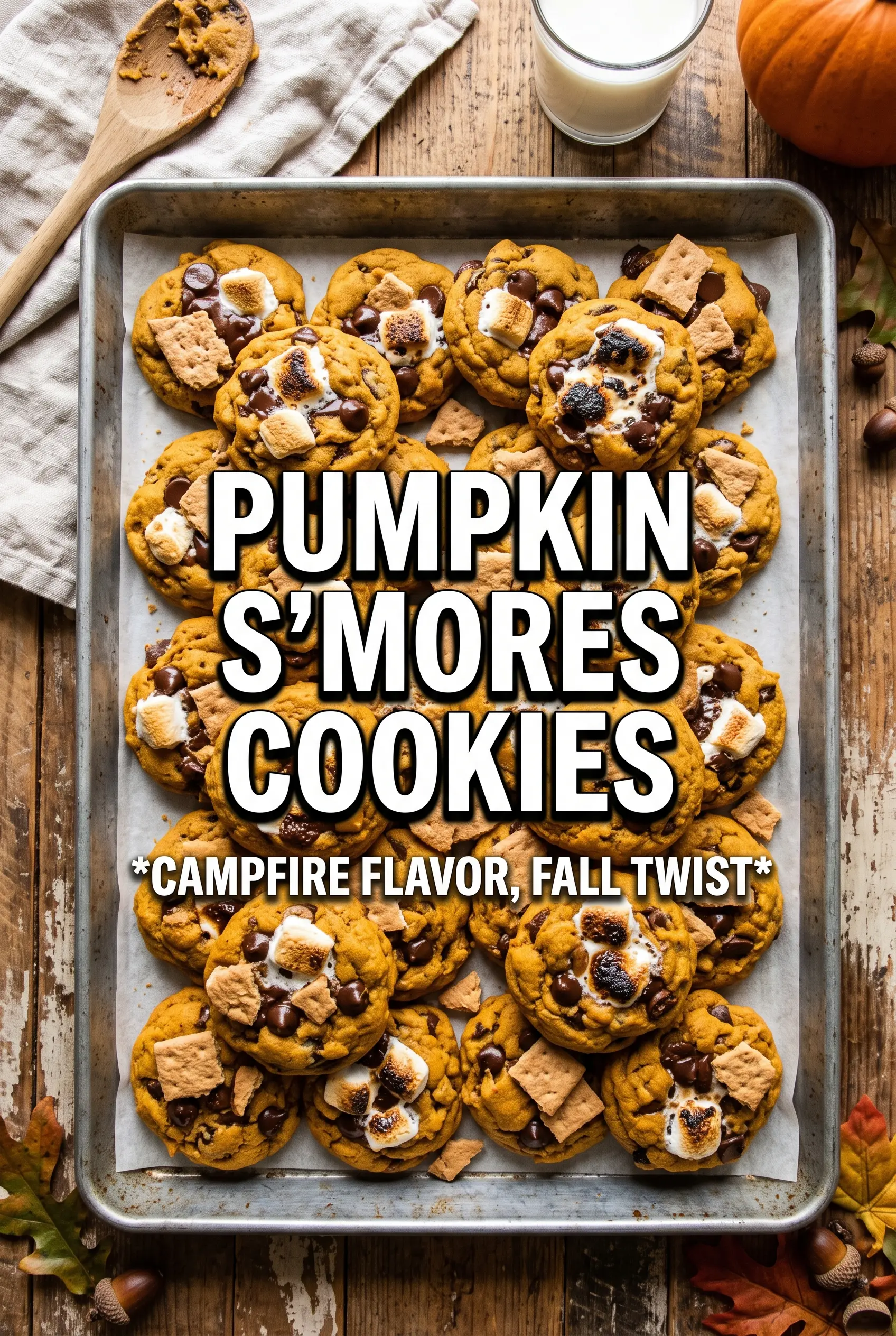
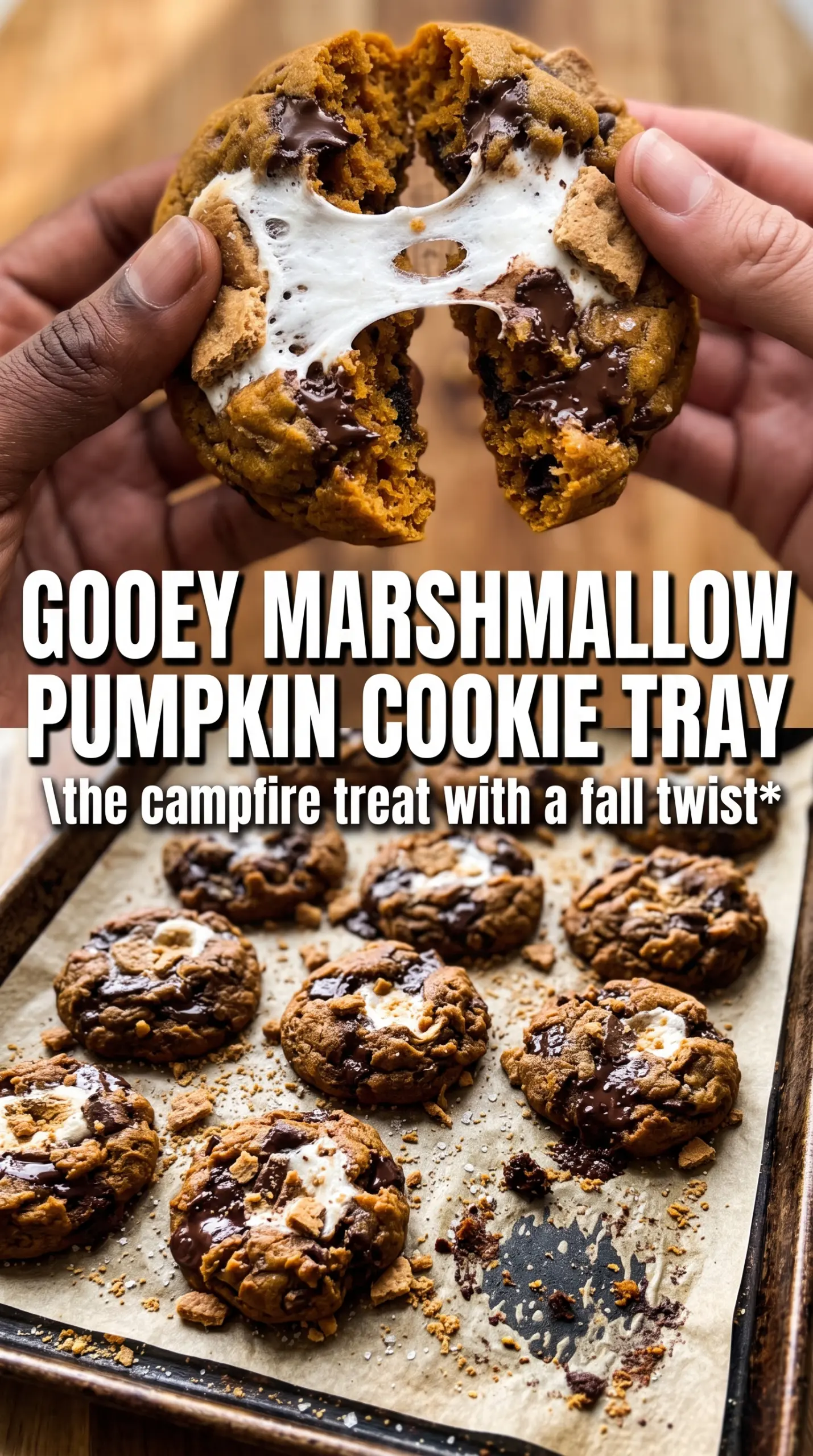
Pumpkin S’mores Cookies bake up thick and soft with crisp edges, gooey marshmallow pockets, and those familiar graham-and-chocolate bites that make every cookie taste like a campfire dessert in fall clothing. The pumpkin stays in the background instead of turning the dough cakey, so you get a tender cookie that still holds its shape and bakes into a chewy center.
The part that makes this version work is the dried pumpkin puree. Pumpkin adds moisture fast, and if you skip blotting it, the dough spreads less predictably and can turn soft in a way that mutes the cookie texture. Browning isn’t the goal here; you want the edges set, the marshmallows blistered, and the centers just barely underdone when they come out of the oven.
Below you’ll find the exact point where the marshmallows should go into the dough, why some belong on top instead, and how to get those toasted tops without scorching the chocolate. If you’ve ever had s’mores cookies collapse into a sticky puddle, this method keeps them closer to the cookie you actually meant to bake.
The pumpkin flavor stayed balanced and the marshmallows actually toasted on top instead of disappearing into the dough. I loved that the cookies were soft in the middle but still held together after cooling.
Pumpkin S’mores Cookies with toasted marshmallow tops are the kind of bake that disappears fast, so pin this one for the next time you want a soft cookie with graham crunch and melted chocolate in every bite.
The Pumpkin Mistake That Makes Cookie Dough Spread Too Little or Too Much
Pumpkin is the ingredient that changes the whole behavior of these cookies, and it’s also the reason people get inconsistent results. Pumpkin puree holds a lot of water, which means the dough can look fine in the bowl and still bake up too soft if you use it straight from the can. Blotting it first pulls off enough moisture to keep the cookies thick, chewy, and shaped like cookies instead of little cakey puffs.
The marshmallows are another place where technique matters. Half go into the dough so you get those soft pockets and stretch when you break a cookie open. The other half go on top so they can brown and toast instead of melting completely out of sight.
- Pumpkin puree — Use plain pumpkin puree, not pumpkin pie filling. The filling has sugar and spices already added, which throws off both texture and seasoning.
- Brown sugar — This gives the cookies their chew and a little caramel depth. Light or dark brown sugar both work; dark brown sugar makes the molasses note more obvious.
- Graham cracker pieces — Break them by hand so you keep a mix of fine crumbs and bigger shards. The crumbs help flavor the dough, while the bigger pieces give you that s’mores crunch.
- Mini marshmallows — Mini marshmallows melt evenly and are much easier to portion than full-size ones. If yours are stale, they won’t puff and toast as nicely.
What Each Ingredient Is Actually Doing in This Recipe
- Primary ingredient (the star) — Quality matters most. Choose the best you can find.
- Cooking medium (oil, butter, or broth) — This carries flavors and prevents dryness.
- Seasonings (salt, pepper, spices, herbs) — Layer flavors so nothing overpowers. Build depth gradually.
- Aromatics (garlic, onion, herbs) — Cook with fat to bloom flavors. Become the foundation.
- Supporting ingredients — Complement the main ingredient without overpowering it.
- Sauce or liquid (if applicable) — Brings flavors together. Balance richness with acid.
- Acid (lemon, vinegar, wine, or other) — Brightens and prevents flat-tasting results.
- Final finish (garnish, glaze, or sauce) — Prevents one-dimensional taste and adds visual appeal.
Building the Dough So the S’mores Pieces Don’t Disappear
Dry the pumpkin first
Spread the pumpkin puree between a few layers of paper towel and press gently until it looks thicker and a little drier. You’re not removing every bit of moisture, just enough to keep the cookies from turning slack. If the pumpkin still looks wet and glossy, the dough will need extra flour to hold together, and that usually makes the cookies heavier than they should be.
Cream the butter and sugars until pale
Beat the softened butter with both sugars until the mixture looks fluffy and lighter in color. That step traps air, which helps these cookies rise without becoming cake-like. If the butter is too warm, the dough will look greasy instead of creamy and the cookies will spread too fast in the oven.
Fold the mix-ins in last
Stir in the graham crackers, chocolate chunks, and only half the marshmallows after the flour goes in. If you add the marshmallows too early, they smear through the dough and melt into sticky streaks before the cookies even bake. Folding them in at the end keeps the pockets intact, and pressing the rest on top gives you the toasted finish that makes these taste like s’mores instead of pumpkin cookies with extras.
Watch the bake, not the clock alone
Bake just until the edges are set and the centers still look a little underdone. That’s when the cookies will finish setting on the pan without turning dry. If you want extra toast on top, a 60-second broil works, but keep the tray high enough that the marshmallows brown before the chocolate burns.
How to Adapt These Cookies Without Losing the S’mores Texture
Dairy-Free Version
Use a plant-based butter that behaves like regular butter in baking, not a tub spread that stays soft at room temperature. The cookies will still hold together, but the flavor loses a little of the buttery richness, so the chocolate and graham cracker pieces matter even more.
Gluten-Free Swap
Use a good 1:1 gluten-free flour blend and swap in gluten-free graham-style crackers. The cookies will be slightly more delicate, so let them cool on the pan before moving them. That resting time helps the starches set and keeps them from breaking apart.
Extra Chocolate, Less Marshmallow
If you want a richer cookie and less sticky topping, reduce the marshmallows on top and add a few more chocolate chunks instead. You’ll get a cleaner bake with fewer melted edges, but you lose some of the toasted marshmallow look that makes the cookies feel like s’mores.
Storage and Reheating
- Refrigerator: Store in an airtight container for up to 4 days. The marshmallows soften as they sit, but the cookies stay chewy.
- Freezer: Freeze baked cookies for up to 2 months with parchment between layers. You can also freeze scooped dough balls and bake straight from frozen, adding 1 to 2 minutes.
- Reheating: Warm a cookie in the microwave for 8 to 10 seconds or in a 300F oven for a few minutes. Too much heat will harden the chocolate and melt the marshmallows into a puddle, so keep it brief.