Red, white, and blue fruit kabobs disappear fast because they hit the sweet spot between playful and practical. The berries stay juicy, the marshmallows add that soft, nostalgic bite, and the whole tray looks party-ready without any last-minute fuss. They work as an appetizer, a dessert, or the first thing people grab while the grill is still heating up.
The part that makes these kabobs worth repeating is the balance of texture and moisture. Strawberries and blueberries bring freshness, while marshmallows keep the skewers from feeling too acidic or one-note. Threading them in a repeating pattern also matters more than it sounds like it should; it keeps the colors bold and evenly distributed, and it makes the platter look polished even if you assembled them in ten quick minutes.
Below, I’ve included the small details that keep the fruit looking fresh, plus a few smart swaps if you want to use grapes instead of marshmallows or need to make the kabobs a little ahead for a crowd.
I made these for a block party and the pattern stayed neat on the platter, even after sitting out for a bit. Using halved strawberries helped the skewers hold together better, and the marshmallows kept the kids coming back for more.
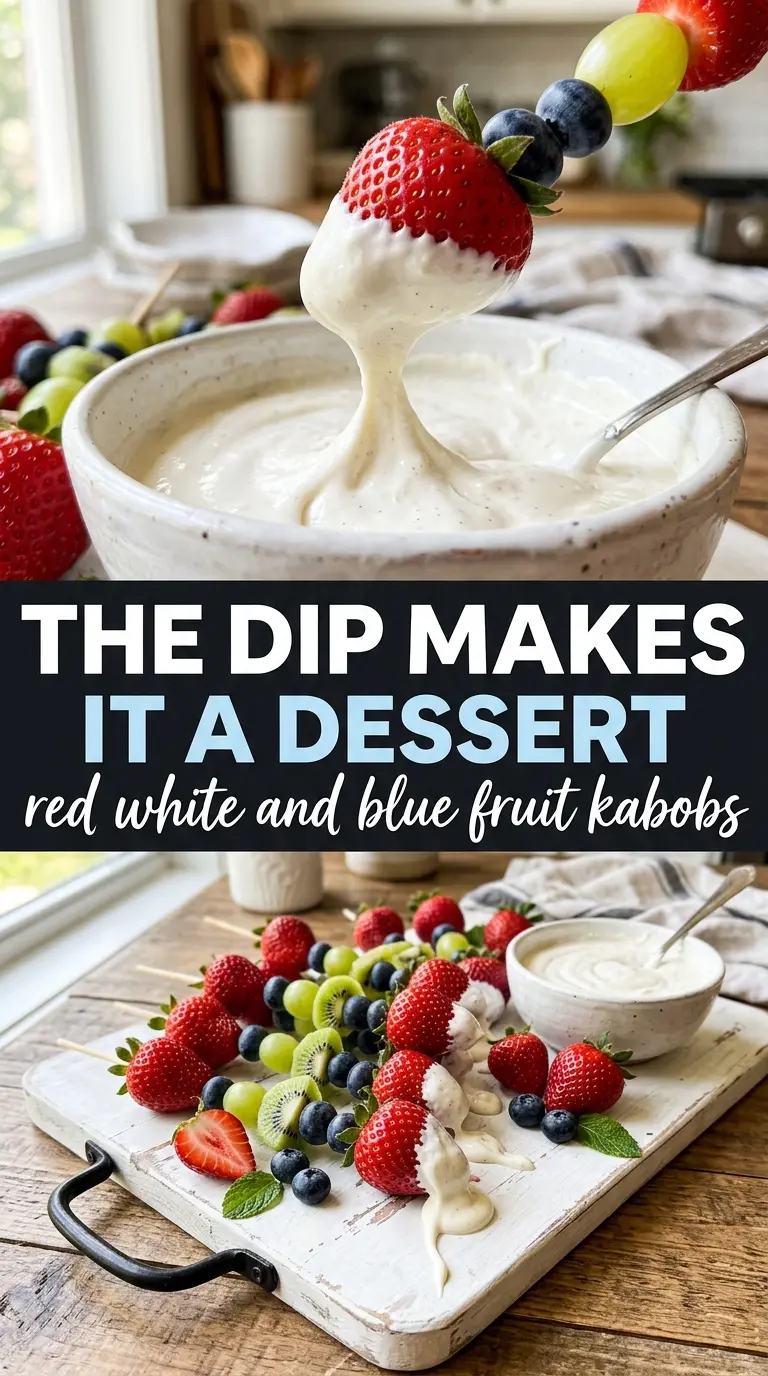
These red, white, and blue fruit kabobs make the easiest patriotic tray for backyard cookouts and July 4th dessert tables.
The Trick to Keeping Fruit Kabobs Fresh, Not Watery
The biggest mistake with fruit skewers is building them too far ahead and leaving them uncovered. Strawberries can soften fast once they’re cut, and blueberries will sometimes wrinkle if they sit in warm air. Keeping the fruit cold until the last possible minute preserves the clean look and the crisp bite that makes these worth serving.
Another detail that matters is the size of the fruit pieces. If the strawberries are large, halving them helps the skewers sit flatter and keeps the pattern from tipping. Marshmallows or grapes should be close to the same size as the berries so every skewer feels balanced instead of top-heavy.
What Each Ingredient Is Actually Doing in This Recipe
- Primary ingredient (the star) — Quality matters most. Choose the best you can find.
- Cooking medium (oil, butter, or broth) — This carries flavors and prevents dryness.
- Seasonings (salt, pepper, spices, herbs) — Layer flavors so nothing overpowers. Build depth gradually.
- Aromatics (garlic, onion, herbs) — Cook with fat to bloom flavors. Become the foundation.
- Supporting ingredients — Complement the main ingredient without overpowering it.
- Sauce or liquid (if applicable) — Brings flavors together. Balance richness with acid.
- Acid (lemon, vinegar, wine, or other) — Brightens and prevents flat-tasting results.
- Final finish (garnish, glaze, or sauce) — Prevents one-dimensional taste and adds visual appeal.
What the Fruit and Marshmallows Are Doing on the Skewer
- Strawberries — These give the kabobs their bold red color and the freshest, juiciest bite. Halving large berries keeps the skewer stable and makes the red section easier to eat without the fruit sliding around.
- Blueberries — Fresh blueberries hold their shape better than softer fruit and add a pop of color that stays neat on the tray. Pick berries that are firm and dry on the outside so they don’t stain the marshmallows as you thread them.
- Large marshmallows — Marshmallows give you the white layer and a soft, sweet contrast to the berries. If you want a less sugary version, use white grapes instead; the kabobs will taste fresher and less dessert-like, but you’ll lose that soft, cloud-like texture.
- Wooden skewers or bamboo picks — Straight, sturdy skewers matter more than they seem to. Short picks work for a snack platter, but longer skewers give you enough room to repeat the pattern and make the color contrast obvious from across the table.
Threading the Pattern So the Tray Looks Intentional
Starting With a Stable Base
Begin each skewer with a blueberry or a strawberry half so the pointed end gets covered and the fruit has something firm to anchor against. If you start with a marshmallow, it can slide and tear as you thread the rest of the ingredients. The goal is a snug fit, not a packed skewer, so leave just enough room that the fruit sits flush without being squeezed.
Repeating the Color Sequence
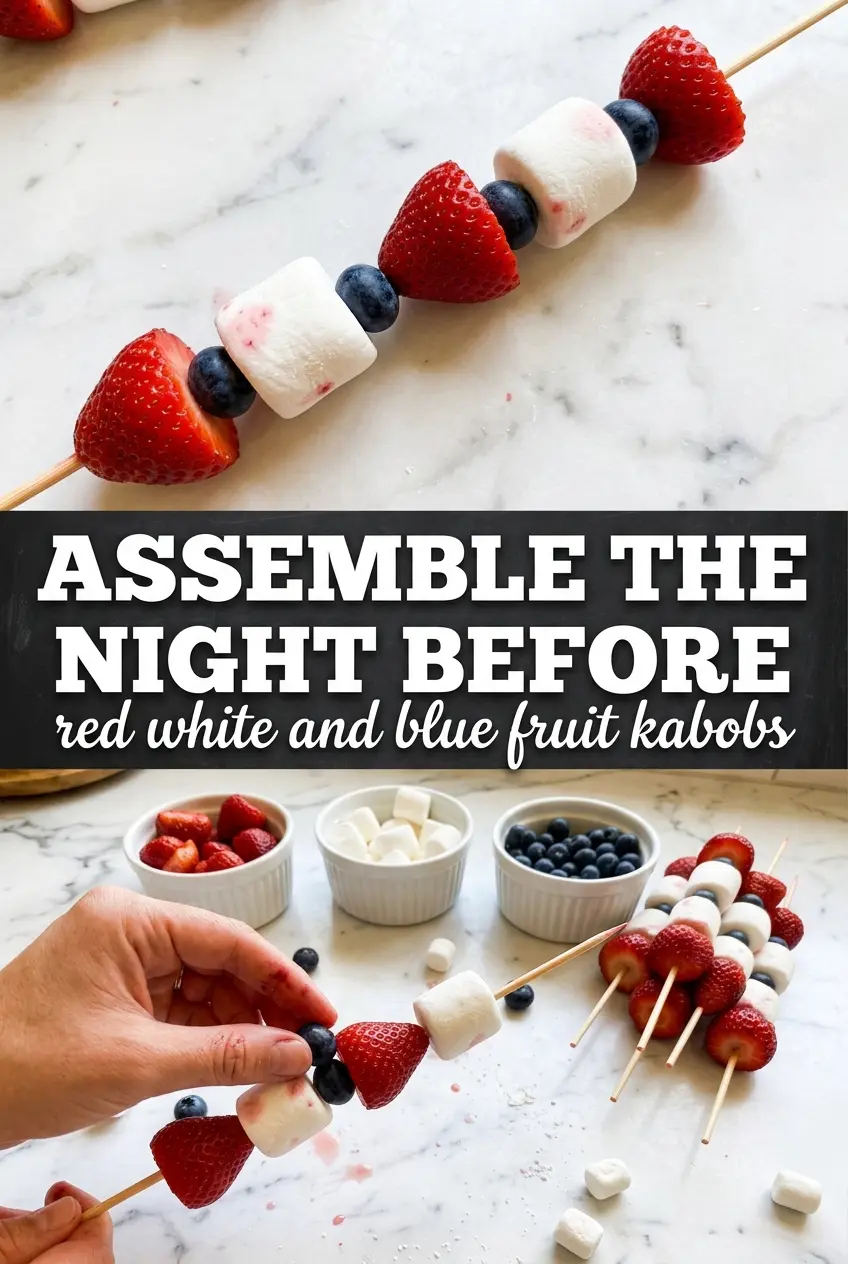
Build each kabob in the same order: blueberry, marshmallow, strawberry, then repeat. That repetition is what gives the platter its flag-like look, and it keeps each skewer looking complete even if the lengths vary a little. If the berries are especially large, stop one pattern short rather than forcing the fruit together; crowded skewers split the marshmallows and make the tray look messy.
Serving at the Right Moment
Lay the finished kabobs on a tray in a single layer and refrigerate them until serving time. They hold best for about 2 hours, which is long enough for a party spread but short enough to keep the fruit bright. If the tray sits uncovered much longer, the marshmallows dry out and the strawberries start to weep, so cover them lightly if you need to chill them ahead.
How to Adapt These Patriotic Fruit Skewers for Different Crowds
Use white grapes instead of marshmallows
This turns the kabobs into a fresher, less sugary appetizer and makes them a better fit for people who want fruit only. The texture becomes firmer and juicier, but you lose the soft, candy-like bite that makes the original version feel a little festive.
Swap in strawberries, bananas, and blueberries for a softer dessert version
If you want a more dessert-style kabob, add banana slices and keep the fruit pieces smaller. The bananas add creaminess, but they brown fast, so this version needs to be assembled right before serving.
Make it dairy-free, gluten-free, and vegetarian without changing anything
As written, these kabobs already fit all three of those needs as long as you use marshmallows that match your dietary preferences. If you’re serving a mixed crowd, grapes are the simplest way to keep the recipe broadly friendly without changing the method.
Storage and Reheating
- Refrigerator: Store the assembled kabobs for up to 2 hours before serving. After that, the fruit starts to lose its fresh look and the marshmallows can dry at the edges.
- Freezer: These don’t freeze well once assembled. The fruit turns mushy when thawed and the marshmallows get sticky.
- Reheating: Not needed for this recipe. Serve them chilled straight from the fridge, because room temperature is when the strawberries start to soften and the kabobs lose their clean finish.
Answers to the Questions Worth Asking
Red, White & Blue Fruit Kabobs
Ingredients
Equipment
Method
- Wash and prep all fruit by hulling the strawberries and leaving the blueberries whole, so everything threads cleanly.
- Thread each skewer in a repeating pattern of 1 blueberry, 1 marshmallow, and 1 strawberry, repeating 2–3 times per skewer depending on the skewer length.
- Line the completed skewers on a serving platter or tray, then refrigerate until ready to serve for up to 2 hours ahead (keep covered to prevent drying).
- Serve the kabobs chilled as a grab-and-go party appetizer or dessert.