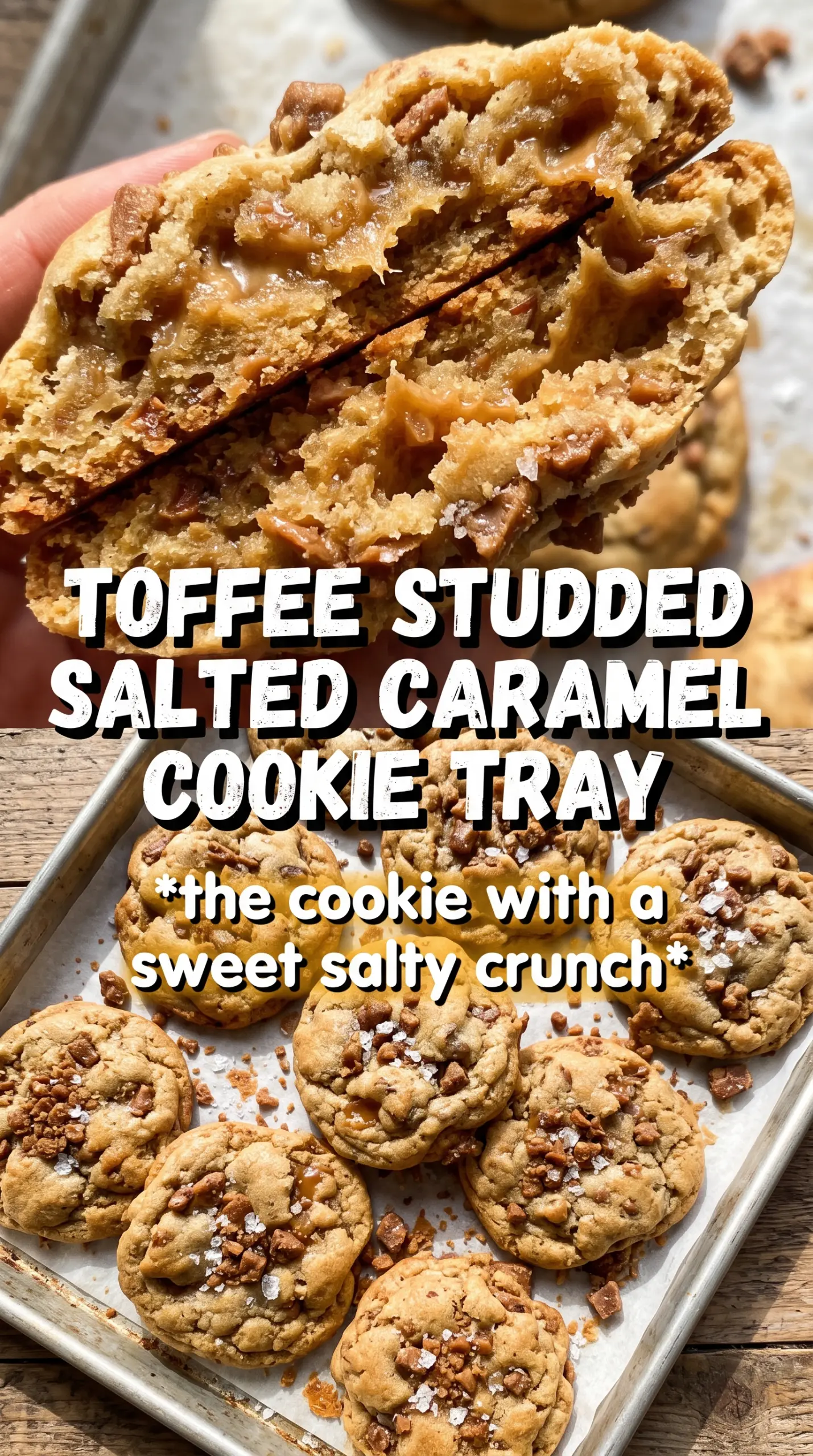
Salted caramel toffee cookies bake up with crisp edges, soft centers, and those little pockets of melted caramel that turn sticky and irresistible as they cool. The toffee gives each bite a warm, buttery crunch, while the flaky sea salt keeps the sweetness in check so the cookies taste balanced instead of one-note. They come off the pan looking a little rough in the best way, with golden tops and glossy caramel spots that set as they rest.
The trick with these cookies is treating the caramel pieces like a mix-in, not a filling. That means they get folded into a sturdy butter-and-sugar dough that can hold them without spreading into lace on the baking sheet. A short bake at 375°F gives the edges enough color before the centers overbake, and pressing a few extra bits on top right after baking makes every cookie look bakery-made. The salt goes on while the caramel is still warm, so it sticks where it should and gives you that proper sweet-salty finish.
Below, I’ve laid out the part that matters most: how to keep the caramel from turning into a mess, which ingredient swaps still give you the right texture, and the small timing cue that keeps these cookies soft in the middle.
The caramel stayed gooey in the middle and the toffee bits gave the perfect crunch. I baked them for 11 minutes and they were soft for days without getting cakey.
Salted caramel toffee cookies with gooey centers and flaky sea salt are worth pinning for the next time you want a cookie that tastes bakery-rich without any fancy steps.
The Reason These Cookies Stay Soft Instead of Spreading Thin
Cookies like this usually fail for one of two reasons: the butter was too warm, or the caramel was treated like it could behave the same way chocolate chips do. This dough needs structure. The flour, eggs, and a properly creamed butter base give it enough strength to hold the toffee and caramel bits without collapsing into greasy puddles.
The other thing that matters is bake time. These cookies should come out when the edges are set and lightly golden, but the centers still look a touch underdone. That carryover heat finishes the middle on the pan. If you wait until the tops look fully baked in the oven, they’ll lose that soft, chewy center by the time they cool.
- Butter — Softened butter traps air when you beat it with the sugars, which gives the cookies lift. If the butter is melting or shiny, the dough will spread more, so it should give slightly when pressed but still hold its shape.
- Brown sugar — This brings moisture and a faint molasses note that keeps the centers chewy. You can’t fully replace that with all granulated sugar and get the same texture.
- Toffee bits — These add crunch and a deep buttery sweetness that survives baking. Heath-style bits work well because they’re designed to hold up in cookie dough.
- Soft caramel pieces or caramel chips — These are what create the gooey pockets. If you use chopped soft caramels, cut them small so they distribute evenly and don’t melt into one big patch.
- Flaky sea salt — This isn’t optional in spirit, even if it’s optional on paper. The salt on top sharpens the caramel and keeps the cookie from tasting flat.
What Each Ingredient Is Actually Doing in This Recipe
- Primary ingredient (the star) — Quality matters most. Choose the best you can find.
- Cooking medium (oil, butter, or broth) — This carries flavors and prevents dryness.
- Seasonings (salt, pepper, spices, herbs) — Layer flavors so nothing overpowers. Build depth gradually.
- Aromatics (garlic, onion, herbs) — Cook with fat to bloom flavors. Become the foundation.
- Supporting ingredients — Complement the main ingredient without overpowering it.
- Sauce or liquid (if applicable) — Brings flavors together. Balance richness with acid.
- Acid (lemon, vinegar, wine, or other) — Brightens and prevents flat-tasting results.
- Final finish (garnish, glaze, or sauce) — Prevents one-dimensional taste and adds visual appeal.
How to Get the Caramel Pockets Without Turning the Dough Into a Mess
Cream the Butter and Sugars Until the Bowl Looks Fluffy
Beat the butter, granulated sugar, and brown sugar until the mixture lightens in color and looks a little whipped. That step matters because it gives the cookies some lift before the heavy mix-ins go in. If you stop too soon, the cookies bake up denser and flatter. If the mixture looks greasy or soupy, the butter was too warm, and the dough will spread more than you want.
Fold in the Mix-Ins at the End
Once the flour mixture is in, switch to a gentle hand and fold in the toffee bits and caramel pieces. Stirring too aggressively can break the caramel down and smear it through the dough. You want clear pockets of caramel, not a uniform sweet paste. The dough will look thick and a little lumpy, and that’s exactly what you want.
Bake Just Until the Edges Color
Scoop the dough into 2-tablespoon rounds and bake until the edges turn golden and the centers still look soft. The cookies should puff, then settle as they cool. Pulling them at 10 to 12 minutes keeps the middle chewy instead of dry. Right after they come out, press a few extra toffee bits or caramel pieces on top so they stick before the surface sets.
Salt While the Top Is Still Warm
The flaky sea salt belongs on the cookies as soon as they leave the oven. Warm caramel grabs the salt better, and the contrast is strongest when the cookie is still soft. If you wait until they’re fully cool, the salt won’t cling as well and the finish tastes less balanced.
Three Ways to Change These Without Losing the Good Part
Gluten-Free Swap With the Same Chewy Center
Use a good 1:1 gluten-free baking flour in place of the all-purpose flour. The cookies may spread a touch less, but the texture stays close if the blend includes xanthan gum. Let the dough rest for 15 minutes before baking so the flour has time to hydrate.
Dairy-Free Version That Still Tastes Rich
Swap in a plant-based butter stick that’s meant for baking, not a tub spread. Use dairy-free caramel pieces if you can find them, since many regular caramels contain milk solids. The cookies won’t taste exactly the same, but you’ll still get the buttery chew and salted caramel-style finish.
Extra Gooey Centers for a Softer Cookie
Use chopped soft caramels instead of chips and slightly underbake the cookies by about a minute. The centers stay softer and the caramel pools more as they cool. Watch them closely, because that extra minute is the difference between chewy and dry.
Make the Sweetness a Little Deeper
If you like a richer, more caramel-forward cookie, use the optional caramel extract. It won’t replace the real caramel pieces, but it does round out the flavor and makes the cookie taste more layered. A little goes a long way, so keep it at the teaspoon level.
Storage and Reheating
- Refrigerator: Store in an airtight container for up to 5 days. The caramel firms up a little, but the cookies stay chewy.
- Freezer: Freeze baked cookies for up to 2 months, layered with parchment. You can also freeze scooped dough balls and bake from frozen, adding 1 to 2 minutes.
- Reheating: Warm a cookie in the microwave for 8 to 10 seconds or in a 300°F oven for 3 to 4 minutes. Don’t overheat them or the caramel will leak and the edges will turn hard.
Answers to the Questions Worth Asking

Salted Caramel Toffee Cookies
Ingredients
Equipment
Method
- Preheat oven to 375F and line baking sheets with parchment so the cookies bake evenly and release cleanly.
- Whisk all-purpose flour, baking soda, and salt in a bowl until evenly combined.
- Beat softened unsalted butter with granulated sugar and packed brown sugar until light and fluffy.
- Beat in eggs one at a time, then mix in vanilla extract and caramel extract if using.
- Fold the flour mixture into the butter mixture just until no dry streaks remain.
- Fold in toffee bits and soft caramel pieces until the dough is studded throughout.
- Scoop dough into 2-tablespoon rounds and place on the baking sheets, spacing them apart.
- Bake for 10-12 minutes at 375F until the edges are golden.
- Immediately press extra toffee bits and caramels on top while the cookies are hot and still slightly soft.
- Sprinkle generously with flaky sea salt, then cool on the pan for 5 minutes before moving.