Tender yellow squash baked with sharp cheddar and a buttery cracker crust lands on the table soft in the middle, crisp on top, and just rich enough to keep people going back for another spoonful. The best versions don’t taste watery or bland; they taste like squash, onion, and cheese all worked together instead of fighting each other.
The difference is in the prep. Squash holds a lot of moisture, and if it goes into the dish without a proper drain, the casserole steams instead of setting. Cooking the squash and onion first gives you a sweeter, deeper base, while sour cream and mayonnaise keep the filling creamy without turning it heavy. The Ritz topping does more than add crunch — the butter helps it brown into a crust that stays crisp long enough to serve.
Below you’ll find the small details that matter most, including how to keep the casserole from turning soupy and what to do if you want to swap in a different cheese or make it ahead.
The casserole set up beautifully and wasn’t watery at all. Draining the squash well made all the difference, and the Ritz topping stayed crisp even after supper.
Pin this Southern Squash Casserole for a buttery, cheesy side dish with a crisp Ritz topping.
The Reason This Casserole Stays Creamy Instead of Watery
Squash casserole fails for one reason more than any other: too much liquid. Yellow squash releases a lot of water as it cooks, and if that moisture goes straight into the baking dish, the center loosens and the topping sinks into the filling. Cooking the squash and onion first, then draining it well, gives you a casserole that sets in the oven instead of pooling around the edges.
The other part that matters is the base. Sour cream and mayonnaise sound rich, and they are, but they also help the casserole stay cohesive without turning rubbery like a heavy egg custard can. You want the mixture loose enough to fold together, but thick enough that it mounds in the baking dish before it goes in the oven.
What Each Ingredient Is Doing in This Dish
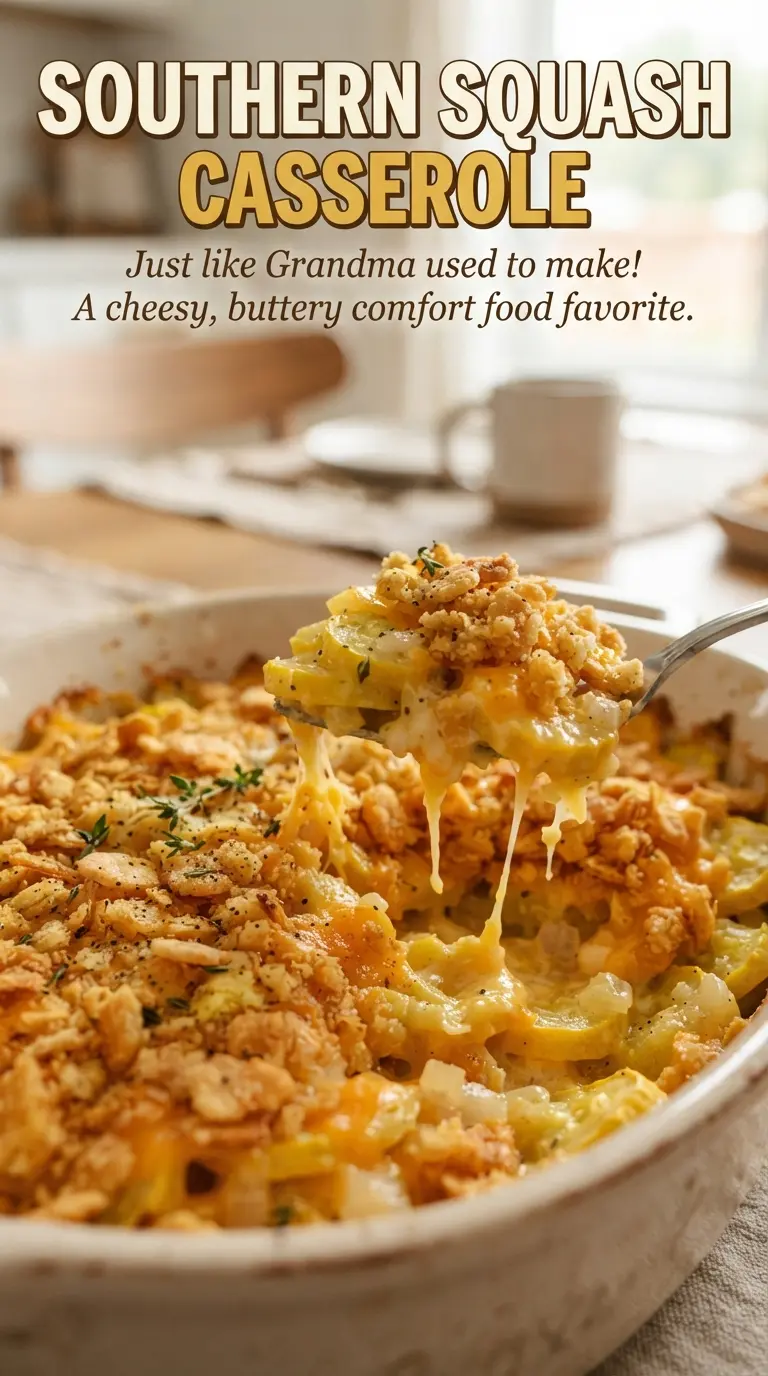
The image block above should appear here exactly as provided, with only the alt text updated for this recipe. The rest of the article continues with ingredient notes that explain why the dish works.
- Yellow squash — This is the body of the casserole, but it needs to be cooked first so it collapses and releases water before baking. Fresh, firm squash gives you the best texture; older squash can be watery and seedy. If your squash is extra juicy, let it sit in a colander a few extra minutes after cooking.
- Onion — Onion brings the savory edge that keeps the casserole from tasting flat. Cooking it with the squash softens the bite and gives the whole dish a sweeter base. Dice it small so it disappears into the filling instead of leaving crunchy bits behind.
- Sharp cheddar — Sharp cheddar gives the casserole its strongest flavor, which matters because squash is mild. Pre-shredded cheese works, but freshly shredded melts more smoothly. If you swap in mild cheddar, expect a softer, less pronounced finish.
- Sour cream and mayonnaise — These are the creamy binders that keep the filling rich and spoonable. Sour cream adds tang, while mayonnaise helps with body and a smooth texture. If you need to swap one, plain Greek yogurt can stand in for the sour cream, but the flavor will be a little sharper.
- Eggs — Eggs set the casserole so it slices instead of slumping. Beat them before adding so they disperse evenly through the filling. If you undermix here, you can get streaks of custard that bake unevenly.
- Ritz crackers and melted butter — This topping is what makes the casserole feel complete. The crackers stay light and crisp, and the butter helps them brown fast without drying out. Another buttery cracker will work, but plain breadcrumbs won’t give you the same sweet, rich crunch.
How to Keep the Crust Crisp and the Center Set
Cooking Down the Squash First
Start by cooking the squash and onion in butter until the squash is tender and the onion looks translucent. You’re not browning them here; you’re driving off moisture and softening the vegetables so they fold into the casserole cleanly. If liquid collects in the pan, keep cooking a minute or two longer. The mixture should look soft and collapsed, not glossy with water.
Draining Without Stripping the Flavor
Tip the cooked squash into a colander and let it drain well before mixing in the cheese and creamy ingredients. Press it gently with the back of a spoon if needed, but don’t mash it into a puree. If you skip this step, the casserole can bake up loose and puddled at the bottom of the dish. A dry-looking squash mixture is what you want going into the bowl.
Building the Filling
Stir together the cheddar, sour cream, mayonnaise, eggs, salt, and pepper, then fold in the squash and onion. Folding keeps the vegetables intact and prevents the filling from turning pasty. Spread it into the baking dish in an even layer so it cooks at the same rate all the way across. If the center is mounded too high, the edges can overbake before the middle sets.
Finishing With the Cracker Topping
Toss the crushed Ritz crackers with melted butter until they’re evenly coated, then scatter them over the top. The butter is what helps them toast instead of just drying out. Bake until the top is deep golden and the center no longer wobbles when you nudge the pan. If the topping browns too quickly, lay a loose sheet of foil over the top for the last part of baking.
Three Practical Ways to Adapt This Casserole
Gluten-Free Version
Swap the Ritz crackers for a certified gluten-free buttery cracker or crushed gluten-free saltines. You still want a finely crushed topping, because large pieces brown unevenly and don’t cling as well. The casserole underneath stays the same, so the texture change is mostly in the crust.
Lighter But Still Creamy
Use full-fat Greek yogurt in place of the sour cream and reduce the mayonnaise slightly if you want a tangier, less rich casserole. The filling will still set, but it won’t taste as lush. This swap works best if you keep the cheddar sharp so the flavor doesn’t flatten out.
Make-Ahead for a Crowd
Assemble the casserole without the cracker topping, cover, and refrigerate. Add the buttered crackers just before baking so they don’t soften overnight. This is the best way to get ahead without sacrificing the crisp top that makes the dish worth serving.
Storage and Reheating
- Refrigerator: Store covered for up to 4 days. The topping softens a bit, but the flavor holds up well.
- Freezer: It freezes best without the cracker topping. Wrap tightly and freeze for up to 2 months, then add fresh buttered crackers before reheating.
- Reheating: Reheat in a 325F oven, covered at first, then uncover for the last few minutes so the top crisps back up. Microwave reheating makes the filling hot but leaves the topping soggy.
Answers to the Questions Worth Asking
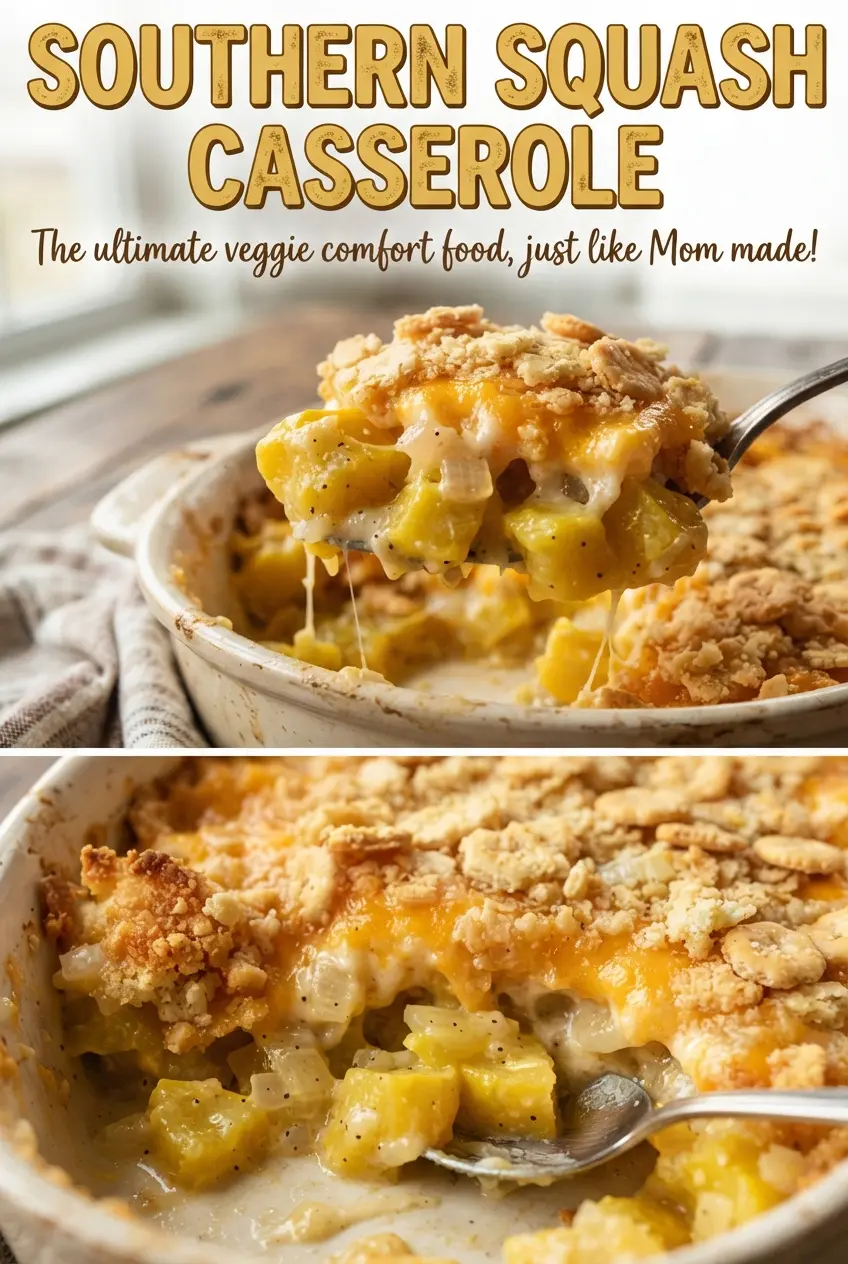
Southern Squash Casserole
Ingredients
Equipment
Method
- Preheat your oven to 350F and grease a 9x13-inch baking dish for easy release.
- In a skillet, cook the sliced yellow squash and diced onion in 2 tablespoons butter for 10-12 minutes, until tender.
- Drain the cooked squash and onion well in a colander to prevent watery casserole texture.
- In a bowl, mix the shredded sharp cheddar, sour cream, mayonnaise, beaten eggs, salt, and black pepper until combined.
- Fold the drained squash and onion into the cheese mixture, then spread it evenly in the prepared baking dish.
- Toss the crushed Ritz crackers with the melted butter, then sprinkle the buttery crumbs over the top for a crisp finish.
- Bake at 350F for 30-35 minutes, until the top is golden and the center is set.