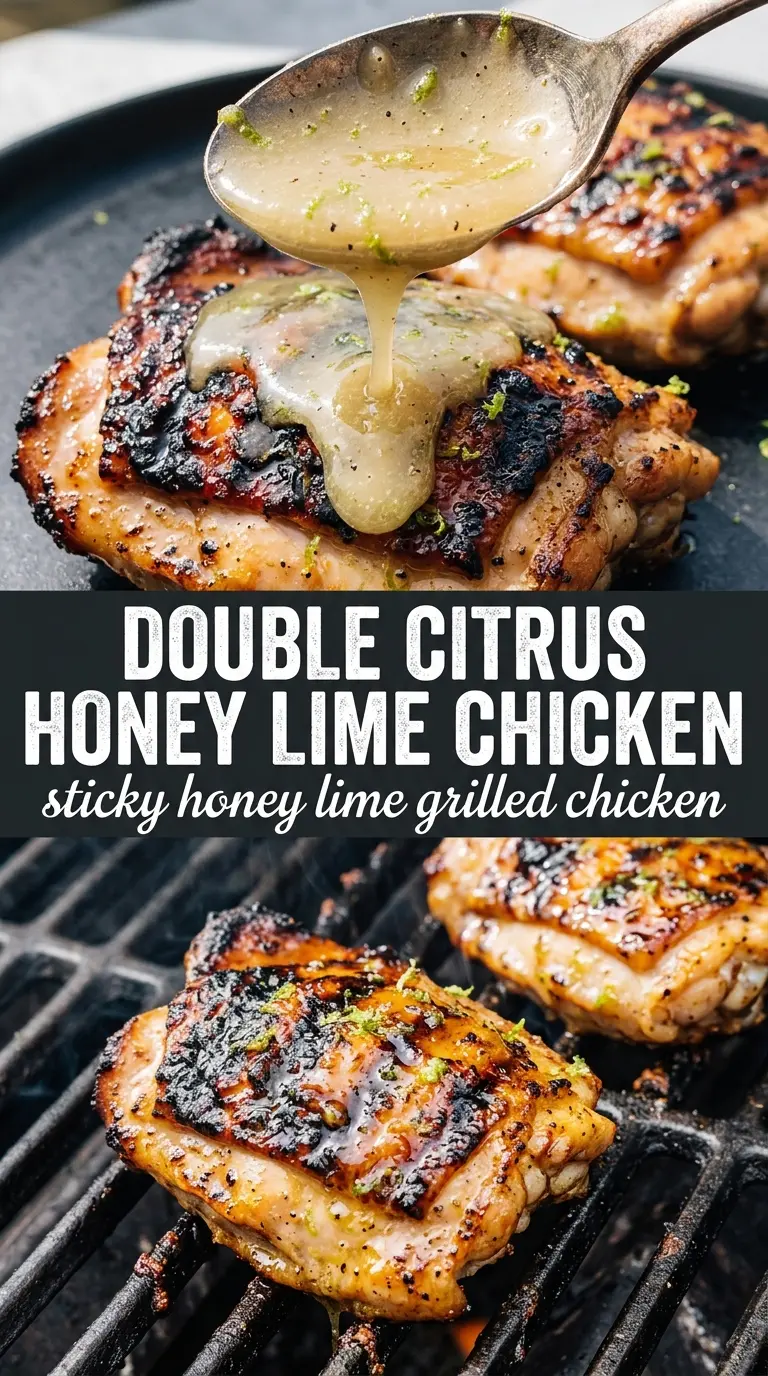
Sticky honey lime grilled chicken lands with that sweet-tart glaze that clings to the skin and turns glossy over the flame. The edges caramelize, the chicken stays juicy, and every bite tastes bright without tipping into sugary or sharp. It’s the kind of grilled dinner that gets passed around fast because the glaze does the heavy lifting.
What makes this version work is the balance in the marinade. Honey gives you the stickiness and browning, lime brings the lift, and the olive oil keeps the surface from drying out before the glaze has a chance to set. Using thighs or drumsticks helps a lot here, because dark meat stands up to the longer grill time and stays tender even as the exterior gets lacquered.
Below you’ll find the exact timing I use for basting without burning the glaze, plus a few smart swaps if you want to adjust the heat or make it work with what you already have in the kitchen.
The glaze thickened up beautifully on the grill and the lime kept it from tasting too sweet. I basted near the end like you said and the chicken came off sticky, shiny, and full of flavor.
Sticky Honey Lime Grilled Chicken brings caramelized edges, bright citrus, and a glossy glaze that’s worth saving for your next grill night.
The Reason This Glaze Sticks Instead of Sliding Off
The sticky part doesn’t happen by accident. Honey alone can scorch before it ever turns glossy, and lime juice alone can taste thin once it hits the grill. The trick is using both, plus a little oil, so the glaze caramelizes instead of drying into a brittle shell. That balance is what gives you chicken that looks lacquered, not burnt.
Marinating matters here, but not forever. One to four hours is enough for the lime, garlic, and spices to season the meat without turning the surface mushy. If you leave chicken in citrus overnight, the outside can start to lose its texture, especially with smaller pieces. That’s why this recipe keeps the acid in check and saves some of the marinade for basting instead of dumping it all on at once.
What Each Ingredient Is Actually Doing in the Marinade
- Honey — This is what turns the chicken glossy and sticky on the grill. It also helps with browning, but it burns fast if the heat is too high, so keep the grill at medium and baste toward the end.
- Lime juice and zest — Juice brings the bright acidity, while the zest carries the stronger lime aroma that survives the grill. If you only use juice, the flavor tastes flatter.
- Chicken thighs or drumsticks — Dark meat is the safer choice here because it stays juicy while the glaze develops. Drumsticks take a little longer than thighs, so cook to temperature instead of timing alone.
- Olive oil — It softens the marinade and helps the chicken brown evenly. If you skip it, the surface can dry before the sugars finish caramelizing.
- Cumin and chili powder — These keep the glaze from tasting one-note sweet. You don’t need much; they should support the lime and honey, not compete with them.
- Garlic — It rounds out the marinade and gives the glaze a little depth. Mince it finely so it disperses instead of clinging in little burnt bits on the grill.
Grilling the Chicken So the Glaze Turns Glossy, Not Burnt
Whisk the marinade and hold back a clean portion
Mix the honey, lime juice, zest, oil, garlic, cumin, chili powder, salt, and pepper until the honey loosens and the marinade looks smooth. Then pull out one-third of it before the chicken goes in. That reserved portion stays clean for basting, which matters because raw chicken marinade can’t safely be brushed on at the end unless it’s boiled first. If you skip that step, you lose the easiest way to build the sticky finish.
Give the chicken time to take on the flavor
Let the chicken sit in the marinade for at least one hour and up to four. You want the surface seasoned and lightly infused, not softened into a mealy texture. Thighs forgive a little extra time; drumsticks do too, but don’t push it much beyond four hours because the lime starts to take over. Pull the chicken out and let excess marinade drip off before it hits the grill so the sugars don’t flare up immediately.
Build the glaze in layers over medium heat
Preheat the grill to medium, not high. Medium heat gives the honey time to caramelize while the chicken cooks through, and it keeps the outside from blackening before the center reaches temperature. Lay the chicken on the grill and let it develop some color before the first baste, then brush with the reserved marinade and turn. Repeated light basting works better than flooding the chicken, which just cools the surface and makes the glaze slippery.
Finish by temperature, not by the clock
Keep grilling until the chicken reaches 165°F in the thickest part and the glaze looks thick and shiny. That glossy look usually shows up near the end, when the sugars have tightened and the skin or surface feels tacky instead of wet. If the glaze starts to darken too fast, move the chicken to a cooler part of the grill and finish there. Let it rest a few minutes, then add cilantro and lime wedges so the fresh citrus stays bright.
How to Adapt This Chicken for Different Nights at the Table
Use boneless chicken thighs for faster grilling
Boneless thighs cook faster and still stay juicy, which makes them the best swap when you need dinner on the table sooner. Cut the grilling time down and watch the glaze closely, because boneless pieces can overcolor before they’re done inside.
Make it dairy-free and gluten-free without changing a thing
This recipe already fits both, as long as your spices are plain and your chicken isn’t pre-seasoned with additives. That’s one reason it’s such an easy grill dinner for a mixed crowd.
Swap lime for lemon when that’s what you have
Lemon works, but the flavor comes out a little sharper and less tropical. Use the same amount of juice and zest, then taste the marinade before it goes on the chicken because lemon can make the sweetness feel more pronounced.
Turn up the heat with a little extra chili powder
If you want more kick, add another half teaspoon of chili powder or a pinch of cayenne. That gives the glaze more backbone without drowning out the lime, but go easy because too much heat can make the honey taste flatter.
Storage and Reheating
- Refrigerator: Store leftovers in an airtight container for up to 4 days. The glaze will set up more firmly once chilled.
- Freezer: Freeze cooked chicken for up to 2 months. Wrap tightly and freeze in portions so the glaze doesn’t get crushed when you thaw it.
- Reheating: Warm in a covered skillet over low heat with a splash of water, or reheat in a 325°F oven until just hot. High heat will dry out the chicken and turn the honey glaze sticky in the wrong way.
Questions I Get Asked About This Recipe
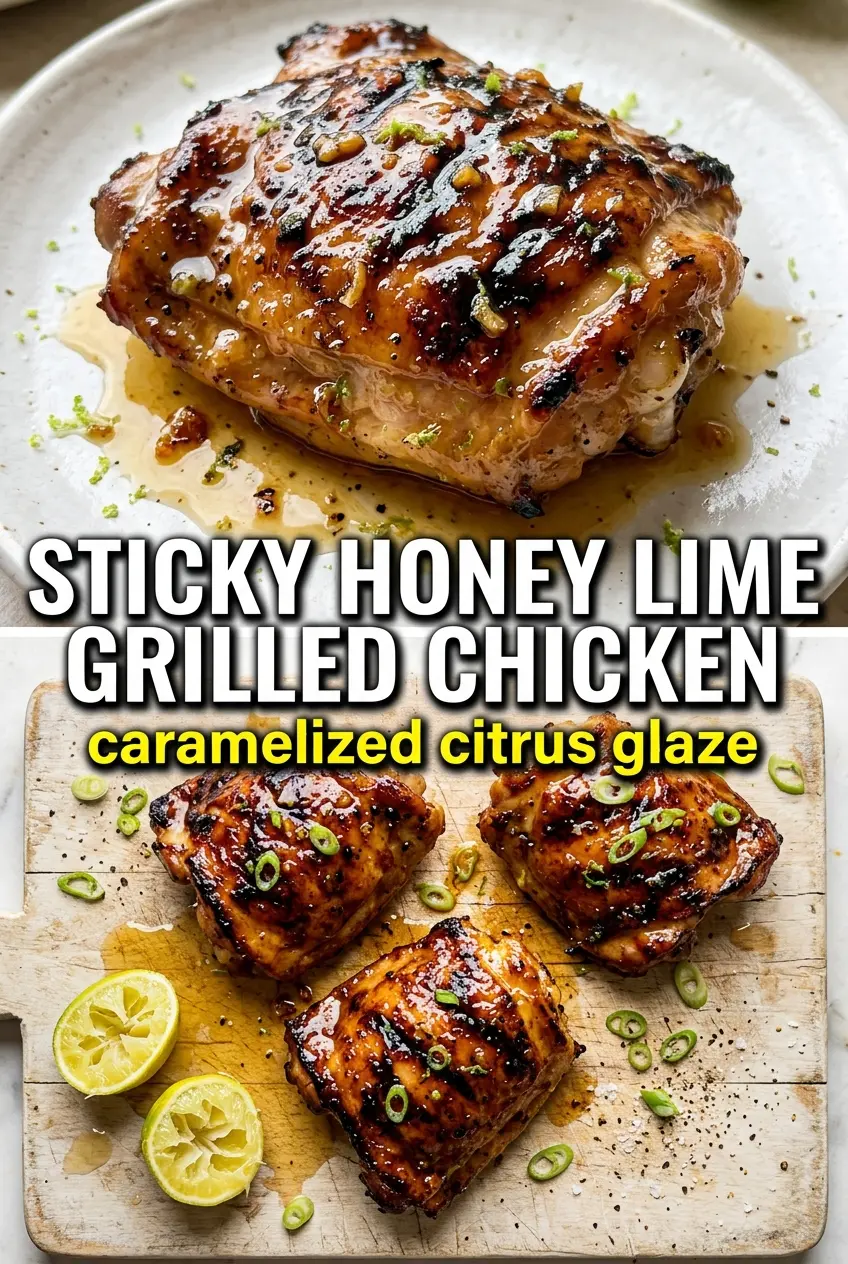
Sticky Honey Lime Grilled Chicken
Ingredients
Method
- Whisk together honey, lime juice, lime zest, olive oil, garlic, cumin, chili powder, salt, and pepper until the mixture looks smooth and glossy.
- Reserve 1/3 cup of the marinade in a separate container for basting, then keep the remaining marinade for the chicken.
- Add chicken to the marinade and coat all sides, then cover and refrigerate for 1-4 hours (visual cue: chicken should look evenly tinted).
- Preheat the grill to medium heat, keeping the grates hot and ready for searing.
- Place chicken on the grill and cook for 7-8 minutes per side, basting frequently with the reserved marinade (visual cue: surface starts to caramelize and shine).
- Continue grilling and basting until the internal temperature reaches 165°F and the glaze looks sticky and thick (visual cue: caramelized, glossy coating clings to the chicken).
- Transfer chicken to a platter and garnish with fresh cilantro and lime wedges for bright finishing color.