Perfectly grilled salmon earns its place in the regular dinner rotation because it gives you crisp skin, tender flakes, and clean smoky flavor without turning fussy or dry. The trick is leaving the fillet alone long enough for the skin to release on its own, then pulling it the moment the center turns opaque but still looks juicy. When that balance is right, the fish feels restaurant-level with almost no effort.
This version keeps the marinade short and sharp: olive oil for protection, lemon juice for brightness, Dijon for a little backbone, and garlic for depth. Fifteen minutes is enough for the surface to pick up flavor without the acid starting to cure the fish. The grill needs to be hot and well oiled, because salmon sticks when the grates are too cool or the fillet gets moved before the skin has a chance to crisp.
Below, I’ve included the one grilling detail that matters most, plus a few ways to adjust the recipe if your salmon fillets are thicker, thinner, or need to be cooked indoors instead.
The salmon released from the grill perfectly after about 7 minutes, and the skin came out crisp instead of sticking. The lemon-Dijon marinade was just right, not overpowering at all.
Save this grilled salmon for the nights when you want crisp skin, flaky fish, and a fast lemon-Dijon finish.
The Reason Salmon Sticks Before It Sees Grill Marks
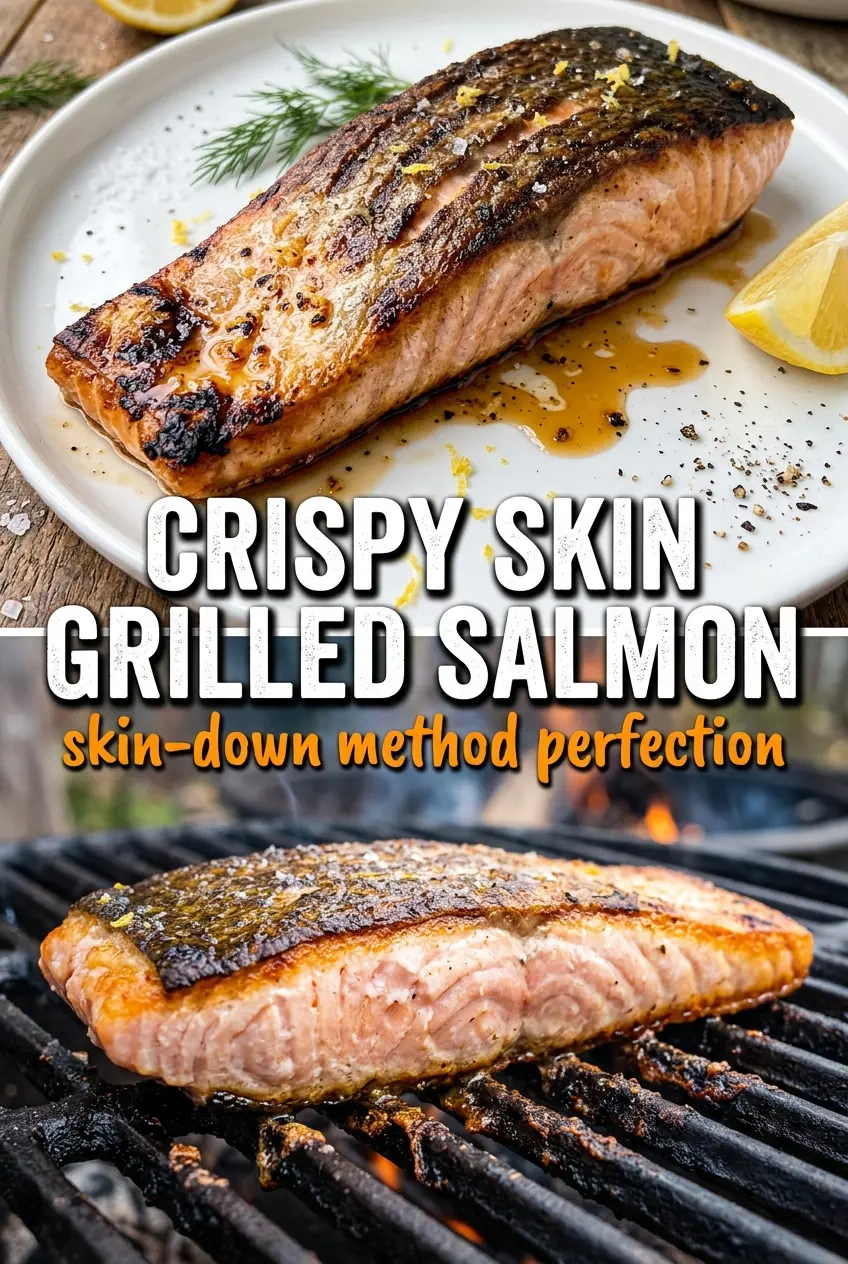
Most grilled salmon problems start before the fish ever hits the grates. If the grill isn’t hot enough, the skin doesn’t sear fast enough to release, and the fillet can tear when you try to move it. The other mistake is hovering over it too soon. Salmon needs a quiet first stretch on the grill so the skin can crisp and the flesh can firm up enough to turn cleanly.
- Skin-side down first — That gives you the best chance at crisp skin and a stable fillet. It also protects the delicate flesh from direct heat while the bottom sets.
- Don’t rush the flip — If the salmon still clings to the grate, it isn’t ready. When it’s ready, it lifts cleanly with a thin spatula instead of fighting back.
- Oil the grates, not just the fish — A slick on the grill grates helps prevent sticking in a way marinade alone can’t. Use a folded paper towel dipped in oil and held with tongs, then wipe the hot grates before the fish goes on.
- Watch the color change — The cooked portion turns opaque from the bottom up. Pull it when the center still looks slightly translucent if you want juicy salmon, or leave it a minute longer for a firmer finish.
What Each Ingredient Is Actually Doing in This Salmon
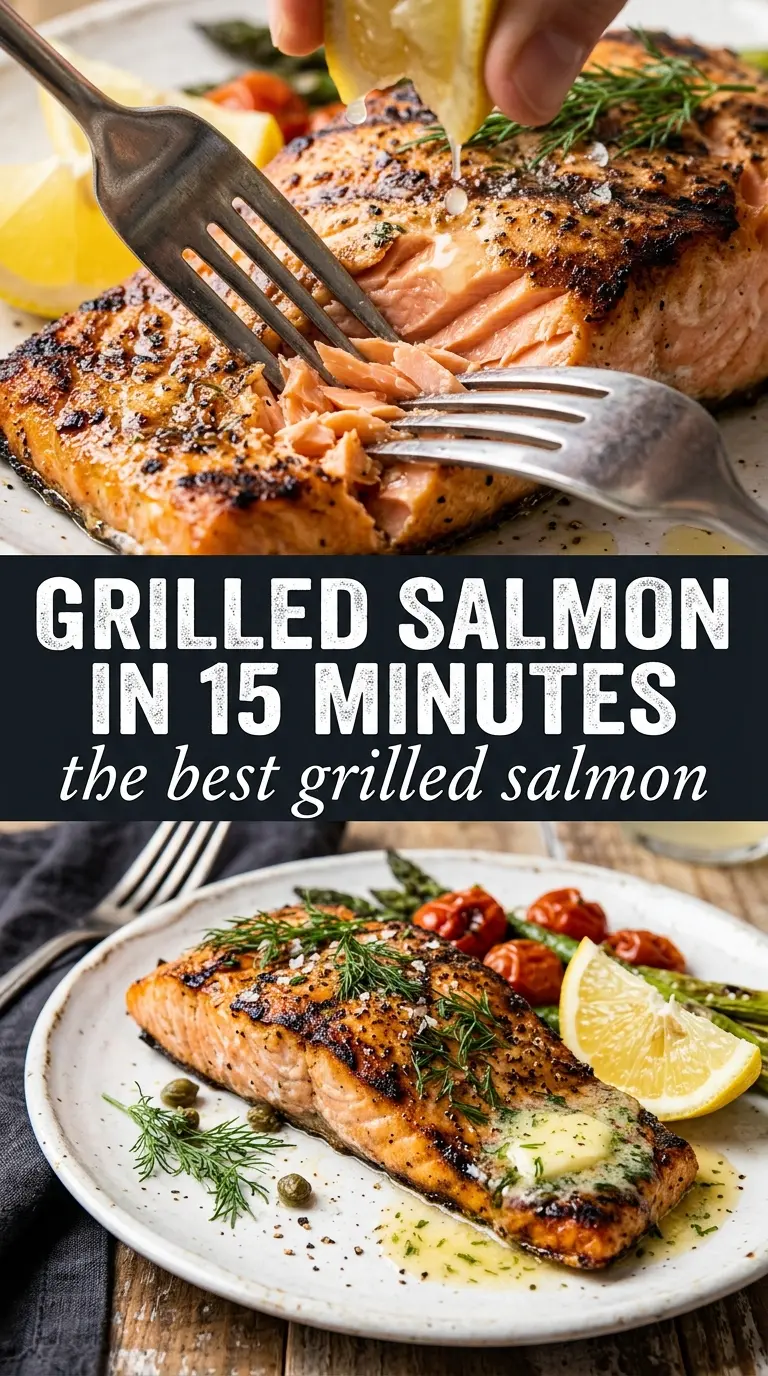
- Skin-on salmon fillets — Skin-on fillets hold together better on the grill and give you that crisp underside people look for in a great salmon dinner. If your fillets are uneven in thickness, tuck the thinner tail end under slightly so it doesn’t overcook before the thickest part is done.
- Olive oil — This keeps the marinade moving and helps the surface brown instead of drying out. A decent everyday olive oil is fine here; save the expensive finishing oil for the table.
- Lemon juice — Lemon brightens the fish and keeps the flavor clean. Don’t marinate much longer than 15 minutes, or the acid can start changing the texture on the surface.
- Dijon mustard — Dijon gives the marinade body so it clings to the fish instead of sliding off. It doesn’t make the salmon taste mustardy; it just adds a little sharpness that works with the dill later.
- Fresh dill — Dill is the herbal note that makes the whole plate taste finished. If you don’t have it, parsley works, but it won’t bring the same bright, slightly grassy edge.
Grilling the Salmon So the Skin Comes Off Crisp and Clean
Mixing the Marinade
Whisk the olive oil, lemon juice, garlic, Dijon, salt, and pepper until it looks slightly thickened and cohesive. That small bit of emulsifying matters because it helps the seasoning cling to the fish instead of pooling on the plate. The garlic should be minced fine so it doesn’t burn bitter on the grill.
Giving the Fish a Short Rest
Brush the salmon lightly with the marinade and let it sit for 15 minutes. That’s enough time for the surface to pick up flavor without crossing into mushy territory. If you leave it much longer, especially with extra lemon, the texture can start to change before it cooks.
Getting the First Side Right
Preheat the grill to medium-high and oil the grates well. Place the salmon skin-side down and don’t move it for 6 to 8 minutes. You’re looking for the flesh to turn opaque about two-thirds of the way up the fillet and for the skin to release with no tugging.
Finishing Without Drying It Out
Flip carefully and cook 2 to 3 minutes more, just until the center is done the way you like it. Salmon keeps cooking after it leaves the grill, so pulling it when it still looks a touch underdone in the middle usually gives the best final texture. Serve it right away with dill and lemon wedges so the flavor stays bright.
How to Adjust This Grilled Salmon for Different Kitchens
Oven-Broiled Salmon
If the grill isn’t cooperating, broil the salmon skin-side down on an oiled sheet pan about 6 inches from the heat. It won’t have the same smoky edge, but the high heat still gives you crisp skin and fast cooking, which is what matters most here.
No-Dairy, Naturally
This recipe already works without dairy, so there’s nothing to remove. That’s one reason it holds up well for a crowd with different diets — the richness comes from the salmon and olive oil, not cream or butter.
Swap the Herbs
Dill is classic, but parsley, chives, or a little tarragon will change the finish in useful ways. Parsley keeps it clean, chives add a mild onion note, and tarragon makes the lemon taste more pronounced.
How to Serve It for Meal Prep
Grilled salmon keeps well for lunch the next day if you cook it just to medium, not past that. Reheat it gently in a low oven or eat it chilled over greens, because aggressive reheating dries out the flakes and makes the skin lose its crunch.
Storage and Reheating
- Refrigerator: Store in an airtight container for up to 3 days. The skin softens in the fridge, but the fish stays flaky if you don’t overcook it first.
- Freezer: Cooked salmon freezes reasonably well for up to 2 months, wrapped tightly and sealed. Thaw overnight in the refrigerator for the best texture.
- Reheating: Warm gently in a 275°F oven until just heated through. High heat dries salmon out fast, and the microwave tends to make the edges tough before the center is warm.
Answers to the Questions Worth Asking
The Best Grilled Salmon
Ingredients
Equipment
Method
- Mix olive oil, lemon juice, garlic, Dijon mustard, salt, and pepper in a small bowl until smooth and evenly combined. The mixture should look glossy and uniform.
- Brush the salmon with the marinade and let it sit for 15 minutes. Cover or keep it chilled if your kitchen is warm.
- Preheat the grill to medium-high heat and oil the grates well so the skin releases cleanly. Wait until the grill is hot before adding the fish.
- Place the salmon skin-side down on the grill. Add the fillets without moving them to set the skin for crisp edges.
- Grill skin-side down for 6-8 minutes without moving. Look for pronounced grill marks and set edges while the center stays slightly translucent.
- Carefully flip the salmon and grill for 2-3 minutes until cooked to desired doneness. It should flake easily with a fork and no longer look raw in the center.
- Serve the grilled salmon with fresh dill and lemon wedges. Garnish over the top for bright flavor and aroma.