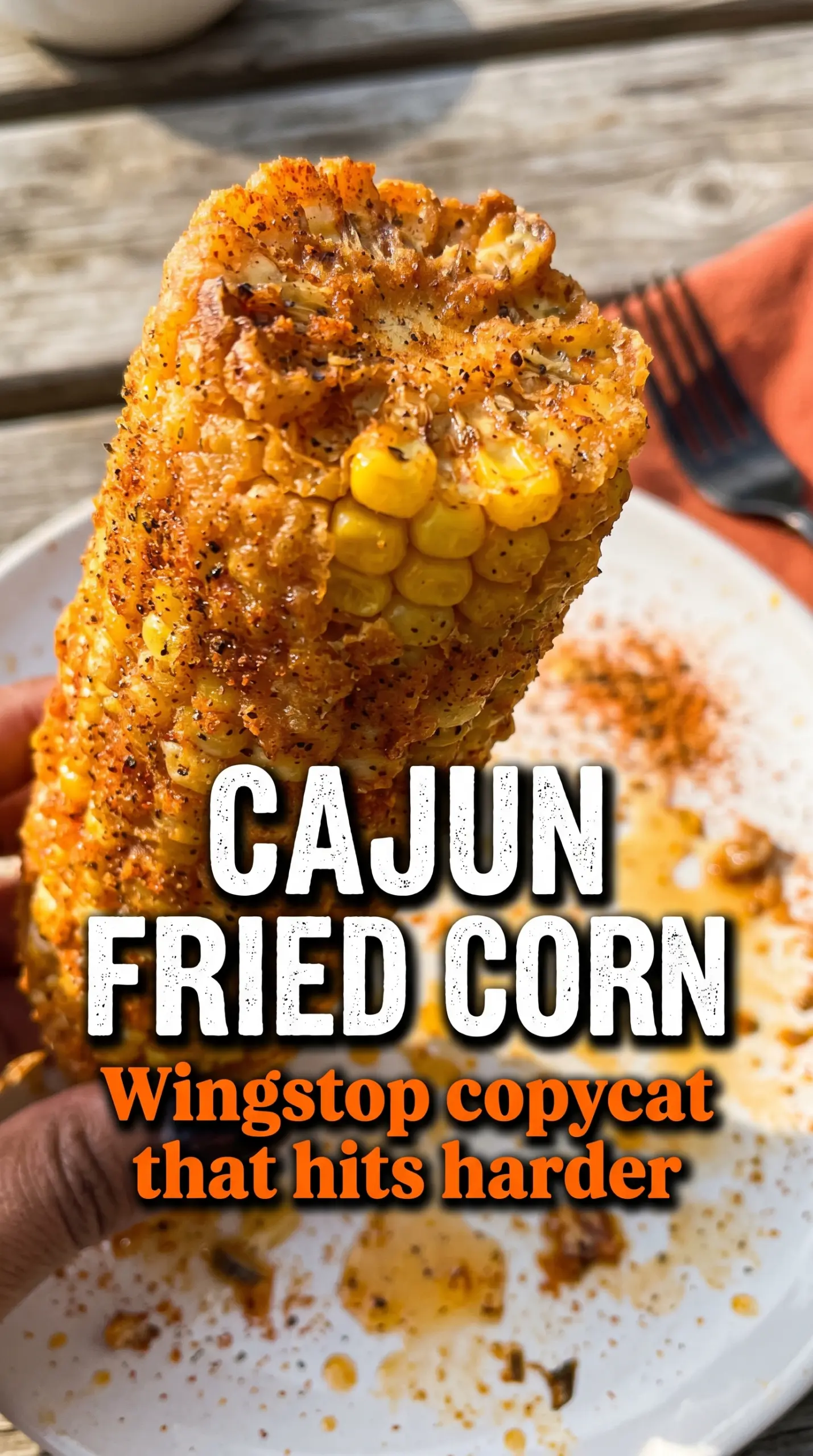
Wingstop-style Cajun fried corn has the kind of crunch that makes people reach for a second piece before they’ve finished the first. The kernels blister and pop in hot oil, the edges turn lacy and crisp, and the Cajun seasoning clings to every ridge instead of sliding off into the plate. What you get is sweet corn with a fried shell and a smoky, peppery finish that tastes straight out of a restaurant basket.
The part that makes this work is dryness and heat. Corn holds a lot of moisture in the crevices between kernels, and if it goes into the oil damp, it spits hard and steams instead of frying. Cutting the ears into thirds gives you manageable pieces that cook evenly and are easy to toss in seasoning while they’re still hot enough for the butter to coat.
Below I’m walking through the little details that matter: how to keep the oil steady at 375°F, why the spice blend goes on after frying, and how to keep the crust crisp if you’re serving this alongside other dishes. It’s a simple recipe, but the difference between good and great comes down to a few careful steps.
The corn came out blistered and crisp on the outside, and the seasoning stuck right away because I tossed it while it was still hot. Even reheated, it held onto that fried texture better than I expected.
Save this Wingstop Cajun fried corn for the next time you want blistered, spicy corn with a crispy restaurant-style finish.
The Trick Is Frying the Corn Dry, Not Seasoning It Early
With fried corn, the biggest mistake happens before the corn even hits the oil. If there’s moisture on the surface, the oil splatters harder and the corn steams at the edges instead of blistering into that lacy crust you’re after. Drying the pieces well and frying in batches keeps the temperature high enough for the kernels to brown instead of absorb oil.
The seasoning belongs at the end for a reason. Cajun spice, smoked paprika, garlic powder, and onion powder can scorch if they go into the fryer, but they cling beautifully once the corn comes out hot. That final toss also lets you control the salt better, because some Cajun blends are already salty and some barely are.
- Corn on the cob — Fresh ears give you the sweetest result and the best texture after frying. If you use frozen corn on the cob, thaw it completely and dry it aggressively, or the oil will pop and the coating won’t set as cleanly.
- Cajun seasoning — This is the main flavor driver, so pick one you actually like on its own. If yours is heavy on salt, hold back and finish to taste after tossing.
- Smoked paprika — Adds the little smoky depth that makes the corn taste more like a restaurant copycat than plain spiced corn. Regular paprika works in a pinch, but you’ll lose some of that round, smoky finish.
- Butter — The butter isn’t just for richness; it helps the seasoning stick to every blistered kernel. Brush it on while the corn is still hot so it melts into the spice instead of pooling underneath.
What Each Ingredient Is Actually Doing in This Corn Dish
- Fresh corn (the star vegetable) — Use the freshest corn available. Peak season (summer) tastes best.
- Butter (the flavor carrier) — This clings to corn and carries seasonings. Room temperature spreads easier.
- Seasonings (salt, pepper, spices) — Apply generously. Build flavor boldly so it stands out.
- Optional cheese (cotija, parmesan, or cheddar) — This adds umami depth. Crumble for even distribution.
- Acid (lime juice or vinegar) — This prevents the dish from tasting one-dimensional. Essential for fresh flavor.
- Herbs and aromatics (cilantro, garlic, or chili powder) — These add personality. Balance so nothing overpowers.
- Proper cooking (gentle heat, don’t overboil) — Overcooked corn becomes mushy. Stop while still tender-crisp.
- Grilling or foil method (if using) — This adds flavor through caramelization. Creates smokiness and depth.
Frying the Corn Until It Blisters, Not Burns
Heating the Oil Properly
Bring the oil to 375°F and give it a minute to settle there before you add any corn. If the oil is too cool, the pieces soak it up and come out greasy. If it’s too hot, the seasoning later can taste harsh and the kernels can darken before the interior has any chance to heat through.
Drying and Loading the Basket
Pat every piece of corn until it feels dry on all sides, then lower it into the oil carefully in batches. Crowding the pot drops the temperature fast and keeps the crust from forming properly. You want steady bubbling around each piece, not a violent boil that churns the oil and cools everything down.
Watching for the Right Color
Fry for 5 to 7 minutes, turning once halfway through, until the kernels are blistered, spotted deep gold, and look slightly wrinkled in places. The corn should still look juicy, not shriveled. If the color is pale, give it another minute; if the oil is smoking hard, turn the heat down before you add the next batch.
Seasoning While It’s Hot
Drain the corn briefly on paper towels, then toss it right away with the spice mix and brush on melted butter. Hot corn grabs seasoning better than warm corn, and the butter helps the powdery spices cling instead of falling to the plate. Taste one piece first, then add a little more salt only if it needs it.
Three Ways to Make This Fried Corn Fit What You’ve Got
Air Fryer Style, Without the Deep Fry
You can brush the corn lightly with oil and air fry it, but the crust won’t be as lacy or as blistered as the deep-fried version. The result is still flavorful and a little lighter, with more of a roasted edge than a true fry. Use the same seasoning finish so the flavor stays close to the original.
Gluten-Free and Naturally Corn-Forward
This recipe is already gluten-free as written, as long as your Cajun seasoning blend is certified gluten-free. That matters because some spice mixes use anti-caking agents or hidden additives. Check the label if you’re serving someone with celiac disease, then keep the rest of the recipe exactly the same.
Less Heat, Same Crunch
If you want the texture but not the spice burn, cut the Cajun seasoning back and lean harder on smoked paprika, garlic powder, and onion powder. You’ll get more smoky-salty flavor and less pepper heat, which is the better move if you’re serving kids or a mixed crowd. The frying method stays the same, so the crunch doesn’t change.
Storage and Reheating
- Refrigerator: Store leftovers in an airtight container for up to 3 days. The crust softens in the fridge, but the flavor stays good.
- Freezer: I don’t recommend freezing this one. The corn loses its crisp edges and turns watery when thawed.
- Reheating: Reheat on a sheet pan in a hot oven or air fryer until the exterior tightens back up. Skip the microwave if you want any chance of keeping the fried coating intact.
Answers to the Questions Worth Asking
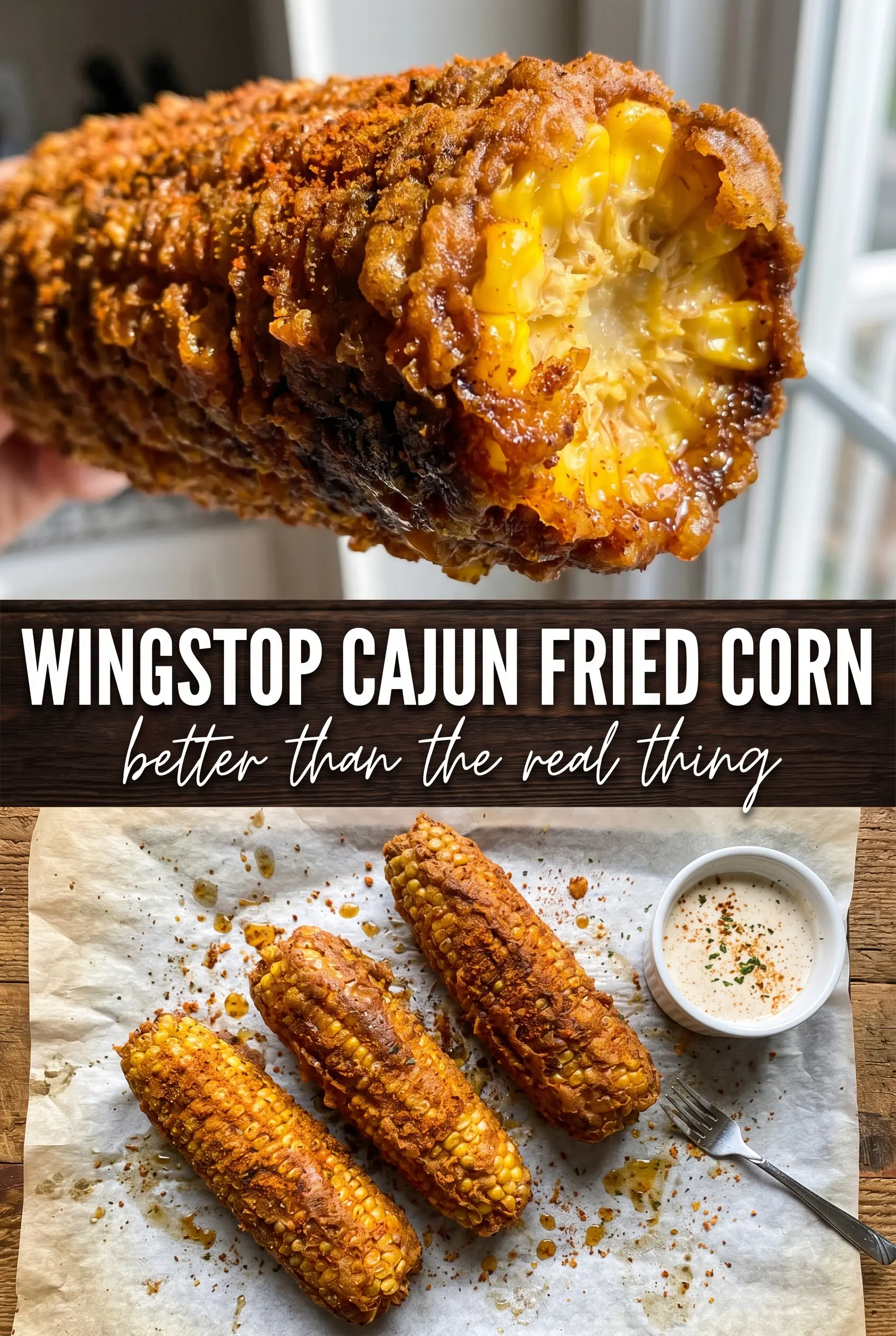
Wingstop Cajun Fried Corn
Ingredients
Equipment
Method
- Heat vegetable oil in a deep pot or Dutch oven to 375°F, keeping the oil steady at that temperature (use a thermometer if you have one). The oil should shimmer and be hot enough that a small test kernel sizzles immediately.
- Pat corn pieces completely dry with paper towels, pressing gently to remove surface moisture. This prevents splattering when the corn hits the oil.
- Carefully lower corn pieces into the hot oil in batches—do not overcrowd the pot. Keep them submerged and allow the oil temperature to recover between batches.
- Fry for 5–7 minutes until the kernels are blistered and golden all over, turning once halfway. Look for an evenly lacy, golden surface before removing.
- Remove with tongs and drain on a paper towel-lined plate. Let excess oil drip for a moment so the crust stays crisp.
- Mix Cajun seasoning, smoked paprika, garlic powder, and onion powder in a bowl. Stir until the blend looks evenly colored.
- Toss the hot corn in the spice blend until every surface is coated. The seasoning should cling right away while the corn is still steaming hot.
- Finish with a brush of melted butter before serving. The butter adds shine and helps the crust hold together.