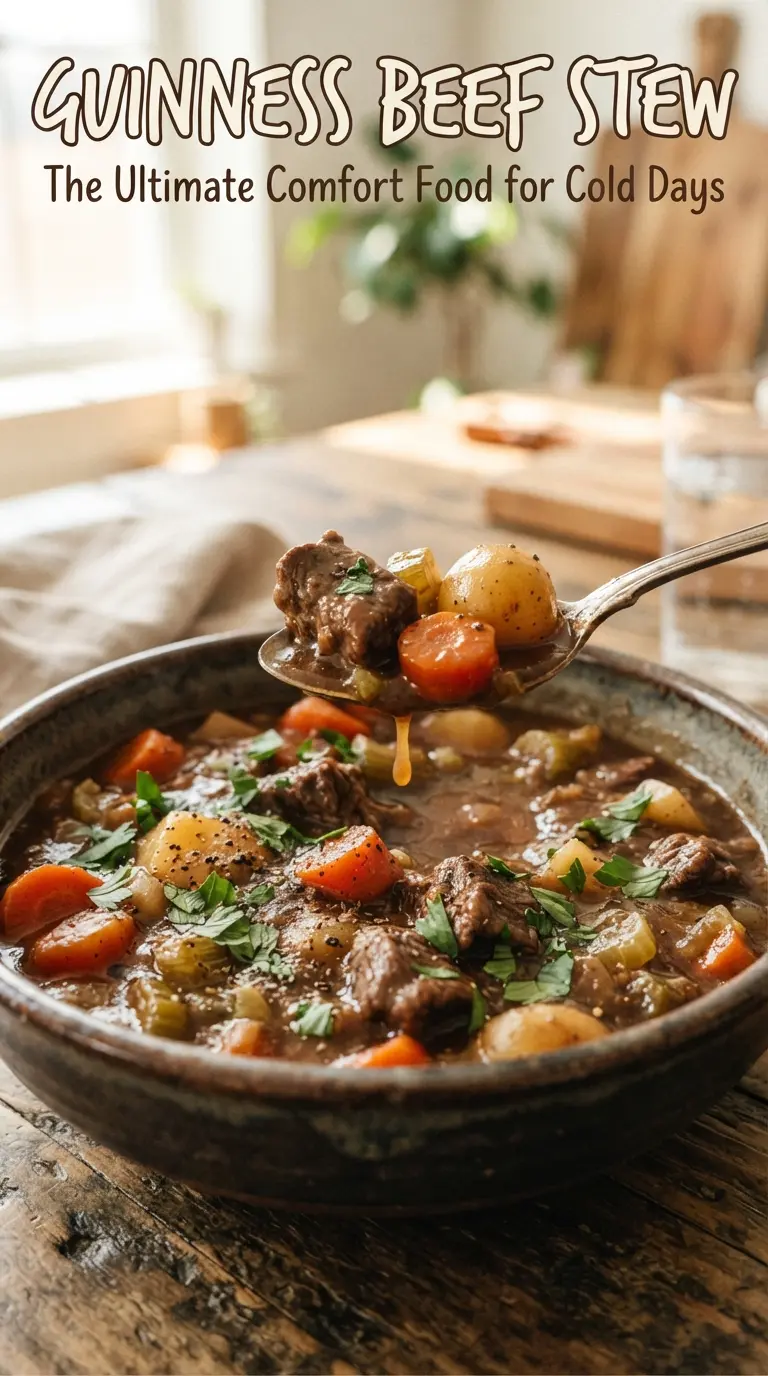
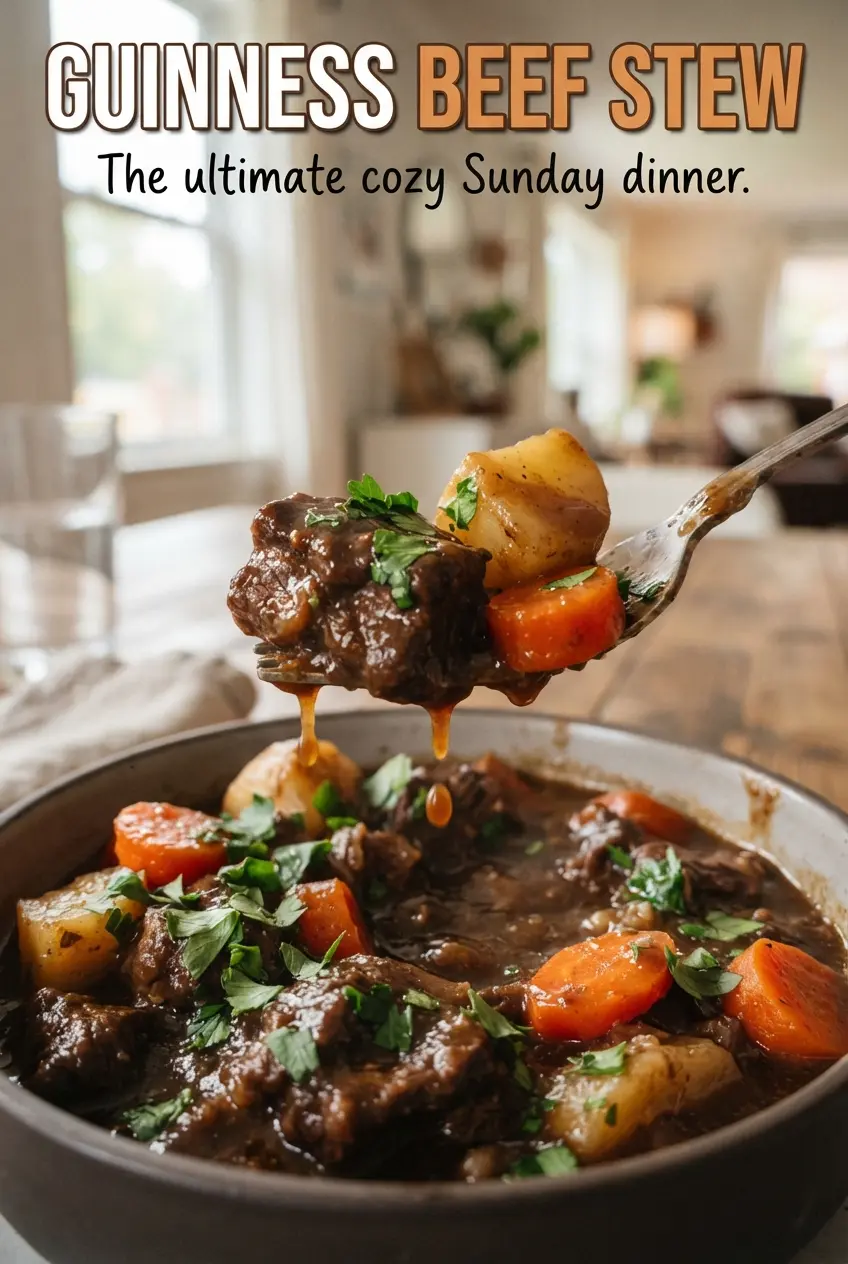
Deep brown, glossy Guinness beef stew earns its place in the cold-weather rotation because the broth tastes like it simmered all day, and the beef turns spoon-tender without falling apart into shreds. The stout brings a roasted, malty backbone that makes the whole pot taste fuller and more layered than a standard beef stew, while the carrots, parsnips, and potatoes soak up every bit of that rich gravy.
The trick is to build flavor in stages instead of dumping everything in at once. Browning the beef first gives you the savory crust that turns into the base of the sauce, and scraping the bottom after the Guinness goes in pulls up those browned bits before they have a chance to burn. Tomato paste adds body, Worcestershire sharpens the edges, and a small spoon of brown sugar rounds out the bitterness from the stout without making the stew sweet.
Below, I’ve laid out the part that matters most: how to get the stew thick, not muddy, and how to add the vegetables so they hold their shape instead of dissolving into the pot.
The stew had the deepest color and the gravy thickened beautifully after the flour on the beef did its job. I added the potatoes at the end like you said, and they stayed intact instead of turning mushy. My husband went back for seconds and asked if there was more for lunch tomorrow.
Save this Guinness beef stew for the nights when you want a deep, stout-rich broth and tender beef with almost no cleanup after dinner.
The Secret to Rich Guinness Stew Is Not More Beer
Too much stout can make beef stew taste harsh or thin instead of deep and round. The bottle gives you the roasted edge, but the broth, browned beef, and long gentle simmer do the actual work of turning it into a proper stew. That’s why this version uses only one bottle and balances it with beef broth, tomato paste, Worcestershire, and a little brown sugar.
The other common failure is heat. If the stew boils hard, the beef tightens up and the vegetables collapse before the sauce has a chance to concentrate. A quiet simmer keeps the liquid moving just below a bubble, which is exactly what you want for turning chuck into something you can cut with a spoon.
- Beef chuck — This is the cut that gives you tender, beefy stew meat after a long simmer. Leaner cuts dry out or go stringy before the pot is done.
- Flour — The flour helps thicken the broth as the stew cooks and gives the beef a light coating that browns better in the pan. If you need gluten-free, use a 1:1 gluten-free flour blend.
- Guinness stout — This is where the dark, roasty character comes from. Use the real stout, not a dark lager; you want the bitterness and malt backbone, even though the flavor mellows a lot as it cooks.
- Parsnips — They add a gentle sweetness that works with the stout. If you don’t have them, use extra carrots, but the stew will taste a little less layered.
- Potatoes — Waxy or all-purpose potatoes hold their shape best. Russets will break down faster and thicken the stew more, which is fine if you want a looser, starchier finish.
What Each Ingredient Is Actually Doing in This Recipe
- Primary ingredient (the star) — Quality matters most. Choose the best you can find.
- Cooking medium (oil, butter, or broth) — This carries flavors and prevents dryness.
- Seasonings (salt, pepper, spices, herbs) — Layer flavors so nothing overpowers. Build depth gradually.
- Aromatics (garlic, onion, herbs) — Cook with fat to bloom flavors. Become the foundation.
- Supporting ingredients — Complement the main ingredient without overpowering it.
- Sauce or liquid (if applicable) — Brings flavors together. Balance richness with acid.
- Acid (lemon, vinegar, wine, or other) — Brightens and prevents flat-tasting results.
- Final finish (garnish, glaze, or sauce) — Prevents one-dimensional taste and adds visual appeal.
Building the Pot in the Right Order
Browning the Beef Without Crowding the Pan
Season the beef, toss it with the flour, and brown it in hot oil in batches. You want a deep brown crust on the outside, not pale gray meat that only looks cooked. If you crowd the pan, the meat steams and the flour turns pasty instead of toasty, which leaves the stew flat from the start. Each batch should leave browned bits stuck to the pan; those bits are part of the sauce later.
Cooking Down the Aromatics
Add the onions to the same pot and cook them until they soften and pick up some of the fond from the bottom. Stir in the garlic and tomato paste and give them about a minute so the paste darkens slightly and stops tasting raw. If the paste sticks too hard or starts to scorch, lower the heat; burnt tomato paste makes the whole pot taste bitter.
Turning the Bottom of the Pot Into the Gravy
Pour in the Guinness and scrape the bottom thoroughly with a wooden spoon. The liquid should loosen every browned bit left from the beef, because that is where a lot of the stew flavor lives. Add the broth, Worcestershire, brown sugar, thyme, and bay leaves, then return the beef to the pot. Bring it just to a simmer, cover, and keep the heat low enough that you only see the occasional lazy bubble at the edge.
Adding the Vegetables Late Enough to Stay Intact
After the beef has simmered for about two hours, add the carrots, parsnips, and potatoes. They only need long enough to turn tender, not long enough to collapse into the broth. If you add them at the beginning, they give up too much starch and lose their shape before the beef is done. Keep the simmer gentle until the vegetables are cooked through and the beef feels fork-tender.
How to Adapt This Guinness Stew for Different Pots and Needs
Make it gluten-free
Swap the all-purpose flour for a gluten-free 1:1 blend and check that your Worcestershire sauce is gluten-free. The stew will still thicken nicely, though the sauce may look a little looser until it cools slightly.
Skip the parsnips
Use more carrots or a mix of carrots and celery if parsnips are hard to find. You’ll lose a little of the sweet-earthy note that makes the stew taste rounder, but the pot will still be rich and satisfying.
Use a Dutch oven or slow cooker
A Dutch oven gives the best flavor because you can brown the meat and build the sauce in one pot. For a slow cooker, still brown the beef and cook the onions first; otherwise the stew tastes flatter and the broth won’t have the same depth.
Storage and Reheating
- Refrigerator: Keeps well for 4 days. The flavor deepens overnight, and the sauce thickens as it chills.
- Freezer: Freezes well for up to 3 months. Cool it completely first, then portion it into airtight containers; the potatoes soften a little after thawing, but the stew still reheats nicely.
- Reheating: Warm it gently on the stove over low heat with a splash of broth or water if needed. Don’t boil it hard, or the beef can toughen and the potatoes can start to break apart.
Questions I Get Asked About This Recipe
Guinness Beef Stew
Ingredients
Equipment
Method
- Season the beef chuck cubes with salt and black pepper, then toss with the all-purpose flour until lightly coated. Visual cue: the meat looks dry and lightly dusted with flour.
- Heat the vegetable oil in a Dutch oven over medium-high heat, then brown the beef in batches for about 3–5 minutes per batch. Visual cue: deep brown crust forms on the beef before removing.
- Add the onions to the pot and cook for 5 minutes, stirring, until softened. Visual cue: the onion edges turn translucent and lightly golden.
- Add the garlic and tomato paste and cook for 1 minute, stirring constantly, until fragrant. Visual cue: the tomato paste darkens slightly.
- Pour in the Guinness stout and scrape the bottom of the Dutch oven to release browned bits. Visual cue: the mixture turns nearly black and glossy as it simmers briefly.
- Add the beef broth, Worcestershire sauce, brown sugar, dried thyme, and bay leaves, then return the browned beef to the pot. Visual cue: the liquid comes back to a gentle simmer around the meat.
- Cover and simmer gently at 180°C (350°F) for 2 hours. Visual cue: the beef becomes very tender and the gravy thickens slightly.
- Add the carrots, parsnips, and potatoes, then cover and simmer for 45–60 minutes until all vegetables are tender. Visual cue: a fork slides easily into a potato cube.
- Remove the bay leaves and sprinkle with fresh parsley before serving. Visual cue: bright green parsley flecks sit on top of the dark stew.