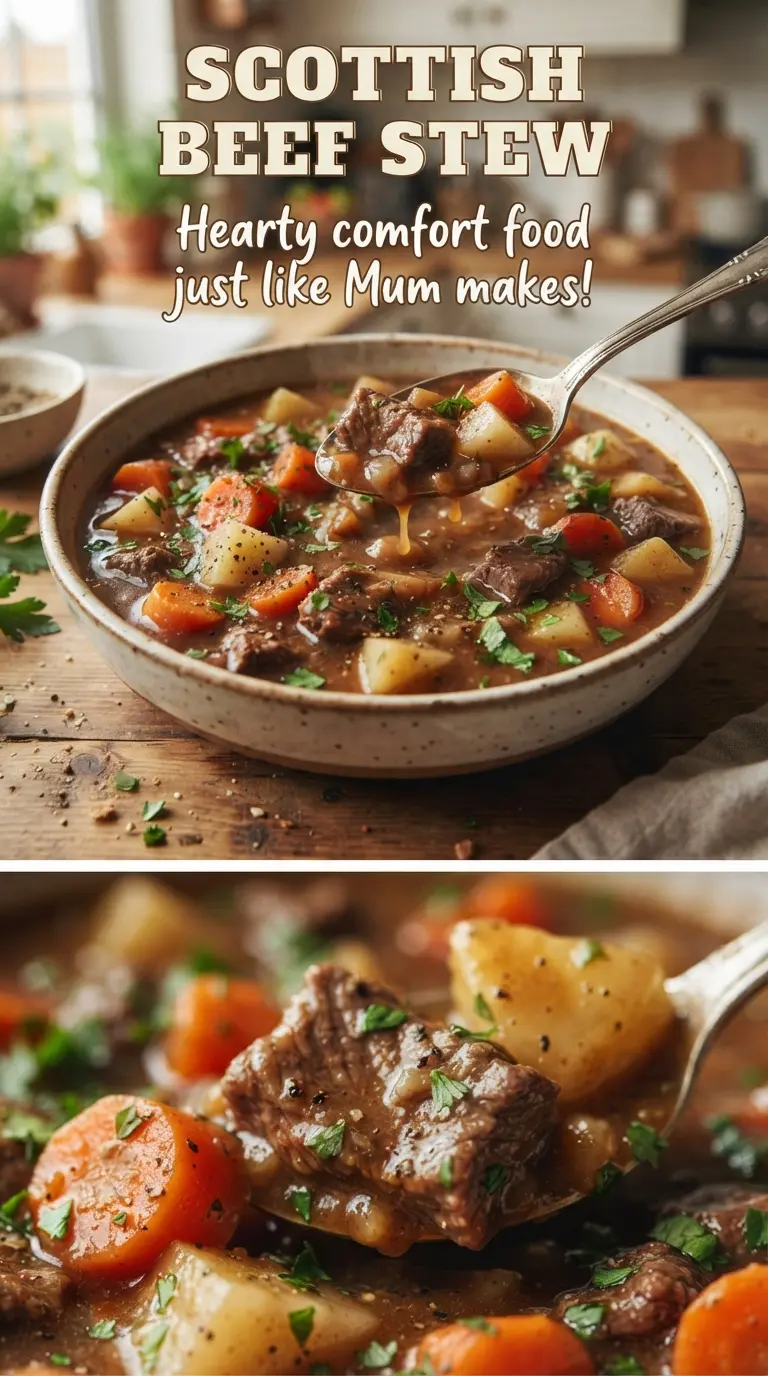
Deep, brown gravy clinging to tender beef, soft leeks, and pearl barley is what makes Scottish beef stew worth putting on repeat. It eats like a full meal in one bowl, with the broth simmered down until it turns velvety and the vegetables give the stew a rooty sweetness that balances the meat. The barley matters here. It thickens the pot naturally and gives every spoonful a little chew, which is exactly what keeps this stew from feeling thin or one-note.
The key is building the flavor in layers instead of dumping everything in at once. Browning the beef in batches gives you the base, and deglazing with Scottish ale or broth pulls every bit of that browned fond into the stew. The long simmer does the rest, turning chuck into something spoon-tender while the barley swells and the turnip and carrots soften without collapsing.
Below, I’ve included the small timing details that keep the barley from turning mushy and the stew from tasting flat. There’s also a note on the best swap if you don’t have Scottish ale on hand, plus a couple of ways to stretch this into a make-ahead dinner that holds up beautifully the next day.
The stew thickened up beautifully once the barley went in, and the beef was fork-tender without falling apart. I used the ale, and the gravy had this deep, rich taste that felt restaurant-level.
Scottish beef stew keeps its rich gravy and tender barley even after a long simmer, so it’s perfect for a make-ahead dinner.
The reason the beef stays tender instead of stringy
The mistake that ruins a lot of beef stews is rushing the simmer. Chuck needs time for the collagen to melt, and that happens slowly over low heat. If the pot boils hard, the outside of the meat tightens before the inside has time to soften, and you end up with beef that tastes cooked but still chews like pot roast that missed the memo.
Flouring the beef before browning does two jobs at once. It helps the cubes develop a deeper crust, and it gives the stew a little body once the flour cooks into the liquid. Brown the meat in batches so the pan stays hot. If you crowd it, the beef steams, the fond never develops, and the stew loses the dark, savory base that makes this dish taste finished.
- Beef chuck — This is the cut that earns its keep here. It has enough connective tissue to turn silky during the long simmer. Lean stew meat can work, but it tends to dry out sooner and gives you a less lush result.
- Scottish ale — The ale adds malt depth and a faint sweetness that plays well with the barley. If you don’t want alcohol in the pot, use extra beef broth plus a teaspoon of balsamic vinegar for a similar dark edge, though the flavor will be a little less rounded.
- Pearl barley — This is what turns the stew into a hearty, spoon-coating bowl. Rinse it first so you don’t dump excess starch into the pot. Quick-cooking barley works in a pinch, but add it later and watch the texture closely because it softens much faster.
- Turnip or swede — This brings a sturdy, slightly sweet flavor that holds up through the long cook. Swede, which is often called rutabaga, is the better swap if you want a more traditional earthy note. Cut it into even cubes so it softens at the same pace as the carrots.
What Each Ingredient Is Actually Doing in This Recipe
- Primary ingredient (the star) — Quality matters most. Choose the best you can find.
- Cooking medium (oil, butter, or broth) — This carries flavors and prevents dryness.
- Seasonings (salt, pepper, spices, herbs) — Layer flavors so nothing overpowers. Build depth gradually.
- Aromatics (garlic, onion, herbs) — Cook with fat to bloom flavors. Become the foundation.
- Supporting ingredients — Complement the main ingredient without overpowering it.
- Sauce or liquid (if applicable) — Brings flavors together. Balance richness with acid.
- Acid (lemon, vinegar, wine, or other) — Brightens and prevents flat-tasting results.
- Final finish (garnish, glaze, or sauce) — Prevents one-dimensional taste and adds visual appeal.
Building the pot in the right order
Browning the Beef First
Season the beef, toss it in flour, and brown it in batches in the butter and oil. You’re looking for a dark, crisp surface on the outside, not a gray layer all over. Leave space between the pieces so they sear instead of steam. If the flour starts to burn, the heat is too high, so lower it a touch and keep the batches moving.
Softening the Onion and Leek Base
Cook the onions and leeks in the same pot until they turn soft and glossy, about 6 minutes. They should pick up a little color from the browned bits stuck to the bottom, but not go deeply brown themselves. This stage sweetens the stew and helps dissolve the fond without scraping so hard that you leave the good flavor behind.
Letting the Simmer Do the Heavy Lifting
Add the ale and scrape the bottom until the pot is clean, then stir in the broth, Worcestershire sauce, thyme, and beef. Cover and simmer gently for 1 1/2 hours. The liquid should move with the smallest lazy bubble, not a rolling boil. Hard boiling is the fastest way to make the beef seize up before it softens.
Adding the Barley and Vegetables at the End
Stir in the barley, turnip, and carrots, then simmer 45 to 60 minutes more until the barley is tender and the beef gives way easily with a spoon. If you add the barley too early, it drinks up too much liquid and turns heavy before the meat is done. Near the end, taste the broth and adjust the salt and pepper only after the vegetables have softened, because the stew concentrates as it finishes.
How to adapt this stew without losing what makes it work
Skip-the-ale version
Use an extra cup of beef broth in place of the ale and add 1 teaspoon balsamic vinegar or a splash of malt vinegar. You’ll lose a little malt sweetness, but the stew still gets the dark, savory depth it needs.
Gluten-free adjustment
Swap the all-purpose flour for a gluten-free flour blend that can brown well, or skip the coating and dust the finished stew lightly with a cornstarch slurry if you want a thicker broth. The texture will be a touch less rustic, but the flavor stays intact.
More vegetables, same balance
You can add parsnips or celery root with the carrots and turnip for a sweeter, more aromatic finish. Keep the total vegetable volume close to the original so the stew doesn’t start tasting like a mixed vegetable soup.
Storage and Reheating
- Refrigerator: Store for up to 4 days. The broth thickens as it chills, and the barley will keep absorbing liquid.
- Freezer: It freezes well for up to 3 months. Cool it completely, portion it into airtight containers, and leave a little headspace for expansion.
- Reheating: Warm it gently on the stove over low heat with a splash of broth or water. Don’t boil it hard or the barley can split and the beef can dry out at the edges.
Answers to the questions worth asking
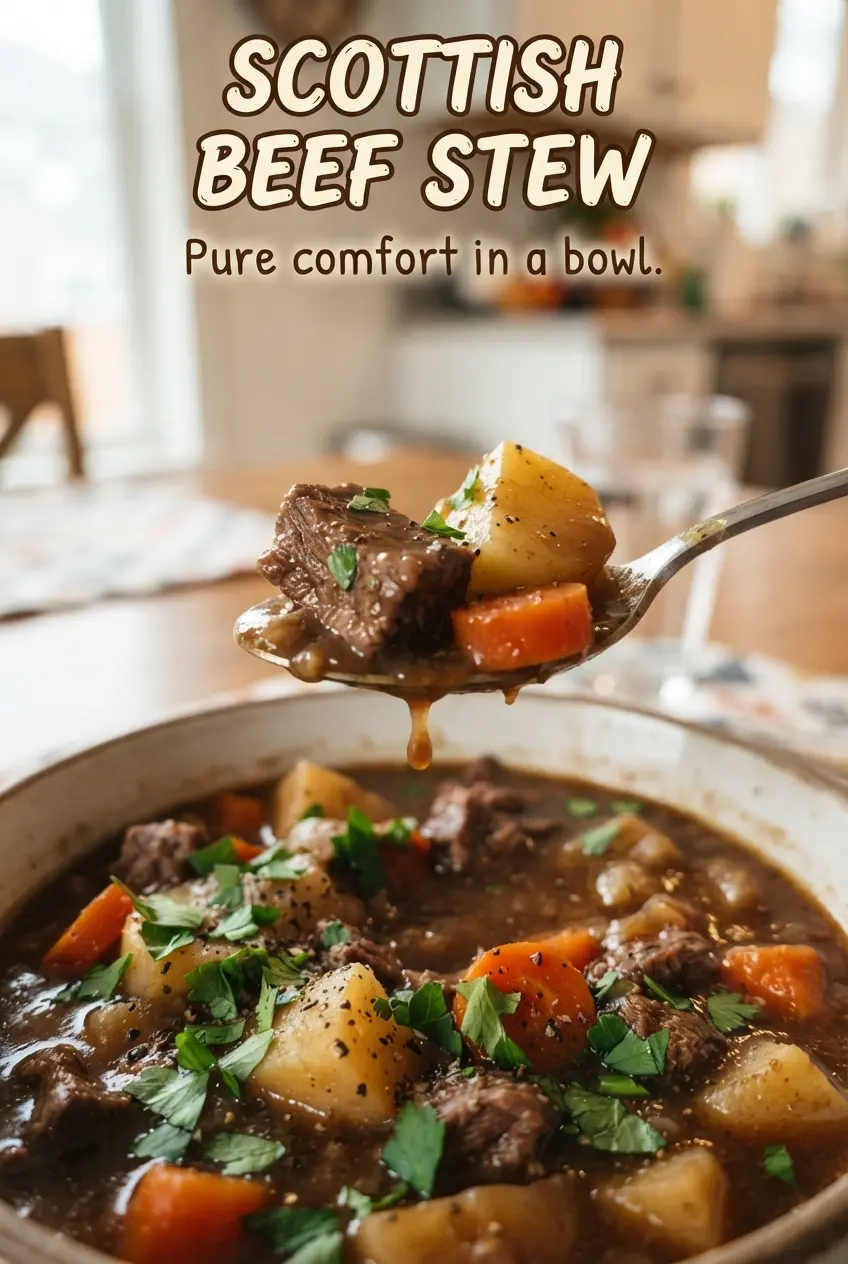
Scottish Beef Stew
Ingredients
Equipment
Method
- Season the beef cubes with salt and black pepper, then toss with the flour until evenly coated and lightly sticky. Visual cue: the flour should look like a thin dusting on every piece.
- Heat the butter and vegetable oil in a Dutch oven over medium-high heat, then brown the beef in batches for 3 to 4 minutes per batch. Avoid crowding; visual cue: browned edges and a dark fond at the bottom.
- Add the onions and leeks to the pot and cook for 6 minutes, stirring, until soft. Visual cue: onions look translucent and leeks soften without heavy browning.
- Pour in the Scottish ale (or extra beef broth) and scrape the bottom to release the fond, cooking for 1 to 2 minutes. Visual cue: the liquid turns darker and glossy as the browned bits dissolve.
- Stir in the remaining beef broth, Worcestershire sauce, and dried thyme. Visual cue: the liquid should look evenly combined with visible herb specks.
- Cover and simmer for 1 hour 30 minutes, keeping a gentle bubble. Visual cue: beef is beginning to look tender when pressed with a spoon.
- Add the pearl barley, turnip (or swede), and carrots, then return to a simmer and cook for 45 to 60 minutes. Visual cue: barley swells and beef breaks down easily, and carrots are tender but not collapsing.
- Taste and season to taste, then top with chopped fresh parsley before serving. Visual cue: bright green parsley flecks stand out on the thick stew surface.