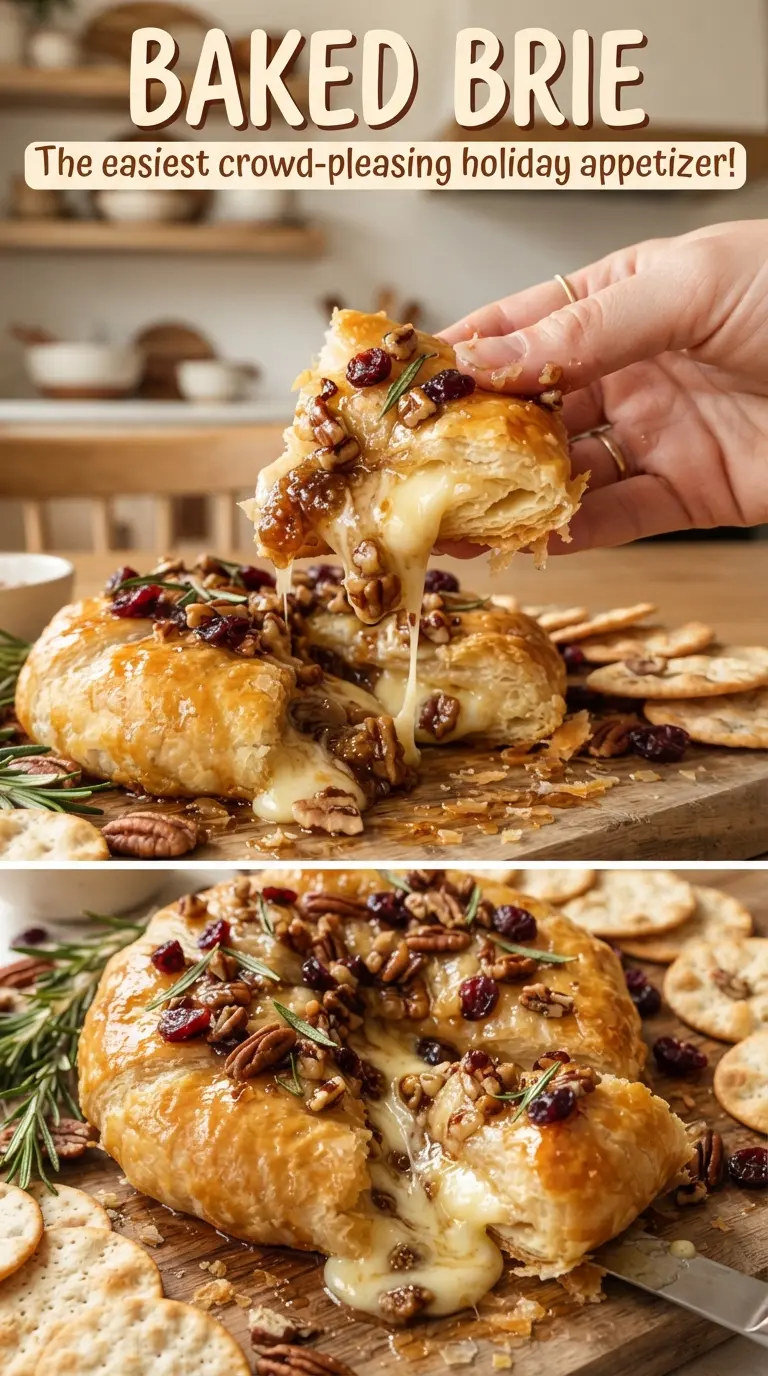
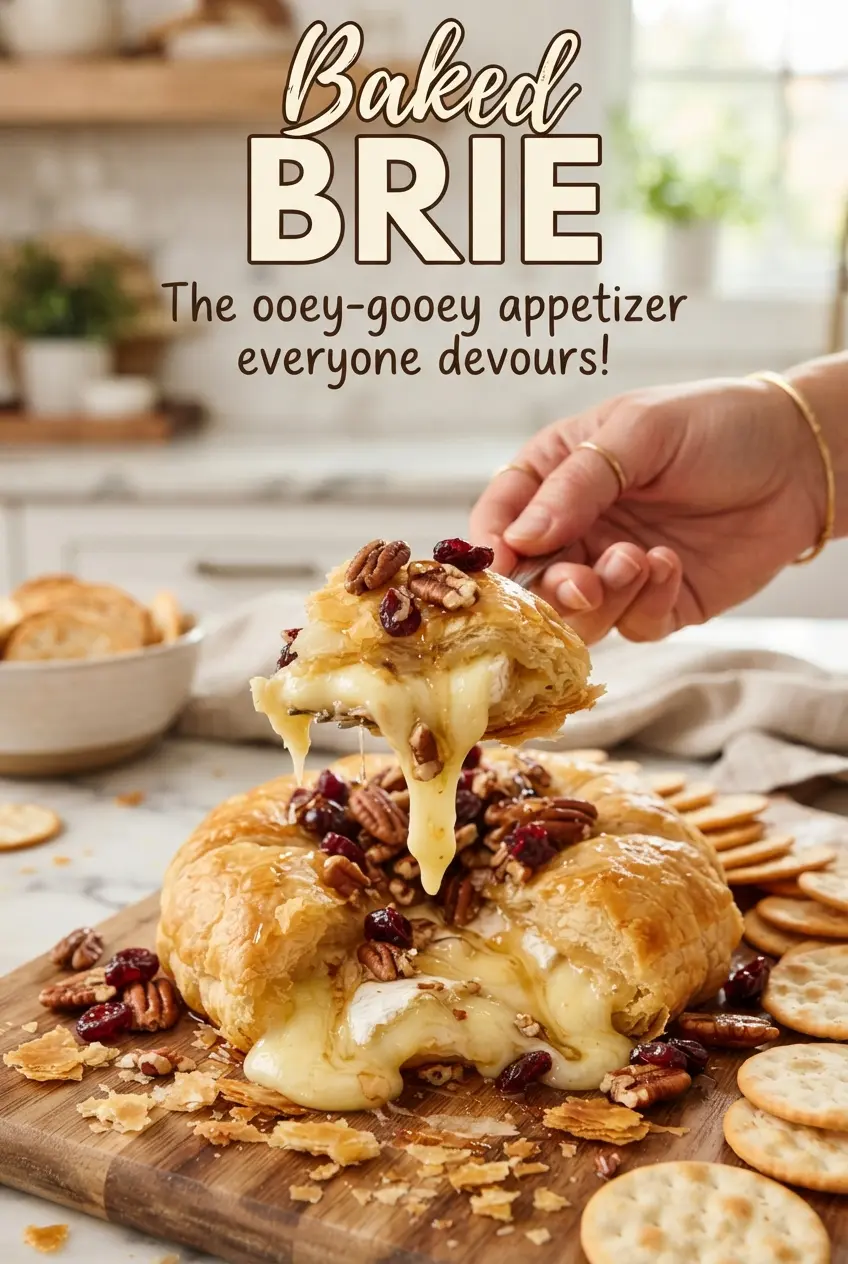
Golden puff pastry wrapped around baked brie turns into the kind of appetizer people hover over before it even hits the table. The pastry bakes up crisp and shattering on the outside while the cheese inside turns soft and molten, and the jam gives every bite a sweet edge that keeps it from feeling heavy. It’s the sort of dish that looks like you worked a lot harder than you did.
This version works because the filling stays simple and the pastry does the protecting. Brie needs just enough time in the oven to soften without collapsing completely, and the jam, pecans, and brown sugar add contrast without leaking everywhere. Chilling isn’t necessary here, but sealing the pastry well and resting it after baking both matter more than most people think. Cut into it too soon and the cheese floods out before anyone gets that first clean scoop.
The pastry came out crisp all the way around and the brie stayed molten without leaking everywhere. I served it with apple slices and the raspberry jam was such a good match that my guests finished it in minutes.
Save this baked brie for when you want a crisp pastry shell, molten cheese, and a jammy center that disappears fast.
The Reason the Brie Stays Creamy Instead of Running Everywhere
The biggest mistake with baked brie is treating it like something that needs to be cooked through. It doesn’t. Brie is already soft; the goal is to warm it until the center turns creamy and the pastry turns crisp. If you bake it too long, the cheese will burst through the seams and leave you with a greasy puddle instead of a tidy, sliceable appetizer.
The pastry does more than look pretty. It gives you structure, and the seam placement matters because the top and bottom of the wheel need a little support while the cheese softens. A short rest after baking lets the molten center settle just enough to hold its shape when you cut into it. That’s the difference between a dramatic pull and a plate full of spilled cheese.
- Puff pastry — Use a full-sheet pastry, not phyllo. Puff pastry gives you the thick, crisp shell that can hold the brie as it melts. Thaw it until pliable but still cool; warm pastry gets sticky and tears easily.
- Brie — An 8-ounce wheel works best here. A double-cream brie melts smoothly, while very ripe triple-cream brie can turn loose faster, so keep an eye on bake time if yours is extra soft.
- Jam — Raspberry gives a bright, tart finish, while fig leans deeper and sweeter. Use a thick jam so it stays centered inside the pastry instead of running into the pan.
- Pecans and brown sugar — These add a little crunch and a caramel note. Chop the pecans fine enough that they tuck into the filling instead of poking holes through the dough.
- Egg wash — This is what gives the pastry that deep golden shine. Water mixed with the egg loosens it just enough to brush on without dragging the dough.
What Each Ingredient Is Actually Doing in This Recipe
- Primary ingredient (the star) — Quality matters most. Choose the best you can find.
- Cooking medium (oil, butter, or broth) — This carries flavors and prevents dryness.
- Seasonings (salt, pepper, spices, herbs) — Layer flavors so nothing overpowers. Build depth gradually.
- Aromatics (garlic, onion, herbs) — Cook with fat to bloom flavors. Become the foundation.
- Supporting ingredients — Complement the main ingredient without overpowering it.
- Sauce or liquid (if applicable) — Brings flavors together. Balance richness with acid.
- Acid (lemon, vinegar, wine, or other) — Brightens and prevents flat-tasting results.
- Final finish (garnish, glaze, or sauce) — Prevents one-dimensional taste and adds visual appeal.
How to Wrap and Bake It So the Bottom Doesn’t Go Soggy
Roll, Fill, and Seal Cleanly
Roll the puff pastry just enough to smooth the folds, then set the brie in the center and spread the jam directly over the top. Sprinkle on the pecans and brown sugar so they sit in the jam instead of slipping off the sides. Fold the pastry up over the wheel, trimming away excess if the corners stack too thick, and press the seams firmly so the cheese has nowhere to escape. If the dough tears, patch it with a scrap of pastry and pinch it closed before baking.
Flip for a Better Base
Turn the wrapped brie seam-side down onto a parchment-lined baking sheet. That puts the strongest part of the seal underneath where it can support the weight of the cheese as it softens. Brush the whole surface with egg wash, including any visible seams, because a dry patch tends to bake pale and crack open before the rest of the pastry is done.
Watch for the Right Color, Not the Clock Alone
Bake at 400°F until the pastry is deep golden brown and you can see a little puff around the edges, usually 22 to 25 minutes. If the top starts browning too quickly, the oven is running hot and you should move the pan to a lower rack for the last few minutes. The brie should feel soft if you gently nudge it, but it should not look collapsed. Let it rest for 10 minutes before serving so the cheese stays luscious instead of pouring out like soup.
Three Ways to Adapt This Baked Brie Without Losing the Good Part
Make It Dairy-Free
Use a dairy-free brie-style wheel if you can find one, and choose a jam that tastes balanced on its own because you’ll lose some of the buttery richness from the cheese. The texture won’t be identical, but the pastry and topping combo still gives you that same warm, slice-and-serve effect.
Use Apples Instead of Nuts
If you need to skip the pecans, leave them out and add a few very thin apple slices over the jam before wrapping. You’ll lose the crunch, but the fruit keeps the filling lively and plays well with raspberry or fig.
Swap the Jam for a Savory Finish
A spoonful of onion jam or pepper jelly changes the whole mood of the dish. Onion jam leans savory and rich, while pepper jelly brings sweet heat; both work because they stay thick enough to bake without flooding the pastry.
Go Gluten-Free with a Different Wrapper
A gluten-free puff pastry will work if it bakes up cold and goes straight into a hot oven. Handle it gently, because many gluten-free doughs crack at the folds more easily than standard pastry, and patching those seams before baking is the key to keeping the cheese inside.
Storage and Reheating
- Refrigerator: Store leftovers covered for up to 3 days. The pastry softens, but the flavor stays good.
- Freezer: Freeze before baking if you want to prep ahead. Wrap tightly and freeze for up to 1 month, then bake from frozen with a few extra minutes added.
- Reheating: Reheat in a 350°F oven until warmed through and the pastry crisps back up. The microwave will make the crust limp and the cheese uneven.
Answers to the Questions Worth Asking
Baked Brie
Ingredients
Equipment
Method
- Preheat oven to 400F and line a baking sheet with parchment to prevent sticking.
- Roll the puff pastry slightly and place the brie in the center so it fits inside without overfilling.
- Spread jam over the brie, then sprinkle pecans and brown sugar for even coverage.
- Fold pastry up over the brie, trimming excess and pressing seams to seal so the cheese stays inside while baking.
- Flip seam-side down onto the baking sheet and brush with egg wash for a glossy, browned crust.
- Bake 22-25 minutes at 400F until deep golden brown with puffed, crisp layers.
- Rest 10 minutes so the cheese sets slightly and stays molten but scoopable.
- Garnish with fresh rosemary and serve with crackers and apple slices.