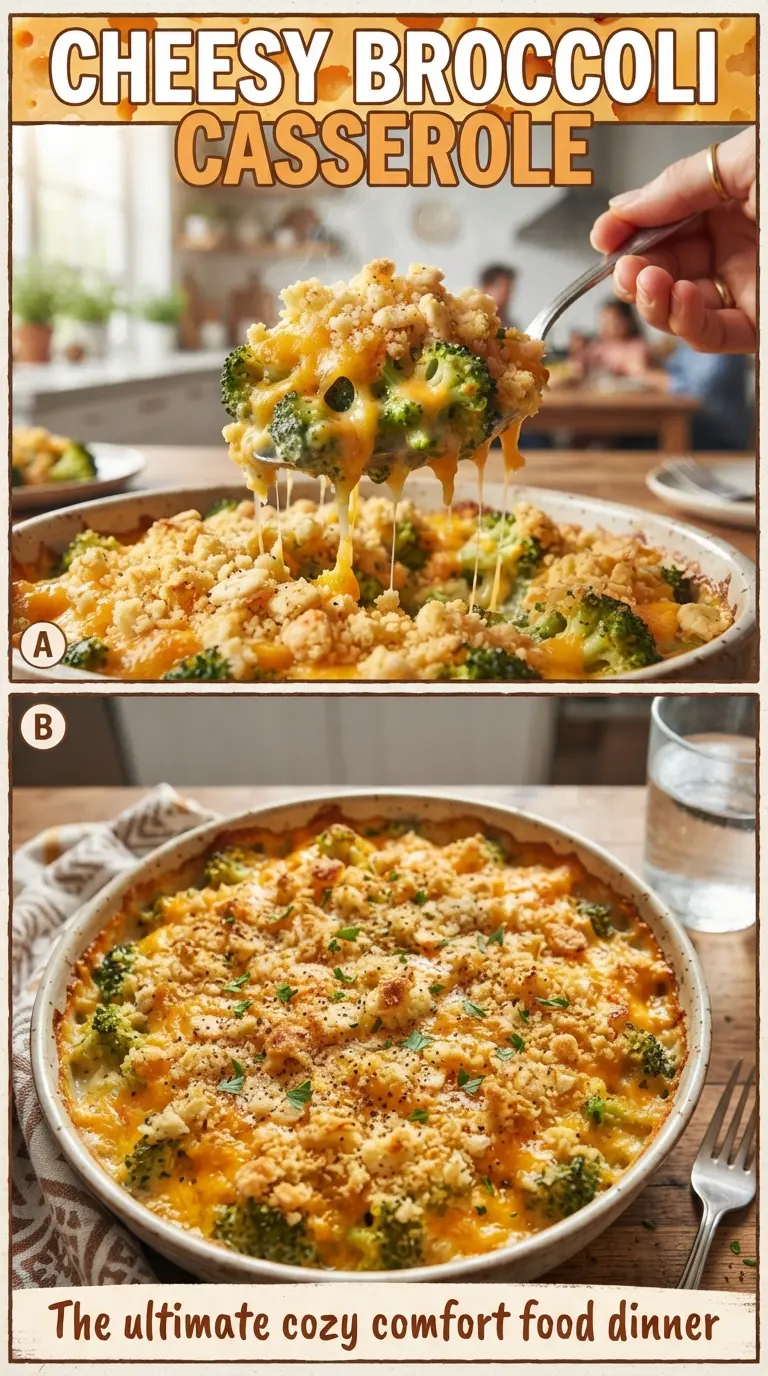
Cheesy broccoli casserole lands on the table with creamy, savory edges and a crisp buttery top that makes people scoop past the first serving without hesitation. The broccoli stays bright and tender instead of collapsing into mush, and the cheddar sauce sets up just enough to hold each bite together. That cracker topping brings the last bit of crunch the dish needs, so every forkful has contrast.
The part that makes this version work is the balance between moisture and structure. The broccoli gets steamed only until crisp-tender, then drained well so the casserole doesn’t turn watery in the oven. The filling leans on cream of mushroom soup, mayonnaise, and eggs for body, which sounds old-school because it is, but it also means the sauce bakes into something spoonable instead of sliding apart on the plate. Sharp cheddar matters here too; mild cheese disappears into the background, while sharp cheddar keeps the flavor present after baking.
Below you’ll find the small details that keep the casserole from going soft, plus a few swaps that still preserve the creamy center and crunchy top.
The broccoli stayed tender but not mushy, and the cracker topping came out crisp even after sitting on the table for a while. My husband went back for seconds before dinner was even halfway over.
Save this cheesy broccoli casserole for the nights when you need a creamy, golden side dish that holds up at the table.
The Reason Broccoli Casserole Turns Watery
The most common problem with broccoli casserole is excess moisture, and it usually starts before the dish ever goes into the oven. Broccoli holds water in its stems and florets, so if it’s steamed too long or not drained well, that water leaks into the sauce and loosens everything. You end up with a casserole that tastes fine but won’t slice cleanly or hold its texture on the plate.
This version avoids that by steaming the broccoli just until the color brightens and the stems give a little when pierced, then letting it drain thoroughly. The other safeguard is the egg in the filling. Once baked, it helps the sauce set instead of staying loose, which is why the casserole stays creamy without turning soupy.
- The broccoli should still have some bite before it goes into the oven.
- Don’t skip draining; even a little trapped water shows up in the finished dish.
- The cheese goes both inside and on top, so the casserole tastes rich through the whole pan.
What Each Ingredient Is Actually Doing in This Dish
- Broccoli florets — Fresh broccoli gives the best texture because it stays bright and sturdy after baking. Frozen broccoli can work in a pinch, but thaw it completely and press out as much water as you can or the filling loosens.
- Cream of mushroom soup — This is the base that gives the casserole its body without requiring a separate sauce. A homemade cream sauce can replace it if you want, but the texture will be a little lighter and the flavor less nostalgic.
- Mayonnaise — Mayo adds richness and helps the filling bake up creamy. It doesn’t taste like mayonnaise in the finished dish; it just rounds out the sauce and keeps it from feeling flat.
- Eggs — The eggs are the setting agent. They give the casserole enough structure to serve in neat spoonfuls instead of puddling in the pan.
- Sharp cheddar — Sharp cheddar is worth using here because it stands up to the creamy base. Mild cheddar melts fine, but the flavor gets buried.
- Ritz crackers and butter — This is the crunchy finish that makes the casserole feel complete. The crackers need the butter to brown properly, so don’t cut that amount back unless you want a drier, sandier topping.
Building the Casserole So the Topping Stays Crisp
Steam the broccoli just to the edge of tenderness
Bring the broccoli to crisp-tender, not soft. The florets should brighten and the stems should give slightly when pierced, but they should still hold their shape. If you cook them until they’re fully tender at this stage, they collapse later and the casserole gets mushy. Drain them in a colander and let steam escape for a few minutes so extra water doesn’t end up in the pan.
Mix the filling until it looks cohesive, not whipped
Stir the soup, mayonnaise, eggs, onion, salt, pepper, and most of the cheddar together until the mixture looks evenly combined. You don’t need to beat it hard; overmixing works too much air into the filling and can give the baked casserole a loose, spongy texture. Fold in the broccoli gently so the florets stay intact and the sauce coats every piece.
Finish with cheese, then buttered crumbs
Spread the mixture into the baking dish and add the remaining cheddar before the cracker topping. That layer of cheese melts into the top of the casserole and helps anchor the crumbs so they don’t slide around after baking. Toss the crushed crackers with melted butter until every crumb looks lightly coated, then scatter them evenly across the surface. The topping should bake to a deep golden color; if it looks pale at the end, give it another few minutes because the crunch is where this dish earns its best texture.
How to Adapt This for Different Tables and Different Pantries
Make it gluten-free
Use a certified gluten-free condensed soup and swap the Ritz crackers for a gluten-free buttery cracker. The casserole still bakes up creamy, and the topping keeps its crunch if the replacement cracker has a similar fat content.
Use frozen broccoli when that’s what you have
Thaw the broccoli completely and squeeze out the extra moisture before mixing it in. Frozen broccoli softens faster than fresh, so the finished casserole will be a little less firm, but it still tastes good if you don’t skip the draining step.
Swap the mushroom soup for cream of chicken
Cream of chicken gives the casserole a slightly lighter, more savory background flavor. The texture stays the same, so this is a good swap when you want the same creamy result without the mushroom note.
Make it a little richer and more substantial
Add a handful of cooked, crumbled bacon or diced ham to the filling. It turns the casserole from a side dish into something closer to a meal, but the extra salt means you should taste the filling before adding more seasoning.
Storage and Reheating
- Refrigerator: Keep leftovers covered for up to 4 days. The topping softens as it sits, but the flavor stays good.
- Freezer: It freezes best without the cracker topping. Wrap tightly and freeze for up to 2 months, then add a fresh buttery topping before baking or reheating.
- Reheating: Reheat covered in a 325F oven until hot in the center, then uncover for the last few minutes to bring back some texture. The mistake most people make is blasting it in the microwave, which turns the broccoli soft and the sauce greasy.
Answers to the Questions Worth Asking

Cheesy Broccoli Casserole
Ingredients
Equipment
Method
- Preheat the oven to 350°F and grease a 9x13-inch baking dish for easy release.
- Steam the broccoli 4-5 minutes until crisp-tender, then drain well so the casserole doesn’t get watery.
- Mix cream of mushroom soup, mayonnaise, eggs, diced onion, 1 1/2 cups cheddar, salt, and black pepper until smooth and evenly combined.
- Fold in the steamed broccoli and spread the mixture into the prepared baking dish.
- Top with the remaining cheddar so it melts into a cheesy layer as it bakes.
- Toss the crushed Ritz crackers with the melted butter until the crumbs look evenly moistened.
- Sprinkle the buttery cracker crumbs over the casserole.
- Bake 30-35 minutes at 350°F until bubbly in the center and golden on top.