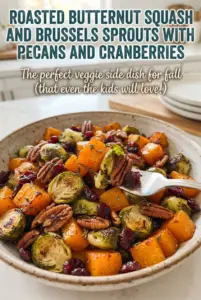
Caramelized butternut squash and crisp-edged Brussels sprouts make one of those side dishes people remember after the rest of the meal is gone. The squash turns soft and sweet in the center, the sprouts pick up those dark roasted edges, and the pecans and cranberries bring the kind of crunch-and-tang finish that keeps every bite interesting.
What makes this version work is the balance. The vegetables roast hot enough to brown instead of steam, and the maple-balsamic glaze is added at the end so it clings without softening the texture you worked for in the oven. Toasted pecans matter here, too — raw pecans taste flat next to the warm vegetables, while toasted ones bring depth and a cleaner crunch.
Below, I’ve laid out the small details that keep the pan from getting crowded, plus a few easy ways to adapt this dish for a different table. It’s the kind of side that fits next to roast chicken, pork, turkey, or a simple grain bowl without needing any extra fuss.
The squash got those caramelized edges I never seem to get, and the maple-balsamic on top tied everything together without making the sprouts soggy. I made it for Sunday dinner and there wasn’t a spoonful left.
Roasted butternut squash and Brussels sprouts with pecans and cranberries is the kind of side dish that earns its spot on the table every time.
The Trick to Roasting Two Vegetables That Finish at the Same Time
Butternut squash and Brussels sprouts behave differently in the oven, and that’s usually where this kind of side dish goes wrong. Squash softens first and can collapse if it’s cut too small, while Brussels sprouts need enough exposed surface to pick up browning before they turn limp. The fix is to keep the squash cubes and sprout halves close in size and give them room on the pan so the hot air can do the work.
The other mistake is crowding. When the vegetables sit on top of each other, they steam instead of roast, and you lose the crisp edges that make the dish worth serving. A large sheet pan and one solid toss halfway through are enough to build color without burning the sugars.
What Each Ingredient Is Doing in This Dish
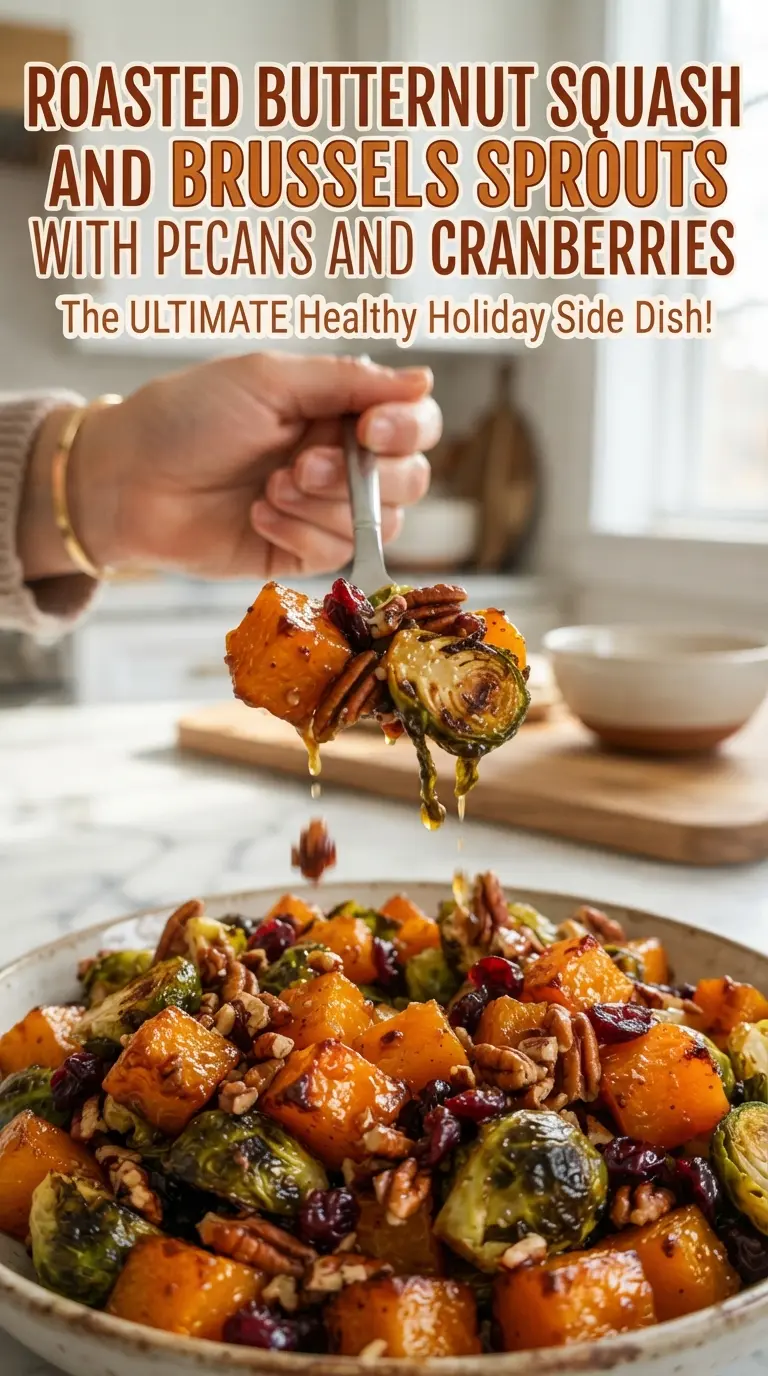
- Butternut squash — This gives you the sweet, soft base that balances the sharper Brussels sprouts. Fresh squash is worth the effort here because it roasts into clean-edged cubes that hold their shape; pre-cut squash is fine if it’s not wet or irregularly sized.
- Brussels sprouts — Halving them exposes the cut side, which is what caramelizes. If the outer leaves fall off, keep them on the pan; they turn into little crisp pieces and add texture.
- Maple syrup and balsamic vinegar — This is the finishing move, not the roasting liquid. Maple brings rounded sweetness, while balsamic adds tang and a darker edge; whisk them together after roasting so the glaze stays bright instead of disappearing into the pan.
- Pecans — Toasted pecans give the dish its crunch and a deeper, nutty flavor. Raw pecans work in a pinch, but they taste flat next to the roasted vegetables.
- Dried cranberries — They add sharp sweetness and a chewy bite that cuts through the richness. If yours are especially dry, stir them in while the vegetables are still warm so they soften slightly.
Building Color Before You Add the Sweet Finish
Seasoning the Pan
Toss the squash and Brussels sprouts with olive oil, salt, and black pepper until every cut surface looks lightly coated. That thin layer of oil is what helps the vegetables brown instead of drying out. If the pan looks shiny with oil, it’s too much; you want just enough to coat, not puddle.
Roasting Until the Edges Turn Deep Gold
Spread the vegetables in a single layer on a large sheet pan and roast at 425F. After about 15 minutes, turn them so the cut sides can meet the pan again. The squash should be tender enough for a fork to slide through, and the sprouts should have browned edges, not pale softened skins.
Finishing with the Glaze, Nuts, and Fruit
Whisk the maple syrup and balsamic vinegar together, then toss it through the hot vegetables with the cranberries and toasted pecans. The warmth loosens the glaze so it coats without pooling, and it slightly softens the cranberries. Add the glaze too early and it can scorch; add it at the end and it tastes clean and balanced.
How to Adapt This for Different Tables
Make it dairy-free and naturally vegetarian
This recipe already fits both diets as written, which is part of why it works so well for a crowd. The flavor comes from roasting, not butter or cheese, so the vegetables stay front and center.
Swap the pecans for pumpkin seeds
Use toasted pepitas if you need a nut-free version. They bring the same crunch, though the flavor is less buttery and a little more earthy, which still works nicely with the squash.
Add goat cheese for a richer side
A handful of crumbled goat cheese at the end turns this into a more substantial holiday-style side. The tang plays well with the cranberries, but add it after the vegetables come off the heat so it softens instead of melting away.
Use maple only if you want a sweeter finish
If you like a sharper finish, reduce the maple syrup slightly and keep the balsamic as written. More maple makes the glaze softer and sweeter; less of it lets the roasted vegetables taste more savory.
Storage and Reheating
- Refrigerator: Store leftovers in an airtight container for up to 4 days. The sprouts soften a little after chilling, but the flavor holds up well.
- Freezer: You can freeze it, but the squash and sprouts will lose some texture. Freeze in a single layer first, then transfer to a container; use within 2 months for the best result.
- Reheating: Warm on a sheet pan in a 400F oven until hot and the edges perk back up. The common mistake is microwaving it until it turns mushy, which takes away the roasted texture you worked for.
Questions I Get Asked About This Dish
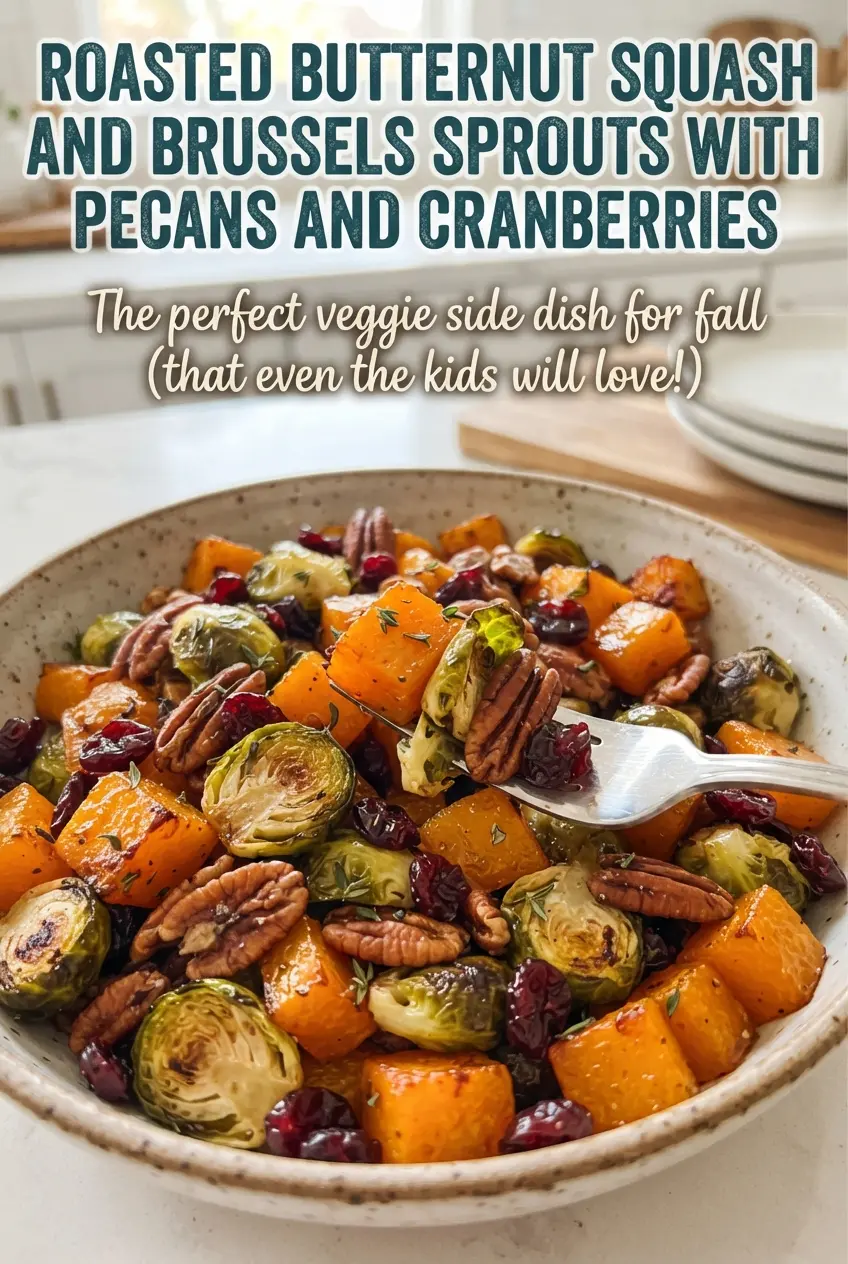
Roasted Butternut Squash and Brussels Sprouts with Pecans and Cranberries
Ingredients
Equipment
Method
- Preheat the oven to 425F to get a hot sheet pan-ready roasting temperature.
- Toss butternut squash and Brussels sprouts with olive oil, salt, and black pepper on a large sheet pan until evenly coated, especially on the cut sides.
- Roast for 25-30 minutes, tossing halfway, until the vegetables are tender and caramelized with browned edges.
- Whisk maple syrup and balsamic vinegar together until smooth and pourable.
- Toss the roasted vegetables with the maple balsamic mixture, dried cranberries, and pecans, then serve warm.