Queso fundido lives and dies by texture. When it’s done right, the cheese turns glossy and elastic, the chorizo brings a smoky, spiced richness, and the whole skillet arrives at the table bubbling at the edges with long, stretchy pulls on every scoop. The trick is that this isn’t a dip you can walk away from; it rewards a little attention and a hot pan, then it disappears fast once the chips hit it.
The combination of Oaxaca, Chihuahua, or asadero cheese gives you the melt you want without turning greasy or grainy, while a little Cotija adds salty depth instead of just more gooeyness. Cooking the chorizo first builds the base, and the garlic and jalapeños only need a short sauté so they stay fragrant instead of bitter. A splash of heavy cream helps the cheeses melt into one smooth layer, especially if your skillet runs hot.
Below, I’ve laid out the part that matters most: how to keep the cheese silky, what to swap if you can’t find the exact cheeses, and how to serve it so it stays spoonable long enough for everyone to get a turn.
The cheese melted into a perfect stretchy layer and never got oily, and the chorizo gave it enough flavor that we didn’t even need salsa. I put the skillet on the table and it was gone in minutes.
Pin this bubbling queso fundido with chorizo and jalapeños for the next time you need a skillet appetizer that stretches, sizzles, and vanishes fast.
The Cheese Has to Melt, Not Break
The difference between silky queso fundido and a greasy skillet of cheese is heat control. Cheese melts beautifully when it warms gently and has just enough moisture to loosen into one smooth pool, but if the pan is too hot, the fat separates and you end up with a slick on top instead of that elastic pull everyone wants. That’s why the chorizo gets cooked first and the cheese goes in after the garlic and jalapeños have had only a quick minute in the pan.
Heavy cream isn’t there to make it fancy. It gives the cheeses a little insurance so they melt together instead of clumping, especially if your skillet holds heat aggressively. If the mixture ever looks tight or stubborn while melting, lower the heat and stir in the cheese gradually. Rushing it is what turns a good queso into one that looks broken before it even reaches the table.
What Each Cheese Is Actually Doing in the Skillet
- Oaxaca or mozzarella — This is your stretch cheese. Oaxaca is the best choice if you can find it because it melts into long, clean pulls without getting stringy in a weird way. Mozzarella works in a pinch, but use low-moisture mozzarella rather than fresh, which can turn watery.
- Chihuahua or asadero — These bring the creamy, melty body that makes the dip spoonable. They’re worth seeking out if you want a more authentic texture. If you can’t find either, Monterey Jack is the closest practical substitute.
- Cotija — Cotija doesn’t melt into the base the same way. It adds salt and a little sharpness, which keeps the dip from tasting flat. If you need a swap, use a small amount of Parmesan, but expect a slightly different finish.
- Chorizo — This is the backbone of the dish. It seasons the oil in the pan and gives the cheese something smoky and savory to cling to. Spanish-style cured chorizo won’t behave the same way here; you want fresh Mexican chorizo so it crumbles and browns into the skillet.
- Jalapeños, garlic, and onion — The jalapeños bring heat, the garlic deepens the savoriness, and the onion finishes the top with a little sharp crunch. Dice the onion finely so it doesn’t overwhelm each bite, and keep the garlic brief so it stays fragrant instead of bitter.
Building the Skillet Without Losing the Stretch
Brown the Chorizo First
Set the skillet over medium heat and cook the chorizo while breaking it apart with a spoon. You want browned bits and rendered fat, not pale crumbles that still taste raw. If the pan starts smoking hard, the heat is too high and the outside will darken before the chorizo cooks through. That rendered fat is part of the flavor, so don’t drain it unless there’s an obvious pool of excess grease.
Wake Up the Garlic and Jalapeños
Stir in the minced garlic and diced jalapeños and cook just until fragrant, about a minute. The garlic should smell warm and savory, not sharp or toasted. This is the point where people often walk too far away and let the garlic catch; once it browns, it tastes harsh and you’ll notice it in the finished dip. Pull the pan back from the heat if needed before adding the cheese.
Let the Cheese Melt Slowly
Add the shredded Oaxaca, Chihuahua, and Cotija, then pour in the heavy cream. Stir often as the cheese softens, and don’t crank the heat to hurry it along. The base should go from distinct shreds to a glossy, unified mass over 5 to 7 minutes. If it looks oily, the heat is too aggressive; lower it and keep stirring until it comes back together.
Finish Before It Tightens
Scatter the diced onion and cilantro over the top right before serving. The onion gives a fresh bite that cuts through the richness, and the cilantro keeps the skillet from tasting heavy. Serve it straight from the pan with warm tortilla chips while the cheese is still loose enough to scoop. Once it sits too long, it firms up fast, so get the table ready before the skillet comes off the heat.
How to Adapt This for a Crowd, a Lighter Pan, or a Different Diet
Vegetarian Queso Fundido
Skip the chorizo and cook the garlic and jalapeños in a tablespoon of butter or oil instead. You’ll lose the smoky pork richness, but the cheese gets to stand on its own and the jalapeños stay front and center. A pinch of smoked paprika can bring back some of that depth without turning it into a different dish.
Dairy-Free Version
A true queso fundido texture is hard to mimic without dairy, but a plant-based shredded melt cheese can get you close if you use one that melts smoothly. Use a nonstick skillet and keep the heat low so the substitute doesn’t seize or separate. The result will be softer and less stretchy, but still workable for dipping.
No Cast Iron Skillet
Use any heavy-bottomed oven-safe pan or a small Dutch oven. The important part is even heat, because a thin pan can scorch the chorizo and overheat the cheese before it finishes melting. If your pan doesn’t hold heat well, serve the queso in the pot you cooked it in and keep the burner on the lowest setting.
Storage and Reheating
- Refrigerator: Store leftovers in an airtight container for up to 3 days. The cheese will firm up and the texture will turn denser once chilled.
- Freezer: Freezing isn’t ideal. Melted cheese dips tend to separate after thawing, so this one is best made fresh.
- Reheating: Rewarm gently over low heat with a small splash of cream or milk, stirring often. High heat is what makes the cheese turn oily and grainy, so patience matters more than speed here.
Answers to the Questions Worth Asking
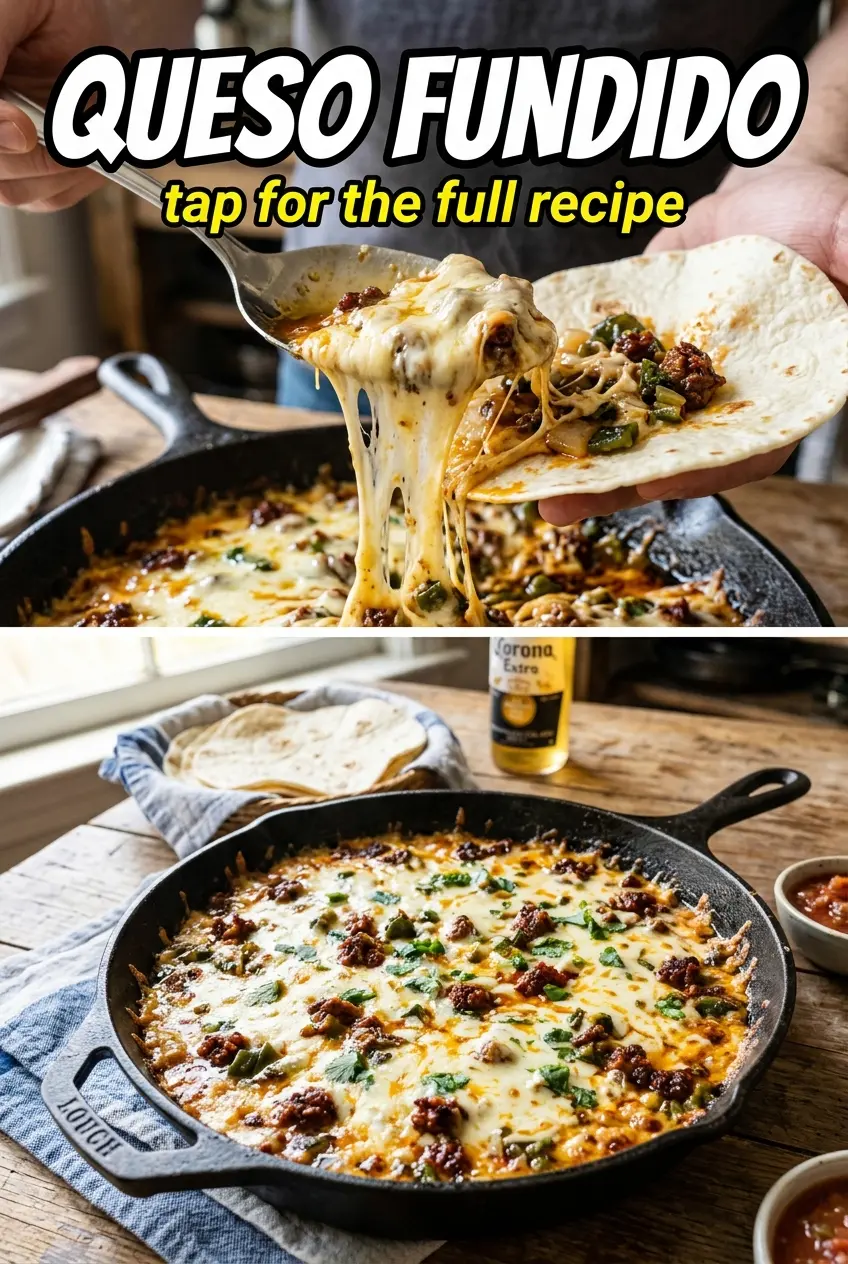
Queso Fundido
Ingredients
Equipment
Method
- Heat a cast iron skillet or small heavy-bottomed pot over medium-high heat and cook the chorizo, breaking it apart as it cooks, until browned.
- Add the minced garlic and diced jalapeños and cook for 1 minute until fragrant.
- Add the Oaxaca (or mozzarella), Chihuahua (or asadero), and Cotija cheeses along with the heavy cream.
- Stir frequently at a steady simmer until the cheese is completely melted and smooth, about 5-7 minutes, with continuous bubbling at the edges.
- Top the queso with the diced white onion and chopped cilantro, then stir once to distribute.
- Serve immediately in the cast iron skillet with warm tortilla chips for dipping, lifting a spoon to show stretchy cheese strings.
- Keep warm over low heat or transfer to a slow cooker to maintain a gentle bubble before serving.