Frozen mango, lime, chamoy, and tajín hit all at once in a mangonada: sweet, tart, salty, spicy, and icy enough to feel like a treat instead of a drink. What makes this version worth repeating is the balance. It stays thick and slushy without turning watery, and the chamoy and tajín don’t just sit on top for looks — they season every sip.
The trick is using frozen mango as the main body of the drink, then adding just enough mango juice to get the blender moving. Too much liquid and you end up with a thin smoothie; too little and the blades stall. Honey rounds out the lime, but the real personality comes from the contrast between the bright fruit and that savory chile-lime edge.
Below, I’ll show you how to get the right slush texture, how to rim the glasses so the tajín actually sticks, and what to do if your mango is extra sweet or your chamoy is thicker than usual.
The mango flavor came through beautifully and the texture stayed thick enough to hold the chamoy ribbon instead of melting into juice. I added a little extra lime to mine and it tasted just like the one from my favorite fruit stand.
Save this mangonada for the days when you want frozen mango, tart lime, and chamoy-spiked tajín in one glass.
The Slush Texture Matters More Than the Ingredients List
A mangonada lives or dies by texture. If it turns into a thin mango drink, the chamoy sinks, the tajín slides off the rim, and the whole thing loses the layered bite that makes it special. Frozen mango does most of the work here, which is why the blender only needs enough liquid to keep things moving. The goal is a spoonable slush that still pours cleanly into the glass.
The other mistake is overblending. Once the mango is smooth and icy, stop. Letting it run too long warms the mixture and melts the edges, and that’s how you end up with a drink that tastes fine but looks flat. If your blender struggles, add the juice in small splashes instead of dumping it all in at once.
What Each Ingredient Is Actually Doing in This Mangonada
Frozen mango chunks are the backbone. Fresh mango won’t give you the same thick, frozen body, and you’ll need a lot more ice to compensate, which waters down the flavor. Use a ripe, sweet mango juice or nectar if you can. It boosts the fruit flavor without making the drink taste diluted.
- Lime juice — This keeps the drink from reading as one-note sweet. Fresh lime tastes brighter than bottled, and that sharpness is what lets the chamoy and tajín stand out.
- Honey — Honey softens the tart edges of the lime. If your mango juice is already very sweet, start with less and taste before adding the full amount.
- Chamoy sauce — This gives the drink its signature sweet-sour-salty heat. Thick chamoy clings to the inside of the glass best; if yours is loose, chill it first so it drizzles in ribbons instead of pooling.
- Tajín seasoning — Tajín on the rim is more than garnish. It seasons each sip and gives the first hit of salt, chile, and lime before the mango comes through.
- Ice cubes — Ice helps the blender catch the frozen mango, but too much will mute the fruit. Keep it to the small amount listed so the drink stays bold and creamy-frozen instead of icy.
Building the Mangonada So the Layers Stay Bold
Starting the Blender Without Turning It Watery
Add the frozen mango, mango juice, lime juice, honey, and ice to the blender. Start low, then work up only as needed. If the blades spin without catching, stop the blender and push the mixture down with a tamper or add a small splash more juice. The mixture should look thick and glossy, with no big chunks, but it should still be dense enough to mound briefly in the blender jar.
Coating the Glass with Tajín and Chamoy
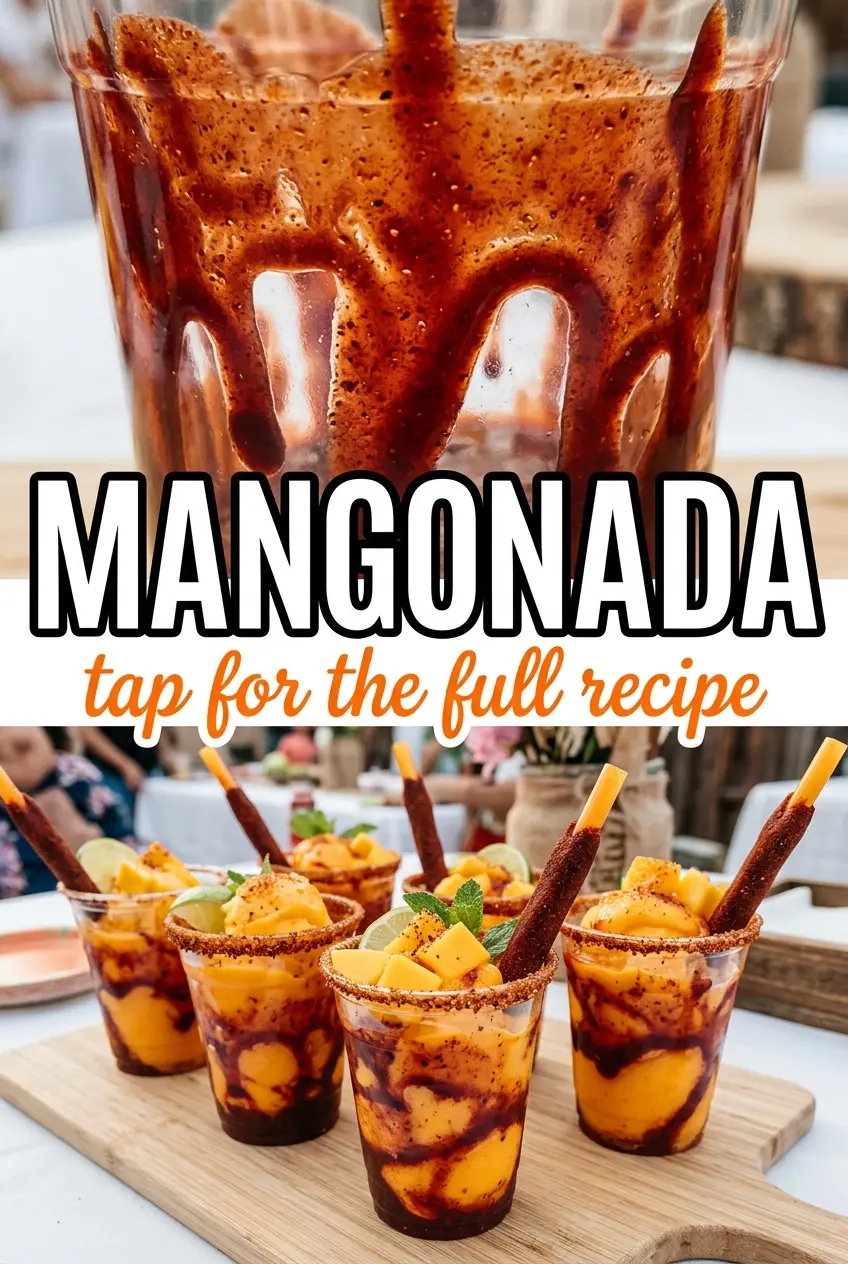
Run a lime wedge around the rim, then dip it in tajín. Press lightly so the seasoning sticks instead of falling off. Drizzle chamoy down the inside of each glass after rimming, not before. That sequence matters because the chamoy helps create the visual streaks, while the rim seasoning gives you the first punch of flavor as soon as the drink hits your lips.
Finishing Without Letting It Melt
Divide the mangonada between the prepared glasses right away. Top with the fresh mango chunks, tuck in the lime wedge, and add the cilantro garnish if you’re using it. Serve immediately while the texture is still thick and slushy. If it sits too long, the juice starts to separate from the frozen mango and the drink loses its dramatic layers.
How to Adapt This Mangonada for Different Tastes and Diets
Dairy-Free and Naturally Vegetarian
This recipe is already dairy-free and vegetarian, which is part of why it works so well for a wide range of people. Just check your chamoy and tajín labels if you’re being strict about ingredients, since brands can vary. The drink stays just as bright and layered without any dairy at all.
Less Sweet, More Tart
If you like your mangonada sharper, cut the honey back or leave it out and add a little more lime juice. The drink will taste more like a street-style fruit cup and less like a smoothie. That works especially well if your mango nectar is already sweetened.
No Mango Nectar on Hand
Use orange juice or pineapple juice in a pinch, but expect a different result. Orange keeps the drink mellow and creamy, while pineapple pushes it brighter and more tropical. Both work, but mango nectar gives the deepest mango flavor and the cleanest slush texture.
Extra-Spicy Rim
For more heat, use a heavier hand with the tajín and add a little extra chamoy inside the glass. That gives you a stronger chile-lime hit without changing the base drink. It’s a good move if you want the mangonada to taste closer to what you’d get from a street cart.
Make-Ahead Components
You can blend the base a few minutes ahead and keep it in the freezer while you prep the glasses, but don’t walk away from it. Frozen mango drinks set up fast, then turn hard at the edges. If you need to hold it, stir once or twice and serve before it becomes icy instead of slushy.
Serving Note
Mangonadas are best served immediately after blending. If you need to prep for a small group, set out the rimming salt, chamoy, and garnishes ahead of time, then blend in batches so every glass gets that thick, icy texture.
Answers to the Questions Worth Asking
Mangonada
Ingredients
Equipment
Method
- Combine frozen mango chunks, mango juice or nectar, lime juice, honey, and ice cubes in a blender and blend until smooth and slushy (about 30–60 seconds). Watch for a thick, pourable consistency with no large ice pieces.
- Rim two glasses with tajín seasoning by pressing the rim into the seasoning so it sticks evenly. You should see a complete ring of red-green speckled coating on each glass.
- Drizzle chamoy sauce down the inside of each glass so it streaks from the rim toward the bottom. Aim for visible ribbons rather than pooling.
- Divide the smoothie between the two glasses and top each with fresh mango chunks. The surface should look vibrant and slightly chunky from the fruit pieces.
- Insert a straw and garnish with a lime wedge and cilantro, then serve immediately. The glass should show condensation, and the toppings should remain bright and fresh.