Foil packet fish comes off the heat tender, flaky, and full of lemony steam, with the vegetables cooked just enough to stay bright instead of collapsing into mush. The best part is how the packet does the work for you: the fish gently bastes in butter, garlic, and citrus while the vegetables catch all the flavor underneath. When it’s done right, you open the foil and get that clean, fresh smell of herbs and lemon before you even take the first bite.
What makes this version reliable is the setup. Heavy-duty foil keeps the packet intact over campfire heat, and a small pat of butter helps the fish stay moist without drowning it. Salmon holds up with a richer finish, trout stays delicate and silky, and tilapia cooks fast and clean. The vegetables go in sliced thin so they’re done at the same time as the fish instead of lagging behind.
Below, I’ll walk through the part that matters most: how to seal the packet so it steams instead of leaks, plus the timing cues that tell you the fish is ready without overcooking it.
The fish came out flaky and the zucchini was cooked just right, not soggy. I loved that the lemon and dill stayed bright even after 20 minutes over the fire.
Foil packet fish with lemon, herbs, and vegetables is the kind of campfire dinner that disappears fast and cleans up even faster.
The Secret to Foil Packet Fish That Steams Instead of Drying Out
Foil packet fish works because it traps moisture, but that only helps if the packet is sealed tightly and the heat stays moderate. Too much heat, or a loose fold, and the fish dries out before the vegetables are tender. The goal is gentle steam, not aggressive roasting.
Slice the zucchini and bell pepper thin enough that they soften in the same window as the fish. If the vegetables are too thick, they’ll still be crunchy when the fish is done, and if they’re piled too high, they’ll block the steam from circulating around the fillet. A single layer under and around the fish is enough.
- Heavy-duty foil holds up better over campfire grates and is worth using here. Regular foil tears more easily when you flip or move the packet.
- Butter helps the fish baste itself as it cooks. If you swap in olive oil, the packet still works, but the finished fish tastes a little leaner.
- Lemon slices do more than garnish. They perfume the steam and keep the fish tasting bright, especially with salmon or trout.
- Fresh dill or parsley gives the packet a clean finish. Dried herbs work in a pinch, but use a smaller amount because they concentrate as they cook.
What Each Ingredient Is Doing Inside the Packet
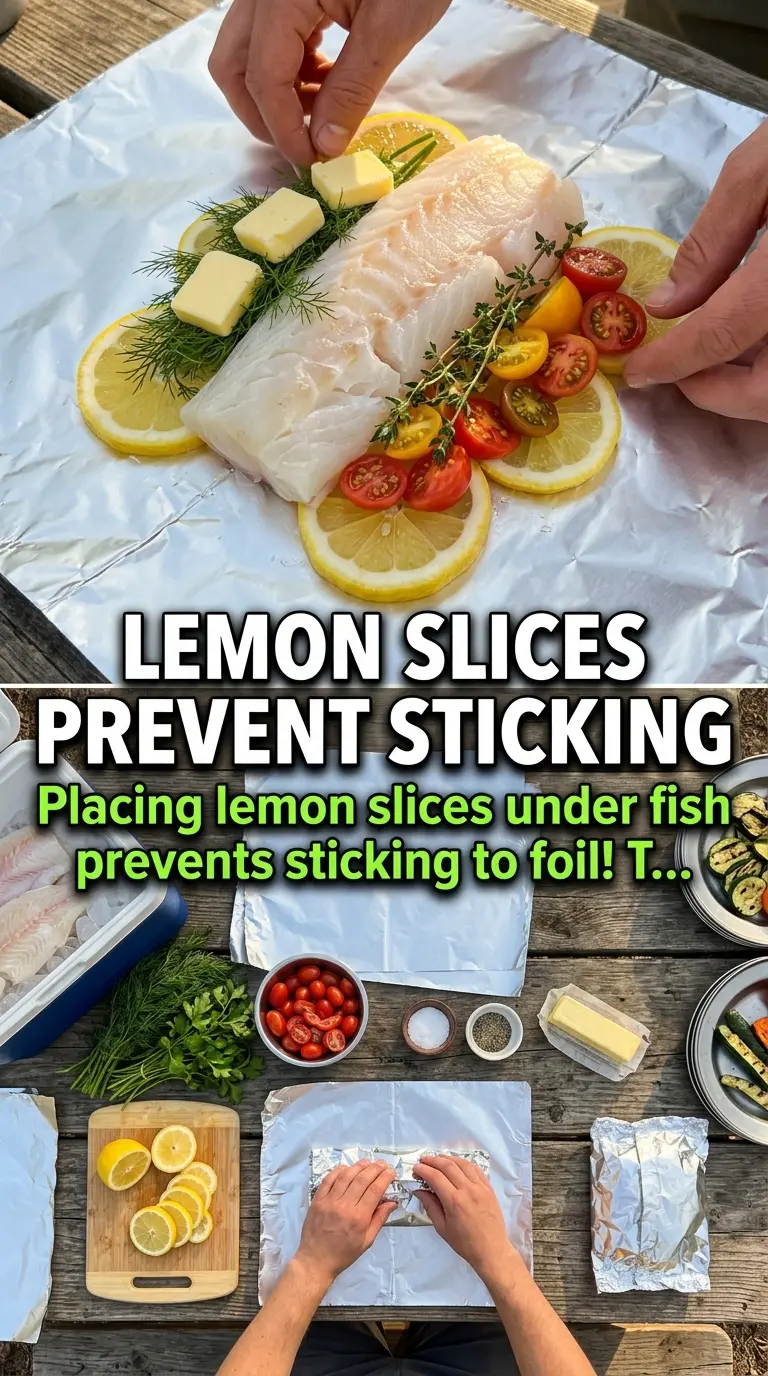
- Fish fillets are the center of the dish, and the type you choose changes the final texture. Salmon stays richest, trout cooks delicately, and tilapia is mild and quick-cooking.
- Garlic should be minced fine so it softens in the steam instead of tasting sharp. Large pieces can stay punchy in a way that overpowers the fish.
- Butter melts into the vegetables and keeps the fish supple. If you need a dairy-free version, olive oil gives you moisture, though you lose a little of that round, buttery finish.
- Zucchini and bell pepper bring color and enough structure to make the packet feel like a full meal. Cut them evenly so nothing finishes early and turns soft while the fish is still cooking.
- Foil is part of the cooking method, not just the packaging. A tight seal traps steam, which is what gives you that flaky texture.
How to Build the Packets So the Fish Cooks Evenly
Start with a Flat Base
Lay each fillet in the center of its own foil sheet and keep the vegetables in a low, even layer around it. If you mound everything up, the fish at the top overcooks before the vegetables underneath have a chance to soften. Season the fish before adding the butter so the salt can start pulling out flavor right away.
Seal for Steam, Not Drip
Bring the long sides of the foil together over the fish and fold them down in tight, crimped turns. Then fold the ends inward so the packet looks sealed and puffed, with room inside for steam to circulate. If the packet is loose, moisture escapes and the fish can end up dry even if the timing is right.
Watch the Fish, Not the Clock Alone
Cook the packets over medium heat for 15 to 20 minutes, depending on thickness and the type of fish. Salmon usually needs the full range, while thin tilapia can finish earlier. The fish is ready when it flakes easily with a fork and the center looks opaque instead of translucent. If the vegetables are done but the fish still looks glassy in the thickest spot, give it a couple more minutes before opening.
How to Adapt This for Different Fish, Cooking Setups, and Diets
Best Fish Choices for the Texture You Want
Use salmon for the richest result, trout for a softer, more delicate packet, or tilapia when you want a mild fish that cooks quickly. Thicker fillets need the longer end of the cooking range, while thinner ones can dry out if left over the heat too long.
Dairy-Free Version
Swap the butter for olive oil or a dairy-free buttery spread. You’ll lose a little of the sweet, round finish butter gives, but the fish will still stay moist and the lemon-herb flavor will come through clearly.
Stovetop or Oven Cooking Instead of Campfire Heat
If you’re not cooking over a fire, bake the sealed packets on a sheet pan at 400°F until the fish flakes easily. The texture stays close to the campfire version, but the vegetables usually cook a touch more evenly because the heat is steadier.
Storage and Reheating
- Refrigerator: Store leftovers in an airtight container for up to 2 days. The fish stays tasty, but the vegetables soften a bit more after chilling.
- Freezer: This dish doesn’t freeze well. The fish texture gets mealy and the vegetables turn watery after thawing.
- Reheating: Warm leftovers gently in a covered skillet over low heat or in a 300°F oven just until heated through. High heat dries the fish out fast, which is the main mistake people make with reheated seafood.
Questions I Get Asked About This Recipe
Foil Packet Fish
Ingredients
Equipment
Method
- Lay each fish fillet in the center of a sheet of heavy-duty aluminum foil. Top each fillet with minced garlic, dill or parsley, salt, and pepper, then add a pat of butter.
- Arrange lemon slices over the fish and surround it with zucchini and bell pepper slices. Keep the filling evenly distributed so everything cooks at the same pace.
- Fold the foil to fully seal the packets. Press edges tightly to trap steam during cooking.
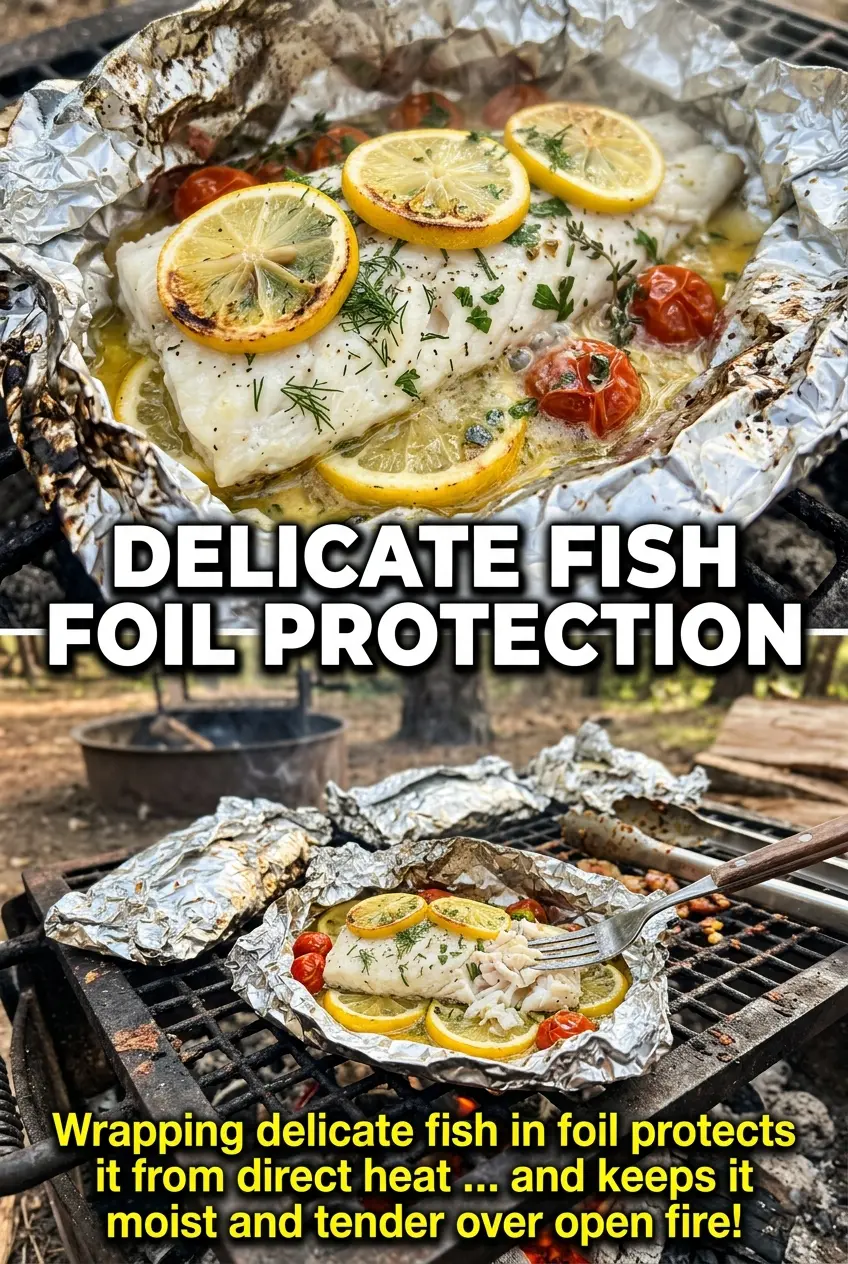
- Place the sealed packets on a campfire grate over medium heat for 15-20 minutes. Keep the packet side up and avoid flipping so the steam cooks the fish evenly.
- Check doneness by opening one packet carefully and testing the fish with a fork. Cook until the fish flakes easily and the vegetables are tender.
- Carefully open the packets at the table and let steam vent away from your face. Serve the fish and vegetables straight from the foil with the lemon juices.