Golden campfire hash browns need a hot skillet, a little patience, and enough fat to turn a layer of frozen potatoes into crisp edges with a tender center. When they’re done right, the bottom takes on that deep, crackly crust you can hear when the spatula slides under it, while the onions soften and sweeten in the rendered butter or oil. It’s the kind of breakfast side that disappears fast because it tastes like you worked harder than you did.
This version keeps the ingredient list short, but the method matters. Frozen hash browns need space and steady heat, not constant stirring, or they steam before they brown. A cast iron skillet over campfire heat gives you the best shot at that even crust, and seasoning the potatoes early helps the garlic powder and paprika bloom as the edges crisp. If you’ve ever ended up with pale, soggy breakfast potatoes, the fix is in the heat and the restraint.
Below, I’ve included the small details that make these turn out crisp instead of greasy, plus a few smart swaps for cooking them over a fire, on a grill, or in a home skillet.
The potatoes got crispy around the edges without turning greasy, and the onion cooked right into them instead of burning. We made these at the campsite two mornings in a row.
Save these campfire hash browns for the mornings when you want crispy skillet potatoes with smoky campfire flavor and almost no cleanup.
The Trick to Crisp Hash Browns Over a Live Fire
Campfire heat is uneven, and that’s where a lot of hash browns go wrong. If the skillet sits over flames that are too aggressive, the outside scorches before the center has time to dry out. What you want is steady heat and a layer of potatoes that can sit still long enough to build a crust.
Frozen hash browns are already parcooked and shredded, which helps, but they still carry moisture. Spreading them in an even layer gives the water room to steam off instead of trapping it under a pile. Resist the urge to stir constantly. Let the first side set, then flip in sections so you keep the crisped bits intact.
- Cast iron skillet — This is what gives you the crust. Thin pans lose heat too fast and hot spots become burnt spots.
- Butter or oil — Butter adds flavor, but oil holds up better over direct heat. If you use butter, keep the fire moderate so the milk solids don’t blacken before the potatoes brown.
- Frozen hash browns — Thawed potatoes can work, but they need to be patted dry first. Straight from frozen is easier because they’re less likely to clump into wet, gummy patches.
- Onion — Diced onion softens as the potatoes cook and gives the hash browns a little sweetness. Keep the dice small so it cooks through in the same time as the potatoes.
What Each Ingredient Is Doing in the Skillet
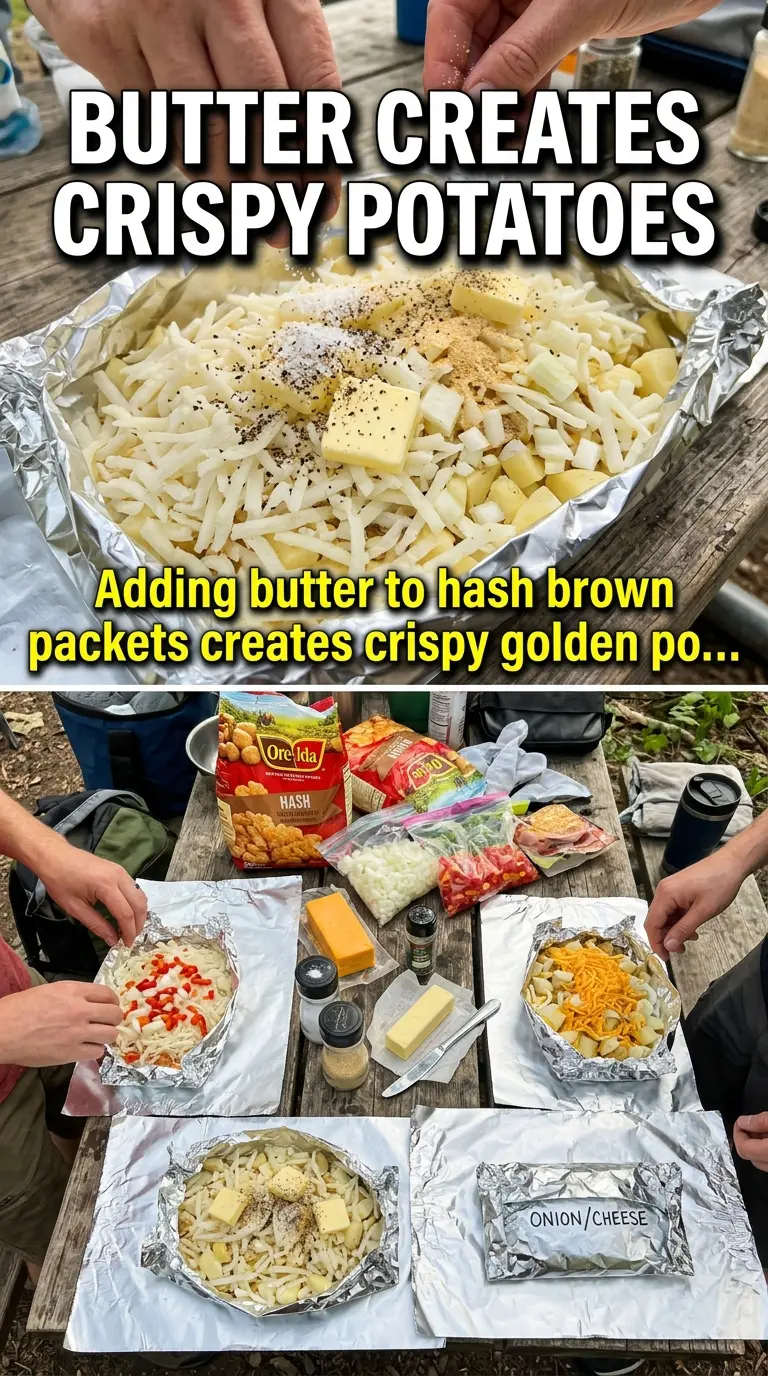
- Frozen hash browns — These are the base and the shortcut. They cook evenly, crisp well, and save you the work of shredding and squeezing out liquid yourself.
- Onion — Fresh onion adds sweetness and a little bite. Yellow onion is the best all-purpose choice, but white onion works if that’s what you’ve got.
- Butter or oil — Butter gives a richer finish; oil gives a cleaner, higher-heat sear. A blend of both is ideal if you want flavor without burning too fast.
- Garlic powder and paprika — Garlic powder seasons the potatoes without leaving raw garlic bits behind, and paprika adds color plus a faint smoky note that fits the campfire setup.
- Cheese and green onions — These are best added at the end. Cheese melts into the hot potatoes, and green onions stay fresh and sharp instead of fading into the skillet.
How to Build the Crust Without Burning the Potatoes
Heating the Skillet First
Set the cast iron over hot coals or a stable fire grate and let it come up to temperature before the fat goes in. If the skillet starts cold, the potatoes soak up fat before they begin browning, and that’s how you end up with greasy hash browns. The pan should feel hot when you hover your hand near it, but not smoking hard.
Adding the Potatoes in a Flat Layer
Once the butter or oil is hot, add the hash browns and onion and spread everything into an even layer. Crowding the pan is the fastest way to trap steam, so if your skillet is small, cook in batches. You’re looking for edges that start to dry and turn golden before you touch them.
Seasoning While They Cook
Sprinkle on the salt, pepper, garlic powder, and paprika after the potatoes are in the pan so the seasonings cling to the surface instead of disappearing into the fat. The paprika should deepen in color as it heats, and the garlic powder should smell fragrant, not sharp. If the spices hit scorching hot fat and start to smell bitter, pull the skillet slightly off the fire for a minute.
Flipping in Sections
After 15 to 20 minutes, lift an edge with a spatula and check for a deep golden crust. If the potatoes release cleanly, flip in sections instead of trying to turn the whole mass at once. Any pale, soft spots can go back down to the pan for a few more minutes until they catch up.
Finishing With Cheese and Green Onions
Scatter cheese over the top only when the hash browns are already crisp and cooked through. If you add it too early, the cheese can seal in steam and soften the crust underneath. Green onions go on last so they stay bright and fresh against the hot potatoes.
How to Adapt These Hash Browns for the Fire You’ve Got
Dairy-Free Campfire Hash Browns
Use oil instead of butter and skip the cheese, or finish with a dairy-free shredded cheese if you like that melty topping. Oil gives a cleaner, more reliable crisp over fire anyway, so this swap barely changes the texture.
Loaded Breakfast Version
Stir in cooked bacon or diced ham near the end, then top with cheese so it melts into the potatoes. This makes the skillet heartier and turns the hash browns into a full breakfast base instead of just a side.
Vegetarian Breakfast Skillet
Keep the recipe as written and serve it with eggs, sautéed peppers, or beans on the side. The hash browns bring enough richness and texture that you don’t need meat for it to feel substantial.
Storage and Reheating
- Refrigerator: Store leftovers in an airtight container for up to 3 days. The crust softens a bit, but the flavor holds up well.
- Freezer: These freeze better after cooking than before. Lay portions flat, freeze, then reheat from frozen or thawed for the best texture.
- Reheating: Reheat in a skillet over medium heat with a little oil to bring the crisp back. The microwave works in a pinch, but it will steam the potatoes and wipe out the crust.
Questions I Get Asked About This Recipe
Campfire Hash Browns
Ingredients
Equipment
Method
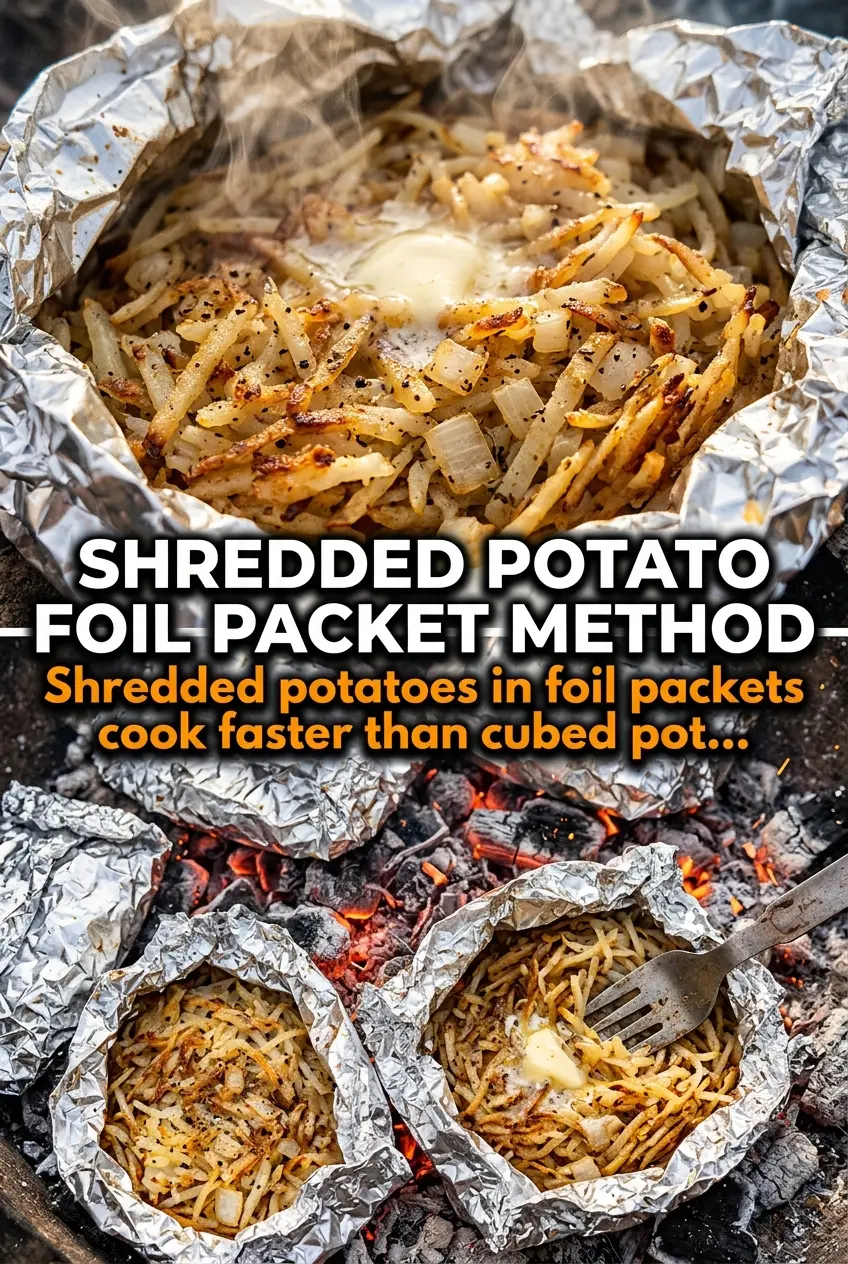
- Heat the butter or oil in a large cast iron skillet over the campfire until melted and shimmering.
- Add the frozen hash browns and diced onion, then spread into an even layer so they contact the skillet.
- Season with salt, pepper, garlic powder, and paprika, distributing the spices over the surface.
- Cook for 15-20 minutes, flipping occasionally, until the hash browns are golden brown and crispy with visible browned edges.
- Top with shredded cheese and green onions if desired, then let the cheese melt for 1-2 minutes and serve hot.
- Serve hot as a side dish or breakfast base.
- Serve hot as a side dish or breakfast base.