Hobo foil packets turn a handful of simple ingredients into a full dinner with tender potatoes, sweet carrots, soft onions, and meat that picks up all the buttery steam trapped inside the packet. The best part is the texture contrast: the vegetables cook in their own little covered oven while the meat stays juicy and the butter melts down through everything. When the foil is sealed well, you get that classic campfire result where every bite tastes seasoned from the inside out.
This version works because the vegetables go in first and the meat sits on top, where the heat can reach it without drying out the whole packet. Thin-sliced potatoes and carrots are the key; if they’re cut too thick, the meat finishes before the vegetables do. Heavy-duty foil matters too, since thin foil tears easily and lets the steam escape, which changes the whole cook.
Below, I’ll walk through the one packing order that keeps everything cooking evenly, plus a few smart swaps for different proteins, vegetables, and cooking setups. You’ll also find the timing cues that matter most so you know when the packets are done without guessing.
The potatoes were tender, the carrots had just enough bite left, and the butter made the whole packet taste rich without getting greasy. I cooked them over coals for 28 minutes and they came out perfect.
Hobo foil packets with juicy meat and buttery vegetables are the kind of campfire dinner worth keeping handy.
The Packet Sealing Step That Keeps Dinner Steaming Instead of Drying Out
The whole recipe depends on trapping steam. If the foil isn’t sealed tightly, the potatoes and carrots don’t soften evenly and the meat can end up a little leathery instead of juicy. I like to leave enough space inside each packet for a pocket of steam, then crimp the edges tightly so the heat can circulate without leaking out.
Another thing that matters here is how the ingredients are stacked. Vegetables on the bottom keep the meat from sitting directly against the hot foil, which helps prevent scorching and gives the vegetables time to catch up. If you’ve ever opened a packet and found burnt edges with underdone potatoes, that’s usually a packing problem, not a heat problem.
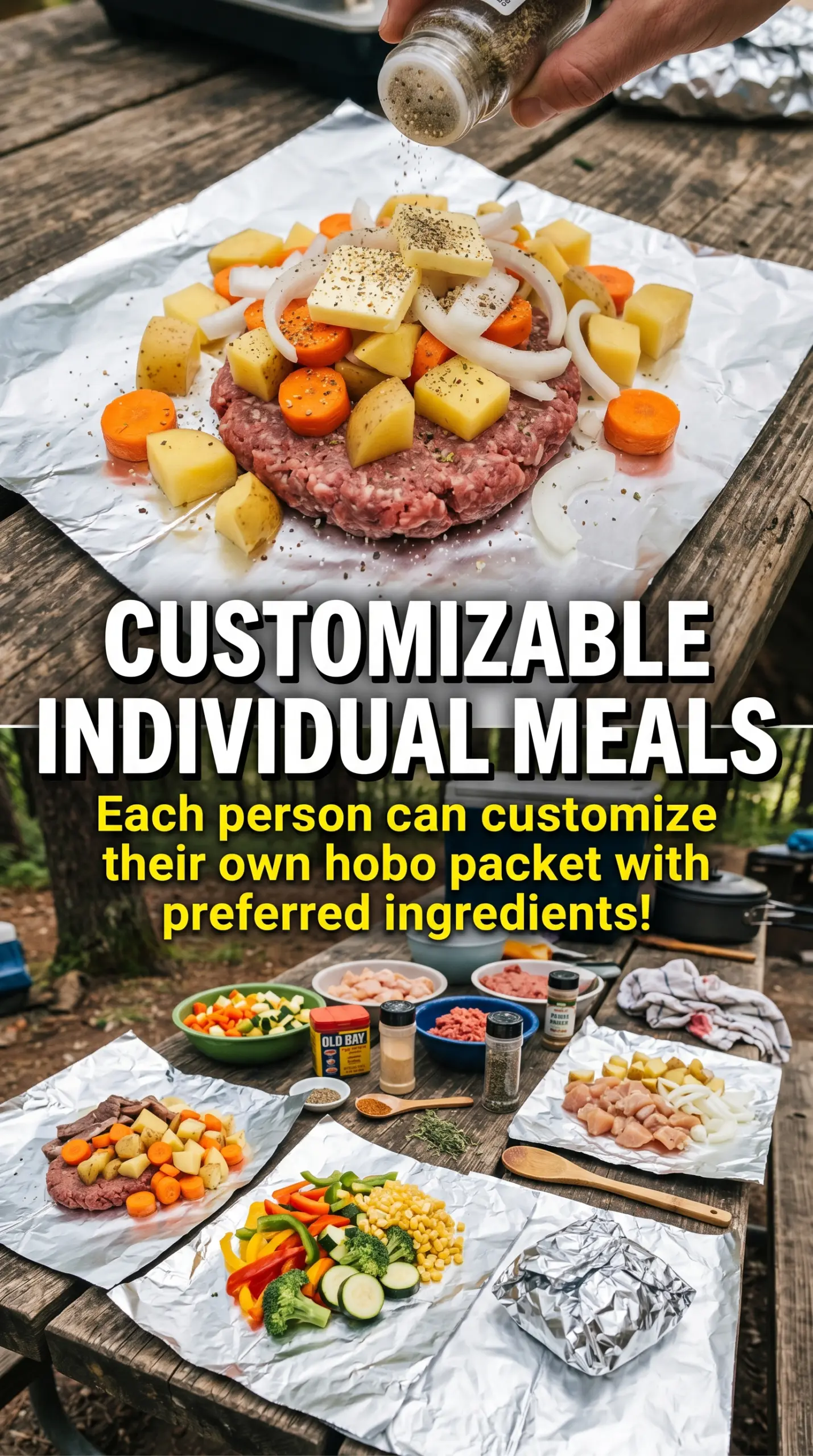
What Each Ingredient Is Actually Doing in This Packet
The ingredients here all have a job, and the dish gets better when you know what those jobs are. A few small choices change the final texture more than people expect.
- Ground beef or stew meat — Ground beef gives you a quicker, more familiar packet with juicy drippings that coat the vegetables. Stew meat brings a firmer, beefier bite, but it needs the full cook time and benefits from being cut into even portions so one packet doesn’t finish before another.
- Potatoes — These are the backbone of the packet, and they need to be sliced thin enough to soften in 30 minutes. Waxy potatoes hold their shape well; russets get fluffier and absorb more butter, but only if they’re cut evenly.
- Carrots and onions — Carrots add sweetness and stay a little firm even when fully cooked. Onions melt down into the steam and season everything around them, so slice them thin enough to soften instead of staying crunchy.
- Green beans — Canned green beans are convenient and work here because they’re already tender. Fresh green beans can be used, but they’ll need thinner slices or a little extra time to lose their raw edge.
- Heavy-duty foil — Regular foil can tear when you flip the packets or when the vegetables push against the seam. Heavy-duty foil holds the steam in, which is what gives you that fully cooked, packed-together result.
- Butter — This isn’t just for richness. It carries the garlic and pepper through the packet and keeps the vegetables from tasting flat after they steam.
The Packing Order That Makes the Vegetables Finish on Time
Start with the vegetables
Lay the potatoes, carrots, onions, and green beans in a shallow mound on each sheet of foil. Keep the potatoes on the bottom where they can sit closest to the heat source and soak up the butter as it melts down. If the pile is too tall, it traps steam in awkward pockets and cooks unevenly, so spread everything into a compact layer instead of a tight ball.
Set the meat on top
Place the beef patty or portion of stew meat over the vegetables so the juices drip down as everything cooks. Season the meat directly with salt, pepper, and garlic powder, then top it with the butter. If you bury the meat under the vegetables, the top can stay pale and underseasoned while the bottom gets overcooked.
Seal, flip, and rest
Fold the foil into a tight packet with room for steam to expand inside. Cook over medium heat for 25 to 30 minutes, flipping once halfway through so the packet doesn’t scorch on one side. Let it rest for 5 minutes before opening; that pause finishes the carryover cooking and keeps the steam from blasting out the second you cut the foil.
How to Adapt These Foil Packets for Different Fires, Diets, and Fillings
Make it with chicken instead of beef
Use boneless, skinless chicken thighs for the most forgiving result. They stay juicy over campfire heat and won’t dry out the way chicken breasts can. Cut the thighs into large chunks and keep the same vegetable timing, but check early if your fire runs hot.
Vegetarian foil packets
Skip the meat and add thick slices of mushrooms or cubes of firm tofu. Mushrooms bring a savory, meaty feel and release enough moisture to keep the vegetables from drying out. Tofu should be pressed first or it can go soft in the steam instead of holding its shape.
Dairy-free version
Use olive oil or a dairy-free butter substitute in place of the butter. You’ll lose a little of that classic rich finish, but the packet still cooks well and the vegetables stay coated. Add an extra pinch of garlic powder to help build back some depth.
Oven-baked packets at home
Bake the sealed packets on a sheet pan at 400°F until the potatoes are tender and the meat is cooked through. This is the cleanest way to get the same texture without a campfire, and it also gives you more even heat than a grill grate.
Storage and Reheating
- Refrigerator: Store leftovers in an airtight container for up to 3 days. The potatoes soften a bit more as they sit, but the flavor holds up well.
- Freezer: These freeze okay, though the potatoes will be softer after thawing. Wrap portions tightly and freeze for up to 2 months for best results.
- Reheating: Reheat in a 350°F oven, still wrapped or covered, until hot through. The biggest mistake is microwaving uncovered, which dries out the meat and makes the vegetables unevenly warm.
Questions I Get Asked About This Recipe
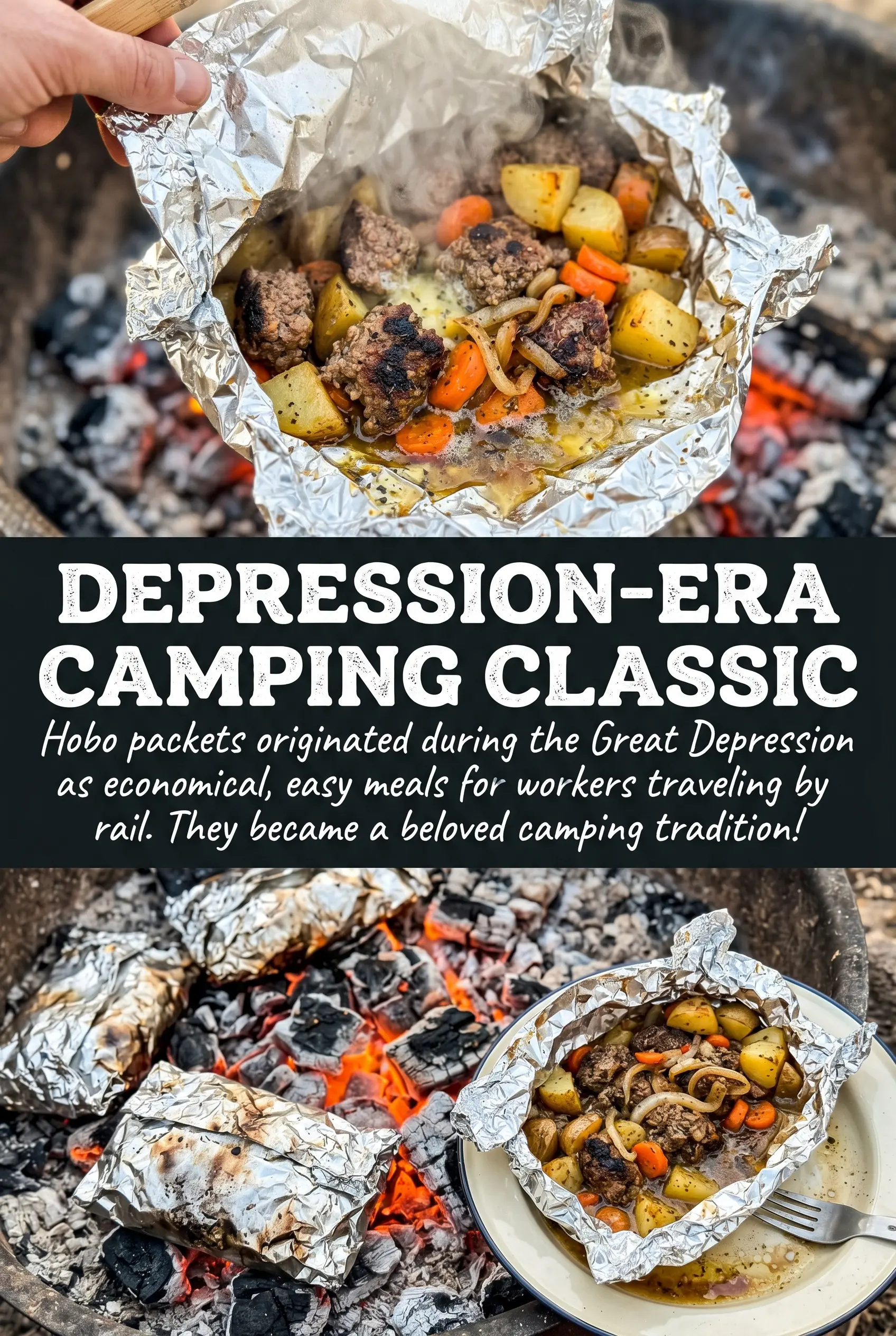
Hobo Foil Packets
Ingredients
Equipment
Method
- If using ground beef, form into 4 patties; if using stew meat, divide into 4 portions. Keep portions similar in thickness so they finish at the same time.
- On each foil sheet, layer potatoes, carrots, and onions first, then add green beans. Press the vegetables into an even layer so the packet heats uniformly.
- Place the meat on top of the vegetables on each foil sheet. Set it centered so steam circulates evenly around it.
- Season each packet with salt, pepper, and garlic powder, then top with 1 tablespoon butter. Leave the surface covered so the butter melts into the filling as it cooks.
- Fold the foil into sealed packets, pinching edges tightly to prevent leaks. Make the packet snug but not overly compressed for steam flow.
- Place packets on the campfire grate over medium heat for 25-30 minutes, flipping halfway. Look for steady bubbling steam inside the foil as the vegetables soften and the meat cooks through.
- Flip the packets halfway using heat-safe tongs or a flat tool. The visual cue is the foil should still be sealed with no visible gaps or leaks.
- Let the packets cool for 5 minutes before carefully opening and serving. The texture cue is steaming hot contents that are slightly set for easier serving.