Golden, sticky monkey bread cooked in a Dutch oven has a way of disappearing the second it hits the table. The biscuit pieces puff up into soft pull-apart layers, the cinnamon sugar melts into the butter and brown sugar, and the top turns deep amber without drying out the middle. It’s the kind of campfire dessert that feels a little messy in the best way, which is exactly why everyone goes after it first.
The trick is keeping the biscuit pieces evenly coated and cooking them with steady heat from above and below. That’s what gives you browned edges without a doughy center. The Dutch oven does the heavy lifting here, but the layering matters too — if you dump everything in loosely, the caramel won’t work its way through the bread the same way.
Below, I’ve included the one timing cue that matters most, plus a few ways to adapt this if you’re working with a bigger fire, a smaller crew, or a pantry that doesn’t have exactly what the recipe calls for.
The biscuit pieces cooked all the way through and the caramel soaked down into every layer. I lifted the lid at 28 minutes and it smelled like cinnamon rolls over a campfire.
Save this campfire monkey bread for the next night you want a gooey Dutch oven dessert with a caramelized cinnamon crust.
The Secret to Getting Monkey Bread Browned Through a Dutch Oven, Not Burned on the Bottom
Campfire cooking changes the rules a little. The bottom of the Dutch oven picks up heat fast, and if the fire is too hot, the sugar mixture can darken before the center of the bread has a chance to cook. That’s why this recipe works best with a bed of coals rather than open flames and with some of the coals set on top of the lid, too. You’re trying to bake the bread evenly from all sides, not blast it from underneath.
The other common problem is packing the biscuit pieces too tightly. They need room to expand, and the caramel needs pathways to sink down between them. A loose, even layer gives you those soft pull-apart sections instead of one dense lump in the middle.
What Each Ingredient Is Doing in This Campfire Monkey Bread
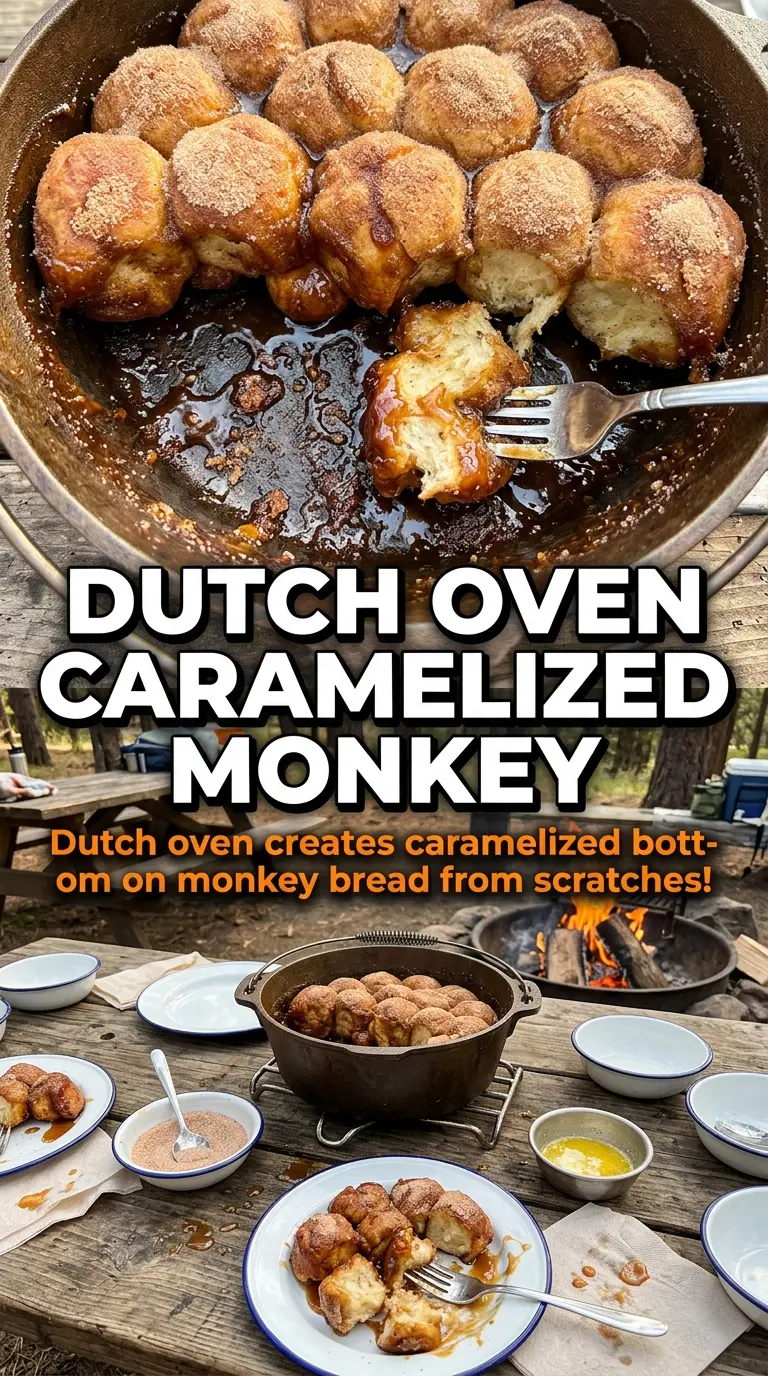
- Refrigerated biscuit dough — This is the backbone of the recipe. It bakes up into soft, fluffy pieces that tear apart easily after they’ve soaked in the butter mixture. Homemade dough won’t give you the same quick campfire-friendly result, and canned biscuits are sturdy enough to handle the shake-and-coat treatment without falling apart.
- Sugar and cinnamon — This coating gives the bread its crust and most of its aroma. Granulated sugar clings well to the biscuit pieces and turns crisp at the edges while the cinnamon perfumes the whole pan. If you want a deeper spice note, add a pinch of nutmeg, but don’t reduce the cinnamon or the bread loses its signature flavor.
- Butter and brown sugar — This is the caramel layer that melts down through the bread as it cooks. Brown sugar brings molasses depth that white sugar can’t match, and the butter helps the topping seep into every gap. Melt the butter fully before mixing so the sugar dissolves as much as possible; gritty butter-sugar patches don’t spread as well.
- Cooking spray — The Dutch oven needs a good coating so the sugar doesn’t weld itself to the sides. This is one of those times when a generous spray matters more than brand names or fancy ingredients.
Building the Layers So Every Piece Gets Cinnamon Sugar
Cutting and Coating the Biscuit Dough
Cut each biscuit into quarters so the pieces are small enough to cook through before the outside scorches. Drop them into the cinnamon sugar bag in batches and shake until every surface is coated. If the bag gets clumpy, separate the pieces with your fingers before they go in the Dutch oven, because bare spots won’t caramelize the same way.
Layering the Dutch Oven
Spray the Dutch oven well, then add the coated biscuit pieces in an even layer. Don’t press them down hard. They need some space to expand, and that air gap helps the butter mixture travel downward as it melts. When you pour the brown sugar mixture over the top, aim for even coverage instead of one big pool in the center.
Cooking Over the Coals
Set the Dutch oven over hot coals and put coals on the lid, too. That top heat is what keeps the bread from staying pale and raw in the middle. After about 25 minutes, lift the lid and look for a deep golden top and bubbling caramel at the edges. If it still looks wet and pale, give it a few more minutes; if the bottom smells too dark too soon, the fire is too hot and you need fewer coals underneath.
Resting and Inverting
Let the monkey bread cool for 5 minutes before turning it out. That short rest helps the caramel settle so it doesn’t run everywhere the second you invert the pan. Wait too long, though, and the sugar starts to firm up against the Dutch oven, which makes the release messier and more frustrating.
How to Adapt This When You Want a Different Kind of Campfire Dessert
Dairy-Free Version
Swap the butter for a plant-based baking stick that melts cleanly. The texture stays close, but the caramel won’t taste quite as rich, so the cinnamon becomes the louder flavor. Pick a dairy-free butter that’s meant for baking rather than a soft spread, or the topping can separate in the heat.
Extra-Spiced Monkey Bread
Add a pinch of nutmeg, cardamom, or pumpkin pie spice to the sugar mixture. That gives the bread a warmer, more bakery-style finish without changing the structure of the recipe. Don’t go overboard, because too many spices can muddy the clean cinnamon-sugar flavor that makes this one so good.
Smaller Batch for Two or Three People
Use one can of biscuits and halve the sugar, cinnamon, butter, and brown sugar. Cook it in a smaller Dutch oven or camp oven so the bread still has enough depth to puff up properly. A too-large pan spreads the pieces out thin, which dries them before the center gets tender.
Storage and Reheating
- Refrigerator: Store leftovers in an airtight container for up to 3 days. The sugar coating will firm up, and the bread won’t stay as fluffy as it was fresh.
- Freezer: It freezes, but the texture softens after thawing. Wrap portions tightly and freeze for up to 1 month if you want to use them later for a quick treat.
- Reheating: Warm individual portions in the microwave for 15 to 20 seconds or cover the Dutch oven and reheat gently over low coals. High heat burns the sugar before the center softens, so go slow.
Answers to the Questions Worth Asking
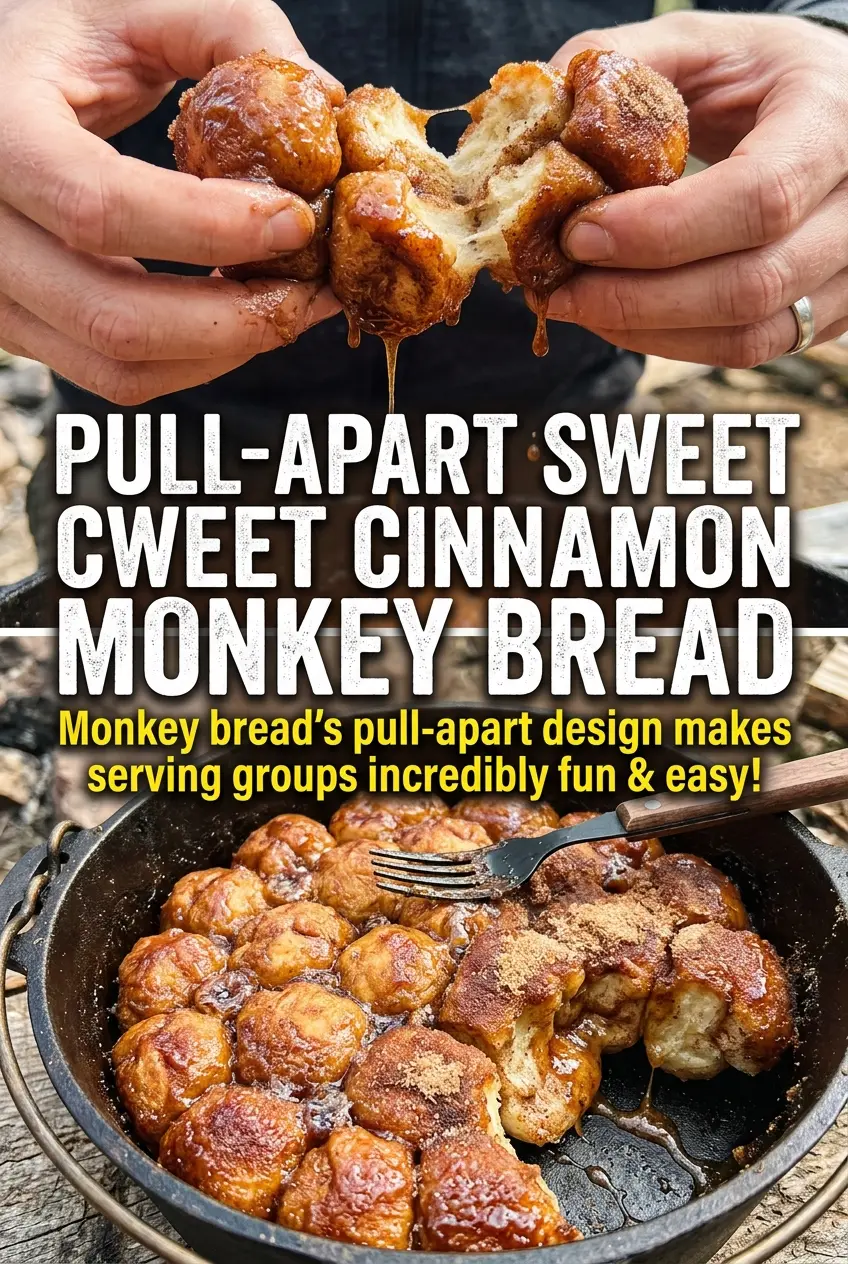
Campfire Monkey Bread
Ingredients
Equipment
Method
- Cut each refrigerated biscuit into quarters to create bite-size pieces for even coating and cooking.
- Mix the sugar and cinnamon in a large zip-top bag, add the biscuit pieces, and shake to coat until well dusted.
- Spray the Dutch oven with cooking spray so the pull-apart bread releases cleanly.
- Layer the coated biscuit pieces in the Dutch oven in an even, single layer where possible.
- Mix the melted butter and brown sugar, then pour over the biscuit pieces so they’re coated and can caramelize.
- Cover the Dutch oven and place it on campfire coals with coals on top of the lid for top-and-bottom heat, cooking for 25-30 minutes until golden brown and cooked through with visible browning.
- Let the monkey bread cool for 5 minutes so the caramel glaze thickens slightly and releases better.
- Invert onto a plate and pull apart to serve, showing the golden, caramel-coated pull-apart pieces.