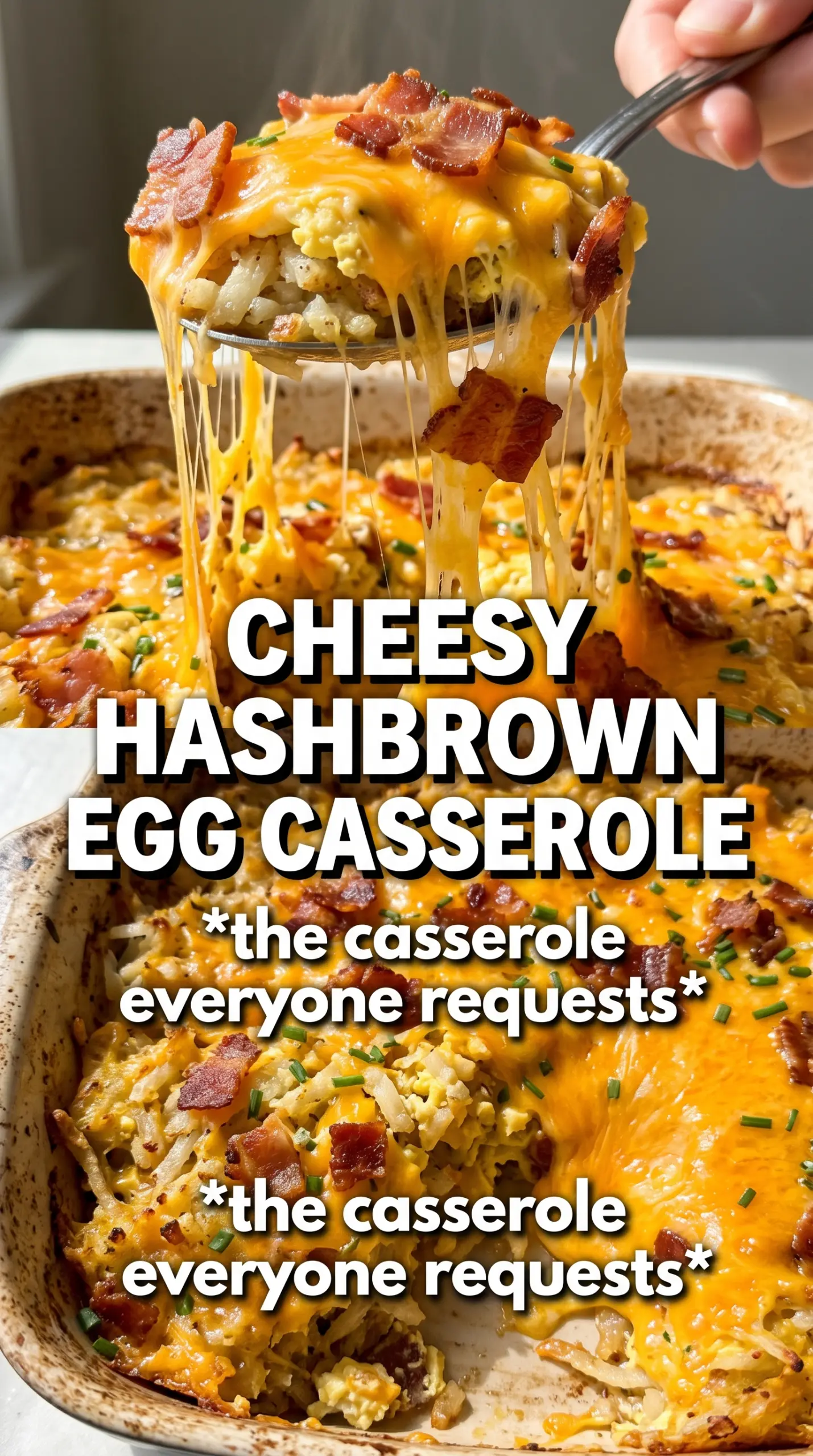
Golden hashbrown casserole with bacon, eggs, and a crisp cheddar top is the kind of breakfast bake that disappears fast because it hits every note at once: salty, creamy, crisp, and filling. The edges go deeply browned and crunchy while the center stays tender and custardy, which is exactly what you want when you’re feeding a brunch crowd or setting up breakfast for a busy morning.
What makes this version work is the way the thawed hash browns are pressed into a real base instead of left loose and shaggy. That gives the eggs somewhere sturdy to set, and it keeps the whole dish from turning watery. The bacon goes in two ways too: crumbled inside for smoky flavor in every bite, then a few strips on top so you get those crisp, savory bites right off the surface.
Below, I’ve included the small details that keep the casserole from going soggy, plus the best way to make it ahead without losing that golden top.
The hash browns baked up with crispy edges and the eggs set perfectly without getting rubbery. I loved that the bacon stayed on top instead of sinking, and the whole pan tasted even better reheated the next morning.
Save this bacon, egg, and hashbrown casserole for the mornings when you want a crisp top, a tender middle, and zero stovetop juggling.
The Part That Keeps Hashbrown Casserole from Turning Watery
The biggest mistake with a breakfast casserole like this is treating the hash browns like a fluffy filler instead of the foundation. Frozen shredded potatoes carry a lot of moisture, and if they go into the pan still damp, they steam under the eggs instead of baking into a sturdy base. That’s how you end up with a soft, wet bottom and a top that looks done before the center has actually set.
Pressing the thawed hash browns into an even layer matters more than people expect. You’re building a layer that can support the egg mixture, absorb some of the bacon fat, and still crisp around the edges. The uncovered bake is part of that too — steam has to escape, or the top will stay pale and the center will take forever to firm up.
What Each Ingredient Is Actually Doing in This Dish
- Frozen shredded hash browns — These are the backbone of the casserole. Thawed potatoes press into a tight layer and bake up with better texture than diced potatoes would here. If they seem especially wet after thawing, pat them dry with a clean towel before they go in the dish.
- Bacon — Cook it until it’s fully crisp so it stays distinct after baking. Soft bacon turns chewy in the oven. Reserving a few whole strips for the top gives you better texture and a more finished look than crumbling everything inside.
- Eggs and whole milk — This is the custard that binds the casserole. Whole milk gives the eggs enough fat to stay tender instead of spongy. Lower-fat milk works, but the center won’t taste as rich and can bake up a little firmer.
- Sharp cheddar — Sharp cheddar melts into the egg mixture and also forms that browned top everyone goes for first. Pre-shredded cheese will work, but freshly shredded melts smoother because it doesn’t carry the anti-caking coating.
- Garlic powder and onion powder — These season the casserole in a way fresh aromatics can’t manage in the same texture. They spread evenly through the egg base and keep every slice savory without adding extra moisture.
- Green onions — These go on at the end for a fresh bite and a little color. Add them after baking so they stay bright instead of soft and dull.
How to Layer the Pan So the Center Sets and the Top Stays Crisp
Building the Potato Base
Grease the baking dish well, then press the thawed hash browns into a flat, even layer. Don’t leave gaps or mounds, because uneven spots bake at different speeds and can leave you with a dry corner and a soggy center. A spoon or your hands both work here; the goal is a packed base that feels level from edge to edge.
Loading in the Bacon and Egg Custard
Scatter the crumbled bacon over the potatoes, then whisk the eggs with the milk and seasonings until the mixture looks uniform and smooth. Stir in some of the cheddar before pouring it over the casserole so the cheese melts into the custard instead of sitting only on top. If the egg mixture is poured too quickly in one spot, it can push the potatoes around, so add it in a steady stream across the whole dish.
Baking Until the Middle Is Set
Top with the rest of the cheddar and arrange the reserved bacon strips across the surface. Bake uncovered until the top is deeply golden and the center no longer sloshes when you gently shake the pan. If the edges brown early but the middle still looks loose, cover the dish loosely with foil for the last stretch so the top doesn’t overdarken before the eggs finish.
Three Ways to Make This Breakfast Bake Fit Your Table
Make it gluten-free without changing the method
This recipe is naturally gluten-free as written, as long as your bacon and seasonings are certified gluten-free. The texture and bake time stay the same, which makes this an easy breakfast option when you’re cooking for mixed diets.
Swap in turkey bacon for a lighter finish
Turkey bacon works, but cook it until crisp before adding it to the casserole or it will turn soft in the oven. You’ll lose some of the smoky fat that seasons the potatoes, so the dish tastes a little leaner and a touch less rich.
Use a different cheese for a sharper or milder result
Cheddar gives the most classic result, but Monterey Jack melts a little silkier and pepper jack adds heat. If you switch to a very mild cheese, season the egg mixture a bit more aggressively so the casserole doesn’t taste flat.
Make it ahead for an easier morning
Assemble the casserole the night before, cover it, and refrigerate it without baking. In the morning, let it sit on the counter while the oven heats so the center isn’t ice-cold, then bake until the eggs are fully set. Straight-from-the-fridge casseroles need extra time and can brown before the middle is done.
Storage and Reheating
- Refrigerator: Store covered for up to 4 days. The top softens a bit, but the flavor holds up well.
- Freezer: This casserole freezes well in squares. Cool completely, wrap tightly, and freeze for up to 2 months. Thaw overnight in the fridge before reheating.
- Reheating: Warm slices in a 325°F oven until heated through, or use the microwave for quick leftovers. The oven keeps the texture better; the microwave works, but the potatoes soften more.
Answers to the Questions Worth Asking
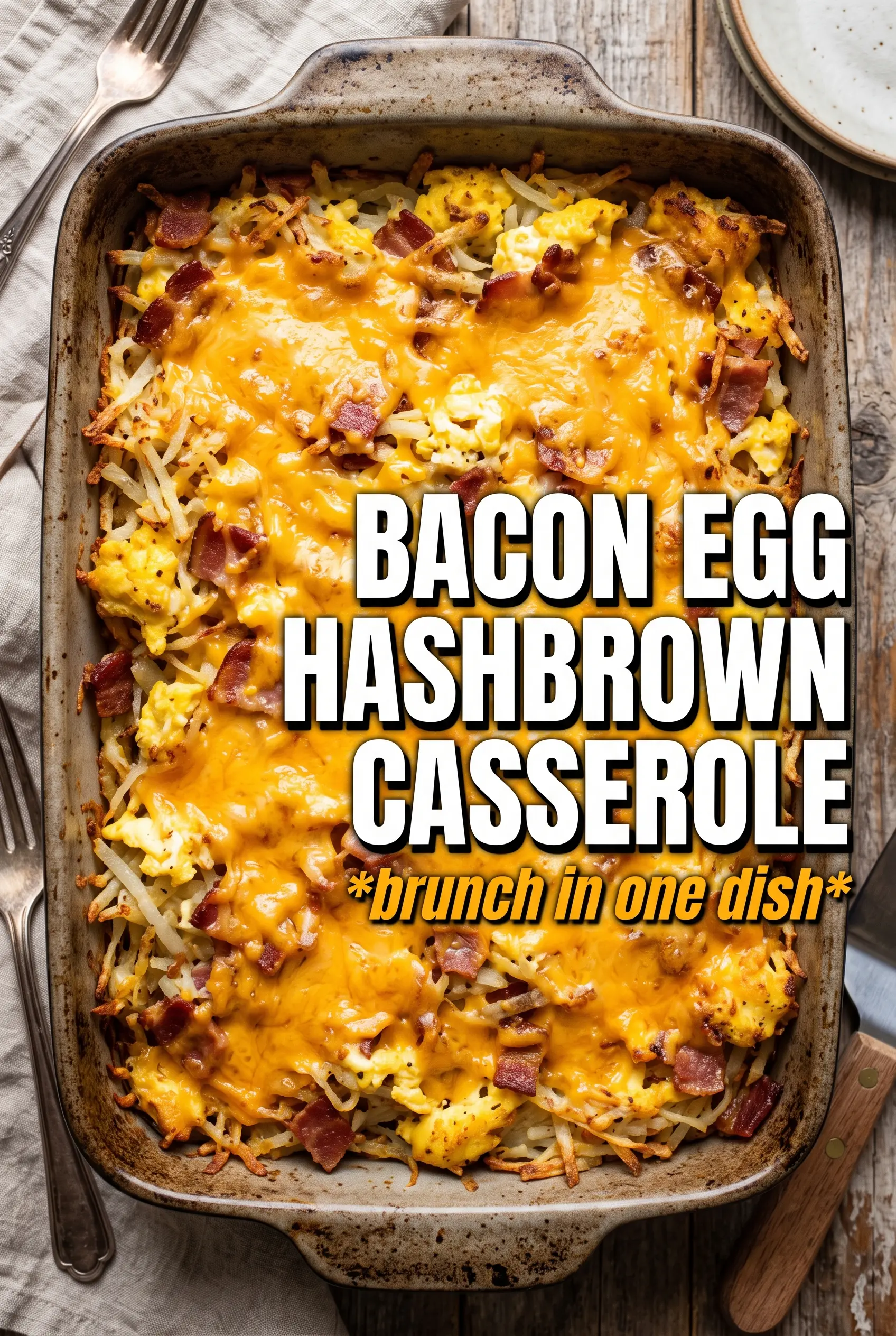
Bacon, Egg, and Hashbrown Casserole
Ingredients
Equipment
Method
- Preheat the oven to 375°F and grease a 9x13 dish.
- Press the thawed hash browns in an even layer across the bottom of the dish to create a uniform base.
- Scatter the crumbled bacon over the hash browns so it distributes throughout the casserole.
- Whisk the eggs, whole milk, garlic powder, onion powder, salt, and black pepper until smooth.
- Stir in 1.5 cups of the shredded cheddar, then pour the mixture over the bacon layer so it soaks into the potatoes.
- Top with the remaining cheddar and arrange a few whole bacon strips across the top for visible bacon strips after baking.
- Bake uncovered for 45–50 minutes at 375°F until the eggs are set and the top is deeply golden.
- Garnish with sliced green onions immediately after baking so the casserole looks fresh and bright.