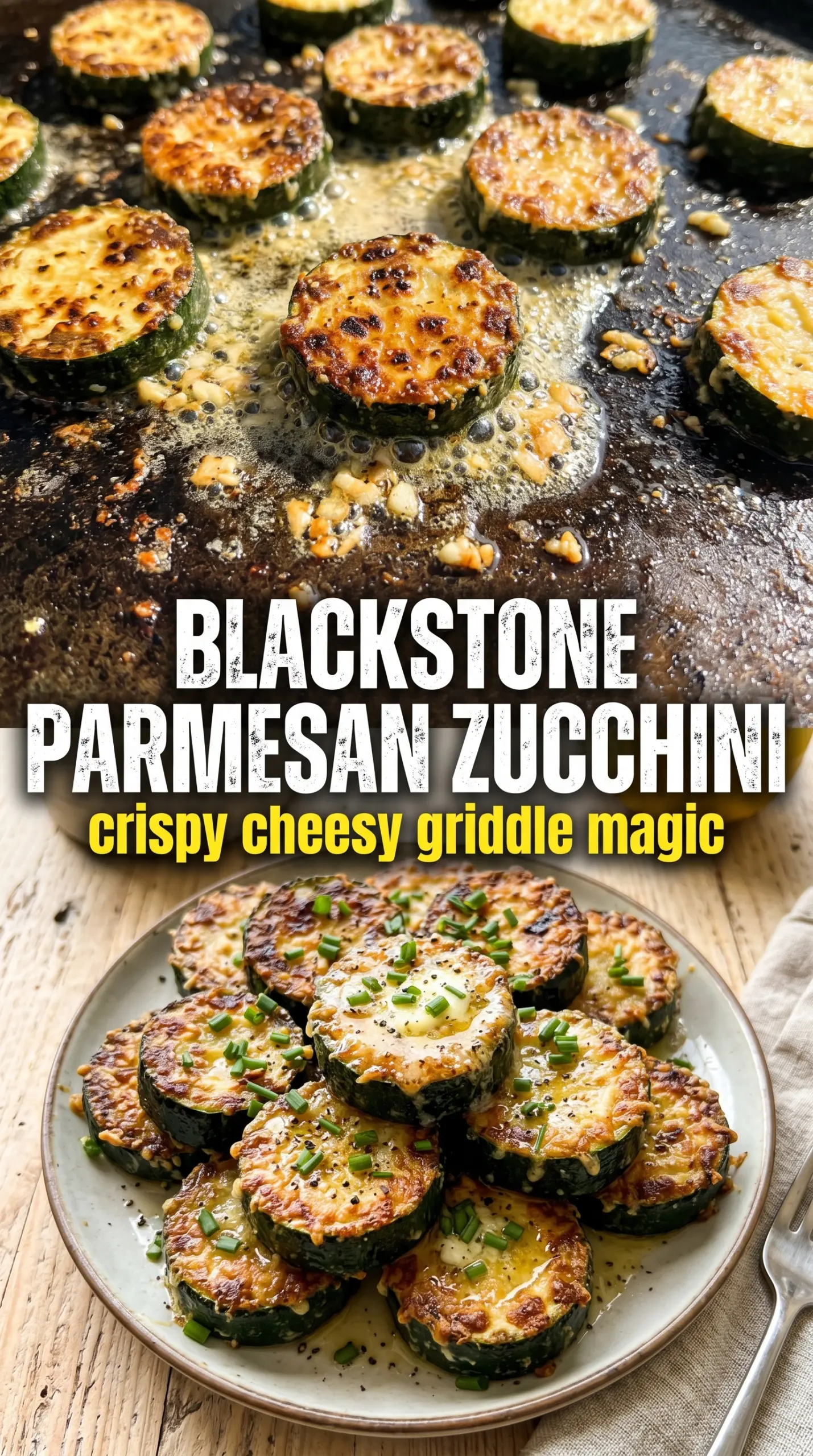
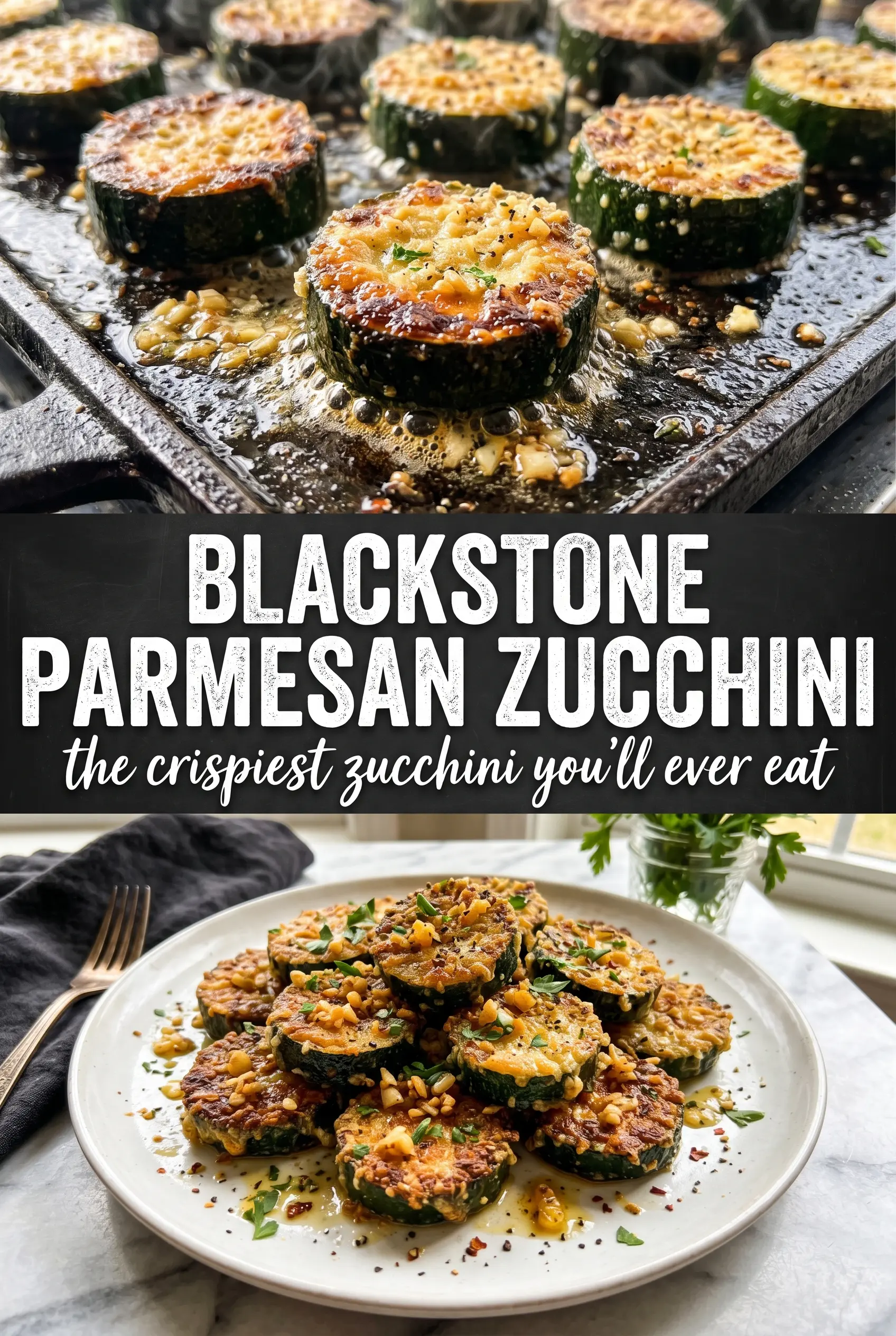
Blackstone parmesan zucchini turns an everyday vegetable into something with real edge: browned, crisped at the surface, tender in the center, and finished with that salty parmesan crust that clings to each coin. The flat top gives you the kind of direct heat a skillet can’t match, so the zucchini picks up deep caramelization instead of turning soft and watery. That’s the difference between a side dish people eat and a side dish people keep picking at.
The trick is simple but important. Zucchini holds a lot of moisture, so the griddle has to be hot enough to sear fast before the slices start steaming. I also toss it with seasoning before it hits the heat, then finish it with butter, garlic, and parmesan at the end so the cheese melts onto the hot surface instead of disappearing into the pan.
Below, I’ll walk through the exact timing that keeps the zucchini browned instead of limp, plus a few easy swaps if you want to change up the seasoning or make it dairy-free.
The zucchini got those crisp, browned edges on the Blackstone, and the parmesan melted into a little crust on top instead of falling off. I served it with grilled chicken and my husband kept sneaking pieces off the tray before dinner.
Save these parmesan-crusted Blackstone zucchini coins for the nights when you want a fast side dish with real caramelization.
The Part Most Zucchini Gets Wrong on a Hot Griddle
Zucchini fails on the griddle for one reason: it spends too long releasing water before the surface has a chance to brown. Once that happens, you’re no longer searing. You’re steaming. The fix is hot heat, a single layer, and enough time untouched for the underside to pick up color before you move it.
Cutting the zucchini into 1/3-inch rounds matters here. Thinner slices can go soft before they brown, and thicker ones need too much time to cook through. You want coins that are sturdy enough to survive a flip and tender enough to eat in a couple bites.
- Don’t crowd the griddle. Space gives the moisture room to evaporate instead of trapping steam around the slices.
- Let the first side sit. If you keep nudging the zucchini, it won’t develop that deep golden crust.
- Add the parmesan near the end. It melts best when the zucchini is already hot and the surface is dry enough for the cheese to cling.
What Each Ingredient Is Actually Doing in This Dish
- Zucchini: Fresh, firm zucchini is the whole reason this works. Older zucchini can be watery and seedy, which makes browning harder and gives you a softer finish.
- Olive oil or avocado oil: You need enough oil to coat the coins and keep them from sticking while they sear. Avocado oil handles higher griddle heat a little better, but olive oil works fine.
- Butter and garlic: These go on after the initial sear so the garlic doesn’t burn before the zucchini is cooked. If garlic hits the griddle too early, it turns bitter fast.
- Parmesan: Freshly grated parmesan melts and forms a crust much better than the shelf-stable stuff in a can. If that’s all you have, it’ll still add flavor, but it won’t cling the same way.
- Lemon wedges: The acid wakes everything up at the end. A squeeze over the hot zucchini keeps the dish from tasting heavy.
How to Get Deep Browning Without Turning the Zucchini Mushy
Heating the Griddle the Right Way
Preheat the Blackstone to medium-high and let it get truly hot before the zucchini goes down. If the surface isn’t hot enough, the coins will sit there and sweat. You want that immediate sizzle the second they hit the oil. Spread the oil evenly so every round has a thin film under it instead of dry spots that can stick.
Seasoning Before the Sear
Toss the zucchini with olive oil, Italian seasoning, garlic powder, salt, and pepper before it hits the griddle. The oil helps the seasoning cling, and the garlic powder gives you garlic flavor without burning on contact. Keep the layer light; too much seasoning clumps on the griddle and can make the surface look messy instead of nicely browned.
Flipping at the Right Moment
Leave the first side alone for about 4 minutes until it’s deeply golden underneath. If it lifts cleanly, it’s ready. Turn each round and cook the second side for another 3 minutes. The zucchini should still hold its shape and feel tender when pierced, not collapsed or wet in the center.
Finishing With Butter, Garlic, and Parmesan
Push the butter and minced garlic to one side of the griddle and cook them just until fragrant, about 30 seconds. Garlic goes from fragrant to bitter quickly, so don’t leave it there once it starts sizzling hard. Toss the zucchini through the butter, then press a pinch of parmesan onto the top of each round and let it melt for about a minute. That last step is what gives you the savory crust instead of loose cheese scattered on the plate.
Three Ways to Adapt This Griddled Zucchini
Dairy-Free Griddle Zucchini
Skip the butter and parmesan and finish the zucchini with extra olive oil, garlic, and a good squeeze of lemon. You lose the salty crust, but the browning and the bright finish still carry the dish. A sprinkle of nutritional yeast can add a little savory depth if you want that cheesy note.
Extra Crispy Parmesan Finish
For a more pronounced cheese crust, pat the zucchini dry before seasoning and use freshly grated parmesan in a finer shred. The drier surface helps the cheese cling and crisp instead of sliding off. This version tastes a little saltier and feels closer to a crunchy topper than a soft melt.
Oven or Grill Pan Backup
If you don’t have a Blackstone, use a heavy skillet or grill pan over medium-high heat and cook in batches. You won’t get quite the same flat-top caramelization, but the technique stays the same: high heat, no crowding, and parmesan added at the end. The key is resisting the urge to stir constantly.
Storage and Reheating
- Refrigerator: Store in an airtight container for up to 3 days. The parmesan softens and the zucchini releases a little moisture, so the texture is best on day one.
- Freezer: I don’t recommend freezing this one. Zucchini turns watery after thawing and the cheese coating won’t hold its texture.
- Reheating: Reheat in a hot skillet or on the griddle for a few minutes to bring back some browning. The microwave will make it soft, which is the fastest way to lose the texture you worked for.
Answers to the Questions Worth Asking
Blackstone Parmesan Zucchini
Ingredients
Equipment
Method
- Preheat the griddle to medium-high, then add the olive oil and spread it evenly across the cooking surface.
- Toss the zucchini rounds with olive oil, Italian seasoning, garlic powder, salt, and black pepper until evenly coated.
- Place the zucchini in a single layer on the hot griddle without crowding, and cook undisturbed for 4 minutes until the bottoms are deeply golden with visible caramelization.
- Flip each zucchini round and cook for 3 minutes on the other side until hot and browned.
- Add the butter and minced garlic to one side of the griddle, then cook for 30 seconds until fragrant, and toss the zucchini in the garlic butter.
- Press a pinch of parmesan onto the top of each zucchini round, then let it melt for 1 minute until the surface turns into a lightly set parmesan crust.
- Transfer to a plate, garnish with chopped parsley, and serve with lemon wedges.