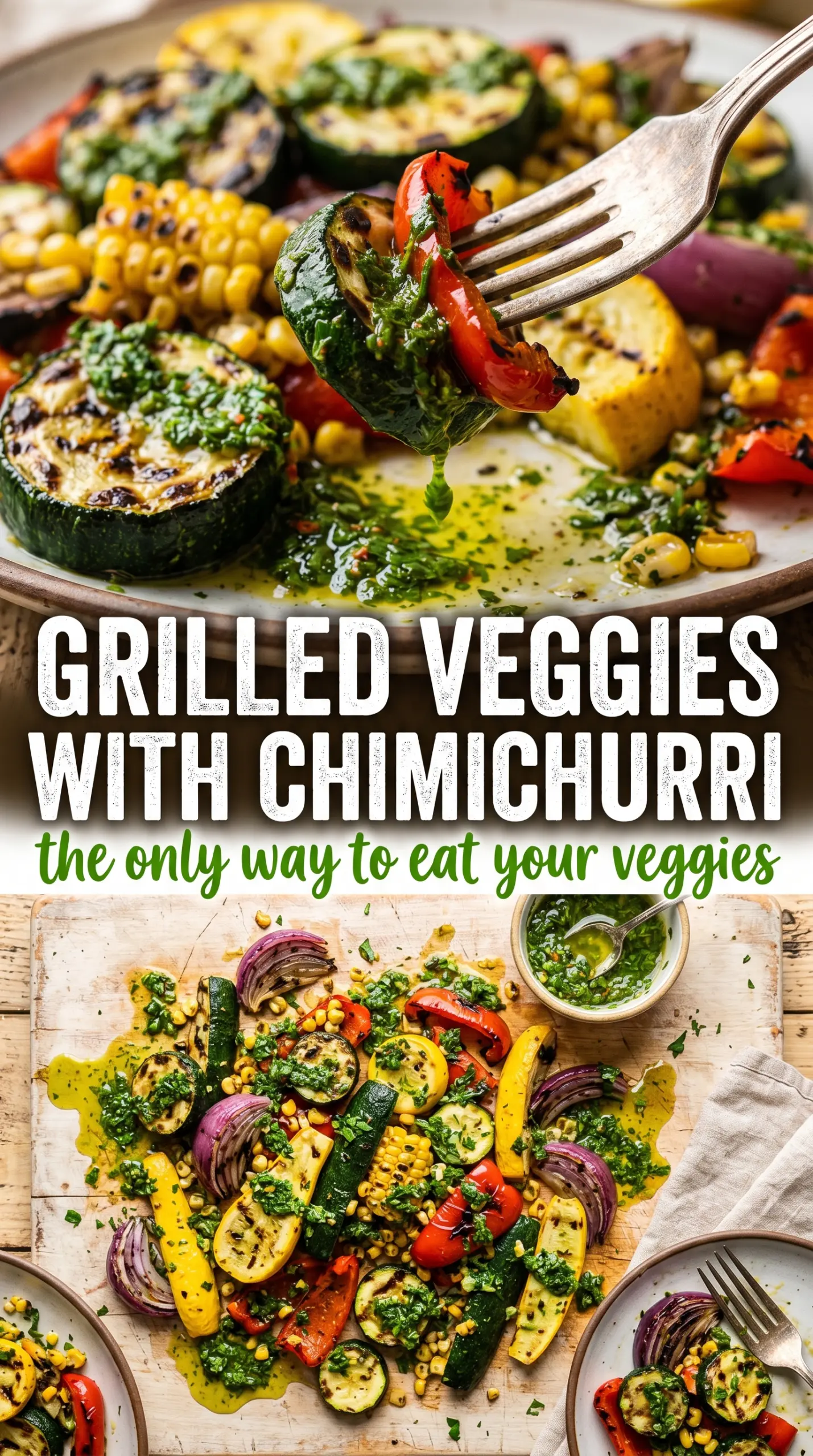
Charred grilled vegetables get a lot more interesting when they’re finished with chimichurri. The smoke from the grill, the sweetness from the onions and peppers, and the sharp herbal sauce hit at the same time, and that contrast is what makes this platter disappear fast. Zucchini and eggplant can go limp and plain on their own, but when you pull them off the grill with deep browned edges and spoon over that bright green sauce, they taste layered and alive.
What makes this version work is restraint. The vegetables are oiled just enough to prevent sticking and encourage browning, but not so much that they steam. The chimichurri stays rough-chopped instead of turning into a puree, which gives it more bite and keeps the garlic, herbs, and vinegar distinct instead of muddy. It’s the kind of side dish that handles a crowd without getting fussy, and it tastes just as good warm as it does at room temperature.
Below, I’ll show you how to keep the vegetables from collapsing on the grill, how to judge when each one is ready, and how to swap in other vegetables without throwing off the whole balance.
The chimichurri was bright and punchy, and the zucchini held its shape instead of turning mushy. I took the platter to a cookout and people kept going back for the eggplant and onions.
Grilled veggies with chimichurri are the platter to pin for smoky summer sides, cookouts, and easy vegetable dinners.
The Reason the Grill Works Better Than the Oven Here
Grilled vegetables need direct heat to earn their flavor. In the oven, zucchini and eggplant can soften before they brown, which leaves you with a pleasant texture but not much depth. On the grill, the dry heat and hot grates do two things at once: they concentrate the natural sugars and create those dark marks that taste smoky instead of flat.
The other key point is timing. Not all vegetables cook at the same rate, and that matters here. Bell peppers and onion rounds need a little longer to soften and char, while zucchini and eggplant go from tender to floppy quickly if you walk away. Keeping them in separate piles on the grill gives you control without adding work.
- Zucchini — Slice it lengthwise so it stays intact on the grates and doesn’t fall through. Thicker slices hold up better and give you a better char-to-tender ratio.
- Eggplant — This is the one vegetable that benefits most from enough oil to lightly coat the surface. Eggplant drinks up fat, so under-oiling leaves it dry and spongy instead of silky.
- Red onions — Cut them into rounds so the layers stay together. If the rounds are too thin, they fall apart before they can caramelize.
- Bell peppers — Quartering them keeps the pieces easy to turn and gives the skins enough contact with the grate to blister and sweeten.
What the Parsley, Garlic, and Vinegar Are Each Doing in the Chimichurri
- Parsley — This is the backbone of the sauce. Use fresh flat-leaf parsley if you can, because curly parsley brings less flavor and a softer finish.
- Cilantro — It adds a greener, slightly citrusy edge that keeps the sauce from tasting one-note. If you’re one of the people who doesn’t like cilantro, replace it with more parsley rather than skipping the volume entirely.
- Garlic — Raw garlic is supposed to stay sharp here, but blending it too fine can make the sauce harsh. Rough chopping gives you bite without turning the chimichurri bitter.
- Red wine vinegar — This is what wakes up the grilled vegetables. Lemon can work in a pinch, but it gives a brighter, cleaner finish and loses the classic chimichurri tang.
- Olive oil — Use a good-tasting oil here because it stays front and center. For the vegetables, a basic olive oil is fine; for the sauce, the oil carries the herbs and vinegar, so bland oil tastes flat.
The Part of the Grill Setup That Keeps Everything From Sticking
Getting the grates hot enough
Preheat the grill fully before the vegetables go on. If the grates are only warm, the vegetables release moisture before they sear, and that’s how you end up with soft surfaces and broken slices. You want a hot grate that gives an immediate sizzle the second the vegetables touch it.
Oiling the vegetables, not flooding them
Brush the vegetables lightly with olive oil and season them before grilling. Too much oil softens the exterior and makes flare-ups more likely; too little leaves the vegetables dry and prone to sticking. A thin, even coat is enough to promote browning and help the seasoning cling.
Turning at the right moment
Let the vegetables sit until they release more easily from the grates. If you try to move them too soon, they tear and lose those neat char marks. The right moment feels obvious: the surface looks browned, the edges are lifted, and the vegetable comes away with a little resistance instead of a full stick.
Building the platter while the vegetables are still warm
Arrange the vegetables on the serving platter as they come off the grill, then spoon the chimichurri over the top. Warm vegetables soak up the sauce better than cold ones, and the heat loosens the garlic and herbs just enough to make everything smell even more vivid. Serve it right away for the strongest contrast, or let it sit briefly if you want the sauce to mellow.
How to Adapt This for a Bigger Crowd or a Different Diet
Make it dairy-free and naturally vegetarian
This recipe already fits both needs without any changes. The vegetables and chimichurri bring all the richness, so there’s no missing layer to replace. It’s a good example of a side dish that tastes substantial without relying on cheese or butter.
Swap in the vegetables you actually have
Portobello mushrooms, asparagus, summer squash, and thick tomato slices all work well. Just group them by cooking time so the softer vegetables don’t collapse before the harder ones finish. The sauce is bold enough to carry almost any mix of grilled produce.
Make the chimichurri ahead
You can blend the sauce a few hours in advance and keep it at room temperature, or refrigerate it if you need more time. The garlic and herbs mellow a little as they sit, which is actually helpful here. Just bring it back to room temperature and stir before serving so the oil loosens up again.
Storage and Reheating
- Refrigerator: Store grilled vegetables and chimichurri separately for up to 3 days. The vegetables soften a bit, but the flavor stays good.
- Freezer: The vegetables don’t freeze well once grilled; they turn watery after thawing. Chimichurri can be frozen in a pinch, but the herbs lose some brightness.
- Reheating: Warm the vegetables in a skillet over medium heat or briefly on the grill. The microwave makes them limp, which erases the char you worked to get in the first place.
The Questions That Come Up Every Time I Make This Platter
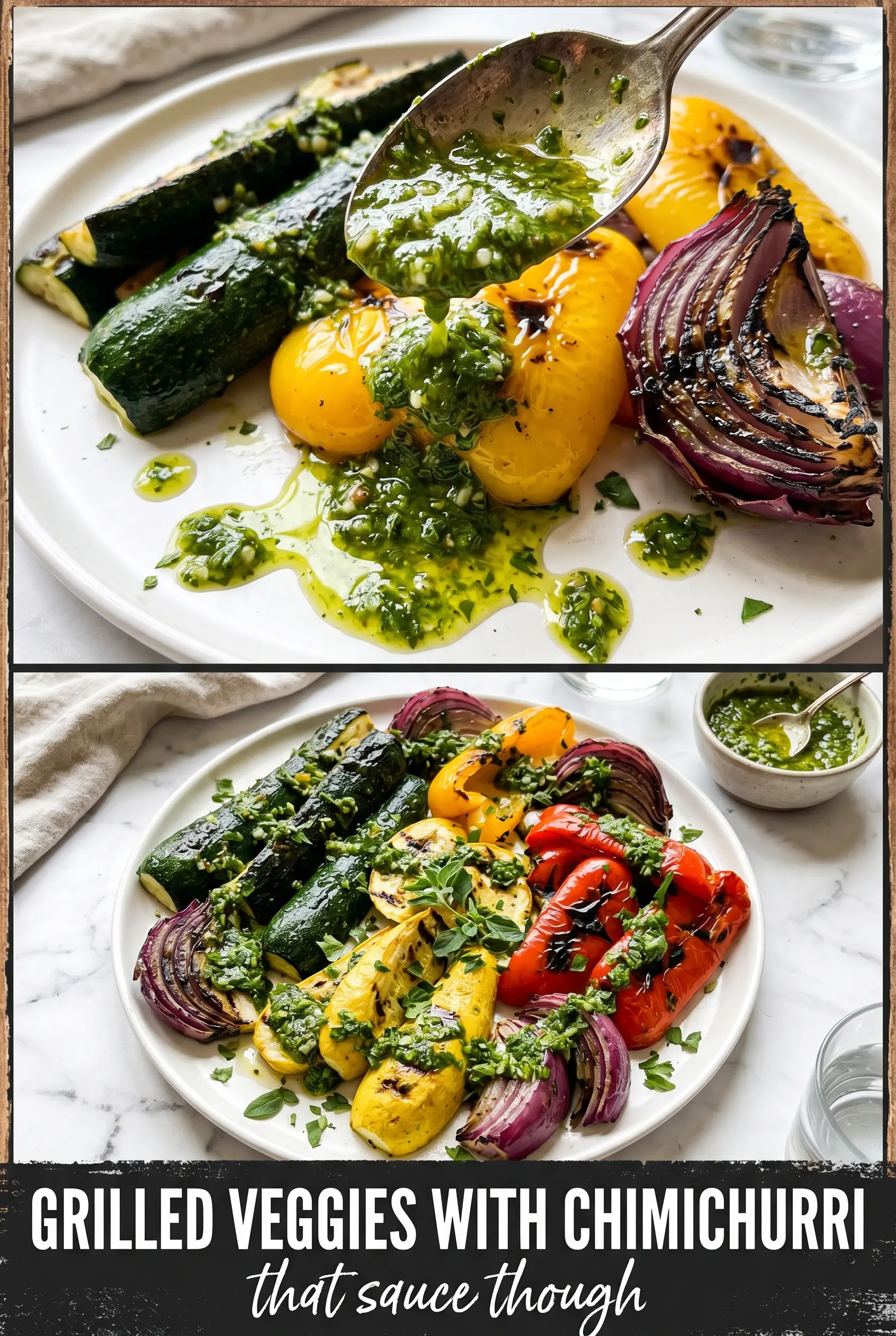
Grilled Veggies with Chimichurri Sauce
Ingredients
Equipment
Method
- Blend the fresh parsley, fresh cilantro, garlic, olive oil, red wine vinegar, dried oregano, and red pepper flakes until roughly chopped, not fully smooth. Taste and adjust salt and pepper, then set aside.
- Brush the zucchini, red bell peppers, eggplant, and red onions with olive oil, then season with salt and pepper. Make sure every surface is coated for good charring.
- Preheat the grill to medium-high and oil the grates. Grill the bell peppers 4–5 minutes per side, zucchini and eggplant 3–4 minutes per side, and onion rounds about 3 minutes per side until char marks form and vegetables are tender.
- Arrange the grilled vegetables on a large serving platter as they come off the grill. Spoon chimichurri generously over everything right away.
- Serve immediately at any temperature. The sauce stays vibrant and the vegetables keep their char-kissed edges.