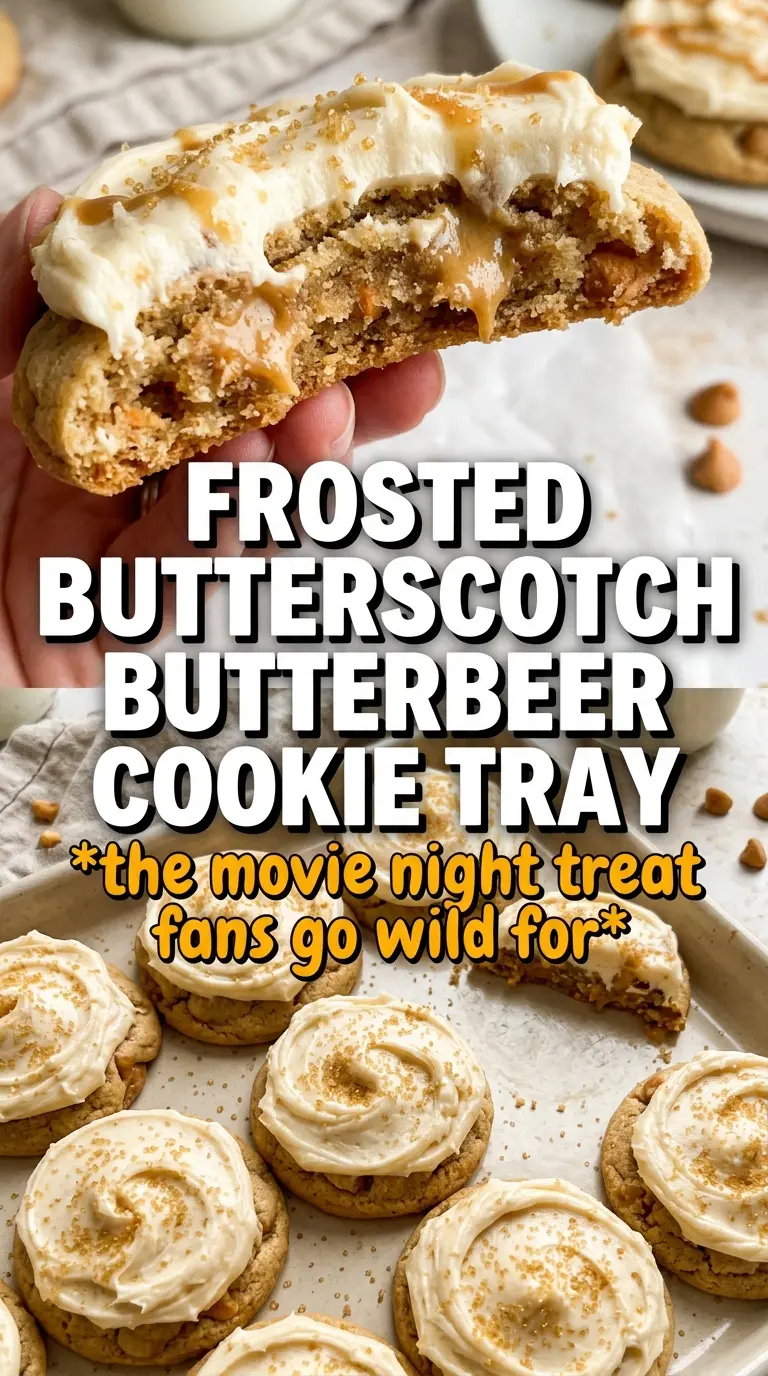
These butterbeer cookies bake up soft in the center with lightly crisp edges and that warm butterscotch note that keeps you reaching for one more. The frosting is where they turn from good to memorable: cream cheese gives it a cool tang, butterscotch sauce brings the caramel-like depth, and the whole cookie lands somewhere between a bakery treat and a nostalgic mug of something sweet and cozy.
What makes this version work is the balance. Butter extract boosts the cookie base without making it taste artificial, and the extra butterscotch extract keeps the flavor from disappearing once the flour goes in. The cookies stay thick because the dough is just mixed enough to bring it together, then scooped and baked until the tops are set and the edges barely take on color. That keeps the centers tender instead of dry.
Below you’ll find the little details that matter most: how to keep the cookies soft, how to get a frosting that pipes cleanly, and what to do if you want a stronger butterscotch finish without making the cookies heavy.
The cookies stayed soft for days and the butterscotch frosting set up enough to stack them after an hour in the fridge. I loved that the extract came through without tasting fake.
Save these butterbeer cookies with butterscotch frosting for the days when you want soft, bakery-style cookies with a thick caramel drizzle.
The Secret to Keeping Butterbeer Cookies Soft Instead of Dry
The biggest mistake with cookies like these is baking them until they look finished in the middle. By the time the centers stop looking soft on the sheet pan, the residual heat has already pushed them past the tender stage. Pull them when the edges are set and lightly golden and the tops still look a little underdone. That short bake is what keeps the crumb soft enough to support the frosting without turning cakey.
The second trap is overmixing after the flour goes in. Once the dry ingredients are added, stir only until the dough comes together and the butterscotch chips are distributed. If you beat it past that point, the cookies can bake up tougher and lose the plush texture that makes them feel like a treat instead of just another frosted cookie.
What Each Ingredient Is Doing in These Cookies
- Brown sugar — This gives the cookies their deeper caramel note and helps keep them soft. The molasses in it matters here, so don’t swap all of it for white sugar unless you want a lighter, less rich cookie.
- Butter extract — This is the shortcut that makes the cookies taste more like butterbeer than a basic butterscotch cookie. Vanilla works in a pinch, but butter extract gives a rounder, more bakery-style flavor.
- Butterscotch extract — A little goes a long way. It keeps the butterscotch flavor present after baking, since chips alone can soften into the dough without reading as strongly once the cookies cool.
- Butterscotch chips — These add pockets of sweetness and help reinforce the flavor in every bite. If you can’t find them, chopped caramel chips or white chocolate chips plus an extra teaspoon of butterscotch sauce in the frosting will still give you a nice result, though the cookie will taste a little less distinct.
- Cream cheese — This is what keeps the frosting from becoming cloying. It also gives you enough structure to pipe a thick swirl that holds its shape on top of the cooled cookies.
- Butterscotch sauce — This is the flavor bridge between the cookie and the frosting. Use a thicker sauce if you can; a thin caramel topping can make the frosting loose and harder to pipe.
How to Bake, Frost, and Finish Them Cleanly
Building the Cookie Dough
Start by whisking the flour, baking soda, and salt so the leavening is evenly distributed. Then beat the butter with both sugars until the mixture looks pale and fluffy, not greasy and dense. That step traps air and helps the cookies spread in a controlled way. Add the eggs and extracts next, and stop mixing as soon as the dough looks smooth. If the butter is too soft or melted, the cookies will spread too much and lose their thick, bakery-style shape.
Folding in the Chips
Use a spatula for the flour and chips instead of the mixer. The dough should look cohesive, but not beaten. Once the butterscotch chips are evenly scattered through the dough, it’s ready to portion. If you overwork it here, the cookies can bake up dense and the chips may break apart instead of staying in clean little pockets.
Baking to the Right Edge
Scoop the dough into 2-tablespoon rounds so the cookies bake evenly. Bake just until the edges turn golden and the centers look set but still soft, about 10 to 12 minutes. They’ll finish on the sheet pan after they come out of the oven. If you wait for full color across the top, they’ll go dry fast. Let them cool completely before frosting or the swirl will slide right off.
Whipping the Frosting and Finishing the Top
Beat the cream cheese and butter until smooth before adding the butterscotch sauce, powdered sugar, and vanilla. If the frosting looks loose, add a spoonful more powdered sugar; if it feels stiff, a tiny splash of cream can loosen it enough to pipe. Pipe a generous swirl onto each cooled cookie, then finish with caramel drizzle and a butterscotch chip. The drizzle should sit on top, not soak in, which is why the cookies need to be fully cool first.
How to Adapt These Cookies Without Losing the Point
Gluten-Free Version
Use a good 1:1 gluten-free baking blend that already contains xanthan gum. The texture will be a little more delicate and the cookies may need an extra minute in the oven, but they’ll still hold their soft centers and frosting well.
No Butter Extract
Vanilla extract works here, and the cookies will still taste like butterscotch thanks to the chips and frosting. What you lose is that deeper buttery note that makes the flavor read more like butterbeer than a standard frosted sugar cookie.
Extra Butterscotch, Less Sweet Frosting
Swap half the caramel drizzle for extra butterscotch sauce if you want the flavor to lean more toffee-like and less sugary. The frosting will be a little softer, so pipe it closer to serving time if the room is warm.
Storage and Reheating
- Refrigerator: Store frosted cookies in an airtight container for up to 4 days. The frosting stays firm, though the cookies soften a little more under the chill.
- Freezer: Freeze the unfrosted cookies for up to 2 months. Wrap them well so they don’t pick up freezer odors, then thaw at room temperature before frosting.
- Reheating: These aren’t meant to be reheated once frosted. If you want the cookie base warm, heat an unfrosted cookie for a few seconds in the microwave and add frosting after it cools slightly.
Answers to the Questions Worth Asking

Butterbeer Cookies With Butterscotch Frosting
Ingredients
Equipment
Method
- Preheat oven to 375F and line baking sheets with parchment so the cookies bake evenly and release easily.
- Whisk all-purpose flour, baking soda, and salt in a bowl until the mixture looks uniform in color.
- Beat unsalted butter and both sugars (brown sugar and granulated sugar) until fluffy, then add eggs, butter extract or vanilla extract, and butterscotch extract and beat until smooth.
- Fold the flour mixture into the wet ingredients until no dry streaks remain.
- Fold in butterscotch chips so they’re evenly distributed through the dough.
- Scoop dough into 2-tablespoon rounds and place on the lined sheets with space between, then bake 10-12 minutes until the tops are golden.
- Cool completely on the baking sheets or a rack so the frosting won’t melt.
- Beat cream cheese, unsalted butter, butterscotch sauce, powdered sugar, and vanilla until smooth and thick enough to hold a swirl.
- Pipe a generous swirl of butterscotch frosting onto each cooled cookie.
- Drizzle caramel sauce over the cookies and finish with a butterscotch chip on top for a shiny, decorated look.