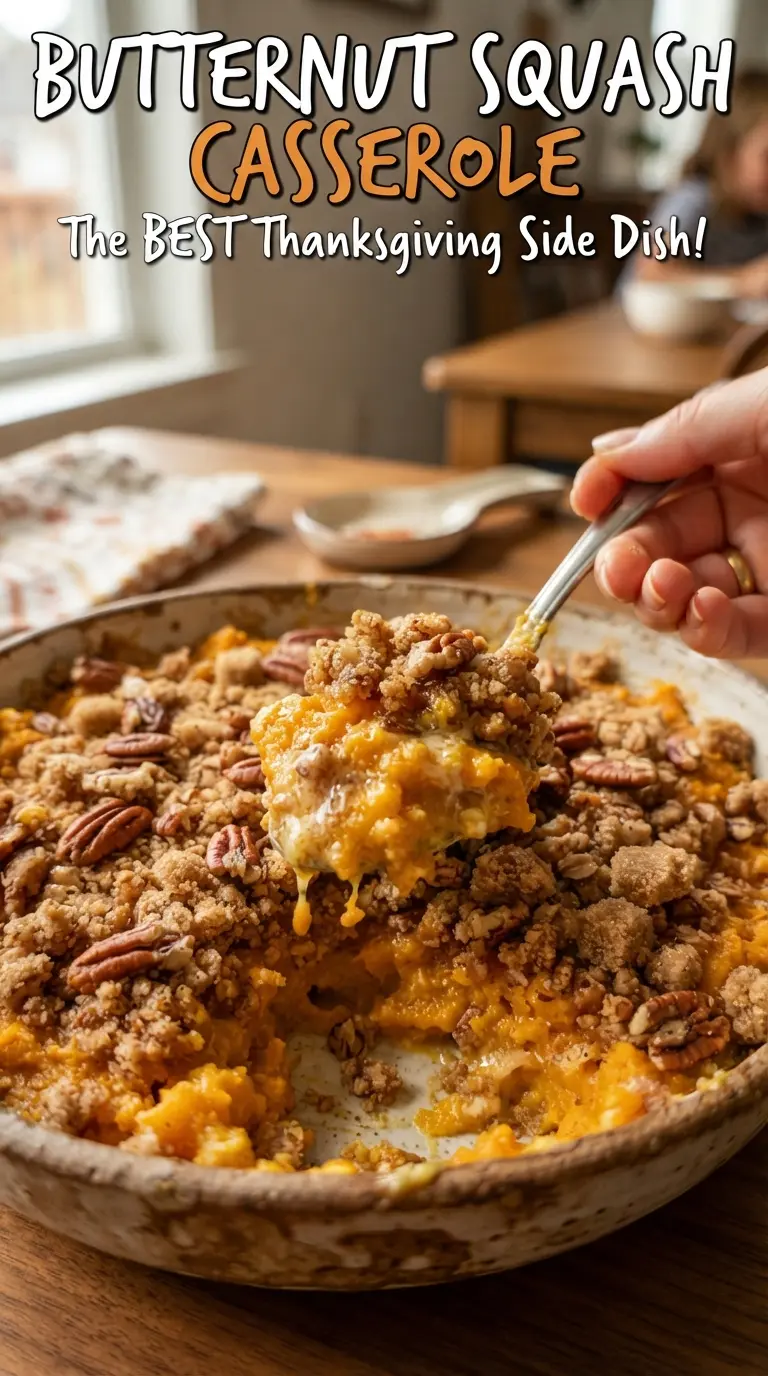
Butternut squash casserole lands on the table with a creamy, spoonable center and a pecan streusel that bakes into a crisp, golden cap. The contrast is what keeps people going back for another scoop: soft squash underneath, toasted nuts and brown sugar on top, and just enough cinnamon to make the whole dish taste warm and rounded without turning it into dessert.
The part that matters most is the squash itself. Boil it until it’s completely tender, then drain it well so the casserole doesn’t turn loose and watery in the oven. Once the squash is mashed with butter, eggs, milk, vanilla, and a little cinnamon, the base bakes up almost like a soufflé set into a side dish. The topping does the rest of the work. Flour, butter, brown sugar, and pecans turn into a crumbly layer that browns before the filling dries out.
Below you’ll find the trick for keeping the squash from tasting bland or heavy, plus the small timing detail that keeps the streusel crisp instead of soggy. If you’ve ever had a squash casserole that baked up thin or mushy, this version fixes both problems.
The squash baked up creamy instead of watery, and that pecan topping stayed crunchy all the way through dinner. My husband kept sneaking spoonfuls straight from the dish.
Save this butternut squash casserole for the buttery pecan topping and creamy Southern-style filling.
The Part That Keeps This Casserole Creamy Instead of Watery
The biggest mistake with squash casserole is carrying too much moisture into the oven. Butternut squash holds a lot of water, and if you mash it while it’s still wet from boiling, the filling loosens as it bakes instead of setting into that soft, custardy middle. Drain it well, then let the steam escape for a minute or two before mixing. That small pause matters.
The eggs do the setting here, so the filling needs to be smooth enough to spoon but not soupy. If the mixture looks thin in the bowl, it will bake thin in the dish. You want a mash that mounds slightly when you drag a spoon through it. The topping also needs a dry base to cling to, which is another reason the squash has to be drained thoroughly.
Brown sugar belongs in both layers, but it does different work in each one. In the filling, it rounds out the squash and helps it taste fuller. On top, it caramelizes with the butter and pecans so the casserole gets a crisp lid instead of a sandy one.
What Each Ingredient Is Doing in This Dish
- Butternut squash — This is the whole base of the dish, so pick one that feels heavy for its size with firm skin. Fresh squash gives a cleaner flavor and better texture than canned puree, which tends to be looser and less sweet. If you have to substitute, sweet potato works best because it behaves similarly when mashed and baked.
- Butter — Half goes into the filling and half into the topping, and that split is what gives you richness in both places. Use real butter here; the flavor carries through the squash and helps the streusel brown. Melt it before mixing so it disperses evenly instead of leaving greasy pockets.
- Brown sugar — This adds molasses depth that white sugar can’t match. It sweetens the squash without making it flat, and it helps the pecan topping clump into crumbles instead of turning into paste. Light brown sugar is fine.
- Eggs and milk — The eggs set the casserole, while the milk loosens the mash just enough to keep the texture spoonable. Whole milk gives the best result, but 2% works if that’s what you keep on hand. Don’t go too heavy on the milk or the casserole can lose its structure.
- Pecans — These are the difference between a soft topping and one that gives you crunch in every bite. Chop them fairly small so they mix evenly into the streusel and toast quickly. If you need a swap, walnuts will work, though they taste a little sharper and less buttery.
Building the Filling and Topping in the Right Order
Cooking the Squash Until It Mashes Cleanly
Boil the cubed squash until a fork slides through without resistance, then drain it in a colander and let it sit long enough for the steam to fade. If you rush this part, extra water ends up in the casserole and the filling bakes up loose. After draining, mash while the squash is still warm so the butter melts right in and the mixture stays smooth.
Mixing the Base Without Overworking It
Add the butter, brown sugar, eggs, milk, vanilla, cinnamon, and salt to the squash and mash until the mixture looks even and creamy. A few small lumps are fine, but stop before it turns gluey. If you overmix after the eggs go in, the texture can get dense instead of soft and custardy.
Making the Pecan Streusel
Stir the flour, pecans, remaining butter, and remaining brown sugar together until the mixture looks crumbly and clumpy, not smooth. That dry, sandy texture is what turns into a crisp top in the oven. If the topping seems too wet, it will melt into the filling instead of staying separate, so add the butter gradually if needed.
Baking Until the Edges Bubble
Spread the filling into the greased dish and scatter the streusel evenly over the top. Bake until the topping is deeply golden and the edges of the casserole bubble a little at the sides. That bubbling is your cue that the center has heated through and the eggs have set.
How to Adapt This for a Bigger Table or a Different Diet
Dairy-Free Version That Still Tastes Rich
Use plant-based butter and an unsweetened milk like oat or almond milk. Oat milk gives the closest body, while almond milk keeps the casserole lighter. The filling will still set, but the flavor will be a touch less rich and the topping a little less buttery.
Gluten-Free Swaps for the Streusel
Replace the all-purpose flour with a cup-for-cup gluten-free blend. The topping will still crumble and brown, though it may look a little looser before baking. Choose a blend that already contains xanthan gum so the streusel holds together better.
Using Sweet Potato Instead of Butternut Squash
Sweet potato makes an excellent swap if that’s what you have. It brings a deeper, earthier sweetness and the same creamy texture once mashed. The casserole will taste a little more familiar and a little less nutty than it does with butternut squash.
Storage and Reheating
- Refrigerator: Store covered for up to 4 days. The topping softens a bit, but the flavor stays good.
- Freezer: It freezes well after baking. Cool completely, wrap tightly, and freeze for up to 2 months. Thaw in the refrigerator before reheating.
- Reheating: Reheat in a 325F oven, covered loosely with foil at first so the top doesn’t scorch. Remove the foil for the last few minutes to bring back some crunch. Microwaving works in a pinch, but it softens the streusel and takes the edge off the texture.
Answers to the Questions Worth Asking

Butternut Squash Casserole
Ingredients
Equipment
Method
- Boil the butternut squash for 15 minutes until very tender, then drain well so it’s not watery.
- Preheat the oven to 350°F, then grease a 9x13-inch baking dish.
- Mash the butternut squash with 1/4 cup butter, 1/4 cup brown sugar, eggs, milk, vanilla extract, ground cinnamon, and salt until smooth.
- Spread the smooth squash mixture into the greased baking dish.
- Mix all-purpose flour, pecans, remaining butter, and remaining brown sugar until crumbly, then sprinkle evenly over the squash.
- Bake at 350°F for 35 to 40 minutes, until the topping is golden and the edges bubble.