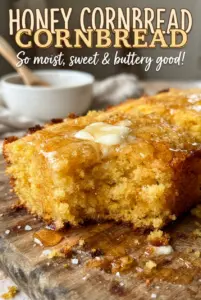
Honey cornbread should come out with a tender middle, crisp golden edges, and just enough sweetness to make the warm slices taste like they belong beside everything from chili to roast chicken. The honey in the batter softens the crumb and keeps the texture moist without turning it cakey, while the melted butter gives the top a rich, almost browned-butter edge. A good pan of cornbread should cut cleanly but still feel light when you lift a square from the baking dish.
This version keeps the batter straightforward, which matters here. Cornmeal brings the grainy bite, but the flour keeps the crumb from falling apart, and the eggs hold everything together without making it dense. The honey goes into the batter and onto the top, so you get sweetness in the crumb and a glossy finish that melts into the warm surface the second it comes out of the oven.
Below, I’ve included the small details that make the difference between dry cornbread and a pan you want to eat warm from the corner piece in. The topping goes on while it’s still hot, and that timing is what gives you the best honey-butter finish.
The honey butter brushed on at the end soaked right into the top and the middle stayed soft even the next day. I baked it in an 8×8 pan and it sliced cleanly without crumbling apart.
Save this honey cornbread for the nights when you want a tender, golden side with real honey-butter flavor baked right in.
The Secret to Honey Cornbread That Stays Tender, Not Dry
The biggest mistake with cornbread is treating it like a quick bread that can be mixed hard and baked long. Once the flour and cornmeal hit the wet ingredients, the batter only needs a few strokes. Overmixing tightens the crumb and knocks out the lightness the baking powder is trying to create, which is how you end up with a slice that eats like a brick instead of a soft square of cornbread.
The other failure point is overbaking. Cornbread keeps cooking in the pan after it leaves the oven, so pull it when the top is golden and the center springs back lightly to a touch. If the toothpick is completely dry and the edges look deep brown, you’ve probably gone a minute or two too far. A little carryover heat works in your favor here, but only if you stop at the right moment.
- Mix just until combined — a few small streaks are better than a batter beaten smooth.
- Use the 8×8 pan — it gives you the right thickness for a tender center and browned edges.
- Brush the topping on warm bread — that’s what lets the honey-butter sink in instead of sitting on top.
What Each Ingredient Is Doing in This Cornbread
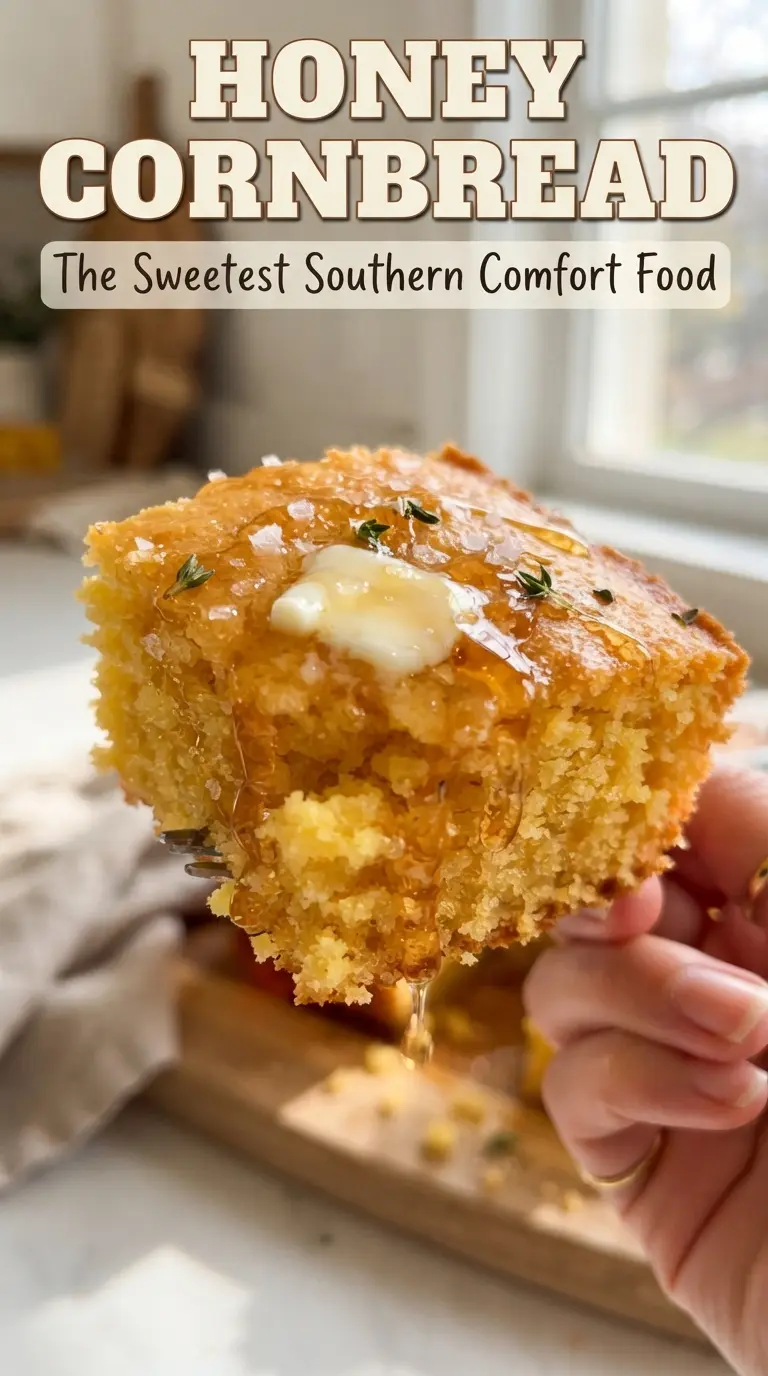
- Yellow cornmeal — this is where the cornbread gets its grainy bite and color. Fine or medium grind both work, but stone-ground cornmeal will give you more texture and a deeper corn flavor.
- All-purpose flour — flour keeps the crumb together so the squares slice cleanly. Without it, this would lean much more crumbly and dense.
- Baking powder — this is the lift. Fresh baking powder matters more here than in many recipes, because cornbread depends on a quick burst of rise to stay light.
- Honey — honey sweetens the batter and helps the cornbread stay soft after baking. Any mild honey works well; a strong buckwheat honey will push the flavor darker and more assertive.
- Butter — melted butter brings richness into the batter, and the soft butter on top finishes the bread with a glossy, almost frosting-like melt. If you use salted butter, reduce the added salt a little.
- Whole milk — whole milk gives the batter enough fat to stay tender. Lower-fat milk will work, but the crumb won’t be as plush.
- Eggs — the eggs help the cornbread set without turning it rubbery. Bring them to room temperature if you can, since they blend more smoothly into the melted butter.
The 20 Minutes That Matter Most
Getting the Dry Bowl Ready
Whisk the cornmeal, flour, baking powder, salt, and sugar together until the color looks even and there are no little pockets of baking powder hiding in the mix. That step sounds basic, but it keeps the rise consistent and prevents random bitter spots. If your dry ingredients aren’t fully combined, the cornbread can bake unevenly, with one edge puffed and the center flat. A quick whisk is enough.
Bringing the Batter Together
In the second bowl, whisk the milk, eggs, honey, and melted butter until the butter disappears into the liquid. If the butter is too hot, it can start cooking the eggs or clump when it hits the cold milk, so let it cool for a minute after melting. Stir the wet ingredients into the dry just until the flour disappears. The batter should look slightly lumpy, not silky.
Baking to a Golden Edge
Pour the batter into the greased 8×8 pan and bake at 400°F until the top is golden and the center springs back when pressed lightly. You’re looking for a toothpick that comes out clean or with a few moist crumbs, not wet batter. The pan should smell like toasted corn and butter before it comes out. Once it does, brush on the honey-butter topping right away so it melts into the crust.
The Honey-Butter Finish
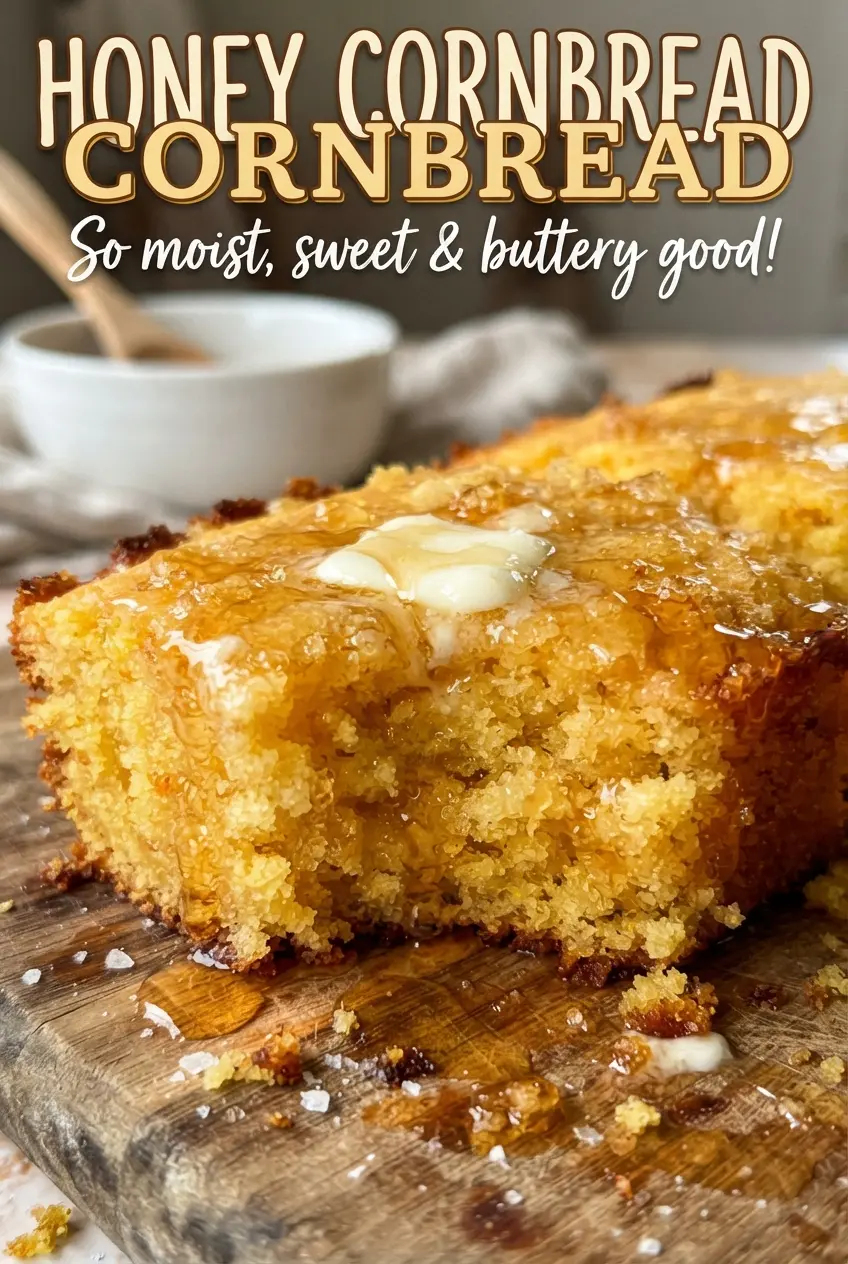
Mix the soft butter with honey until smooth, then brush it over the warm cornbread before slicing. If the bread is too cool, the topping just sits there and feels sticky instead of soaking in. Warm bread absorbs the glaze at the surface and gives you that shiny finish on top of each piece. Let it sit for a few minutes before cutting so the slices hold together.
Three Ways to Make This Cornbread Fit Your Table
Dairy-Free Version
Swap the milk for unsweetened oat milk or almond milk and use a plant-based butter in both the batter and the topping. The cornbread will still rise and stay tender, though the flavor will be a little less rich and the top won’t brown quite as deeply.
Less Sweet Southern-Style Cornbread
Cut the sugar down to 1 tablespoon and use the full honey topping at the end. That keeps the crumb balanced but lets you lean into a more classic cornbread flavor with the sweetness concentrated on top instead of throughout the slice.
Gluten-Free Swap
Use a 1:1 gluten-free baking blend in place of the all-purpose flour. The texture will be a little more delicate, so let the cornbread cool for at least 10 minutes before slicing. The cornmeal still carries the flavor, and the honey keeps the crumb from tasting dry.
Storage and Reheating
- Refrigerator: Store in an airtight container for up to 4 days. The crumb firms up a little in the fridge, but the honey helps it stay moist.
- Freezer: It freezes well. Wrap individual squares tightly and freeze for up to 2 months, then thaw at room temperature.
- Reheating: Warm slices in a 300°F oven for 8 to 10 minutes or microwave briefly. The common mistake is blasting it too long, which dries out the edges before the center warms.
Answers to the Questions Worth Asking
Honey Cornbread
Ingredients
Equipment
Method
- Preheat oven to 400F, then grease an 8x8-inch baking pan so the cornbread releases easily.
- Whisk yellow cornmeal, all-purpose flour, baking powder, salt, and sugar in a bowl until evenly combined and no dry streaks remain.
- Whisk whole milk, large eggs, honey, and butter, melted, then stir into the dry ingredients just until combined and the batter looks thick and uniform.
- Pour the batter into the greased pan, then bake for 20-25 minutes at 400F until golden and a toothpick comes out clean (look for set edges and light browning).
- Mix honey and soft butter, then brush over the warm cornbread before slicing so it melts and looks glossy.