Chicken noodle soup from scratch earns its place when the broth tastes deep and clean, not flat or watery, and the noodles still have enough bite to hold their own in the bowl. The whole chicken does most of the heavy lifting here. As it simmers with aromatics, the broth turns a shade darker and richer than anything from a carton, and the meat comes out tender enough to shred without turning stringy.
The key is giving the broth time before the vegetables and noodles go in. That first long simmer pulls the flavor from the chicken, bones, and herbs, then the fresh carrots, celery, and onion add a brighter layer right at the end so the soup doesn’t taste tired. I also like cooking the noodles directly in the broth because they soak up flavor instead of just floating in it, but they need to go in late so they don’t overcook.
Below you’ll find the small details that matter most: how to keep the broth clear, when to season so it doesn’t taste bland at the finish, and how to adjust the soup if you want it a little lighter or a little heartier.
The broth came out so much richer than the store-bought kind, and the noodles held up perfectly because I added them at the end like you said. My husband went back for a second bowl before I even sat down.
Save this homemade chicken noodle soup for the kind of night when you want a deep golden broth, tender shredded chicken, and noodles that still have some life in them.
The Reason the Broth Tastes Like It Simmered All Afternoon
Most chicken noodle soup turns out thin because the pot never gets enough time with the chicken before the vegetables and noodles are added. The broth here starts with a whole chicken, cold water, peppercorns, bay leaves, thyme, and parsley stems, which gives the soup a fuller backbone without needing bouillon or shortcuts. Cold water matters because it lets the flavor seep out gradually as the pot heats, instead of sealing the chicken too quickly.
The other thing that makes a difference is skimming the foam early. That step keeps the broth cleaner-tasting and less cloudy. If you skip it, the soup still tastes good, but you lose that clear, homemade look and the broth can pick up a slightly muddy edge.
What Each Ingredient Is Actually Doing in This Soup

- Whole chicken — This gives you both the meat and the bones for the broth. Boneless chicken won’t build the same depth, and the soup will taste more like seasoned chicken water than true broth.
- Carrots, celery, and onion — The first round goes into the broth for background flavor, and the second round stays in the finished soup for texture and freshness. That double use is what keeps the soup from tasting flat.
- Peppercorns, bay leaves, thyme, and parsley stems — These season the broth without making it heavy. Parsley stems are worth using here because they bring herb flavor that holds up through the long simmer.
- Wide egg noodles — These are sturdy enough to stand up to the broth, but they still need to be added near the end. If you cook them too long, they go soft and start draining the soup as they sit.
- Fresh parsley — Stirred in at the end, it wakes up the whole pot. Dried parsley won’t give you the same fresh finish.
The Long Simmer, the Strain, and the Finish That Keeps the Soup Clear
Building the broth base
Put the whole chicken and all the broth ingredients into a very large pot, then cover them with cold water. Bring everything up to a boil, but don’t walk away once it starts moving; foam will rise at the top and needs to be skimmed off. Once the broth is cleaner-looking, reduce the heat to a steady simmer. A hard boil can make the broth cloudy and can tighten the chicken instead of coaxing it into tenderness.
Straining and shredding
After about 1.5 hours, the chicken should be fully tender and the broth deep in color. Lift the chicken out, strain the broth, and discard the spent vegetables and herbs. Pull the meat from the chicken while it’s still warm enough to handle, then shred it into bite-size pieces. If you leave any large chunks in the soup, they won’t soak up the broth as evenly.
Cooking the vegetables and noodles at the right pace
Return the clear broth to the pot and season it with salt before adding the fresh carrots, celery, and onion. Let those cook until they soften, then add the egg noodles and keep the soup at a gentle simmer. Add the shredded chicken and fresh parsley in the last few minutes so the meat stays juicy and the herbs keep their color. If the noodles go in too early, they steal too much liquid and turn pasty before the soup is finished.
Three Ways to Make This Soup Fit the Night You’re Having
Gluten-Free Version
Swap the egg noodles for a gluten-free noodle that holds its shape well, or serve the soup over rice if you want the broth to stay clear. Gluten-free pasta can soften faster than wheat noodles, so taste early and pull the pot off the heat the moment the noodles are tender.
Lighter Broth, Same Comfort
Skim the broth well and chill it before reheating if you want to remove extra fat from the top. You’ll get a cleaner, slightly leaner soup without losing the chicken flavor, though the mouthfeel will be a little less rich.
Extra-Hearty Version
Add more shredded chicken or a few extra noodles at the end if you want a thicker, more filling bowl. The broth will absorb into the noodles as it sits, so add a splash of water or extra seasoned broth when reheating if it tightens up too much.
Storage and Reheating
- Refrigerator: Store for up to 4 days. The noodles will keep soaking up broth, so expect the soup to thicken.
- Freezer: The broth and chicken freeze well, but noodles turn soft after thawing. Freeze the soup without noodles if you want the best texture, then cook fresh noodles when reheating.
- Reheating: Warm it gently over medium-low heat until steaming, not boiling. A hard boil will break up the noodles and make the chicken stringy, so add a splash of broth or water if the pot looks too thick.
Answers to the Questions Worth Asking
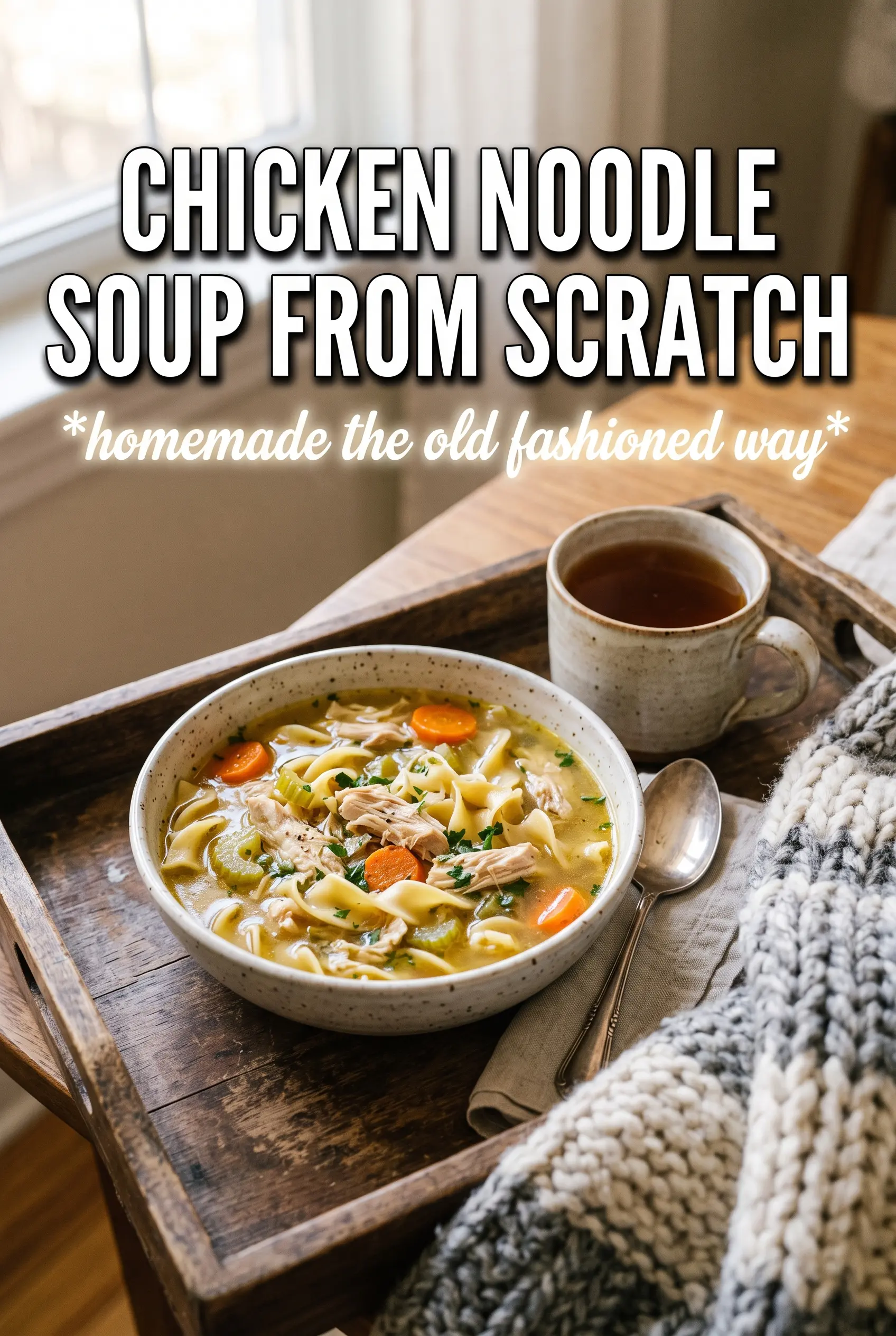
Chicken Noodle Soup From Scratch
Ingredients
Equipment
Method
- Place whole chicken, carrots, celery stalks, onion, garlic cloves, bay leaves, whole peppercorns, parsley stems, dried thyme, and cold water in a very large pot. Bring to a boil over high heat, skimming foam as it rises.
- Reduce heat to a steady simmer and cook for 1.5 hours, stirring occasionally and keeping the surface gently moving. Cook until the chicken is very tender and easily pulls apart.
- Strain the broth and discard the used vegetables. Remove all meat from the chicken and shred until you have bite-size pieces.
- Return clear broth to the pot and taste, seasoning with salt. Keep the broth warm as you prepare the vegetables.
- Bring the broth to a simmer. Add sliced carrots, sliced celery, and diced onion, then stir so the vegetables are submerged.
- Cook at a simmer for 10 minutes, until the vegetables are tender when pierced. You should see bright, slightly softened vegetables throughout the broth.
- Add wide egg noodles and cook for 6 minutes, then continue 0–8 minutes more as needed until tender. The broth will look slightly thicker as the noodles release starch.
- Stir in shredded chicken and chopped fresh parsley and cook for 1 minute just to warm through. The herbs should look fresh and vibrant with no dulling color.
- Adjust seasoning with salt and pepper to taste. Taste once more for balance, then serve hot.