Cranberry sauce with orange marmalade turns into something brighter and more interesting than the usual holiday side dish. The cranberries cook down into a thick, ruby-red base, then the marmalade brings in soft citrus peel, extra shine, and a gentle bitterness that keeps the sauce from tasting flat. It sets up spoonable and glossy instead of loose and watery, which is exactly what you want next to roasted meats, biscuits, or a simple cheese board.
The trick here is timing. The cranberries need a full simmer so they burst and release enough pectin to thicken the sauce on their own. The marmalade goes in near the end, after the berries have broken down, so the orange flavor stays vivid and the peel keeps some texture. Lemon juice sharpens everything without making it sour, and a pinch of salt keeps the sweetness in check.
Below, you’ll find the small details that matter most: when to stop simmering, how thick the sauce looks before it chills, and the storage note that makes this a reliable make-ahead side dish.
The marmalade gave the sauce such a nice orange peel finish, and it thickened up perfectly after chilling. I served it with turkey and kept sneaking spoonfuls straight from the fridge.
Save this cranberry sauce with orange marmalade for a glossy, make-ahead side that brings bright citrus and a little texture to the table.
The Secret to Keeping Cranberry Sauce Thick Instead of Runny
Most cranberry sauces go wrong in one of two ways: they stay too thin, or they get cooked so long they turn dull and jammy. Cranberries have natural pectin, which means they thicken as they burst, but they need a steady simmer long enough to break down fully. If you pull the pan too soon, you get tart juice with floating skins instead of a spoonable sauce.
The other place people lose texture is by adding marmalade too early. Orange marmalade contains sugar and fruit peel, and both can soften too much if they cook for the full time. Stir it in after the cranberries have already burst, then give it just a couple more minutes on the heat. That keeps the sauce glossy and lets the peel stay noticeable instead of disappearing.
- Fresh cranberries — Frozen cranberries work here too, and you don’t need to thaw them first. The sauce may take an extra minute or two to come back to a simmer, but the result is the same.
- Orange marmalade — Use a marmalade you actually like eating on toast. A thinner, more fruit-forward one melts in smoothly; a chunkier style leaves more peel, which is great if you want a little texture.
- Lemon juice — This isn’t enough to make the sauce tart. It just wakes up the orange and cranberry so the finished dish tastes bright instead of sugary.
What Each Ingredient Is Actually Doing in This Dish
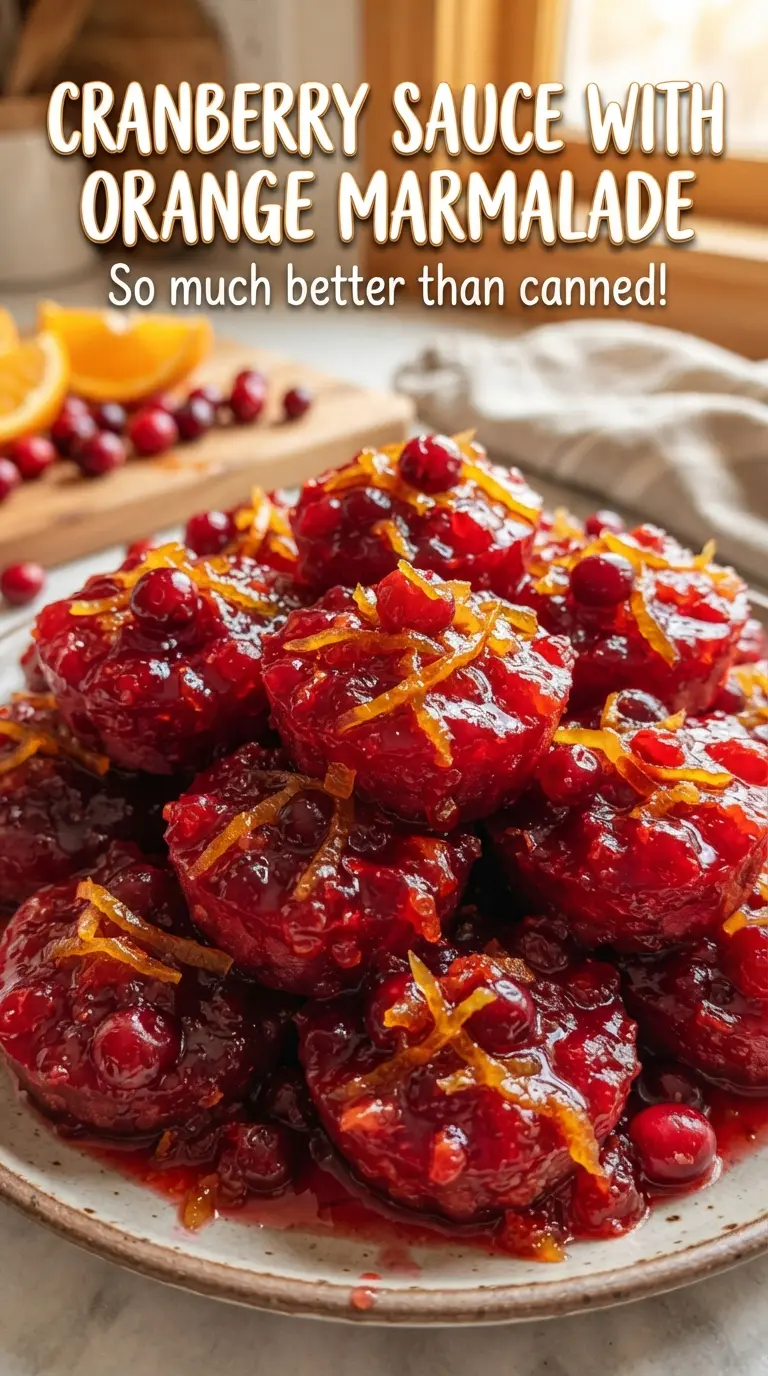
Fresh cranberries are the backbone of the sauce. They bring the color, the tang, and the pectin that helps the sauce thicken as it cools. You can use frozen berries without changing the recipe, but dried cranberries won’t work here because they won’t burst into a sauce.
Sugar does more than sweeten. It softens the sharp edge of the cranberries and helps the sauce finish with a sheen instead of a harsh, thin bite. Orange marmalade is the ingredient that makes this version stand out; it adds citrus oil, peel, and a little bitterness that balances the sweetness. If you don’t have marmalade, orange zest plus a spoonful of orange juice can give you the citrus note, but the texture from the peel won’t be the same.
Lemon juice and salt do the quiet work. Lemon keeps the flavor from going flat after chilling, and the salt tightens everything up so the sauce tastes balanced instead of candy-sweet.
Building the Sauce So It Thickens on the Plate, Not Just in the Pot
Start With the Syrup
Bring the water and sugar to a full boil first, then add the cranberries. That gives the berries a hot, sweet bath right away and helps them start bursting evenly. If you dump everything in cold, the berries sit around too long before they soften, and the sauce can cook unevenly.
Cook Until the Berries Burst Open
Once the cranberries go in, keep the heat at a steady simmer. You should hear a gentle popping as the berries split and the liquid turns from clear to deeply red. Stir now and then so the bottom doesn’t scorch, but don’t mash everything into a puree unless you want a smoother sauce. At about 10 minutes, most of the berries should have collapsed and the liquid will already look thicker.
Finish With Marmalade and Lemon
Stir in the marmalade, lemon juice, and salt after the cranberries have burst. The sauce will look slightly loose at this stage, and that’s fine because it thickens a lot as it cools. Give it 2 to 3 more minutes until it turns glossy and the marmalade is fully melted in. Pull it off the heat when it still looks a touch softer than you want on the table.
Cool It All the Way Down
Let the sauce cool before you chill it. The texture tightens as it cools, and the flavor gets cleaner and brighter after a few hours in the fridge. If it looks too thin while warm, don’t panic and don’t keep boiling it down to a paste. Cranberry sauce finishes in the cold, not in the pot.
Three Ways to Use This Cranberry Sauce Without Changing the Core Recipe
Use It Chunky or Smooth
Leave the berries mostly intact if you want a spoonable sauce with texture, or mash it lightly with the back of a spoon for a softer finish. Cooking it a little longer and stirring more often will give you a smoother result, but it also pushes the flavor toward jam. The choice changes the mouthfeel more than the taste.
Make It Lower Sugar
You can reduce the sugar a little, but don’t cut it too far or the sauce turns sharp and thin. Start by reducing it by 2 to 3 tablespoons if you want a tarter cranberry sauce. The texture will be slightly looser, so plan to chill it fully before judging the final consistency.
Make It Vegan and Gluten-Free Without Changes
This recipe is naturally vegan and gluten-free as written, which is part of why it’s such an easy side dish to bring to a mixed table. Just check the marmalade label if you’re serving someone with strict dietary needs, since some brands use additives or processing notes that people want to avoid. The base recipe itself doesn’t need any swaps.
Turn It Into a Citrus Relish
For a brighter, more rustic version, stir in a little extra finely grated orange zest after the pan comes off the heat. That gives you a sharper citrus hit and a fresher aroma, but it also makes the sauce taste less polished and more like a relish. It’s a good move if you’re serving it with rich meats or cheese.
Storage and Reheating
- Refrigerator: Store in an airtight container for up to 1 week. It thickens as it chills, so don’t judge the texture while it’s warm.
- Freezer: Freezes well for up to 2 months. Thaw overnight in the refrigerator and stir well before serving.
- Reheating: Cranberry sauce is usually best served cold or room temperature. If you want it warm, heat it gently over low heat just until loosened; boiling can make it split and lose that glossy finish.
Answers to the Questions Worth Asking
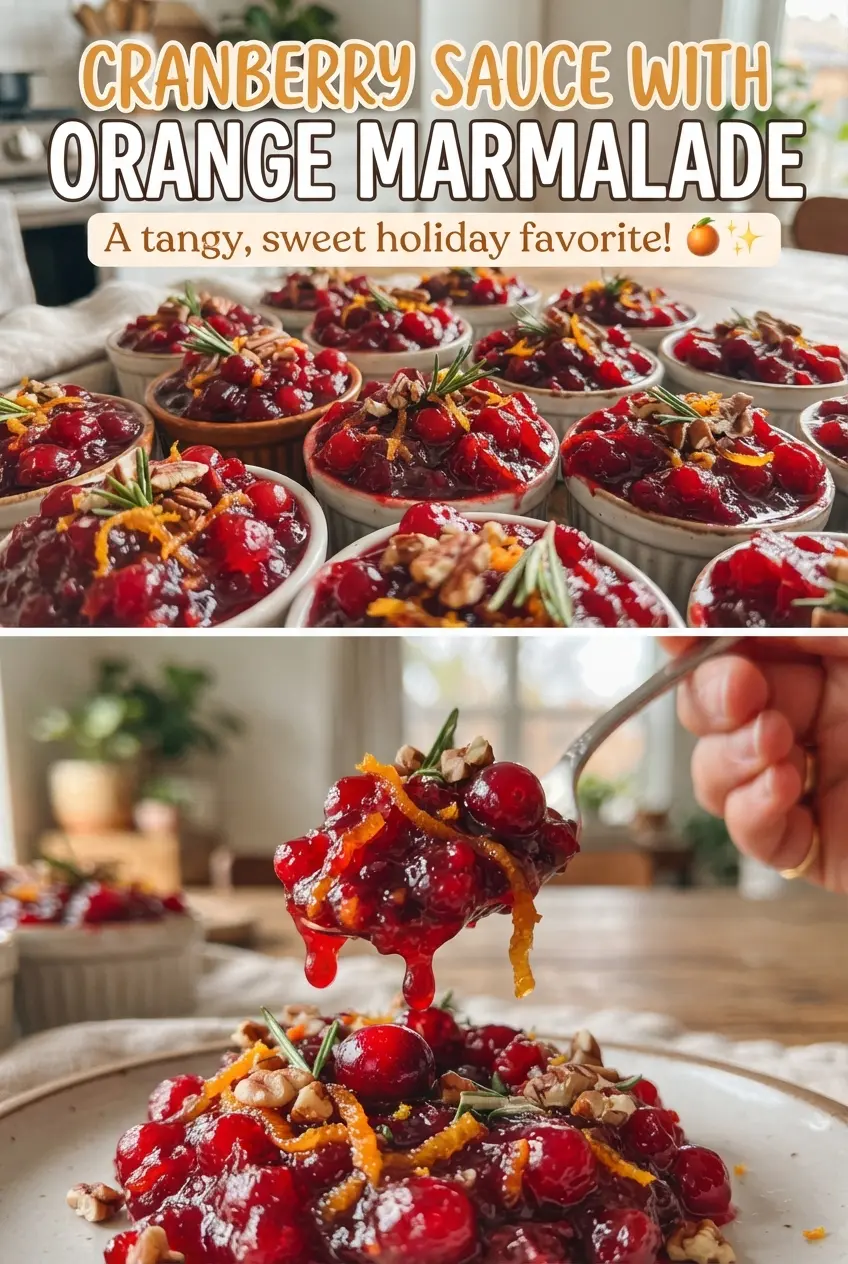
Cranberry Sauce with Orange Marmalade
Ingredients
Equipment
Method
- Bring the sugar and water to a boil in a saucepan over high heat, then keep at a steady boil.
- Add the fresh cranberries and reduce to a simmer, cooking for 10 minutes until the berries burst and the liquid turns ruby.
- Stir in the orange marmalade, lemon juice, and salt, then return to a gentle simmer.
- Simmer for 2-3 minutes until glossy and lightly thickened, with streaks of orange marmalade throughout.
- Cool the cranberry sauce to room temperature, then chill before serving so it sets into a spoonable texture.