Fluffy campfire bread gets the job done when you want something warm, simple, and a little bit old-fashioned straight from the fire. The outside turns deeply golden and crisp while the inside stays soft and tender, with just enough sweetness to make it perfect with butter, jam, or a drizzle of honey. It’s the kind of bread people tear into before it even makes it to the table.
The trick is keeping the dough soft enough to wrap around the stick without cracking, but not so wet that it slides or burns before the center cooks. A little sugar helps the crust brown, and melted butter gives the dough a richer bite than plain water ever could. Constant rotation over hot coals matters more than flame here; fire is for cooking the surface, coals are for cooking the bread through.
Below, I’ve included the small details that make campfire bread work the way it should, plus a few swaps if you need to adjust for what you have on hand. The process is short, but the cues are important, especially when you’re cooking over an open fire instead of a predictable oven.
The dough held onto the stick without sliding, and the bread cooked all the way through with a soft middle and a crisp, golden outside. We finished the whole batch with honey butter and had none left.
Save this fluffy campfire bread for your next night by the fire when you want soft, golden stick bread with a crusty finish.
The Mistake That Makes Stick Bread Burn Before It Bakes
Most campfire bread fails for one of two reasons: the dough is too thick in some spots, or the fire is too hot and licking the bread instead of gently cooking it. When that happens, the outside blackens while the middle stays gummy. The answer is a thin, even rope of dough and patient rotation over glowing coals, not active flames.
Another thing worth knowing is that this dough is meant to be handled lightly. If you keep kneading after it comes together, you’ll tighten the gluten and the bread gets dense. Stop as soon as the dough forms. It should feel soft and slightly tacky, but not sticky enough to cling to your hands.
What Each Ingredient Is Actually Doing in the Dough
- All-purpose flour — This gives you a bread that’s sturdy enough to wrap around a stick but still tender inside. Bread flour makes a chewier loaf, and that isn’t ideal here unless you want a firmer, more rustic bite.
- Baking powder — This is the lift. Since there’s no yeast or long rise, baking powder gives the bread its light, fluffy crumb and keeps it from eating like raw dough around a stick.
- Sugar — A small amount helps the crust brown and gives the bread that slightly sweet campfire bakery taste. You can reduce it a little, but if you cut it completely, the outside won’t color as nicely.
- Melted butter — Butter keeps the dough rich and helps it stay soft after cooking. Oil will work in a pinch, but the bread loses some of the flavor that makes it worth the effort.
- Milk — Milk brings the dough together and adds a softer crumb than water. If you need a swap, use the same amount of water, but expect a drier, less tender result.
How to Shape, Roast, and Pull It Off the Stick Without Losing the Loaf
Mixing the Dough Fast
Start by combining the dry ingredients in a zip-top bag, then add the melted butter and milk. Knead inside the bag just until the dough comes together and no dry flour remains. If it feels shaggy, keep pressing and folding it with your fingers through the bag. If it feels wet and sticky, add a spoonful of flour at a time until it firms up enough to handle.
Wrapping the Ropes Evenly
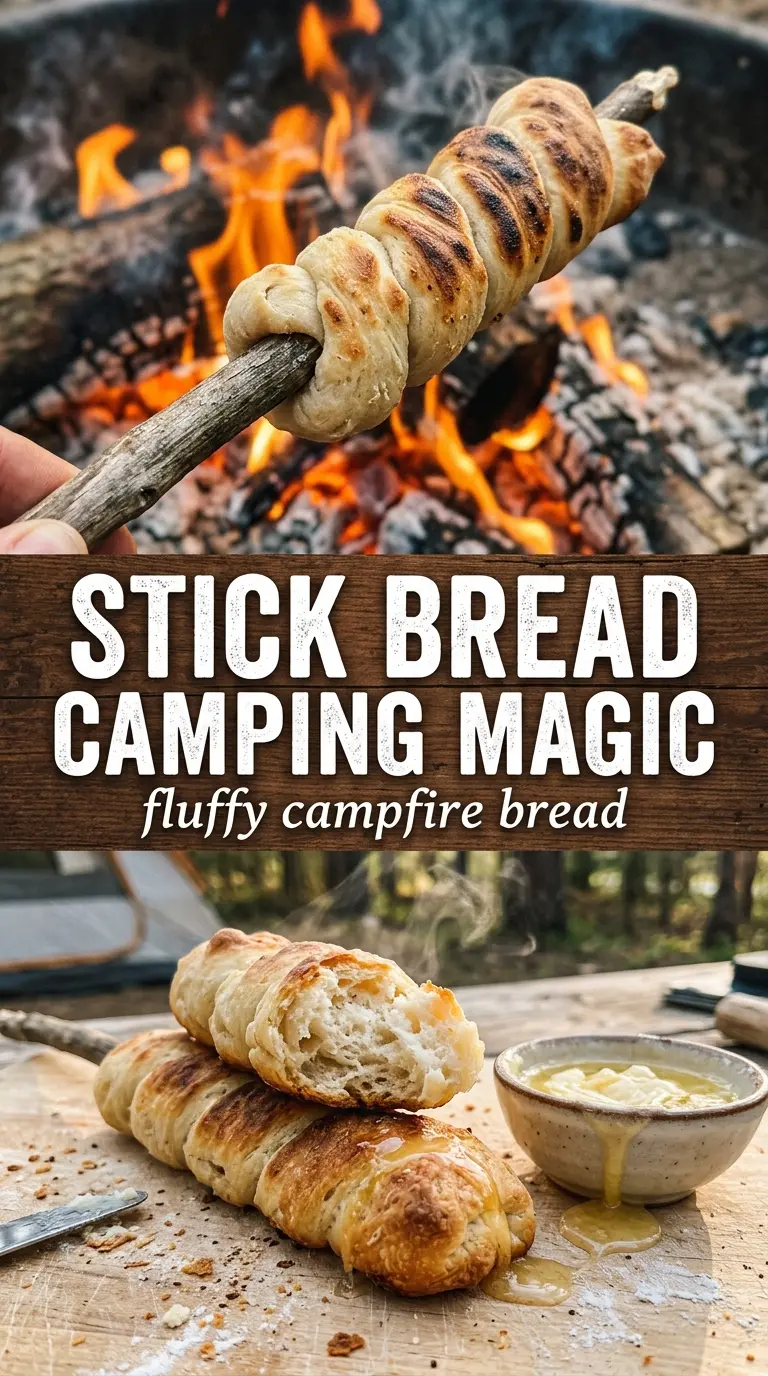
Divide the dough into eight portions and roll each one into a rope with even thickness from end to end. Wind it around the end of the roasting stick with a little overlap so it grips itself as it cooks. Gaps make weak spots, and thick lumps stay doughy while the thinner parts overbake.
Roasting Over the Coals
Hold the bread over hot coals and rotate it constantly so every side gets even heat. You want a steady golden color, not charred patches, and the bread should feel set when you gently tap it. If you see flames touching the dough, move it back immediately; flames are too aggressive and will burn the outside before the center finishes.
Sliding Off and Serving Warm
Once the bread is golden all around and sounds a little hollow when tapped, slide it off the stick right away. Let it rest for a minute before serving so the steam settles and the crumb finishes setting. Eat it warm with butter, jam, or honey while the crust is still crisp.
How to Adapt This for a Bigger Fire, a Smaller Pantry, or No Dairy
Dairy-Free Campfire Bread
Swap the butter for melted vegan butter or a neutral oil, and use water or unsweetened non-dairy milk instead of dairy milk. The bread will still cook up fluffy, but the flavor will be a little less rich, so serve it with a strong topping like jam or cinnamon honey.
Less Sweet, More Savory
Cut the sugar down to 1 tablespoon if you want a bread that leans more toward savory campfire side dish than snack bread. You’ll lose a little browning, but the bread pairs better with stew, chili, or grilled meat.
Gluten-Free Version
Use a cup-for-cup gluten-free flour blend that includes xanthan gum. The dough may need a touch more milk to hold together, and it’ll be more delicate on the stick, so keep the ropes slightly shorter and rotate gently over the coals.
Storage and Reheating
- Refrigerator: Store leftover bread in an airtight container for up to 2 days. It softens as it sits, so the crust won’t stay crisp.
- Freezer: It freezes okay if you wrap the cooked bread tightly and freeze for up to 1 month. Thaw before reheating so the center doesn’t dry out while the outside warms.
- Reheating: Warm it in a 300°F oven for a few minutes or over very low campfire heat. Don’t blast it with high heat or the outside will harden before the middle loosens up.
Answers to the Questions Worth Asking
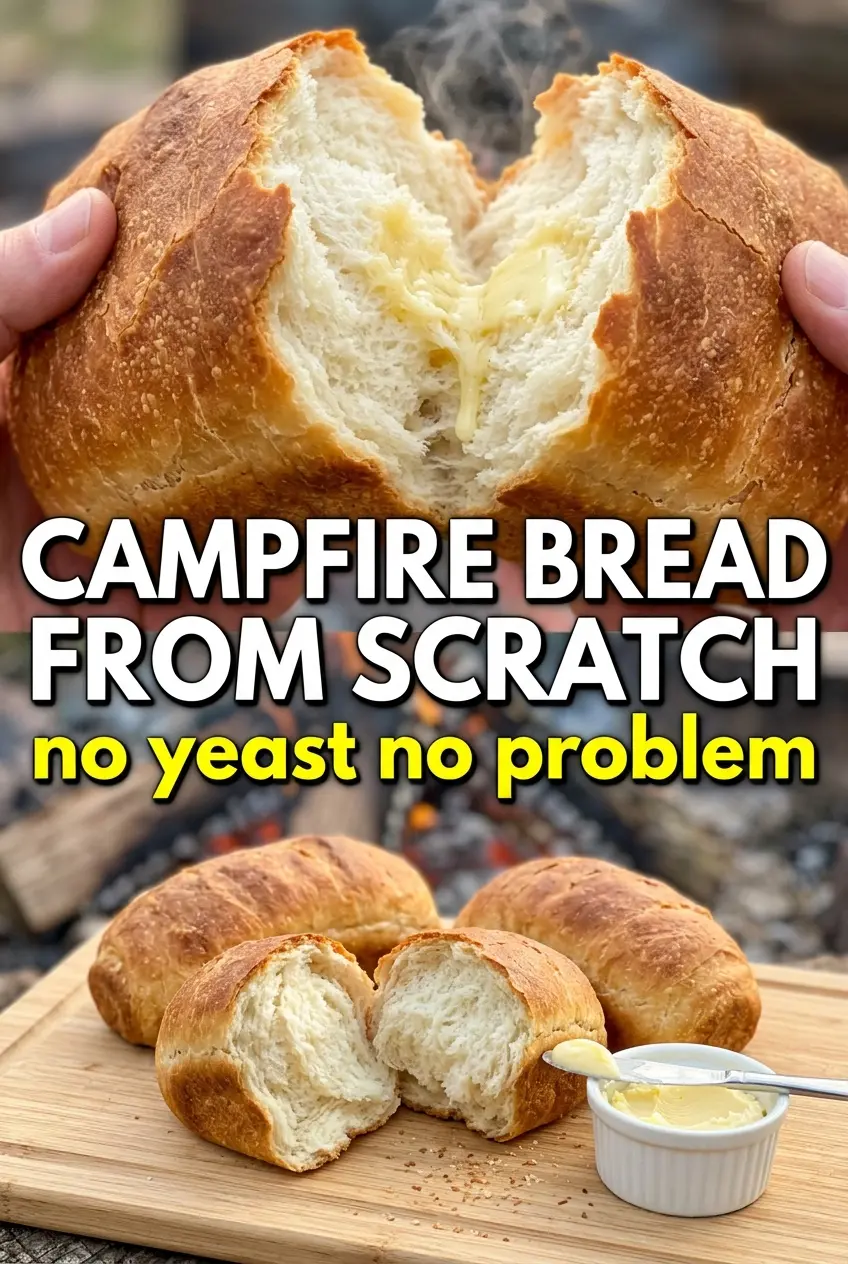
Fluffy Campfire Bread
Ingredients
Equipment
Method
- Mix all-purpose flour, baking powder, salt, and sugar in a large zip-top bag until evenly combined, with no dry pockets visible.
- Add melted butter and milk to the bag, seal, and knead until a cohesive dough forms that pulls together as a single mass.
- Divide the dough into 8 portions, shaping each so it will hold a rope form around the stick.
- Roll each portion into a long rope, then wrap it around the end of a roasting stick so the dough spirals evenly.
- Hold the wrapped stick over campfire coals, rotating constantly for 10–12 minutes until golden brown and cooked through, with the crust looking set and dry on the outside.
- Slide the campfire bread off the stick and serve warm, aiming for a fluffy interior when broken open.
- Serve with butter, jam, or honey while still warm for best texture.