Honey apricot goat cheese spread hits that sweet-savory middle ground that disappears fast once it lands on the table. The base is cool, tangy, and whipped until it turns fluffy instead of dense, then the warm apricot-honey topping sinks into the swirl and gives every scoop a little shine. The chopped pistachios and thyme keep it from tasting one-note, and the flakes of salt at the end are what make the fruit taste brighter.
The trick here is starting with fully softened goat cheese and cream cheese so the mixture turns smooth without streaks. A small splash of milk loosens the spread just enough to make it light and scoopable, but not runny. Warming the preserves with the honey for just a few seconds matters too; it makes the topping spoonable and helps it settle into the cheese instead of sitting in a stiff layer on top.
Below, you’ll find the small details that make this appetizer work: how to get the texture right, which substitutions hold up, and what to do if you want to make it ahead for guests.
The goat cheese whipped up so light, and the warm apricot-honey layer stayed glossy without running all over the plate. I served it with crostini and had people asking what was in it before they’d even finished the first bite.
Save this whipped honey apricot goat cheese spread for your next snack board — it’s creamy, glossy, and ready in 10 minutes.
The Trick to Keeping the Goat Cheese Light Instead of Dense
Goat cheese can go from creamy to stubborn fast, especially if it’s still cold in the middle. When that happens, you end up chasing little lumps around the bowl instead of getting a smooth base. Softening both cheeses first is what gives you that whipped texture, and beating them with the milk loosens the mixture just enough so it spreads in soft swoops.
The other place people run into trouble is the topping. Apricot preserves straight from the jar can be thick and sticky, which makes them harder to spoon evenly. Warming them with the honey for a few seconds changes the texture without cooking the fruit, so you get a glossy layer that drapes over the cheese instead of breaking it apart.
What Each Ingredient Is Actually Doing in This Spread

- Goat cheese — This is the sharp, tangy backbone of the spread. Buy a log you actually like eating on its own, because its flavor stays front and center. If you want a milder finish, use a little more cream cheese and a little less goat cheese, but don’t remove it completely or the dish loses its character.
- Cream cheese — Goat cheese alone can feel crumbly and lean. Cream cheese smooths the texture and makes the spread more generous on crackers. Full-fat gives the best body, but reduced-fat works if that’s what you have.
- Milk — Just enough milk keeps the base from feeling stiff after whipping. Add it a teaspoon at a time if your cheese is soft already; too much turns the spread slack. If you don’t have milk, a spoonful of plain cream or half-and-half does the same job with a richer finish.
- Apricot preserves and honey — The preserves bring fruit and body, while the honey rounds out the sharp edge of the cheese. Together they make the topping spoonable and glossy. If your preserves are very sweet, cut the honey back slightly so the fruit still tastes bright.
- Dried apricots — These add little chewy bursts that fresh apricots can’t give you here. Chop them finely so they don’t drag through the cheese in big pieces. If they’re especially dry, soak them in warm water for 5 minutes and pat them dry before chopping.
- Pistachios and thyme — The pistachios bring crunch and a gentle nutty note, while thyme keeps the whole thing from leaning too dessert-like. Both are small amounts with a big effect. If you skip either one, the spread still works, but the texture and finish will be flatter.
- Flaky sea salt — This is the last detail that wakes everything up. A pinch on top sharpens the fruit and cuts through the richness. Don’t replace it with table salt; you want a few clean crystals, not a salty blur.
Whipping the Base and Layering the Topping Without Muddying the Swirl
Make the Cheese Mixture Smooth First
Beat the softened goat cheese, cream cheese, and milk until the mixture looks pale, fluffy, and completely smooth. Stop and scrape the bowl once or twice so no streaks of cream cheese hide near the bottom. If the cheeses are even a little cold, the mixture will look grainy and dense instead of light, so give them time on the counter before you start.
Build the Swirl in the Bowl
Spoon the whipped cheese into a shallow serving bowl and push it outward, then pull a spoon through the center to make a shallow well. That little dip gives the apricot topping a place to settle and makes the presentation look intentional. A deep bowl works against you here because the cheese gets buried and the topping disappears into the edges.
Warm the Apricot Honey Just Enough
Stir the apricot preserves and honey together in a small bowl and warm them for 20 to 30 seconds, just until the mixture loosens. You want it spoonable, not hot. If it boils or gets too thin, it will slide off the cheese instead of sitting neatly on top.
Finish With Crunch and Salt
Spoon the apricot mixture over the center of the cheese, then scatter on the chopped dried apricots, pistachios, thyme, and flaky salt. Add the toppings at the end so the nuts stay crisp and the herbs look fresh. Serve right away with crackers or crostini while the cheese is still cool and the topping is glossy.
How to Adapt This for Different Guests and Different Pantry Shelves
Make It Dairy-Free With a Soft Almond Spread
Use a dairy-free whipped cheese alternative in place of the goat cheese and cream cheese, then keep the topping the same. The texture will be a little softer and the tang less pronounced, but you’ll still get the sweet-savory contrast from the apricot and honey. Chill it a bit longer before serving so it holds its shape better.
Swap the Goat Cheese for a Milder Spread
If goat cheese is too tangy for your table, replace it with all cream cheese and add a teaspoon of lemon juice for brightness. The result is softer and less assertive, which works well for guests who want something closer to a sweet-savory fruit spread. You lose some of the earthy edge, but the apricot topping still carries the dish.
Make It Nut-Free
Skip the pistachios and use extra thyme or a few sunflower seeds for texture instead. The spread loses some crunch, but the sweet, creamy center still works. If you’re serving it for a crowd, set the nuts on the side so people can add them only if they want them.
Storage and Reheating
- Refrigerator: Store the cheese base covered for up to 3 days. The topping may loosen slightly, but the flavor stays good.
- Freezer: I don’t recommend freezing this spread. The dairy base can turn grainy after thawing, and the topping loses its clean texture.
- Reheating: There’s no real reheating here. If the chilled spread is too firm, let it sit at room temperature for 15 to 20 minutes before serving. The common mistake is microwaving the cheese, which makes the texture greasy and uneven.
Answers to the Questions Worth Asking
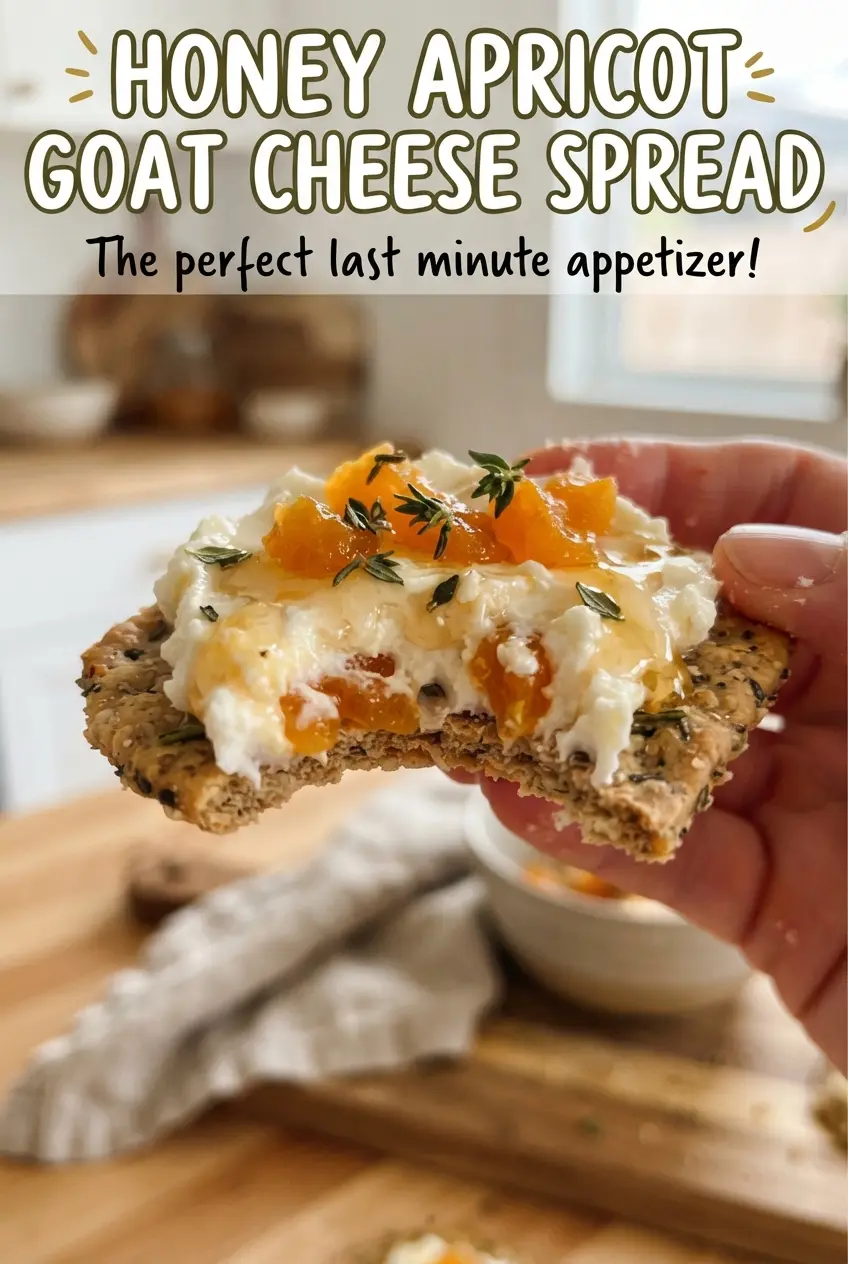
Honey Apricot Goat Cheese Spread
Ingredients
Equipment
Method
- Beat the goat cheese, cream cheese, and milk in a stand mixer until light and smooth, scraping the bowl as needed.
- Spoon the whipped mixture into a shallow serving bowl and swirl in the center to make a clear spot for the topping.
- Warm the apricot preserves with honey for 20-30 seconds, then stir until loose and pourable.
- Spoon the warm apricot-honey over the goat cheese swirl.
- Top with finely chopped dried apricots, chopped pistachios, fresh thyme leaves, and a pinch of flaky sea salt for texture and color.
- Serve immediately with crackers or crostini for scooping and spreading.