Wrapped breakfast burritos are one of those rare make-ahead meals that still taste like actual breakfast, not compromise. The tortillas stay tender, the eggs hold their shape, and the sausage, cheese, and hash browns all settle into a filling that eats cleanly even after freezing. When you reheat them well, you get a hot, sturdy burrito with a melty center and a lightly toasted outside.
What makes this version work is balance. The eggs are scrambled just until set, so they don’t turn rubbery after freezing. The hash browns add bulk and keep the filling from feeling too soft, while the salsa brings enough moisture and seasoning without soaking the tortilla. Warming the tortillas before rolling matters more than people think; cold tortillas split, and once that happens, the whole burrito starts to fall apart in the freezer.
Below, I’ll walk through the small details that keep these burritos from getting soggy, plus a few ways to adapt them for different diets and different mornings. If you’ve ever pulled a frozen burrito apart and found a dry edge with a cold center, the timing notes here will help a lot.
I froze a batch for a camping trip and they reheated perfectly on the grill. The tortillas stayed intact, and the eggs and sausage were still moist instead of turning dry and crumbly.
These make-ahead breakfast burritos freeze beautifully and reheat hot, cheesy, and portable for busy mornings or campfire breakfasts.
The Trick to Burritos That Freeze Without Turning Limp
The mistake most people make is loading the burritos with filling that is still too wet or too hot. Steam gets trapped inside the wrap, then turns into ice crystals in the freezer and a soggy tortilla later on. Let the eggs and sausage cool enough that they’re warm, not steaming, before you roll. That one step makes the biggest difference in texture.
Another thing that matters is how tightly you roll them. A loose burrito opens up in the freezer and reheats unevenly. Fold the sides in first, then pull the tortilla snug over the filling and roll it forward with steady pressure. You want a compact cylinder, not a stuffed tube that can’t hold its own shape.
- Warm tortillas — Cold flour tortillas crack at the fold. A few seconds in a dry skillet or microwave makes them flexible enough to wrap without tearing.
- Cooked hash browns — They act like a buffer between the eggs and tortilla, keeping the burrito from getting mushy. If yours are extra crisp, even better.
- Salsa — Use just enough to season the filling. Too much liquid is the fastest way to get a wet burrito after freezing.
- Foil or wrap — Individual wrapping protects the burritos from freezer burn and helps them keep a tight shape.
What Each Ingredient Is Actually Doing in the Filling
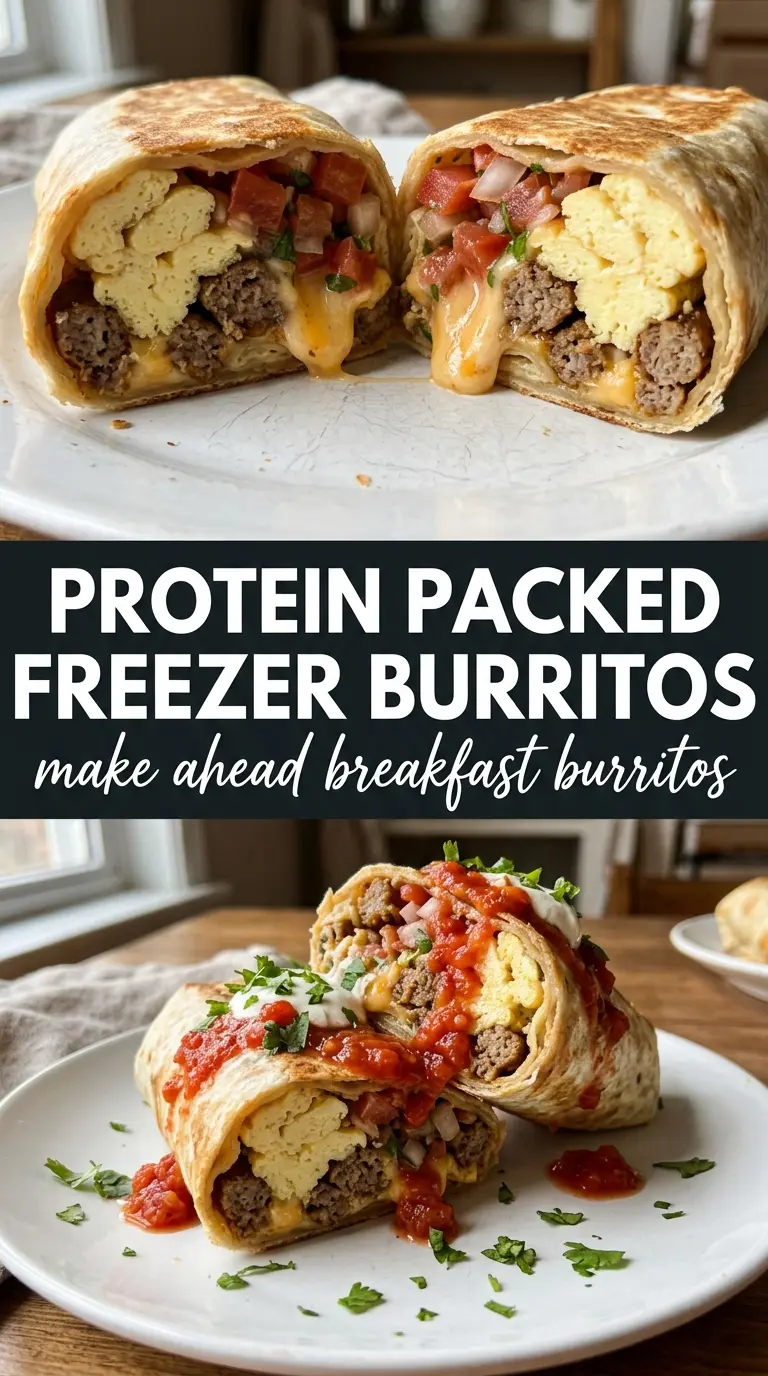
- Flour tortillas — Large flour tortillas hold the filling best and stay flexible after freezing. Smaller tortillas tend to split or overfill too quickly, so this is one place where size matters.
- Eggs — Scramble them just until set, because they’ll firm up a little more during reheating. Soft, slightly underdone eggs freeze better than dry ones.
- Breakfast sausage — This gives the burritos their savory backbone. Any seasoned breakfast sausage works, and turkey sausage is a fine swap if you want a leaner filling.
- Mexican cheese blend — The blend melts evenly and gives you that stretchy, creamy center. Cheddar works too, but it won’t melt quite as smoothly.
- Hash browns — They add body and keep the burrito from feeling too egg-heavy. Leftover roasted potatoes can work in a pinch, but they won’t give quite the same breakfast-burrito texture.
- Salsa — Choose a thicker salsa rather than a watery one. Thin salsa leaks, and leaking is what ruins the wrap.
Rolling, Wrapping, and Reheating Without Ruining the Texture
Getting the Filling Ready
Scramble the eggs with salt and pepper until they’re just set and still a little soft. Cook the sausage separately and let the hash browns cool if they were just made. If the filling is hot enough to fog up the bowl, it’s too hot to roll; wait until the steam is gone so the tortillas don’t turn gummy inside the wrap.
Building a Tight Burrito
Warm the tortillas until they bend without resisting. Spoon the filling in a line across the lower third of each tortilla, keeping the portion even so the burritos all reheat at the same rate. Fold the sides in, then roll from the bottom up as tightly as you can without squeezing filling out the ends. If the seam won’t stay closed, the burrito is overfilled.
Freezing for Later
Wrap each burrito individually in foil or plastic wrap, pressing the wrap snug against the surface. That keeps freezer burn away and stops the burritos from sticking together. Freeze them flat first so they set in shape, then stack them once firm. Flat-freezing matters because a bent burrito takes longer to reheat evenly.
Reheating at Camp or at Home
For camp, unwrap the foil and place the burrito on a grill grate over steady heat for 10 to 15 minutes, turning occasionally until the center is hot. If the outside is browning before the inside is warm, move it to a cooler part of the grate and give it more time. At home, a low oven or covered skillet works best; high heat dries the tortilla before the filling has a chance to thaw.
How to Adapt These Burritos for Different Mornings
Dairy-Free Burritos
Skip the cheese or use a good melting dairy-free blend if you already trust one. The burritos will still hold together, but the filling won’t be quite as creamy, so a spoonful of extra salsa helps bring back some moisture.
Vegetarian Version
Swap the sausage for well-browned black beans, sautéed peppers, or plant-based breakfast crumbles. Beans make the burritos heartier, while peppers add more freshness and a little less richness.
Gluten-Free Option
Use large gluten-free tortillas that are labeled for rolling, not just for serving. They can crack more easily than flour tortillas, so warm them gently and don’t overfill them.
Make Them Spicier
Mix a little chopped jalapeño or hot salsa into the eggs before assembling. That gives you heat in every bite instead of just a spicy streak in the middle.
Storage and Reheating
- Refrigerator: Store assembled burritos for up to 3 days. The tortillas soften a little, but they still reheat well.
- Freezer: Freeze for up to 3 months, wrapped individually. For the best texture, freeze them flat before stacking.
- Reheating: Unwrap and heat over medium-low heat so the center thaws before the tortilla dries out. The most common mistake is blasting them with high heat, which leaves you with a browned outside and a cold middle.
Questions I Get Asked About This Recipe
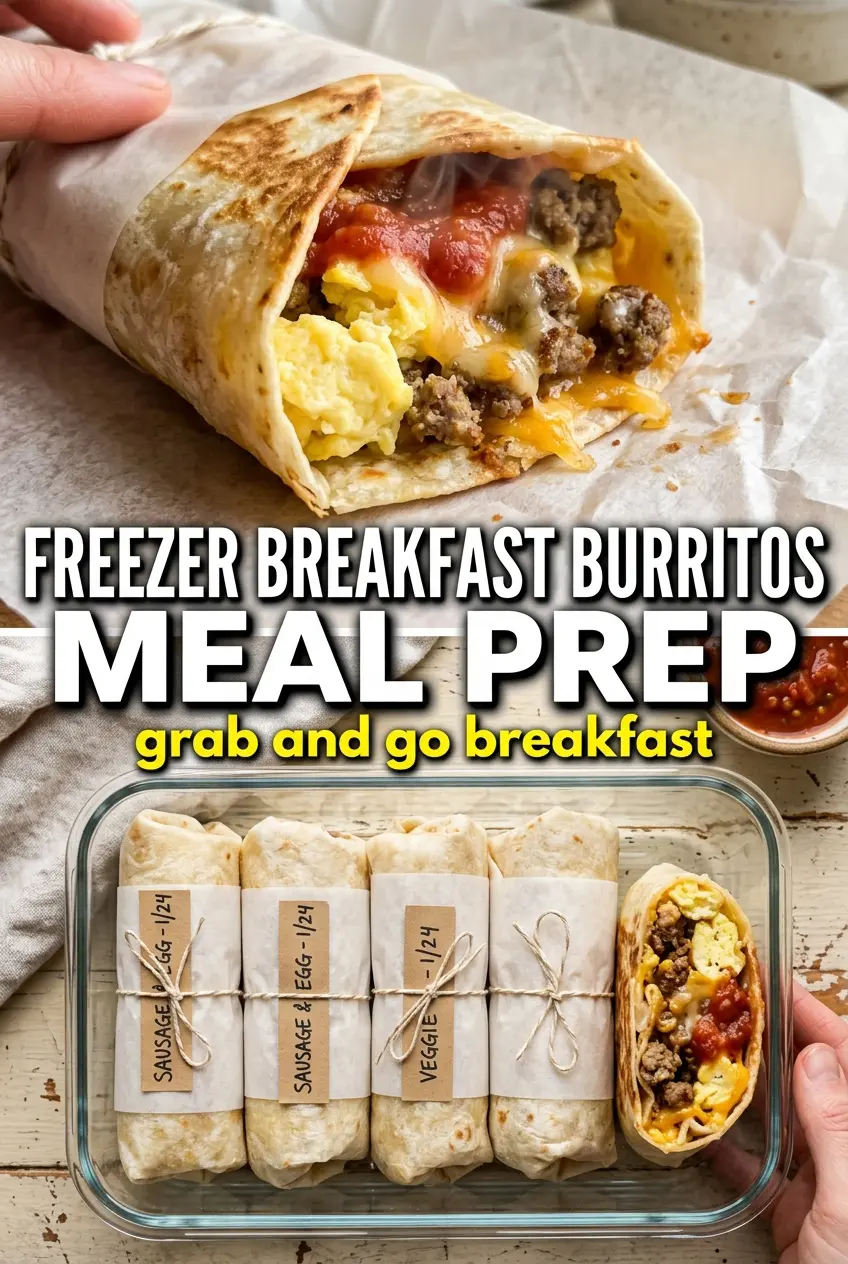
Make Ahead Breakfast Burritos
Ingredients
Equipment
Method
- Scramble the eggs and season with salt and pepper until softly set, then remove from heat to cool slightly.
- Warm the tortillas for 20–30 seconds each until pliable, then keep covered to prevent drying.
- Fill each tortilla with scrambled eggs, cooked and crumbled breakfast sausage, cooked hash browns, shredded Mexican cheese blend, and salsa.
- Fold in the sides and roll tightly into burritos so the filling stays contained.
- Wrap each burrito individually in foil or plastic wrap, pressing lightly so it seals for freezing.
- Freeze the wrapped burritos for up to 3 months.
- At camp, unwrap the burritos and place them on a grill grate for 10–15 minutes, turning occasionally, until hot throughout.