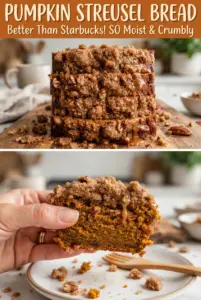
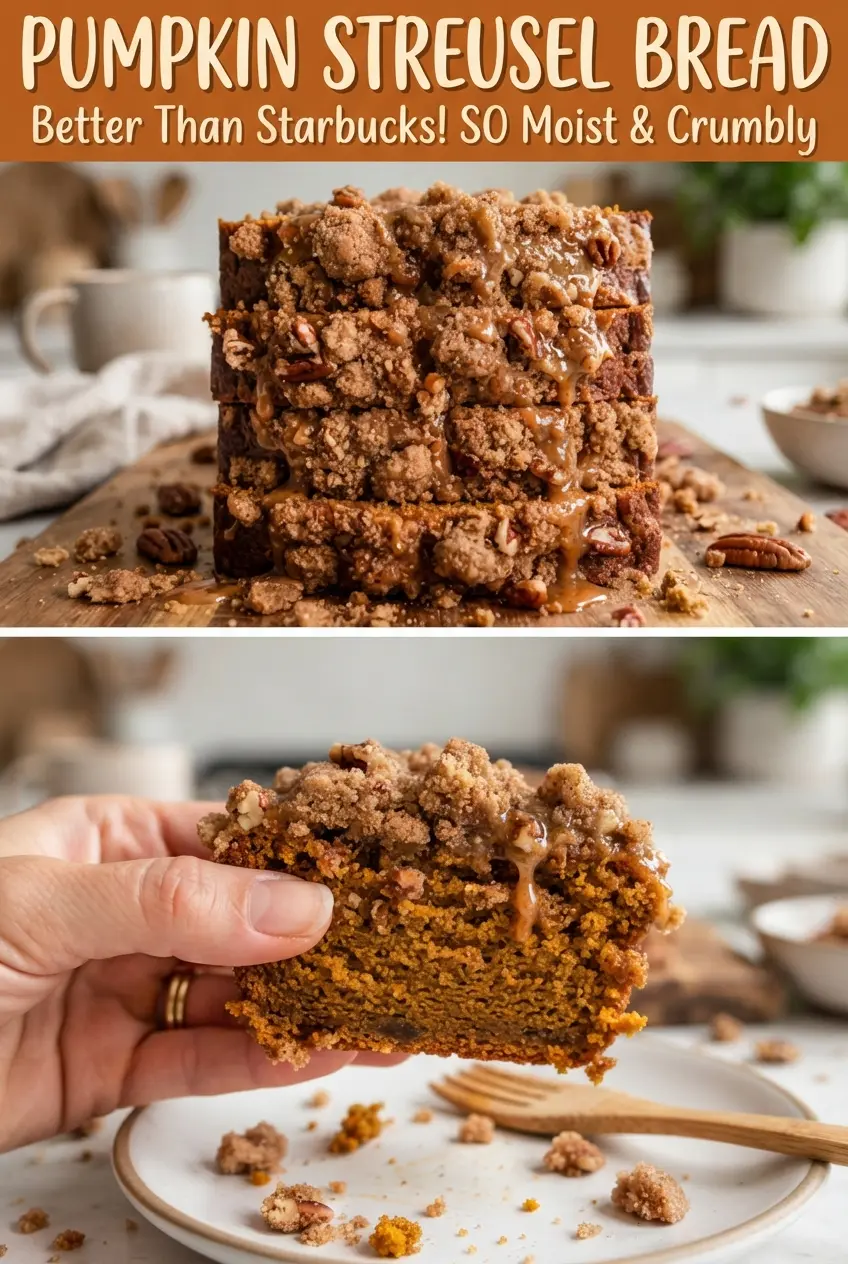
Pumpkin streusel bread bakes up with a tender, moist crumb and a thick crumbly crown that turns every slice into dessert. The bread itself stays soft without feeling heavy, and the cinnamon streusel adds a crisp, buttery layer that breaks apart just enough when you cut into it. It’s the kind of loaf that disappears fast because each bite gives you both warm spice and a little crunch.
What makes this version work is the balance: pumpkin puree brings moisture and body, while the oil keeps the crumb plush for days. The streusel is built with cold butter, not melted, so it bakes into distinct crumbs instead of sinking into the batter. That contrast matters here. If the topping is too warm or the batter is overmixed, you lose the definition that makes this loaf worth baking in the first place.
Below, I’ve included the little details that keep the topping crisp, the center baked through, and the loaf easy to slice cleanly once it cools.
The streusel stayed crunchy on top and the loaf was still moist the next day. I tented it with foil at 40 minutes like you said and it baked evenly without burning the topping.
Save this pumpkin streusel bread for the days when you want a soft, spiced loaf with a crisp cinnamon crumb on top.
The Streusel Topping Is What Can Make or Break the Loaf
The bread batter is forgiving. The topping is not. If the butter is too soft, the streusel turns pasty and melts into the surface instead of baking into those dry, craggy crumbs that give each slice its best texture. Cold butter, rubbed in just until the mixture looks sandy with a few larger clumps, is what keeps the topping distinct.
The other common failure is overmixing the batter after the dry ingredients go in. Pumpkin bread batter should look a little rough when you stop stirring. If you keep going until it’s silky, you’ll work too much air out of it and end up with a tighter, less tender loaf. Stop as soon as the flour disappears.
- Pumpkin puree — Use pure pumpkin puree, not pumpkin pie filling. Pie filling is already sweetened and spiced, which throws off both texture and flavor. The canned version works great here and gives you consistent moisture every time.
- Vegetable oil — Oil keeps the crumb soft even after the loaf cools. Melted butter will give you a richer flavor, but the bread won’t stay as plush for as long. Neutral oil is the safer choice if you want that bakery-style softness.
- Brown sugar — The brown sugar deepens the pumpkin flavor and helps the loaf stay moist. You need it in both the batter and the streusel because that molasses note ties the whole bread together. Light or dark brown sugar both work.
- Cold butter for the streusel — This is the ingredient that gives the topping its crumbly shape. Cubing it first helps it distribute evenly, and chilling the mixture before baking keeps the crumbs from melting too early in the oven.
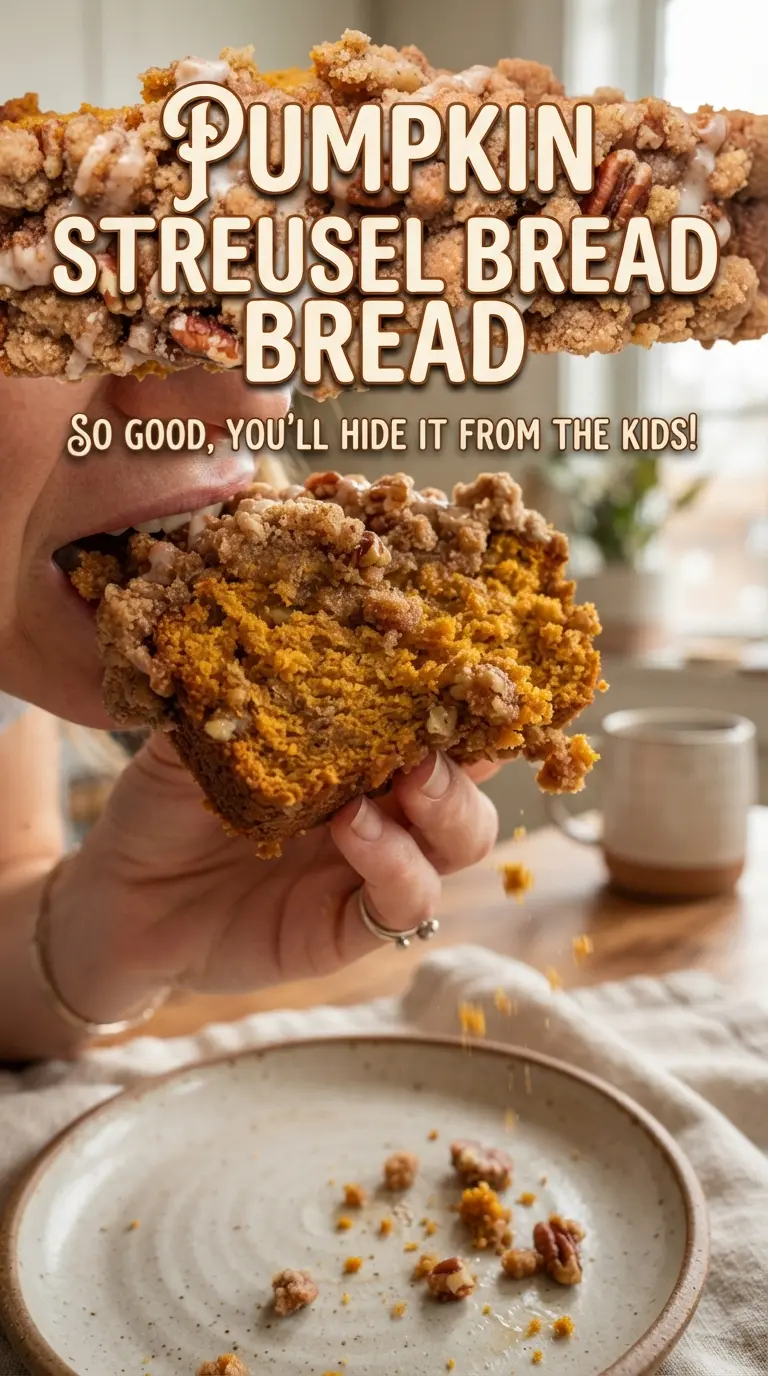
What Each Ingredient Is Actually Doing in This Recipe
- Primary ingredient (the star) — Quality matters most. Choose the best you can find.
- Cooking medium (oil, butter, or broth) — This carries flavors and prevents dryness.
- Seasonings (salt, pepper, spices, herbs) — Layer flavors so nothing overpowers. Build depth gradually.
- Aromatics (garlic, onion, herbs) — Cook with fat to bloom flavors. Become the foundation.
- Supporting ingredients — Complement the main ingredient without overpowering it.
- Sauce or liquid (if applicable) — Brings flavors together. Balance richness with acid.
- Acid (lemon, vinegar, wine, or other) — Brightens and prevents flat-tasting results.
- Final finish (garnish, glaze, or sauce) — Prevents one-dimensional taste and adds visual appeal.
Building the Batter and Keeping the Topping Separate
Mix the Streusel First
Start with the topping so it has time to chill while you make the batter. Rub the flour, brown sugar, cinnamon, and cold butter together until the mixture looks like coarse crumbs with a few pea-sized bits left behind. If it turns into a smooth paste, the butter was too warm or you overworked it, and the topping won’t bake up with much texture. Pop it in the fridge while you move on.
Bring the Batter Together Gently
Whisk the dry ingredients in one bowl and the pumpkin, oil, eggs, sugars, and vanilla in another. Once you add the flour mixture, stir only until the streaks disappear. The batter will be thick and a little rustic, which is exactly what you want. Overmixing here builds toughness, and there’s no need for that in a quick bread.
Bake Until the Center Sets
Spread the batter into a greased and lined 9×5-inch pan, then cover it evenly with the streusel. Bake at 350°F until a toothpick comes out clean from the center, usually 60 to 65 minutes. If the top is getting dark before the middle is done, tent it loosely with foil after about 40 minutes. That protects the streusel while the inside catches up.
Let It Cool All the Way
This loaf needs a full cool-down before slicing. Cutting too early traps steam and can make the crumb gummy, especially under the streusel layer where the heat hangs on the longest. Leave it in the pan until it’s completely cool, then slice with a sharp knife for the cleanest pieces and the least crumb fallout.
How to Adapt This Pumpkin Streusel Bread for Different Kitchens
Dairy-Free Version
This loaf is already dairy-free in the batter, so the only thing to watch is the streusel butter. Swap in a plant-based butter that stays firm when cold, not a soft tub spread. You’ll still get crumbs, though they may brown a little faster, so keep an eye on the top during the last 15 minutes.
Whole Wheat Swap
You can replace up to half of the all-purpose flour in the batter with white whole wheat flour for a nuttier, heartier loaf. The texture gets a little denser, so don’t swap all of it unless you want a more rustic result. The streusel should stay all-purpose flour so it keeps that crumbly top.
Extra-Spiced Loaf
If you like a stronger spice note, add another 1/2 teaspoon of cinnamon or a pinch of ginger to the batter. Don’t push the spices too hard or you’ll drown out the pumpkin itself. The goal is a warm background spice, not a loaf that tastes like it came from a jarred blend.
Storage and Reheating
- Refrigerator: Store tightly wrapped at room temperature for up to 3 days, or refrigerate for up to 5 days if your kitchen runs warm. The streusel softens a bit after day one, but the loaf stays moist.
- Freezer: This bread freezes well. Wrap the cooled loaf or individual slices tightly in plastic wrap, then freeze in a bag for up to 3 months. Thaw at room temperature so the topping doesn’t get soggy.
- Reheating: Warm slices in a toaster oven or a low oven for a few minutes. The mistake is microwaving too long, which makes the crumb gummy and the streusel go soft.
Answers to the Questions Worth Asking
Pumpkin Streusel Bread
Ingredients
Equipment
Method
- Preheat the oven to 350F, then grease and line a 9x5-inch loaf pan.
- Set the pan aside while you prepare the batter and streusel.
- Rub the streusel flour, brown sugar, cinnamon, and cold butter together into coarse crumbs.
- Chill the coarse crumbs while you mix the pumpkin batter.
- Whisk the all-purpose flour, baking soda, salt, and pumpkin pie spice until evenly combined.
- Whisk the pumpkin puree, vegetable oil, eggs, both sugars, and vanilla extract until smooth.
- Fold the dry ingredients into the pumpkin mixture just until combined.
- Pour the batter into the prepared loaf pan and cover evenly with the chilled streusel.
- Bake for 60-65 minutes at 350F until a toothpick comes out clean, tenting with foil after 40 minutes if browning fast.
- Cool the bread completely in the pan before slicing to set the crumb.