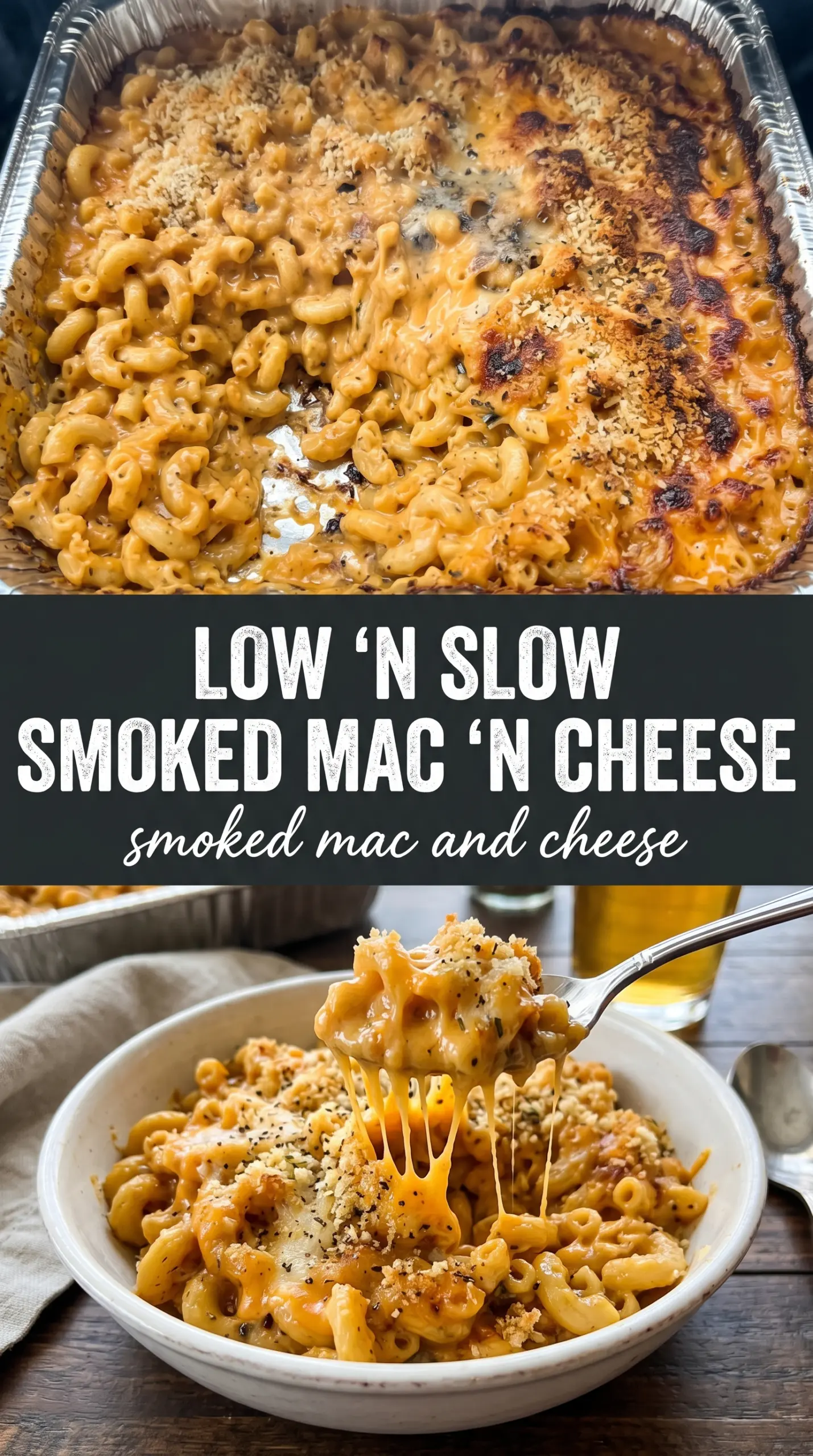
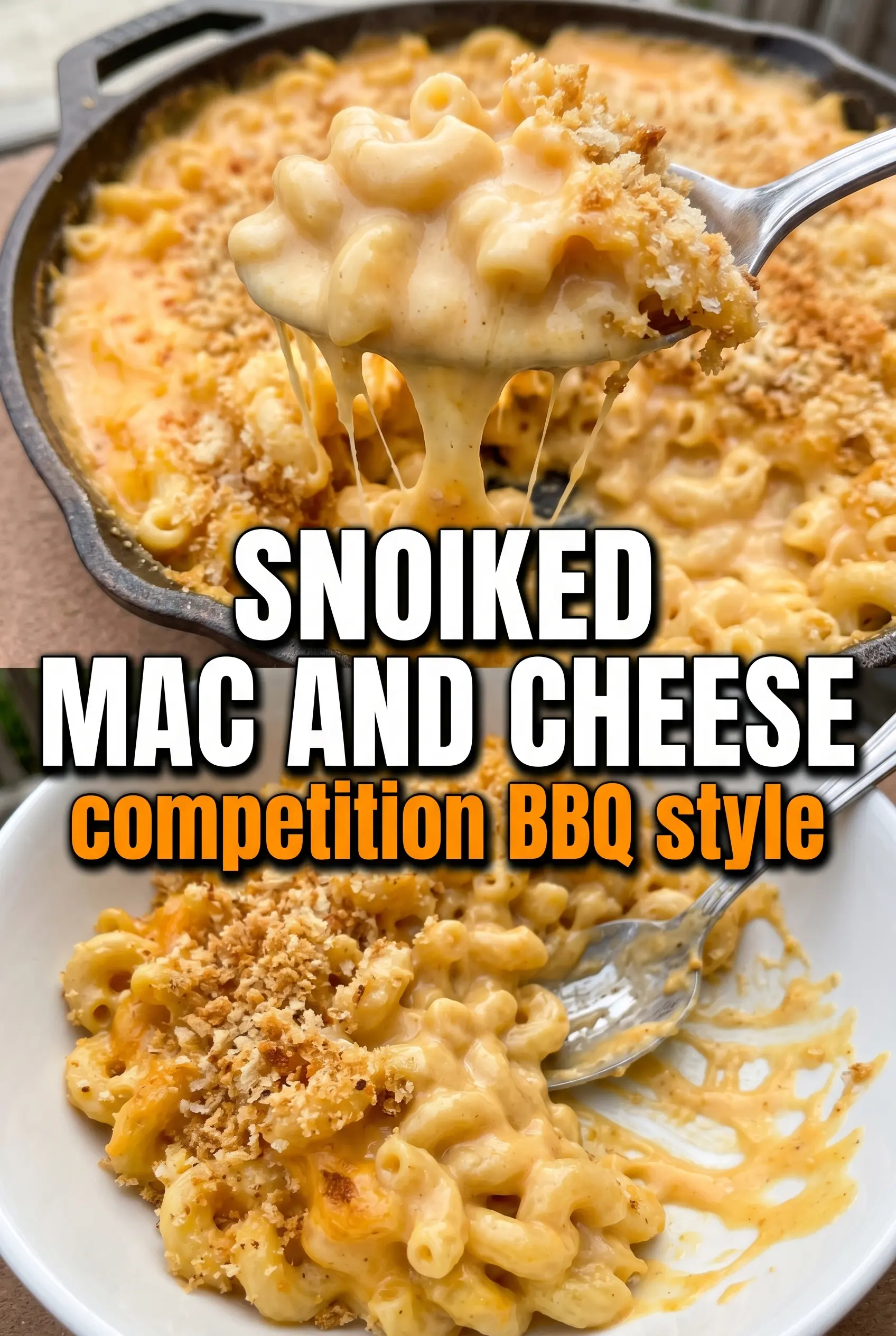
Smoked mac and cheese lands on the table with a creamy center, a crisp breadcrumb top, and just enough wood smoke to make the whole dish taste like it spent the afternoon near a pit. The pasta stays tender without going mushy, and the cheese sauce clings to every elbow instead of pooling at the bottom of the pan. That contrast is what keeps people going back for another scoop.
The trick is balancing a classic stovetop cheese sauce with the low, slow heat of the smoker. Sharp cheddar gives the sauce backbone, while smoked Gouda brings depth without needing a pile of extra seasonings. If you rush the sauce or crank the smoker too high, the cheese can turn grainy and the top can dry out before the center is hot.
Below, I’ll show you how to keep the sauce smooth, how to get a golden crust without losing that creamy middle, and what to change if you need to make it ahead or tweak it for a different crowd.
The sauce stayed silky even after 75 minutes on the smoker, and the smoky Gouda made it taste like it came from an actual BBQ joint.
Save this smoked mac and cheese for the next BBQ spread when you want a creamy center, smoky depth, and a crunchy panko top.
The Reason the Cheese Sauce Stays Creamy Under Smoke
The biggest failure point with smoked mac and cheese is starting with a sauce that’s already too thick or too hot. Once that pan sits in the smoker, the cheese keeps tightening up, so the sauce needs to look a little looser than you think it should when it goes into the pan. That extra fluidity keeps the finished dish spoonable instead of stiff.
The other thing that matters is heat control. The smoker should sit at 225°F, not hotter, so the edges don’t dry out before the center is hot and bubbling. If the top browns too fast, tent it loosely with foil for part of the cook and uncover it near the end to bring back the crust.
- Low smoker temperature — This gives the cheese sauce time to set gently instead of breaking. Higher heat can separate the fat and leave you with a greasy pan.
- Heavy cream — It adds body and helps the sauce stay smooth after smoking. Milk alone works in a pinch, but the finished texture will be thinner.
- Sharp cheddar — This is the backbone of the dish. Mild cheddar melts fine, but it tastes flatter and gets lost once smoke enters the picture.
- Smoked Gouda — It builds the smoky flavor from inside the sauce, which means you don’t have to rely only on the smoker. If you can’t find it, provolone or fontina can work, but the result won’t have the same depth.
What Each Layer Is Doing in the Pan
- Elbow macaroni — The curved shape traps sauce in every bite. Cook it just to al dente because it keeps softening in the smoker.
- Butter and flour — These make the roux that keeps the sauce from turning watery. Cook them together long enough to lose the raw flour smell, but don’t let them brown unless you want a deeper, nuttier base.
- Milk and cream — Warmed dairy blends into the roux more smoothly than cold dairy and helps prevent lumps. This is the part that gives the sauce its silkiness, so whisk steadily until the mixture looks glossy and even.
- Panko mixed with melted butter — This is what gives you the crisp top that makes smoked mac and cheese feel finished. Regular breadcrumbs work, but panko stays lighter and crunches better after smoking.
- Garlic powder — It adds background savory flavor without introducing moisture. Fresh garlic can work, but it’s easier to scorch in the sauce and can taste sharp after a long smoke.
Building the Sauce Before It Ever Hits the Smoker
Making the Roux
Melt the butter over medium heat, then whisk in the flour and cook it until it smells a little nutty and looks like pale sand. If you stop too soon, the sauce can taste floury; if you cook it too hard, it can turn too dark for the mild, creamy profile this dish needs. Keep the whisk moving so nothing catches on the bottom.
Whisking in the Dairy
Pour in the milk and cream gradually while whisking, and keep going until the sauce turns smooth and starts to thicken enough to coat a spoon. Add the dairy too fast and the roux can clump, which is annoying to fix once the cheese goes in. If you do get a few lumps, whisk hard before moving on; most small ones will dissolve as the sauce heats.
Melting in the Cheese
Pull the pan off the heat before adding the cheddar and Gouda. Cheese melts best in gentle heat, and high heat is what makes a sauce grainy or oily. Stir until the sauce looks glossy and unified, then season with garlic powder, salt, and pepper. It should taste a touch stronger than you want in the final dish because the pasta will dilute it a little.
Smoking Until Bubbly and Set
Stir the cooked pasta into the sauce, spread everything into an aluminum pan, and top it with the buttery panko. Slide it into the smoker and leave the lid closed for most of the cook so the heat and smoke can do their work evenly. The mac and cheese is ready when the edges are bubbling, the top is golden, and the center still looks creamy but not loose like soup. Let it rest for 10 minutes before serving so the sauce settles instead of running everywhere.
How to Adapt It for a Bigger Crowd, a Different Cheese, or a No-Dairy Table
Make-ahead BBQ side
You can build the pasta and sauce, spread it in the pan, and refrigerate it for a few hours before smoking. Add the panko topping right before it goes on the smoker so it stays crisp instead of absorbing moisture from the sauce.
Dairy-free version
Use unsweetened oat milk and a good vegan butter, then swap in melting-style dairy-free cheeses that are made for sauces. The texture will be a little less rich, but the smoker still adds enough character to keep the dish satisfying.
Gluten-free swap
Use gluten-free pasta and thicken the sauce with a 1:1 gluten-free flour blend in place of the all-purpose flour. Some gluten-free pastas soften faster, so check them early and pull the pan before they start getting fragile.
Extra-smoky version
If you want the smoke to stand out more, add a little extra smoked Gouda or a pinch of smoked paprika. Don’t overdo it, or the cheese flavor starts to taste muddy instead of balanced.
Storage and Reheating
- Refrigerator: Store leftovers for up to 4 days. The sauce will thicken as it chills, but it still reheats well.
- Freezer: It freezes, though the sauce can lose a little of its silky texture. Freeze in airtight portions and thaw in the fridge before reheating.
- Reheating: Reheat covered in a 300°F oven with a splash of milk stirred in first. The common mistake is blasting it in the microwave, which dries out the pasta and makes the cheese separate.
Answers to the Questions Worth Asking
Smoked Mac And Cheese
Ingredients
Equipment
Method
- Prepare smoker to 225°F and wait until it stabilizes at that temperature before loading the pan.
- Melt the butter over gentle heat, then whisk in the flour until smooth and lightly bubbling.
- Whisk in the milk and heavy cream gradually, maintaining steady heat until the mixture thickens into a smooth sauce.
- Add the sharp cheddar and smoked Gouda and stir until fully melted, then season with garlic powder and salt and pepper.
- Mix the cooked elbow macaroni with the cheese sauce in an aluminum pan so every noodle is coated.
- In a small bowl, stir panko breadcrumbs with melted butter, then spread the topping evenly over the mac and cheese.
- Smoke at 225°F for 60-90 minutes, until the mac is bubbly and the top turns golden with visible smoke.
- Let the smoked mac and cheese rest for 10 minutes before serving so the sauce sets and the crust stays crisp.