Blush-pink watermelon sangria hits the glass with a clean, juicy sweetness that tastes like fresh watermelon instead of candy. The wine stays bright, the citrus keeps it from feeling flat, and the mint lifts the whole pitcher so each sip stays crisp from start to finish. It’s the kind of drink that disappears fast because it looks pretty, pours easily, and tastes even better after a good chill.
The trick is starting with actual watermelon juice, not just chunks floating in wine. Blending part of the fruit gives the sangria that clean watermelon base, while the remaining cubes infuse the pitcher and give every glass a little texture. Dry rosé works best because it brings fruit without too much sweetness, and a splash of sparkling water at the end keeps the drink lively instead of heavy.
Below, I’ll walk you through the one step that matters most for flavor, plus the small adjustments that help you scale this for a party without watering it down.
The watermelon flavor came through beautifully, and chilling it for the full two hours made the whole pitcher taste balanced instead of boozy. I loved that the sparkling water went in at the end — it stayed bright and fizzy in every glass.
Like this watermelon sangria? Save it to Pinterest for the next pitcher drink that needs to be cold, bright, and party-ready.
The Step That Keeps Watermelon Sangria From Tasting Flat
Most sangria gets muddy when the fruit goes straight into the wine and you hope time fixes it. Watermelon is especially prone to that problem because it’s delicate; after a couple of hours, it can still taste thin if you never gave the drink a concentrated fruit base. Blending half the watermelon and straining it first solves that. You get actual flavor in the liquid, not just diluted fruit floating around the pitcher.
The other mistake is adding the sparkling water too early. It loses its lift while the sangria chills, and you end up with a drink that tastes quiet instead of bright. Hold it back until the very end, then stir gently so you keep the bubbles intact.
What the Wine, Citrus, and Sweetener Are Actually Doing Here

- Dry rosé or white wine — This is the backbone of the pitcher. A dry wine keeps the sangria crisp and lets the watermelon stay in charge. If you use a sweeter wine, the drink can turn syrupy fast, so choose something you’d still enjoy on its own.
- Fresh watermelon — Seedless cubes are easiest, but you’ll still want to strain the blended portion through a fine mesh sieve for a smooth juice. That step matters because pulp can make the drink feel grainy after chilling.
- Watermelon vodka or plain vodka — Watermelon vodka pushes the fruit flavor a little further, but plain vodka works if that’s what you have. It adds structure without changing the color or making the sangria taste perfumey.
- Triple sec — This gives the pitcher a citrusy edge that rounds out the watermelon. It’s worth keeping in the mix because plain sugar alone won’t add the same depth.
- Honey or simple syrup — Start with a small amount and taste after chilling. Watermelon varies a lot in sweetness, and a little extra syrup can help if your fruit was pale or underripe.
- Lime and lemon slices — Don’t skip both. Lime brings sharpness, lemon brings brightness, and together they keep the drink from leaning one-note.
Building the Pitcher So the Flavor Stays Bright
Blending the Watermelon Base
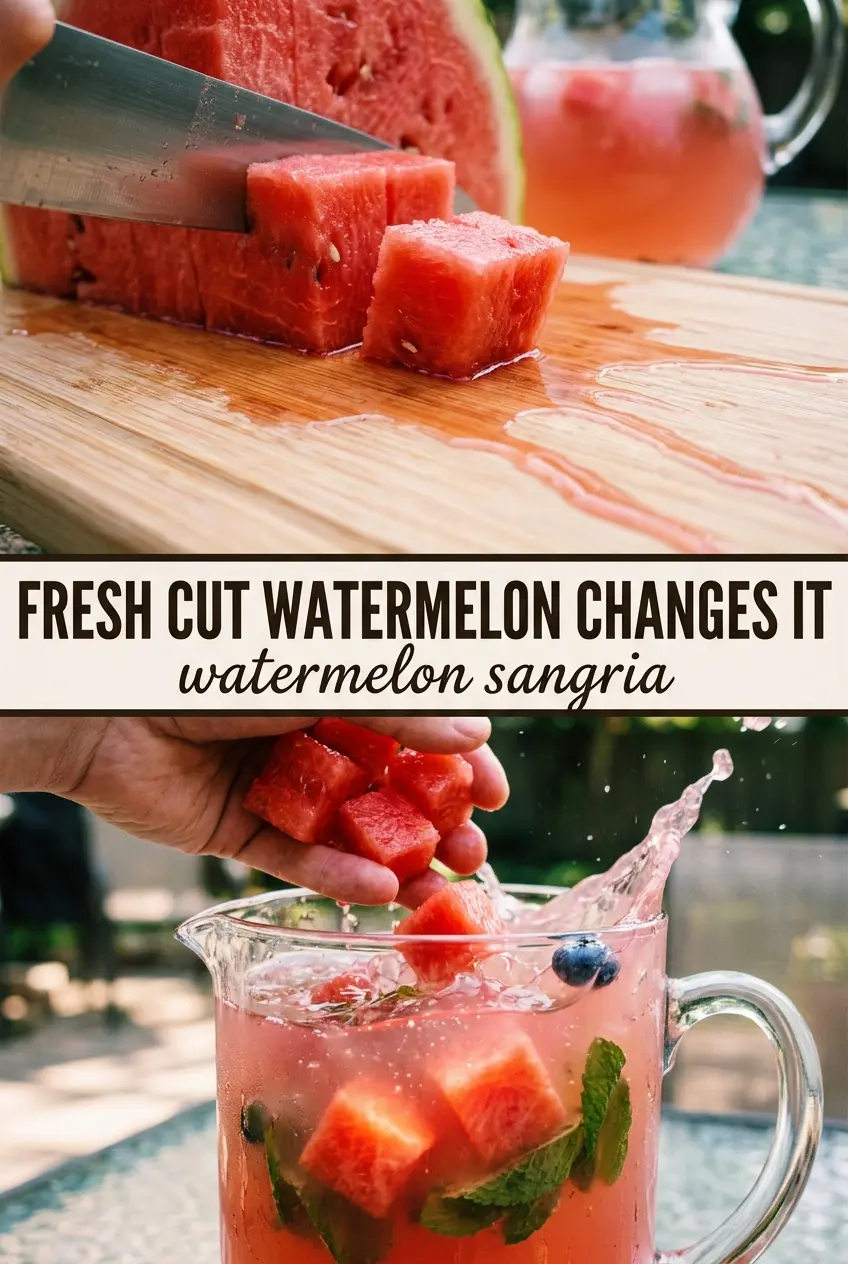
Blend 2 cups of the watermelon until smooth, then strain it through a fine mesh sieve. You’re looking for about 1 cup of juice. If you skip the straining, the pulp settles in the pitcher and makes the sangria taste cloudy and heavy after it sits.
Mixing the Wine Without Killing the Freshness
Stir the watermelon juice, wine, vodka, triple sec, and honey together in a large pitcher until the honey dissolves. Don’t dump in the sparkling water yet. The mixture needs time in the fridge first so the wine and fruit can meld without losing carbonation later.
Adding the Fruit and Letting It Chill
Fold in the remaining watermelon cubes, lime slices, and lemon slices, then cover the pitcher and chill it for at least 2 hours. That rest time is what softens the wine and lets the citrus edges settle in. If you serve it too soon, the flavors will taste separate instead of integrated.
Finishing With Bubbles
Right before serving, pour in the sparkling water and stir once or twice. Add it early and it goes flat; add it at the end and the sangria keeps that light, lively finish. Serve over ice with mint on top, since the ice helps hold the chill once the pitcher starts sitting out.
Three Ways to Change the Pitcher Without Losing the Balance
Make it dairy-free and naturally gluten-free
This recipe already fits both of those needs as written, as long as you use a gluten-free vodka and a sparkling water or club soda you know works for you. The main thing to watch is the sweetener; honey keeps it natural, while simple syrup gives you a cleaner finish if you want the fruit to stay front and center.
Swap the wine to match the crowd
Dry rosé gives you a little berry note and a pretty color, but a dry white wine makes the sangria lighter and more citrus-forward. If you use a wine that’s already sweet, pull back on the honey or skip it entirely so the pitcher doesn’t end up cloying.
Skip the vodka for a lower-proof version
You can leave out the vodka and keep the triple sec for a softer drink that still tastes layered. The sangria will be a little lighter-bodied, so give it the full chilling time and use plenty of chilled fruit to keep it tasting complete.
Turn it into a bigger-batch party pitcher
Double everything except the sparkling water if you’re serving a crowd and want to preserve the fizz. Mix the base ahead, chill it in a second pitcher or beverage dispenser, then add the bubbles right before guests arrive so the first glass tastes just as lively as the last.
Storage and Reheating
- Refrigerator: Store the sangria base without sparkling water for up to 24 hours. After that, the fruit starts to soften too much and the wine loses some of its clean edge.
- Freezer: Don’t freeze the finished sangria. The texture turns watery when it thaws, and the citrus slices go mushy.
- Reheating: Not applicable. This drink should be served cold, and the best fix for leftovers is a fresh splash of sparkling water just before pouring.
Questions I Get Asked About This Recipe
Watermelon Sangria
Ingredients
Equipment
Method
- Blend 2 cups of watermelon cubes until smooth, then strain through a fine mesh sieve to get 1 cup of fresh watermelon juice.
- Combine the watermelon juice, rosé wine, vodka, triple sec, and honey in a large pitcher and stir to combine.
- Add the remaining watermelon cubes, lime slices, and lemon slices to the pitcher, spreading them out so the fruit is visible throughout.
- Cover and refrigerate for at least 2 hours to chill and allow flavors to meld, until the mixture is well chilled.
- Right before serving, top with sparkling water, stir gently, and pour into ice-filled glasses garnished with fresh mint.