Ingredients
Equipment
Method
Brown the beef
- Toss the beef with the flour, salt, and pepper until every cube looks evenly coated. Visual cue: flour should cling to the meat in a light, powdery layer.
- Brown the beef in hot olive oil in batches for 4-5 minutes per batch, then transfer to the slow cooker. Visual cue: edges should be deeply browned and the surface should look dry rather than steamy.
Build the stew base
- Cook the diced onion in the same pan for 4 minutes until softened. Visual cue: the onion should turn translucent and start to pick up light color.
- Add the garlic and tomato paste and cook for 1 minute, stirring constantly. Visual cue: the tomato paste should darken slightly and become fragrant.
- Pour in 1 cup of the beef broth and scrape up the browned bits from the pan, then add everything to the slow cooker. Visual cue: the bottom residue should dissolve into the liquid as you scrape.
Slow cook
- Add the remaining beef broth, Worcestershire sauce, potatoes, carrots, celery, thyme, and bay leaves to the slow cooker. Visual cue: the liquid should come up around the vegetables but not completely cover them.
- Cover and cook on LOW for 8 hours (or HIGH for 4-5 hours) until the beef is fork-tender. Visual cue: a fork should slide through a beef cube with almost no resistance.
Finish and serve
- Stir in the frozen peas and cook for the last 10 minutes. Visual cue: peas should turn bright green and become tender-crisp.
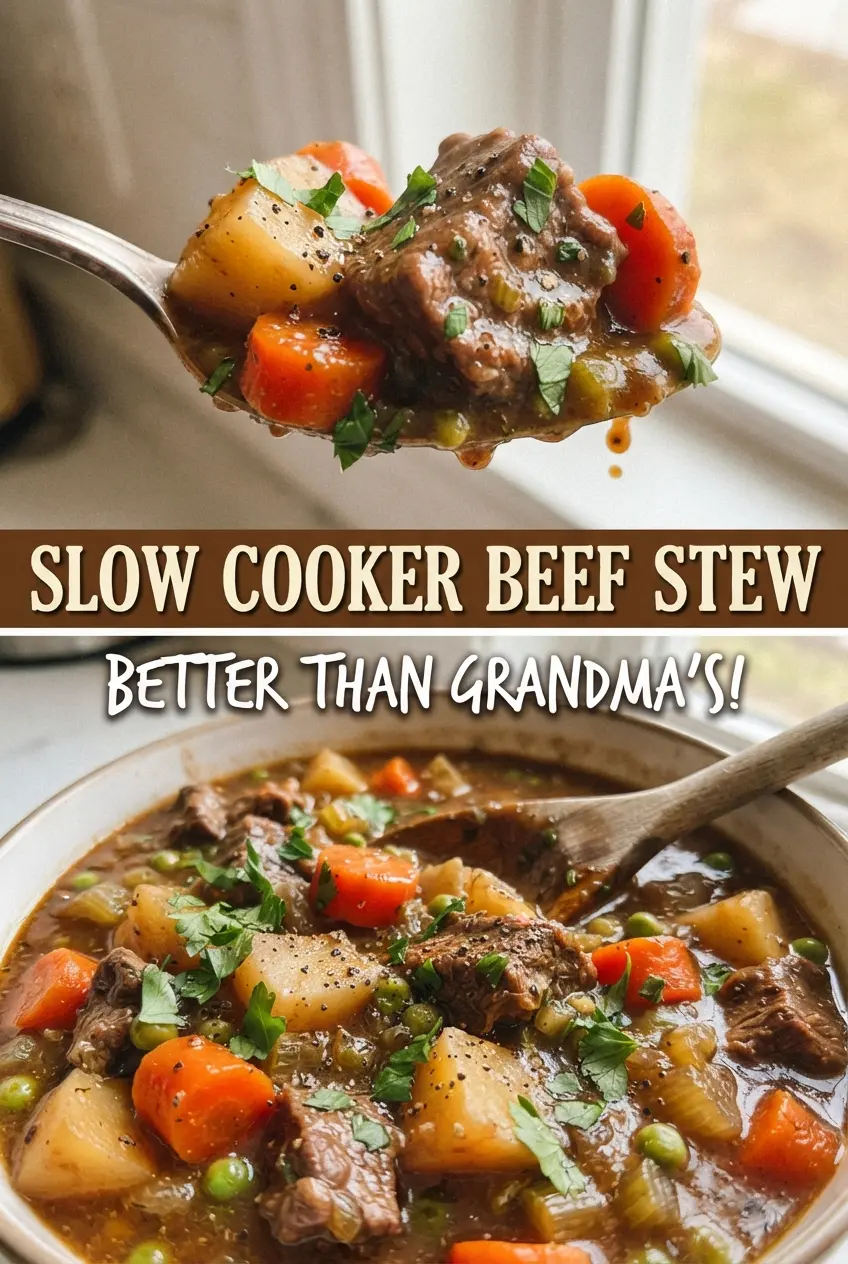
- Remove the bay leaves, then top the stew with chopped fresh parsley before serving. Visual cue: parsley should sit fresh on top with a vivid green color.
Notes
For the thick, glossy gravy, don’t skip browning the flour-coated beef and be sure to scrape the browned bits when you add the broth. Store leftovers in the refrigerator up to 4 days; reheat gently until steaming. Freezing is yes: cool completely, freeze up to 3 months, and thaw in the fridge before reheating. For a lighter option, use low-sodium beef broth and reduce the added salt slightly.