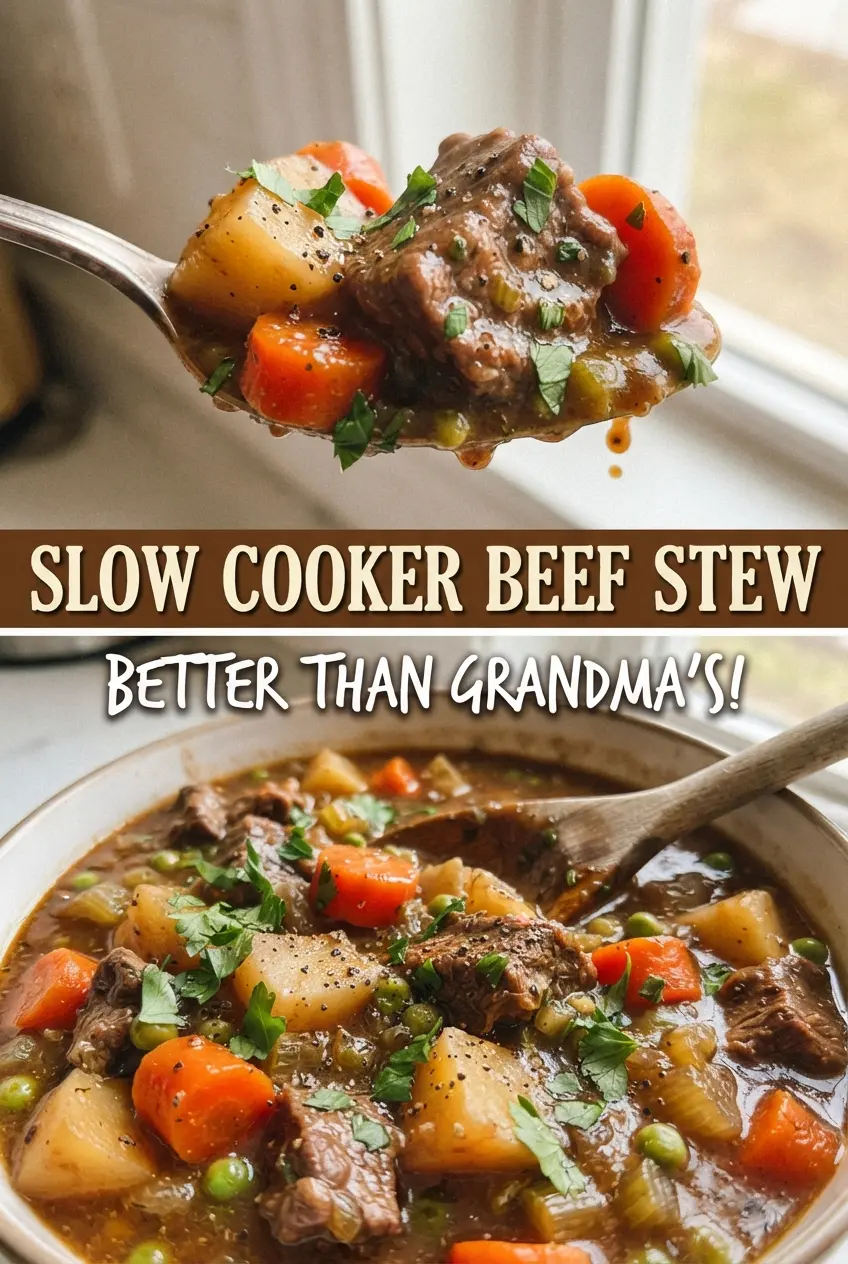
Tender beef, soft potatoes, and a broth that turns thick and glossy are what make a good slow cooker beef stew worth repeating. The meat cooks until it pulls apart with a fork, but it still tastes like beef because it gets a proper sear first instead of going straight into the pot raw. That one step gives the whole stew a deeper, richer base that a long cook alone can’t build.
The other thing that matters here is how the vegetables are layered. Potatoes and carrots hold up well over hours of gentle heat, while the peas go in at the end so they stay bright instead of dull and mushy. The flour on the beef does double duty too: it helps the meat brown and gives the broth just enough body without needing a separate thickener.
Below you’ll find the browning method, the ingredient choices that make the biggest difference, and a few smart ways to adapt the stew if you need to work with what’s in the kitchen.
The broth turned out thick and rich, and the beef was fall-apart tender without getting stringy. I loved that the peas went in at the end and stayed bright — even my picky eater went back for seconds.
Save this slow cooker beef stew for a thick, cozy dinner with tender beef and rich gravy-like broth.
The Browning Step That Keeps This Stew from Tasting Flat
If the beef goes straight into the slow cooker, you get tender meat but not much depth. Browning the cubes in batches changes that. You want a dark crust on the outside and enough fond left in the pan to flavor the onions and broth. Crowding the pan is the usual mistake here — it steams the meat instead of searing it, and steamed beef never gives you the same rich base.
The flour on the beef helps the surface dry out a little faster and gives the final broth body, but it only works if the meat is browned in a hot pan. After that, the onions, garlic, and tomato paste cook in the same pan so they pick up the browned bits instead of starting from scratch. That’s where the stew starts tasting like stew instead of beef in broth.
What Each Ingredient Is Actually Doing in This Stew
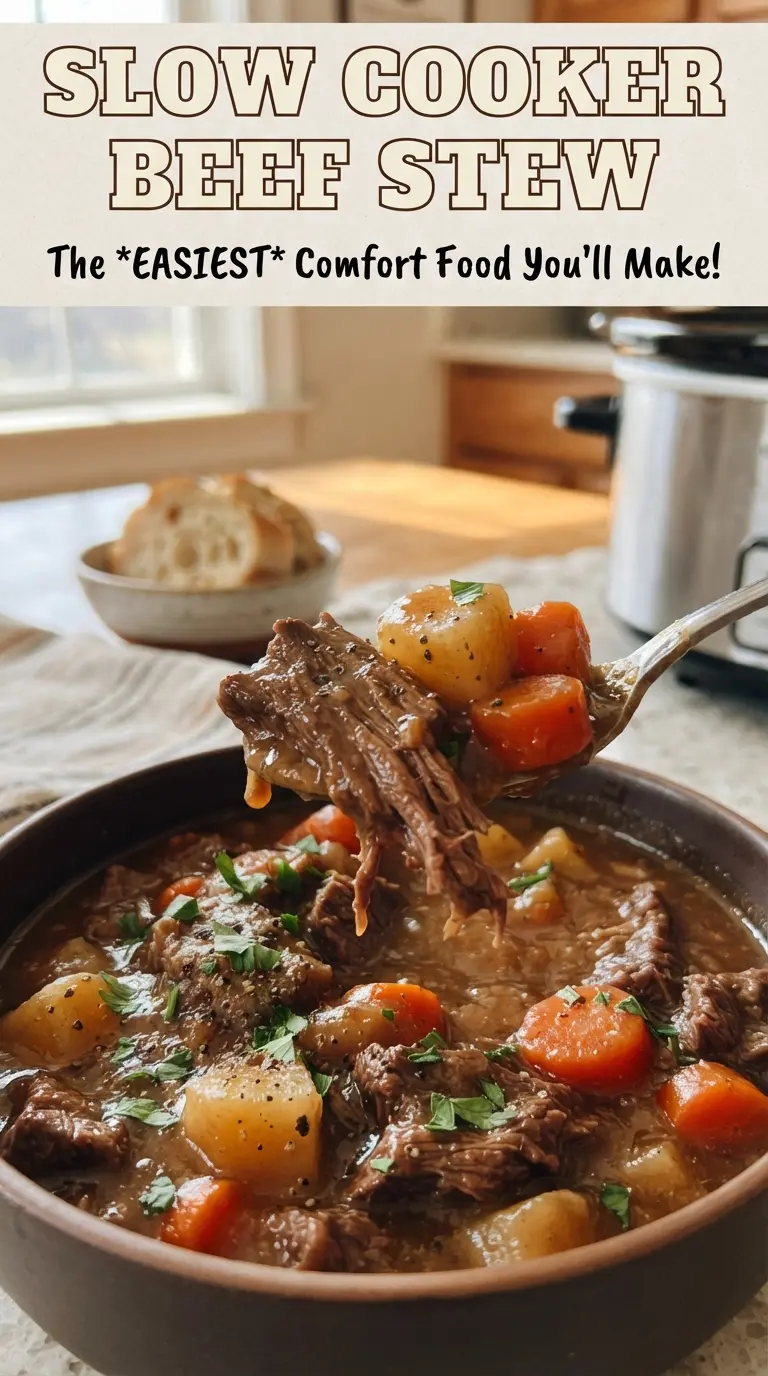
- Beef chuck roast — This is the right cut because it has enough marbling to stay juicy through a long cook. Leaner stew meat tends to dry out before it gets tender. Cut it into even chunks so it cooks at the same pace.
- Tomato paste — It adds depth and a little savory sweetness, and it needs that minute in the pan to lose its raw edge. If you skip the brief cook, the stew can taste sharp instead of rounded.
- Worcestershire sauce — This brings a quiet hit of umami and acidity that makes the broth taste fuller. There isn’t a perfect substitute, but a small splash of soy sauce plus a touch of vinegar can fill in if needed.
- Yukon gold potatoes — They hold their shape better than russets and turn creamy instead of mealy. If you use russets, expect them to break down more and thicken the stew a little more.
- Frozen peas — They go in at the end because they only need a few minutes. Add them early and they lose their color and snap.
Building the Slow Cooker Layers in the Right Order
Sear the Beef First
Toss the beef with flour, salt, and pepper, then brown it in hot oil in batches. Each batch should develop a deep brown crust before you turn it, and that usually takes 4 to 5 minutes. If the pieces stick at first, leave them alone; they’ll release when the crust forms. Move each browned batch to the slow cooker as you go so the pan stays hot enough for the next round.
Use the Same Pan for the Onion Base
The onion goes into the same pan after the beef, not into a clean skillet. Stir it around until it softens and starts to pick up the browned bits, then add the garlic and tomato paste for one minute. That short cook wakes up the paste and keeps the garlic from tasting sharp or raw in the finished stew.
Let the Slow Cooker Do the Long Work
Pour in a little broth first and scrape the pan thoroughly, then add everything else except the peas and parsley. The potatoes, carrots, celery, thyme, and bay leaves need the full cook to soften and meld into the broth. Cook on LOW for 8 hours when you can; the gentler heat gives the beef a more tender texture than rushing it on HIGH.
Finish with Freshness, Not More Heat
Stir in the peas during the last 10 minutes and remove the bay leaves before serving. The peas should look bright green, not faded, and the broth should be thick enough to coat a spoon. Finish with parsley right at the end so the stew tastes clean and lifted instead of heavy.
How to Adapt This When You Need to Work with What’s on Hand
Make it gluten-free
Swap the all-purpose flour for a gluten-free 1:1 flour blend, or skip the flour and dust the beef lightly with cornstarch instead. You’ll still get a little body in the broth, though the stew will be slightly less thick unless you let it reduce a bit at the end.
Use a different potato
Red potatoes or baby potatoes work well if that’s what you have. They hold their shape and give you a cleaner, chunkier stew, while russets break down more and make the broth thicker and softer.
Add more vegetables without breaking the stew
Mushrooms, parsnips, or peas-and-carrots blends all fit here. Add mushrooms with the onions so they lose their raw edge, and add delicate vegetables near the end so they don’t melt into the broth.
Storage and Reheating
- Refrigerator: Keeps well for 4 days. The broth thickens as it chills, so expect a more spoon-coating texture the next day.
- Freezer: Freezes well for up to 3 months. Cool it completely, portion it into airtight containers, and leave a little room at the top for expansion.
- Reheating: Reheat gently on the stove over low heat or in the microwave in short bursts, stirring between rounds. If it looks too thick, add a splash of broth or water; boiling it hard can make the beef dry and the potatoes break apart.
Answers to the Questions Worth Asking
Slow Cooker Beef Stew
Ingredients
Equipment
Method
- Toss the beef with the flour, salt, and pepper until every cube looks evenly coated. Visual cue: flour should cling to the meat in a light, powdery layer.
- Brown the beef in hot olive oil in batches for 4-5 minutes per batch, then transfer to the slow cooker. Visual cue: edges should be deeply browned and the surface should look dry rather than steamy.
- Cook the diced onion in the same pan for 4 minutes until softened. Visual cue: the onion should turn translucent and start to pick up light color.
- Add the garlic and tomato paste and cook for 1 minute, stirring constantly. Visual cue: the tomato paste should darken slightly and become fragrant.
- Pour in 1 cup of the beef broth and scrape up the browned bits from the pan, then add everything to the slow cooker. Visual cue: the bottom residue should dissolve into the liquid as you scrape.
- Add the remaining beef broth, Worcestershire sauce, potatoes, carrots, celery, thyme, and bay leaves to the slow cooker. Visual cue: the liquid should come up around the vegetables but not completely cover them.
- Cover and cook on LOW for 8 hours (or HIGH for 4-5 hours) until the beef is fork-tender. Visual cue: a fork should slide through a beef cube with almost no resistance.
- Stir in the frozen peas and cook for the last 10 minutes. Visual cue: peas should turn bright green and become tender-crisp.
- Remove the bay leaves, then top the stew with chopped fresh parsley before serving. Visual cue: parsley should sit fresh on top with a vivid green color.