These frosted apple butter sugar cookies bake up soft in the middle with lightly crisp edges, and that apple butter in both the dough and the frosting gives them a warm, spiced depth that plain sugar cookies just don’t have. The frosting sets into a creamy layer that plays against the tender cookie underneath, and the cinnamon sugar finish with a little caramel drizzle makes every bite feel finished, not fussy.
The trick here is keeping the dough cold enough to roll cleanly and stop the cookies from spreading too much. Apple butter adds moisture, so the hour chill matters. It gives the flour time to hydrate and firms the butter back up, which is what helps these cut-out cookies hold their shape in the oven instead of turning into soft, misshapen rounds.
Below you’ll find the one step that keeps the frosting smooth, plus a few ways to adapt these cookies if you want a thicker frosting, a different shape, or a make-ahead plan that still gives you a clean result.
The cookies held their shape perfectly after chilling, and the apple butter frosting was smooth and thick enough to spread without running off the edges. I finished them with caramel like you suggested and my kids asked if we could pack the leftovers in lunchboxes.
Love the soft apple butter center and cinnamon-sugar finish? Save these frosted apple butter sugar cookies for your next cookie tray or baking day.
The Chill Time That Keeps Apple Butter Cookies from Spreading
Apple butter brings extra moisture and a softer texture than plain sugar cookie dough, which is great for flavor but tricky if you skip the rest. The dough needs enough time in the fridge to firm up so the butter can chill and the flour can absorb the moisture. If you roll it right away, the cookies lose their shape fast and bake up flatter than you want.
That same chill also makes the dough easier to handle when you’re cutting rounds or apple shapes. If the dough starts sticking to the counter, it isn’t telling you to add a lot of flour. It usually needs a few more minutes in the fridge, not more dry ingredients, or the cookies can turn dense and dry.
What the Apple Butter and Cream Cheese Are Doing Here
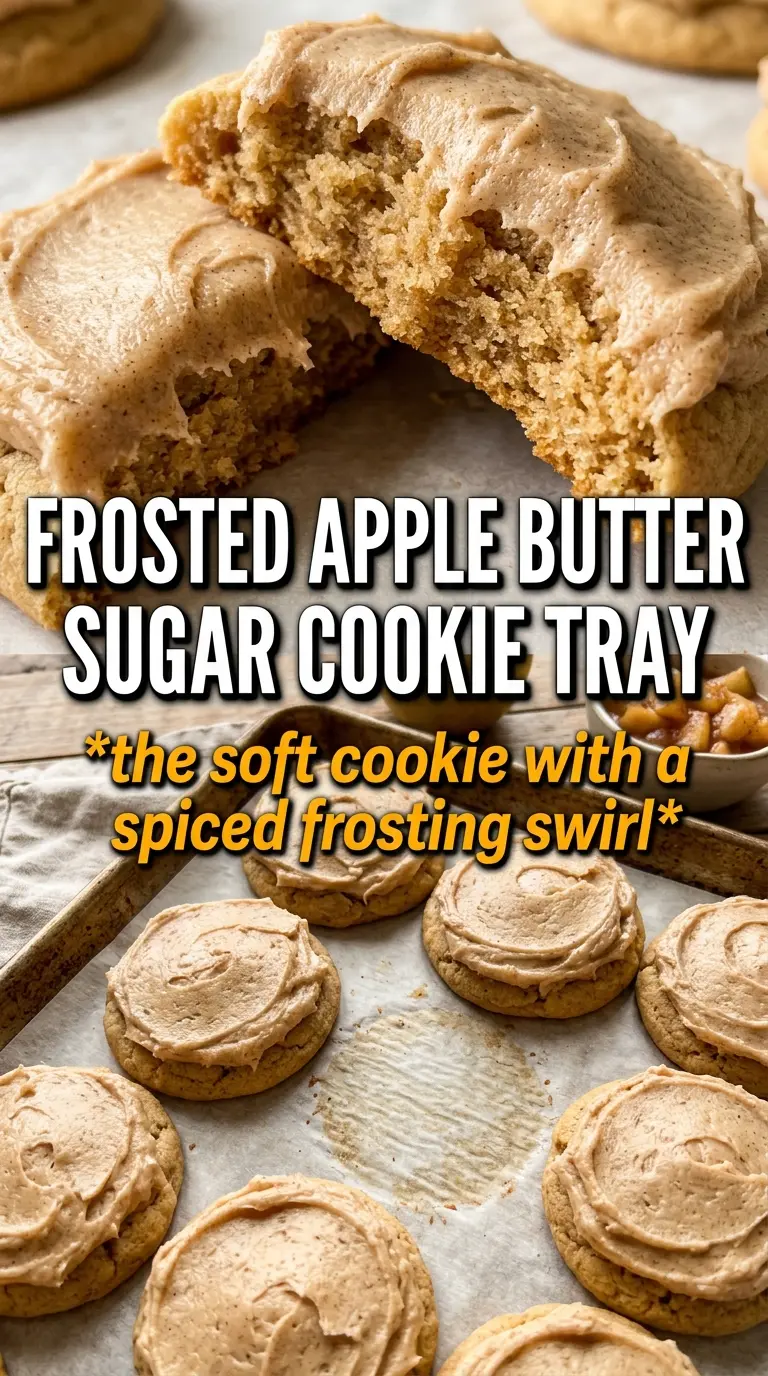
- Apple butter — This is the flavor backbone. It adds concentrated apple flavor without extra chunks or liquid, so you get a warm, spiced note in both the cookie and the frosting. If you swap in applesauce, the dough gets wetter and the frosting loses that deeper cooked-apple taste.
- Softened butter — In the cookie dough, butter gives tenderness and helps the edges bake up with a little structure. For the frosting, it keeps the cream cheese from tasting too sharp and helps the icing spread smoothly. Use real unsalted butter here; the flavor is cleaner and the salt level stays under control.
- Cream cheese — This makes the frosting thick enough to hold its shape on top of a soft cookie. It also balances the sweetness so the final cookie doesn’t taste like straight powdered sugar. Full-fat cream cheese works best because low-fat versions can turn loose and a little gummy.
- Cinnamon — There is cinnamon in both the dough and the frosting for a reason. It rounds out the apple butter instead of letting it read as just sweet. Fresh cinnamon makes a difference here because it sits on top of a pretty simple cookie base.
Rolling, Cutting, Baking, and Frosting Without Losing the Shape
Building the Dough
Beat the butter, sugar, and apple butter until the mixture looks light and a little fluffy, then add the egg and vanilla. Once the flour mixture goes in, stop as soon as the dough comes together. If you keep mixing after the flour disappears, the cookies can bake up tougher than they should.
Chilling for Clean Cuts
Refrigerate the dough for a full hour. It should feel firm but still roll without cracking hard at the edges. If it feels sticky on the counter, dust the surface lightly and chill the dough again before cutting; extra flour worked in at this stage throws off the texture.
Baking Until Just Set
Roll the dough to about 1/4 inch thick and bake at 350F until the edges are set but the centers still look pale and soft. The cookies keep cooking on the sheet after they come out, so pulling them early is what keeps them tender. If you wait for deep color, you lose the soft middle that makes these so good.
Frosting and Finishing
Beat the frosting until smooth and spreadable, adding just enough milk to loosen it. Spread it on fully cooled cookies; even slight warmth will melt the cream cheese frosting and make it slide. Finish with cinnamon sugar and a thin caramel drizzle so the topping tastes layered instead of just sweet.
How to Adapt These Cookies for Different Needs
Gluten-Free Version
Use a cup-for-cup gluten-free flour blend that includes xanthan gum. The dough may feel a little softer, so chill it well before rolling. The cookies will still be tender, but they’ll spread a touch more and have a slightly more delicate crumb.
Dairy-Free Swap
Use a plant-based butter with a firm texture and replace the cream cheese frosting with a dairy-free cream cheese alternative. The cookies will still bake up soft, but the frosting may be a little looser, so chill it briefly before spreading. This keeps the apple butter flavor front and center.
Thicker Frosting for Piping
Use the full amount of powdered sugar and hold back some of the milk until the end. You want a frosting that spreads slowly and holds ridges if you’re piping or swirling it. If it gets too loose, beat in more powdered sugar instead of more liquid.
Storage and Reheating
- Refrigerator: Store the frosted cookies in an airtight container for up to 4 days. The frosting stays firm, but the cookies soften a bit underneath it.
- Freezer: Freeze the unfrosted cookies for up to 2 months. Layer them with parchment so they don’t stick together, then thaw at room temperature before frosting.
- Reheating: These are best served at room temperature, not warmed. Heat softens the frosting too much and makes the caramel topping slide, so let chilled cookies sit out for 15 to 20 minutes before serving.
Answers to the Questions Worth Asking
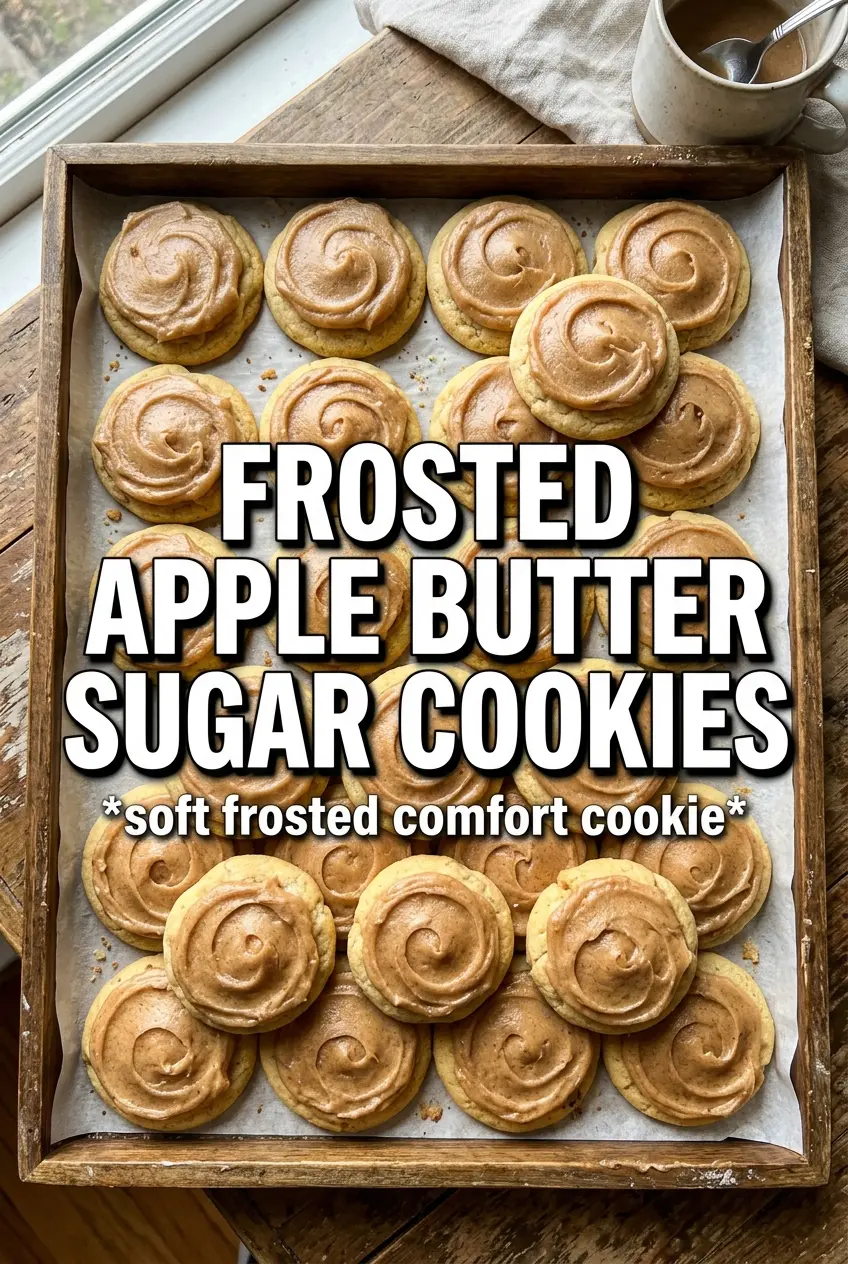
Frosted Apple Butter Sugar Cookies
Ingredients
Equipment
Method
- Beat unsalted butter, granulated sugar, and apple butter until smooth and creamy, then scrape the bowl as needed. Add the egg and vanilla extract and beat until fully combined.
- Fold in all-purpose flour, baking powder, salt, and cinnamon just until no dry streaks remain.
- Refrigerate the dough for 1 hour while you preheat the oven to 350F. Visual cue: dough should firm up and lose its sheen.
- Roll the chilled dough to 1/4-inch thickness on a lightly floured surface. Cut into rounds or apple shapes and place on a sheet pan.
- Bake at 350F for 8-10 minutes, until the edges are just set. Visual cue: tops look lightly matte, not browned.
- Cool cookies completely before frosting. This prevents the frosting from melting and sliding off.
- Beat cream cheese, unsalted butter, apple butter, powdered sugar, and cinnamon until smooth and spreadable. If needed, add milk 1 tablespoon at a time to reach a thick but pourable consistency.
- Frost each cookie with the apple butter cream cheese frosting, then dust with cinnamon sugar and drizzle with caramel. Visual cue: frosting should show soft swirls on top.