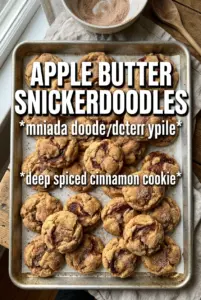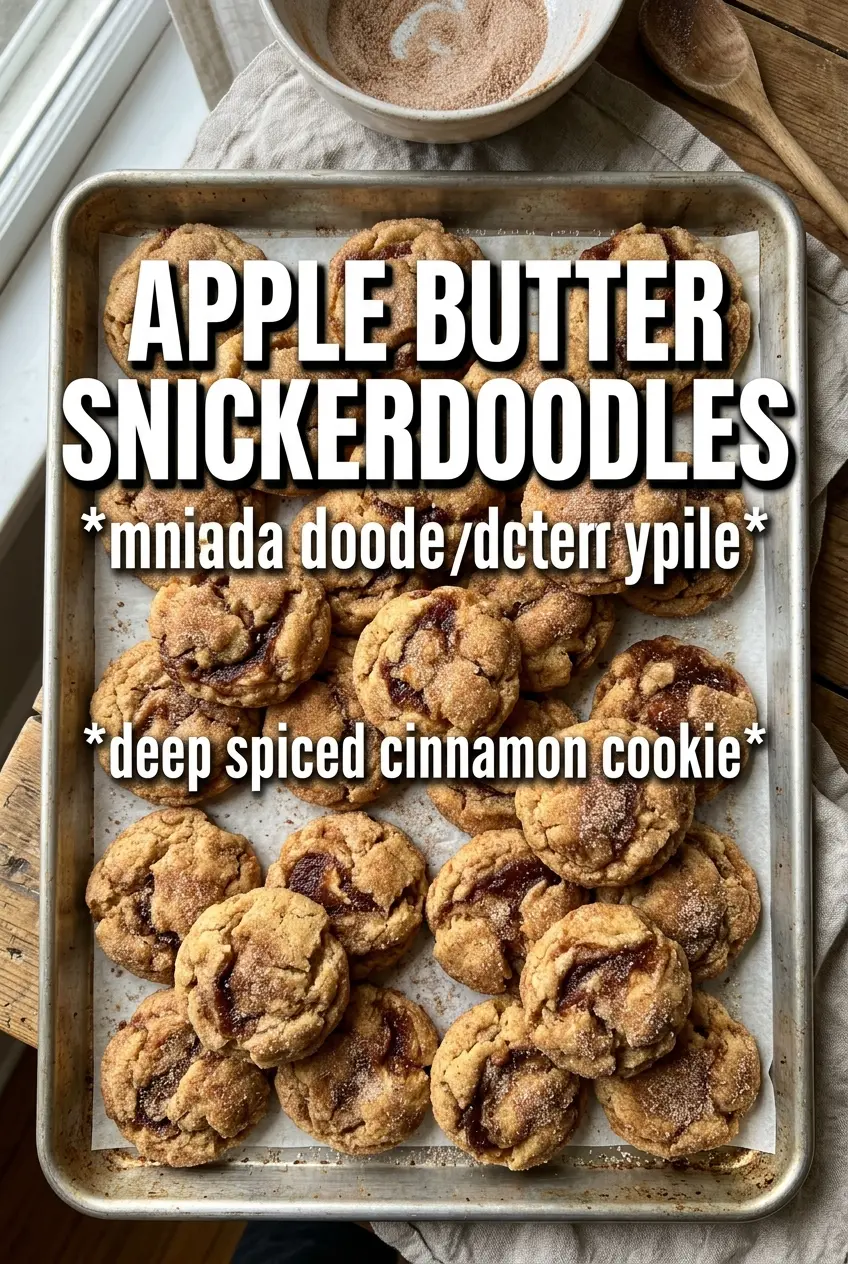
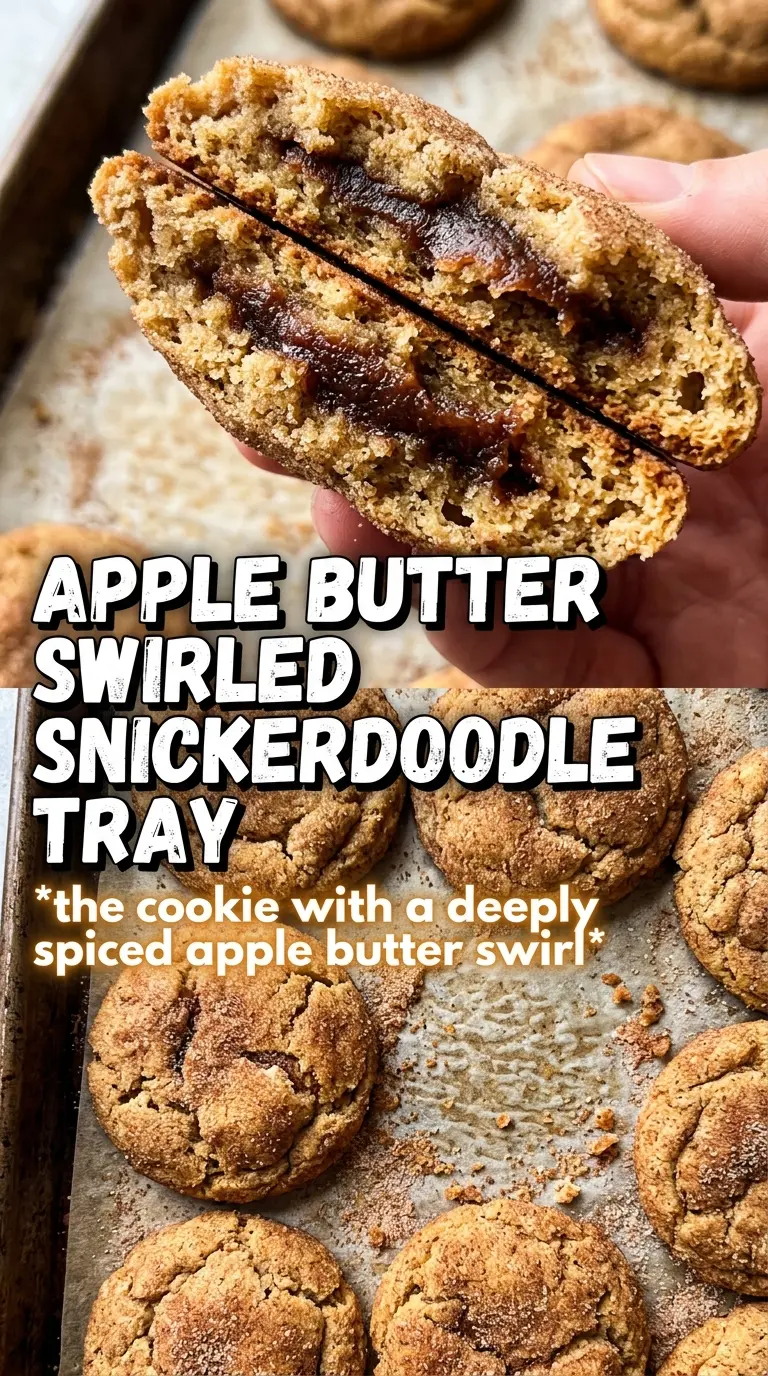
Apple butter snickerdoodles bake up soft in the center with crisp, crinkly edges and that classic cinnamon-sugar shell that makes a snickerdoodle worth reaching for. The apple butter doesn’t make them taste like pie filling. It gives the dough a deeper, caramelized fruit note that sits underneath the spice and keeps the cookies tender for days.
The trick is keeping the dough soft but manageable. Apple butter adds moisture, so the dough can feel sticky before chilling. That short rest firms the butter just enough for clean scoops, and the cookies keep their rounded shape instead of melting flat. Cream of tartar does the same job it always does in a good snickerdoodle: it gives the cookies their slight tang and helps create that classic chewy texture.
Below, I’ve laid out the one detail that keeps these from spreading too much, plus a few swaps and storage notes for when you want to bake them ahead.
The cookies stayed soft for days, and the apple butter gave them this warm caramel-apple thing without making them cakey. I chilled the dough just 30 minutes and they baked up with those perfect crinkly tops.
These apple butter snickerdoodles are soft, crinkly, and packed with cinnamon-sugar warmth — save them for the next time you want a cookie that bakes up tender instead of dry.
The Reason These Snickerdoodles Stay Soft Instead of Spreading Out
The biggest risk with apple butter cookies is extra moisture. Apple butter sounds harmless, but it adds enough liquid to loosen the dough and turn a tidy snickerdoodle into a flat, greasy cookie if you go straight from mixing bowl to oven. The brief chill isn’t a bonus step here. It’s what lets the flour hydrate and the butter firm back up so the cookies hold their shape and bake with those wrinkled tops.
Another thing that matters is the sugar ratio. A generous coating on the outside helps the surface set before the center dries out. That’s what gives you the contrast you want: a slightly crisp shell, soft middle, and enough structure that the cookies don’t collapse when they cool.
- Cream of tartar — This gives snickerdoodles their classic tang and chew. If you skip it, the cookies still bake, but they lose the signature flavor and texture that makes them taste like snickerdoodles instead of plain cinnamon cookies.
- Apple butter — Use thick apple butter, not applesauce. Applesauce is thinner and more watery, which makes the dough harder to manage and the cookies more likely to spread.
- Butter — Softened, not melted. Soft butter traps air when you beat it with the sugar, and that little bit of lift helps the cookies stay tender. Melted butter makes them denser and flatter.
- Apple pie spice in the coating — Just a little takes the finish from standard cinnamon-sugar to something warmer and more autumn-spiced without overpowering the cookie.
What Each Ingredient Is Actually Doing in This Recipe
- Primary ingredient (the star) — Quality matters most. Choose the best you can find.
- Cooking medium (oil, butter, or broth) — This carries flavors and prevents dryness.
- Seasonings (salt, pepper, spices, herbs) — Layer flavors so nothing overpowers. Build depth gradually.
- Aromatics (garlic, onion, herbs) — Cook with fat to bloom flavors. Become the foundation.
- Supporting ingredients — Complement the main ingredient without overpowering it.
- Sauce or liquid (if applicable) — Brings flavors together. Balance richness with acid.
- Acid (lemon, vinegar, wine, or other) — Brightens and prevents flat-tasting results.
- Final finish (garnish, glaze, or sauce) — Prevents one-dimensional taste and adds visual appeal.
Building the Dough Without Losing the Snickerdoodle Texture
Whipping the Butter and Sugar
Beat the butter and sugar until the mixture looks pale and almost fluffy. That step builds air into the dough, and it gives the cookies a lighter center instead of a heavy one. Stop when the mixture looks creamy and slightly increased in volume. If the butter is too soft or greasy, the dough won’t hold that structure, so let it sit at room temperature only until it dents when pressed.
Adding the Eggs and Apple Butter
Mix in the eggs one at a time, then add the apple butter and vanilla. The dough may look a little split or curdled for a moment, and that’s normal because the apple butter is bringing extra moisture into the fat. It smooths out once the flour goes in. If the mixture still looks loose and shiny at this stage, don’t keep beating it; that only warms the butter and makes the final dough stickier.
Folding in the Dry Ingredients
Add the flour mixture just until no dry streaks remain. Overmixing here tightens the dough and makes the cookies tougher, which is the opposite of what you want in a snickerdoodle. The dough should be soft and scoopable, not pourable. If it clings badly to the spoon or your hands, chill it for 30 minutes before shaping instead of adding extra flour, which can dry the cookies out.
Rolling and Baking for Crinkled Tops
Scoop the dough into even balls and roll each one generously in the cinnamon-sugar mixture. That coating is what helps the tops crackle as they bake, so don’t skimp. Bake just until the edges are set and the centers still look slightly underdone. They finish on the pan as they cool, and pulling them too late is how you end up with dry cookies instead of soft ones.
Three Ways to Make These Cookies Fit What You’ve Got
Dairy-Free Version
Swap the butter for a high-quality plant-based butter stick with a similar fat content. Avoid tub spreads, which contain more water and can make the dough spread too much. The cookies will still be soft and spiced, though the flavor will be a little less rich.
If You Don’t Have Apple Butter
You can use thick applesauce in a pinch, but the cookies won’t have the same deep apple flavor or caramelized finish. Reduce it slightly if it seems loose, and expect a softer, more cake-like cookie. For the best result, cook the applesauce down first until it’s thick and spreadable.
Gluten-Free Adaptation
Use a cup-for-cup gluten-free flour blend that includes xanthan gum. The dough may need the full chill time, and the cookies will be a touch more delicate when warm, but the cinnamon-sugar shell still works beautifully. Skip almond flour here; it changes the structure too much for this style of cookie.
Make-Ahead Dough
You can chill the dough for up to 24 hours before baking. The flavor deepens a bit overnight, and the dough is easier to roll once it firms up. Let it sit at room temperature for 10 minutes if it becomes too firm to scoop cleanly.
Storage and Reheating
- Refrigerator: Store in an airtight container for up to 5 days. They stay soft, though the sugar coating softens a bit after day one.
- Freezer: Freeze baked cookies for up to 2 months, or freeze the dough balls before rolling in sugar. If freezing dough, roll them in sugar right before baking for the best crackled finish.
- Reheating: Warm baked cookies in a 300°F oven for 3 to 4 minutes. The common mistake is microwaving them too long, which turns the centers tough instead of soft.