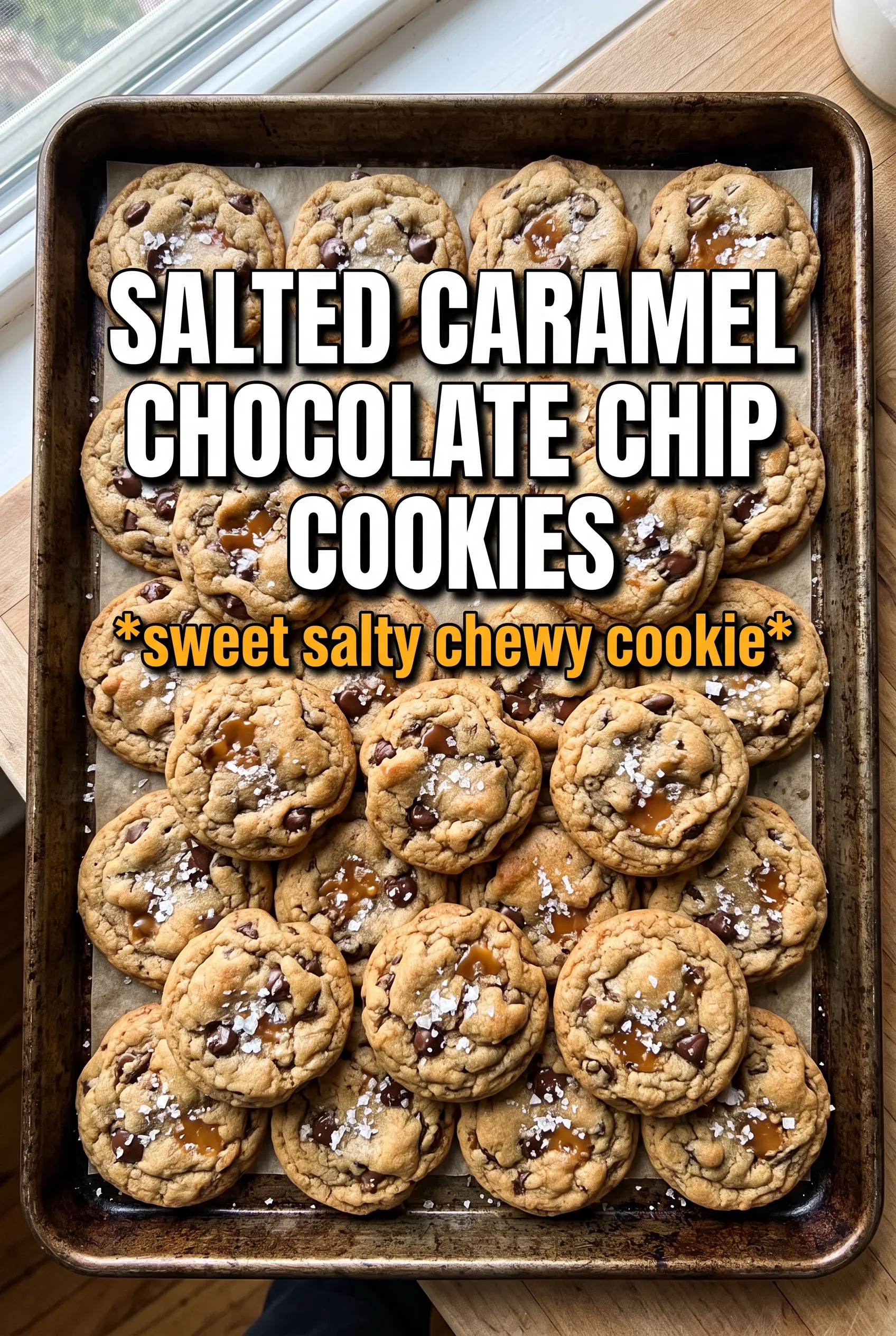
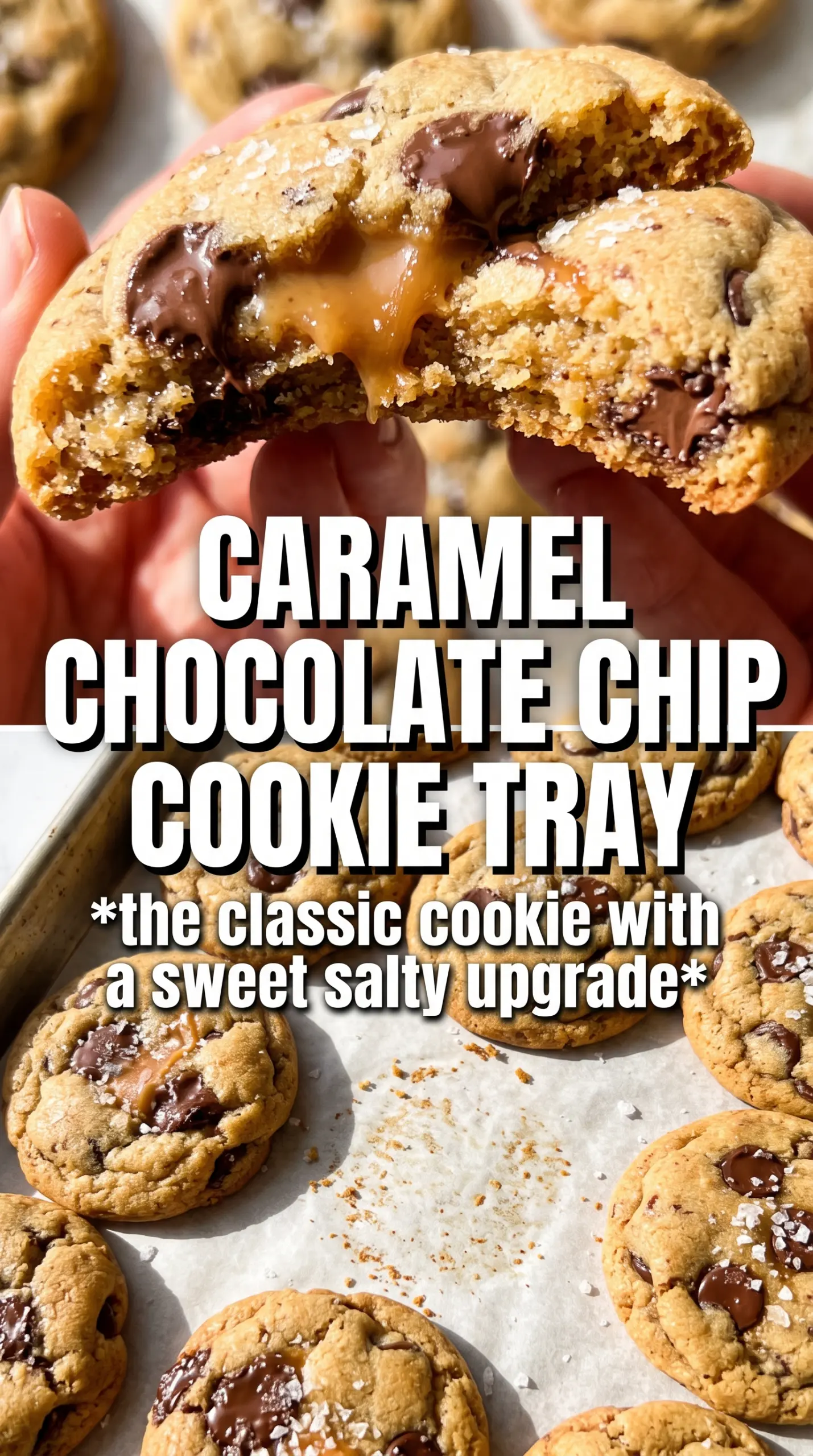
Golden edges, soft centers, and those little pockets of melted caramel make these cookies disappear fast. The chocolate stays glossy in the middle, the caramel turns buttery and just a little chewy, and the flaky sea salt pulls everything into focus. These are the kind of cookies people reach for while they’re still warm from the pan.
The trick is keeping the dough balanced so the caramel doesn’t vanish into the cookie or melt out onto the tray. Cornstarch helps keep the centers tender, and brown sugar brings that deep, toffee-like note that plays well with the caramel bits. A short bake leaves the centers slightly underdone when they come out, which is exactly what you want if you like cookies that stay soft after cooling.
Below, you’ll find the small details that matter most: how to keep the caramel from turning sticky in the dough, when to pull the cookies for the best texture, and a few smart swaps if you need to adjust what you have on hand.
The caramel stayed in little soft pockets instead of disappearing, and the centers were still chewy the next day. I followed the bake time exactly and the sea salt on top made them taste like a bakery cookie.
Save these salted caramel chocolate chip cookies for when you want soft centers, gooey caramel pockets, and a flaky sea salt finish.
The Reason the Caramel Stays in the Cookie Instead of Melting Out
Caramel can be tricky in cookies because it wants to soften fast and spread into the dough. The fix is using soft caramel bits or chopping soft caramels into small pieces so they distribute evenly without creating huge molten pockets that leak across the pan. If the pieces are too large, they’ll slide toward the edges and leave the centers less interesting.
The other thing that matters is pulling the cookies before they look fully done. The centers should still look a little pale and slightly underbaked when they come out. They’ll finish setting on the hot pan, and that carryover heat is what keeps them soft instead of dry.
What Each Ingredient Is Actually Doing in This Dough
- All-purpose flour gives the cookie enough structure to hold the caramel and chocolate without spreading into thin puddles. Stick with standard flour here; bread flour makes these chewier, but it also tightens the crumb more than you want.
- Cornstarch softens the texture and keeps the centers tender. It doesn’t make the cookies cakey; it just takes the edge off the crumb so they stay plush after cooling.
- Brown sugar is doing most of the heavy flavor work. It brings moisture and a deeper caramel note that plain white sugar can’t replace, which matters because the caramel bits alone can’t carry the whole cookie.
- Soft caramel bits or chopped soft caramels are the key to those molten pockets. Hard caramel candies don’t melt the same way and can turn chewy in a tough, sticky way instead of soft and buttery.
- Flaky sea salt goes on at the end, not in the dough, so you get a sharp finish on top instead of an evenly salty cookie. That contrast is what keeps the sweetness from flattening out.
Building the Dough So the Cookies Stay Thick and Soft
Cream the Butter Until It Looks Almost Pale
Beat the softened butter with both sugars until the mixture looks lighter in color and a little fluffy. That air you build here helps the cookies rise instead of baking up dense. If the butter is too cold, the mixture stays grainy and the dough won’t hold as much lift.
Fold the Dry Ingredients in Just Until the Flour Disappears
Add the flour mixture and stop as soon as you no longer see dry streaks. Overmixing at this point develops too much gluten, which makes the cookies tougher and pulls the tenderness out of the center. The dough should look thick and studded, not smooth like cake batter.
Finish With Chips, Caramel, and a Gentle Scoop
Fold in the chocolate chips and caramel bits by hand so they stay in chunks instead of smearing through the dough. Scoop the dough into 2-tablespoon rounds and give them space on the parchment. If the dough feels sticky, chill it for 15 to 20 minutes; that keeps the caramel from spreading too fast in the oven.
Bake for Set Edges and Soft Middles
Bake just until the edges turn golden and the centers still look slightly underdone. They should puff, then settle as they cool. Press a few extra chips or caramel bits onto the tops right after baking, then finish with flaky sea salt while the cookies are still hot enough to catch it.
Three Ways to Make These Cookies Work for Different Kitchens
Dairy-Free Version
Use a solid dairy-free baking stick in place of the butter and choose dairy-free chocolate chips. The cookies will still spread and brown well, though the flavor will be a little less rich than the butter version. Keep the caramel dairy-free too, since many store-bought caramels contain milk.
Gluten-Free Swap
Replace the all-purpose flour with a cup-for-cup gluten-free baking blend that includes xanthan gum. The texture will be slightly more delicate, but the cornstarch still helps keep the centers soft. Let the dough rest for 10 minutes before scooping so the flour has time to hydrate.
Extra Gooey Cookie Centers
Use chopped soft caramels and press a few extra pieces into the tops before baking. That gives you bigger molten spots and a more dramatic pull when the cookies are warm. The tradeoff is a little more spread, so chill the dough if your kitchen is warm.
Storage and Reheating
- Refrigerator: Store in an airtight container for up to 5 days. The caramel firms up a bit, but the cookies stay soft.
- Freezer: These freeze well baked or as scooped dough. Freeze baked cookies in a single layer, then transfer to a bag; bake dough balls from frozen with 1 to 2 extra minutes.
- Reheating: Warm a cookie in the microwave for 8 to 10 seconds, just until the chocolate softens. Longer than that and the caramel turns sticky instead of gooey.