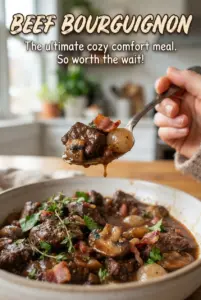
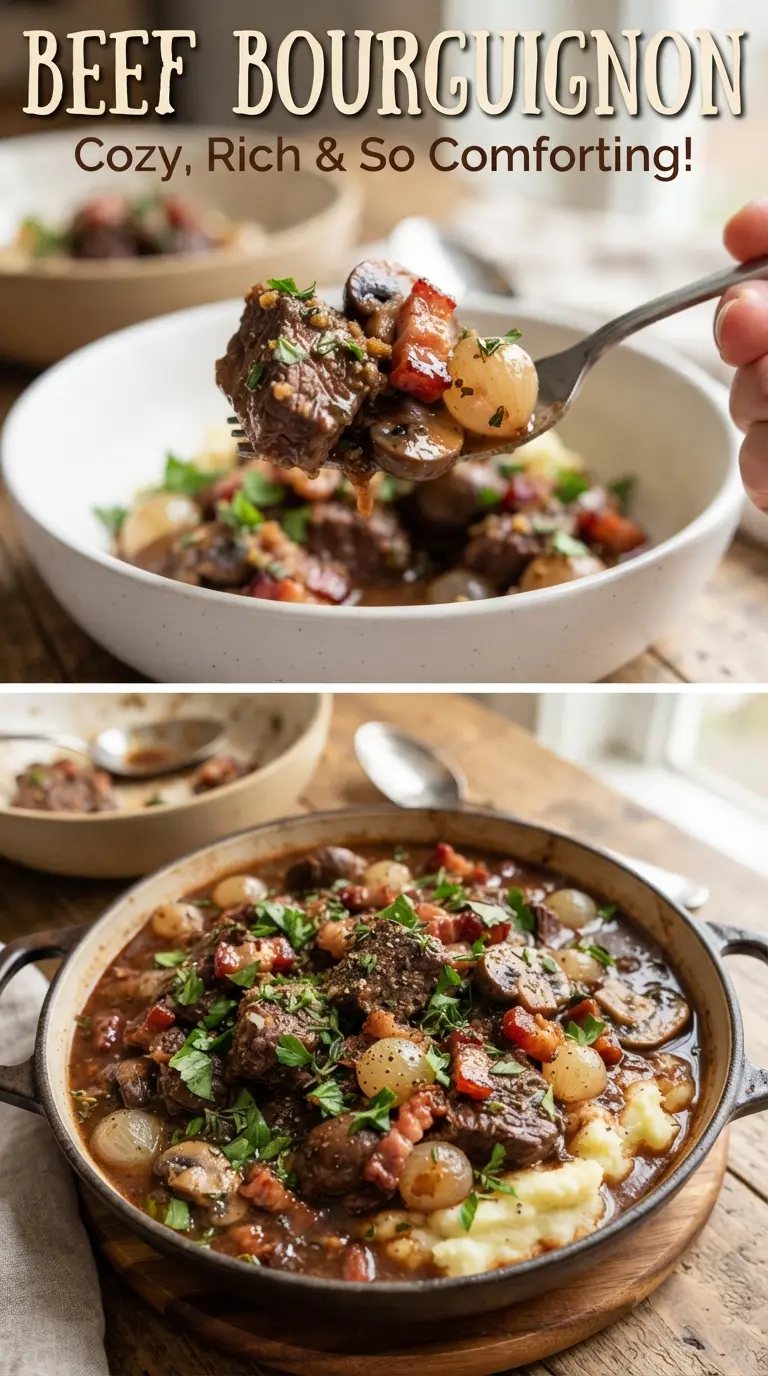
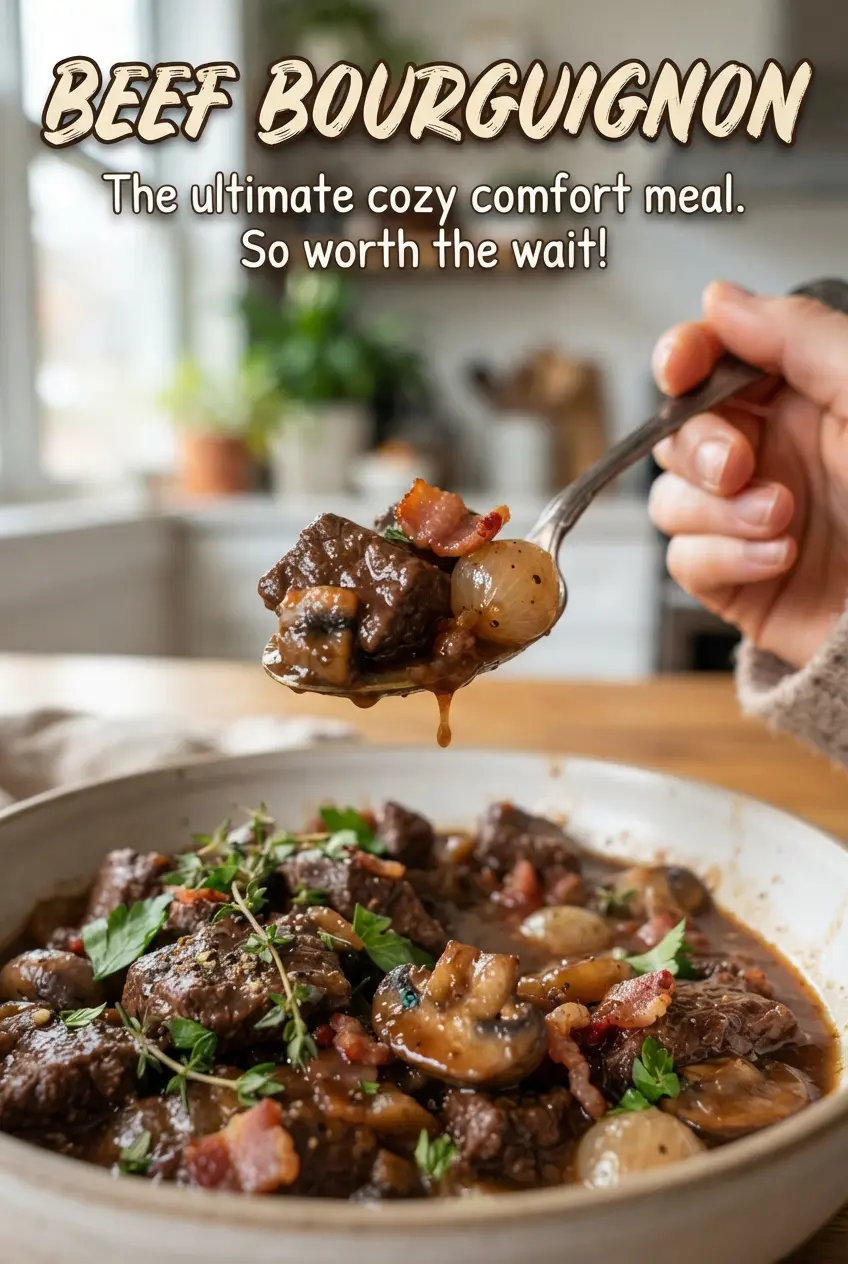
Tender beef, glossy red wine sauce, browned mushrooms, and sweet pearl onions give beef bourguignon the kind of depth that makes a quiet dinner feel special. The magic is in the slow braise: the meat softens until it yields with a fork, the wine cooks down into something rich instead of sharp, and the bacon leaves just enough smoky backbone to keep the whole pot from tasting flat.
What matters most here is patience at the stove before the oven ever gets involved. Browning the beef in batches builds the savory base, and cooking the onions, carrots, flour, and tomato paste long enough takes away the raw edge that can make a stew taste thin. The final swirl of butter gives the sauce that sheen you see in a good restaurant version, but it only works if the braise has reduced properly first.
Below, I’ll walk through the part that trips people up most: getting the beef deeply browned without crowding the pan, then finishing the stew so the wine tastes rounded instead of harsh. There’s also a note on when to add the mushrooms and pearl onions so they stay flavorful instead of disappearing into the sauce.
The beef turned out fork-tender and the sauce was silky, not greasy. I loved that the mushrooms and pearl onions stayed separate and kept their texture instead of turning mushy in the pot.
Save this beef bourguignon for the kind of dinner that needs deep red wine sauce, tender beef, and those glossy mushrooms and pearl onions.
The Secret to Beef Bourguignon That Tastes Deep, Not Boozy
The biggest mistake with beef bourguignon is treating the wine like a shortcut instead of an ingredient that needs to cook down and mellow. If the liquid goes in before the flour has had a chance to coat the vegetables, the sauce can end up thin. If the beef gets crowded in the pan, it steams instead of browns, and that missing crust shows up later as a stew that tastes one-note.
The cure is a proper sear and a brief stovetop build before the braise. You want dark brown bits on the bottom of the pot, softened vegetables, and just enough flour and tomato paste to give the sauce body before the wine and broth go in. Once it’s in the oven, the long, gentle heat does the rest.
- Beef chuck — This cut is the reason the stew turns silky and spoon-tender after a long braise. Chuck has enough fat and connective tissue to reward the full cooking time. Leaner beef won’t give you the same texture.
- Dry red wine — Use a bottle you’d actually drink. It doesn’t need to be expensive, but it should taste balanced and not harsh. A big, jammy wine can make the finished sauce taste heavy, while a thin wine can vanish completely.
- Bacon — The bacon adds smoke, salt, and rendered fat for browning the beef. Thick-cut works best because it holds its shape after the long simmer. If you use standard bacon, cut it a little larger so it doesn’t disappear.
- Pearl onions and cremini mushrooms — These are added near the end so they keep their own texture and don’t turn limp. Browning them in butter first builds a separate layer of flavor that reads clearly in the finished dish.
- Tomato paste and flour — These don’t make the stew taste like tomato or gravy. They deepen the sauce and help it cling to the beef. Cook them for a minute or two so the finished sauce tastes rounded, not floury.
What Each Ingredient Is Actually Doing in This Recipe
- Primary ingredient (the star) — Quality matters most. Choose the best you can find.
- Cooking medium (oil, butter, or broth) — This carries flavors and prevents dryness.
- Seasonings (salt, pepper, spices, herbs) — Layer flavors so nothing overpowers. Build depth gradually.
- Aromatics (garlic, onion, herbs) — Cook with fat to bloom flavors. Become the foundation.
- Supporting ingredients — Complement the main ingredient without overpowering it.
- Sauce or liquid (if applicable) — Brings flavors together. Balance richness with acid.
- Acid (lemon, vinegar, wine, or other) — Brightens and prevents flat-tasting results.
- Final finish (garnish, glaze, or sauce) — Prevents one-dimensional taste and adds visual appeal.
Building the Braise So the Sauce Comes Out Velvety
Render the Bacon and Sear the Beef in Batches
Start by cooking the bacon until it gives up some fat and turns lightly browned, then move it to the side. Pat the beef dry before it hits the pan; wet beef steams, and steaming is the fastest way to lose the crust that gives the stew its backbone. Brown the beef in batches in the bacon fat and olive oil, leaving space between pieces so each side can actually sear. If the pan looks crowded, stop and do another round. That extra time pays for itself in flavor.
Cook the Vegetables Before the Liquid Goes In
Once the beef is out, cook the onion and carrots until the onion softens and the edges start to turn gold. Add the garlic, flour, and tomato paste and stir them through the vegetables for a couple of minutes. The mixture should smell rich and a little toasty, not raw or chalky. This is where the stew gets its body, so don’t rush to add the wine before the flour has had a chance to hydrate and lose its raw taste.
Braise Low and Slow Until the Beef Gives Up
When the wine and broth go in, scrape the bottom of the pot well so every browned bit ends up in the sauce. Bring it to a simmer, cover it, and transfer it to the oven. After a few hours, the beef should break apart easily with a fork and the liquid should look darker and more unified. If the sauce seems thin at the end, let it simmer uncovered for a few minutes on the stove before adding the butter.
Finish with the Mushrooms, Pearl Onions, and Butter
Brown the mushrooms and pearl onions separately in butter so they keep their shape and develop color before they go into the stew. Add them only for the last stretch of cooking, which keeps the vegetables from going soft and washed out. Pull the pot from the heat, remove the thyme and bay leaves, then swirl in the final butter for a glossy finish. That last step gives the sauce a smooth, restaurant-style shine.
How to Adapt Beef Bourguignon Without Losing Its Character
Dairy-Free Version
Skip the finishing butter and use an extra spoonful of olive oil or a dairy-free butter alternative at the end if you want a little shine. The sauce will still be rich because the bacon, wine, and beef do most of the work. You lose a touch of silkiness, but the stew stays fully satisfying.
Gluten-Free Adjustment
Use a gluten-free flour blend that’s meant for thickening, or skip the flour and reduce the braising liquid a little longer on the stove at the end. The flour here mainly helps with body, so if you leave it out, the stew just needs a bit more reduction. The flavor stays the same either way.
What to Use Instead of Pearl Onions
Frozen pearl onions are a good stand-in if peeling fresh ones feels like a chore. You can also use halved shallots for a sweeter, slightly more elegant result. Either way, cook them separately so they brown before they join the stew.
Storage and Reheating
- Refrigerator: Keep covered for up to 4 days. The sauce thickens as it chills, which is a good sign, not a problem.
- Freezer: It freezes well for up to 3 months. Cool it completely, portion it into airtight containers, and leave a little room at the top for expansion.
- Reheating: Warm it gently on the stove over low heat or in a 325F oven until hot throughout. Add a splash of broth or water if the sauce has tightened too much. Don’t boil it hard, or the beef can dry out and the sauce can separate.
The Things That Trip People Up With Beef Bourguignon
Beef Bourguignon
Ingredients
Equipment
Method
- Preheat the oven to 325F, then warm 2 tbsp olive oil in a Dutch oven and brown the bacon in the oil until lightly crisp; set the lardons aside.
- Pat the beef chuck cubes dry, season with salt and black pepper, then sear in batches in the bacon fat until deeply browned with dark crusts.
- In the same Dutch oven, cook the sliced onion and carrots for 5 minutes until softened.
- Add the minced garlic, flour, and tomato paste and cook for 2 minutes, stirring, until the mixture smells toasted.
- Pour in the dry red wine and beef broth, then add fresh thyme, bay leaves, the browned beef, and the reserved bacon; bring everything to a simmer.
- Cover and braise in the oven at 325F for 3 hours, until the beef is very tender and the sauce looks glossy.
- In a skillet, melt part of the divided butter and brown the pearl onions and cremini mushrooms until deeply golden.
- Add the browned mushrooms and pearl onions to the stew and cook for the last 20 minutes to meld the flavors.
- Remove the thyme sprigs and bay leaves, swirl in the remaining butter to enrich the sauce, and top with chopped parsley before serving.