Golden hash browns, smoky ham, sweet peppers, and melted cheddar all in one cast iron skillet is the kind of breakfast that disappears fast. The edges turn crisp before the eggs set, the center stays tender under the cheese, and every scoop gets a little bit of everything. It tastes like a diner plate with campfire character, which is exactly why it earns a spot in the rotation.
The trick is letting the hash browns cook long enough before anything else goes in. If they go into the pan and get stirred too soon, they steam and turn soft instead of picking up those crunchy, browned bits that carry the whole skillet. Once the ham, peppers, and onions hit the pan, the vegetables just need enough time to lose their raw bite and the eggs need a covered finish so the tops set without drying out the yolks.
Below, I’m walking through the part that matters most: how to build a crisp base in a cast iron skillet and how to judge when the eggs are done if you like them soft, jammy, or fully set.
The hash browns got crisp underneath without turning greasy, and the eggs set up perfectly under the foil. I used extra cheddar and the whole skillet was scraped clean in minutes.
Cheesy Western skillet with crisp hash browns, ham, and eggs — save this one for campfire mornings or a no-fuss breakfast dinner.
The Step That Keeps the Hash Browns Crisp Instead of soggy
The biggest mistake in a skillet like this is rushing the potatoes. Frozen hash browns carry moisture, and if the pan is crowded or the heat is too low, they give up that moisture and start steaming. What you want is a dry, hot surface and enough time for the first side to brown before you stir. That’s what gives you the crunchy base that holds up under the eggs and cheese.
Cast iron helps here because it holds heat steady over a flame or burner, which means the potatoes can actually sear instead of just warming through. The ham goes in later because it only needs to heat through and pick up a little color. If you add everything at once, the vegetables release water too early and the whole skillet turns soft before the eggs ever have a chance.
What Each Ingredient Is Actually Doing in This Dish

- Frozen hash browns — These are the backbone of the skillet. Thawing them first can help them brown a little faster, but it’s not required; the main thing is getting them into hot fat and leaving them alone long enough to form a crust.
- Ham — Dice it small so it warms quickly and distributes through the pan. Leftover ham works just as well as packaged diced ham, and this is one place where a less expensive cut still brings plenty of flavor because it’s being browned with the potatoes.
- Bell pepper and onion — These add the sweet, savory layer that makes the skillet taste like a real western breakfast instead of just potatoes with toppings. Dice them small so they soften in the short cooking time; big pieces stay crunchy and throw off the texture.
- Cheddar cheese — Sharp cheddar gives the best payoff because it cuts through the richness of the potatoes and eggs. Pre-shredded cheese works, but freshly shredded melts smoother if you have the time.
- Eggs — The wells keep the eggs from sliding all over the skillet and help you control the final texture. If you want firmer yolks, cover the pan a minute or two longer; if you like them soft, pull it when the whites are just set and the yolks still look glossy.
Building the Skillet in the Right Order
Getting the Potatoes Browned First
Heat the butter or oil in a large cast iron skillet until it shimmers, then spread the hash browns in an even layer. Don’t crowd the pan if yours runs small; too much potato in one layer traps steam and you lose the crisp edges. Let the bottom sit long enough to color before you stir, then turn the potatoes just enough to expose more surface to the heat. You’re looking for pale gold turning into deeper brown spots, not a soft, steamed mass.
Cooking the Ham and Vegetables
Once the potatoes have some color, add the ham, bell pepper, and onion. The pan will sizzle louder when the colder ingredients hit, and that’s your cue that the heat is high enough to keep things moving. Cook just until the onions lose their raw sharpness and the peppers soften slightly. If the pan looks dry before the vegetables are done, add a small splash more oil rather than lowering the heat too much.
Finishing With Eggs and Cheese
Use the back of a spoon to create six wells in the hash brown mixture, then crack an egg into each one. Sprinkle the cheese over the top, cover the skillet with a lid or tightly with foil, and let the trapped heat set the whites. The biggest failure point here is lifting the cover too often, which dumps the heat and slows the eggs down. Pull the pan when the whites are opaque and the yolks still look like they could use another minute or two if you prefer them runny.
How to Adapt This for the Pantry You Have
Make it dairy-free
Use oil instead of butter and skip the cheese, or use a dairy-free shredded cheese that melts well. The skillet will still be satisfying because the browned potatoes and ham carry the flavor, but you’ll lose the salty melt on top that ties the eggs together.
Use breakfast sausage instead of ham
Brown the sausage first, then cook the potatoes in the rendered fat if there’s enough in the pan. That swap makes the skillet a little richer and more seasoned, but it also adds more grease, so spoon off any excess before adding the eggs.
Make it vegetarian
Leave out the ham and add extra onion, peppers, or even mushrooms if you have them. You’ll want a little more salt and a heavier hand with the cheese because the ham usually brings a smoky, savory edge that needs replacing.
Stretch it for a bigger group
Add another bag of hash browns and increase the ham, vegetables, and cheese proportionally, but use a wider skillet or two pans. If you pile everything into one crowded pan, you’ll end up with soft potatoes and uneven eggs instead of a crisp, set skillet.
Storage and Reheating
- Refrigerator: Store leftovers in an airtight container for up to 3 days. The potatoes soften a bit, and the eggs firm up more once chilled.
- Freezer: It freezes, but the eggs change texture enough that I’d only do it if you’re working with leftovers you don’t want to waste. Freeze portions tightly wrapped, then thaw in the fridge before reheating.
- Reheating: Warm it in a skillet over medium-low heat with a lid so the center heats before the bottom burns. The common mistake is blasting it in the microwave, which turns the potatoes rubbery and the eggs tough.
Answers to the Questions Worth Asking
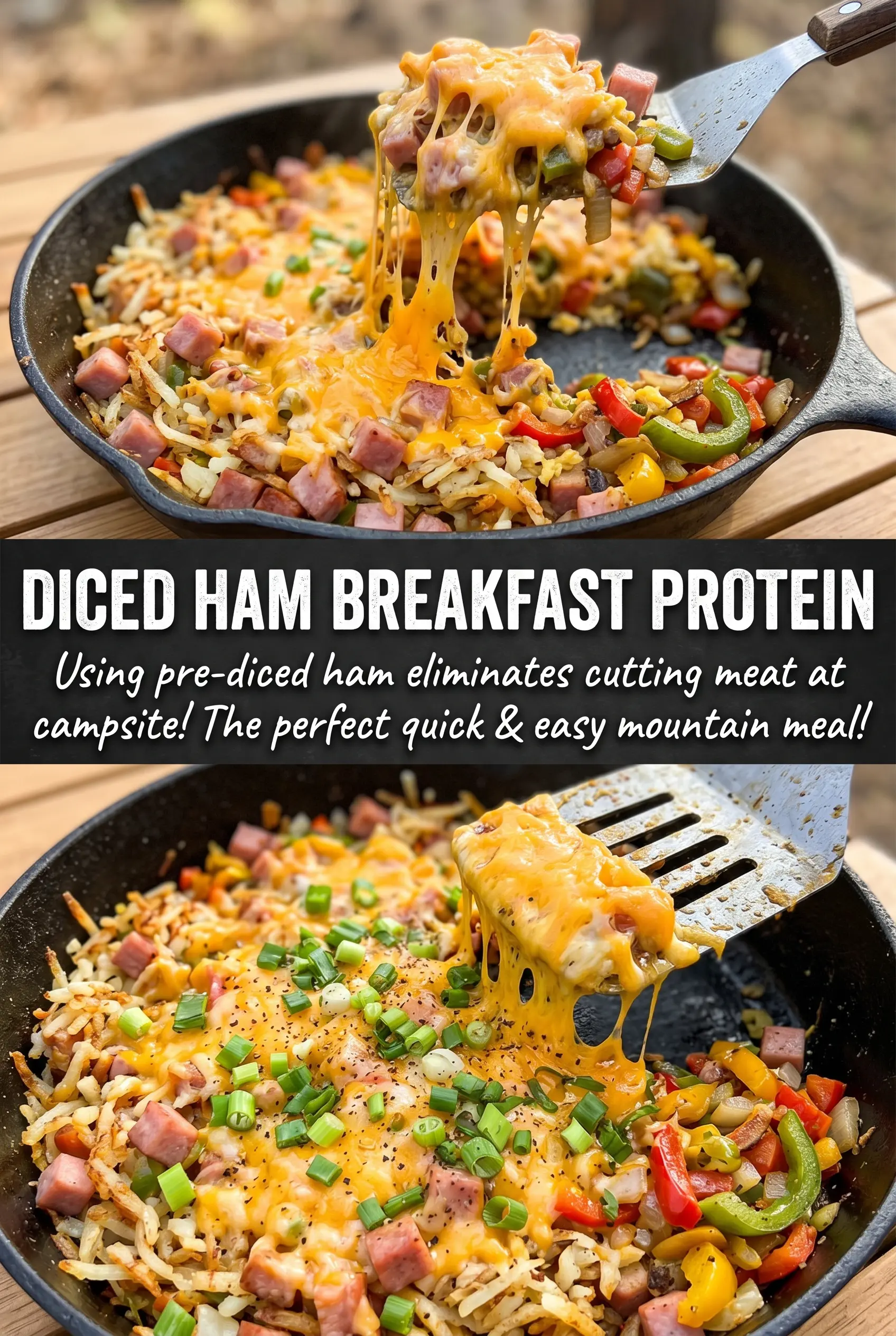
Cheesy Western Skillet with Hash Browns and Ham
Ingredients
Equipment
Method
- Heat 3 tbsp butter or oil in a large cast iron skillet over campfire until hot and shimmering, with a steady cooking surface.
- Add frozen hash browns and cook for 10 minutes, stirring occasionally, until they look golden and crisp at the edges.
- Add ham, bell pepper, and onion to the skillet and cook for 5 minutes more, stirring once or twice, until the vegetables are softened.
- Create 6 wells in the hash brown mixture and crack 1 egg into each well, keeping the yolks intact.
- Sprinkle shredded cheddar cheese over everything, then cover with a lid or foil so steam lifts the heat over the eggs.
- Cook for 8-10 minutes until the eggs are set to your desired doneness, watching for steam rising and the cheese turning fully melted and lightly golden in spots.
- Season with salt and pepper to taste and serve directly from the skillet while the cheese is still melted.