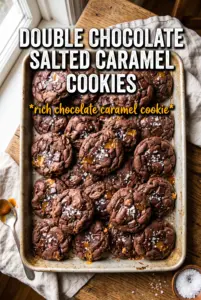
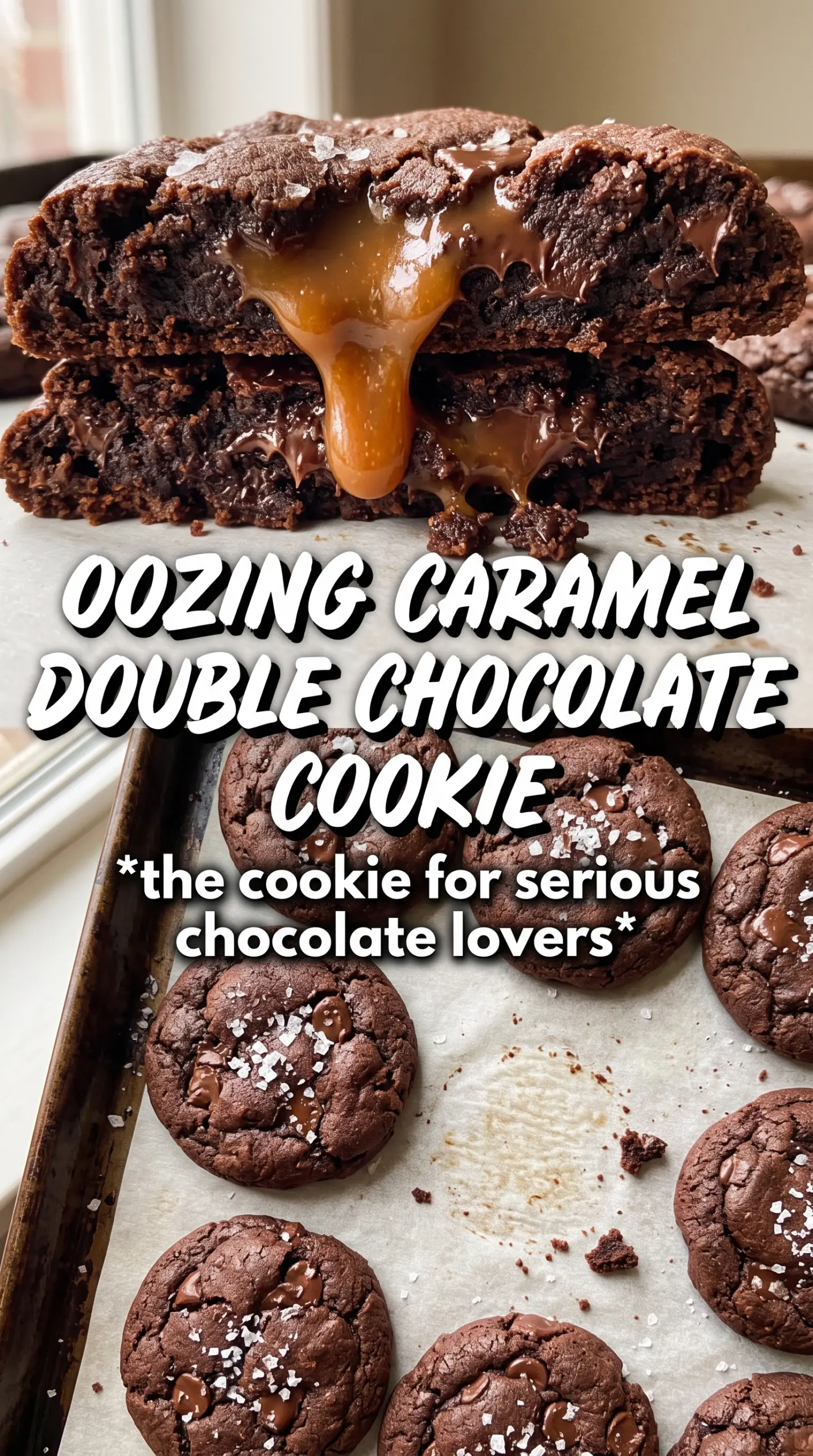
These cookies bake up with crisp edges, a fudgy center, and a molten caramel pocket that stays soft long after the tray comes out of the oven. The chocolate dough tastes deep and rich on its own, but the real payoff is the contrast: dark chocolate puddles, a hidden caramel core, and a hit of flaky salt on top that keeps each bite from leaning too sweet.
What makes this version work is the way the dough is built to hold its shape around the caramel. Cocoa powder gives the cookie a dense, brownie-like crumb, while the creamed butter and sugars add just enough lift to keep the centers tender. Wrapping the dough completely around each caramel matters more than anything else here, because any gap lets the candy leak out instead of turning into that soft middle you want.
Below, I’ve included the one part that trips people up most often, plus the tiny finishing step that makes these taste bakery-level instead of just rich. The salted finish isn’t decoration. It’s what keeps the caramel and chocolate tasting clean and balanced.
The centers stayed soft and gooey, and the caramel didn’t harden up after cooling. I followed the tip about sealing the dough all the way around, and none of them leaked on the pan.
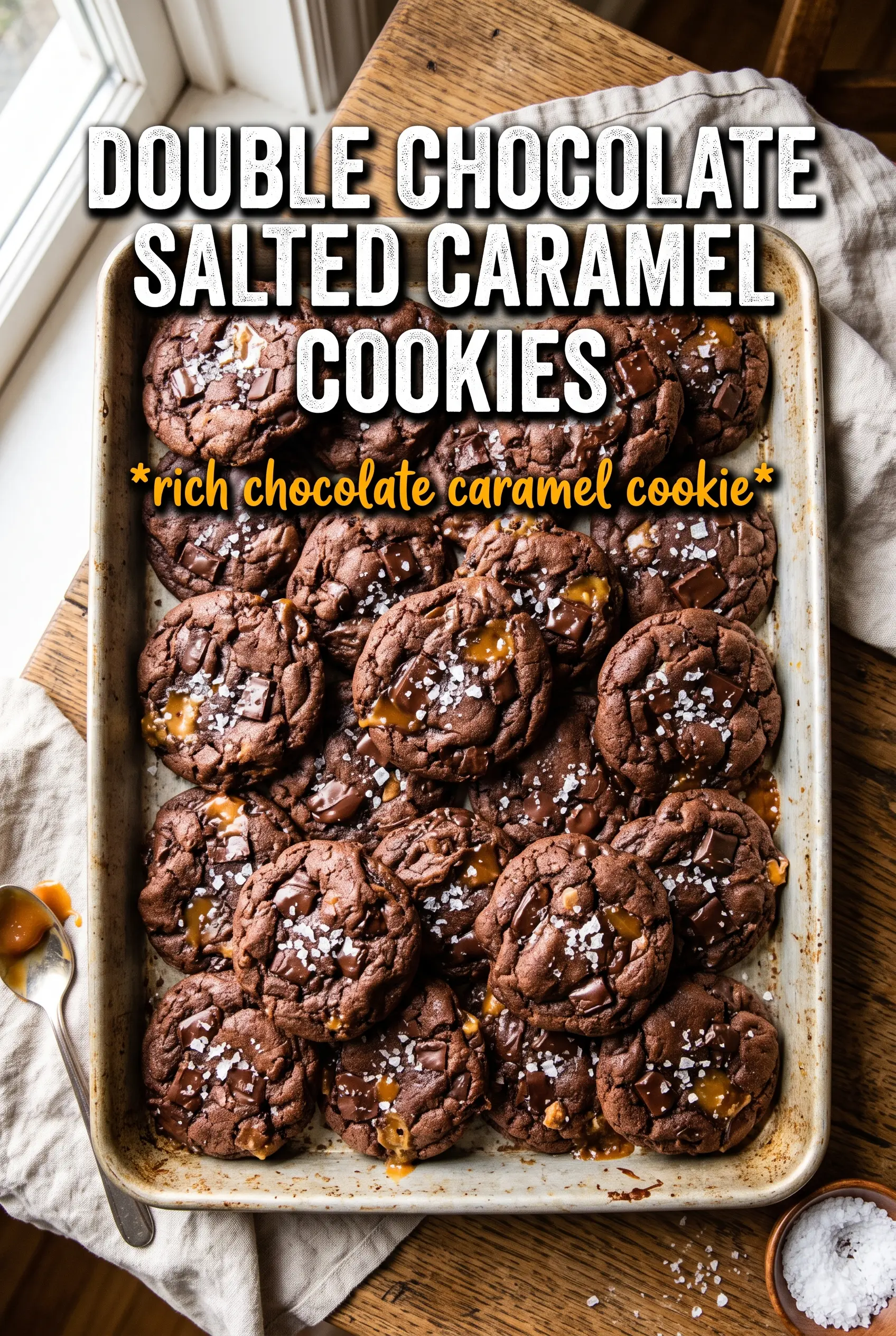
Save these double chocolate salted caramel cookies for when you want a fudgy chocolate cookie with a gooey caramel center and a salty finish.
The Caramel Center Only Works If the Dough Is Fully Sealed
These cookies can look done on the outside before the middle is fully set, and that’s exactly what you want. The mistake is treating them like regular drop cookies and leaving the caramel exposed. Once that candy touches the oven heat directly, it leaks, spreads, and turns into a sticky mess on the pan instead of staying tucked inside the cookie.
The dough needs to be soft enough to press and seal without cracking. If it starts splitting when you wrap it, let it sit for a minute or two and try again. A smooth seam matters more than a perfect shape, because the cookie will settle in the oven and hide any rough edges.
- The caramel should be soft, not hard candy. Soft caramels melt into the middle; hard caramels don’t give you the same gooey center.
- Flatten the dough just enough to cup around the caramel, then pinch the seam shut underneath.
- Pull the cookies when the edges are set and the centers still look slightly underbaked. The carryover heat finishes them.
- Let them cool on the pan for a few minutes before moving them. That short rest helps the caramel set enough to keep from running out.
What Each Ingredient Is Actually Doing in This Dough
- Cocoa powder — This gives the cookies their deep chocolate base and helps create that brownie-like texture. Natural cocoa works fine here; Dutch-process will make them a little darker and smoother, but the recipe still holds either way.
- Brown sugar and granulated sugar — Brown sugar brings chew and moisture, while granulated sugar helps the edges bake up a little crisp. Using both keeps the cookies from feeling cakey.
- Butter — Softened butter creams with the sugar to trap air, which gives the cookies some lift even with all that cocoa in the dough. If the butter is melted, the dough spreads too fast and the caramel centers are harder to contain.
- Dark chocolate chips — These add pockets of extra chocolate that stay distinct from the cocoa-rich dough. Semi-sweet chips work too, but dark chocolate keeps the overall cookie from getting cloying.
- Soft caramel candies — These are the heart of the recipe, and the texture matters. Use soft wrapped caramels that melt smoothly; caramel squares that are too firm can stay tacky instead of flowing.
- Flaky sea salt — Add it right after baking so it sticks to the warm surface. The salt sharpens the chocolate and keeps the caramel from tasting flat.
Getting the Centers Gooey Without Losing the Shape
Cream the butter and sugars until they look fluffy
Beat the butter, brown sugar, and granulated sugar until the mixture lightens in color and looks airy, not gritty. That step builds structure before the flour goes in, which helps these thick cookies spread in a controlled way. If the butter is too cold, the mixture stays clumpy; if it’s melted, the cookies bake up greasy and thin.
Mix the dry ingredients just until the flour disappears
Whisk the flour, cocoa, baking soda, and salt first so the cocoa doesn’t clump in the dough. Once the dry ingredients go in, stir only until no streaks of flour remain. Overmixing after the flour goes in can make the cookies tough, and with a dough this rich, you’ll feel that difference fast.
Wrap each caramel like a sealed package
Scoop a portion of dough, flatten it, set a caramel in the center, and bring the dough up around it from every side. Pinch the seam closed and roll it lightly so the caramel is fully hidden. Any thin spot will split in the oven and let the filling escape before the cookie sets.
Watch the edges, not the clock alone
Bake until the edges look set and the tops have lost their raw shine, even if the centers still seem soft. That underbaked center is what keeps the cookies fudgy once they cool. Pulling them too late is the easiest way to lose the gooey texture and end up with a dry middle.
Three Ways to Make These Cookies Fit What You’ve Got
Gluten-Free Version
Use a 1:1 gluten-free baking blend that already includes xanthan gum. The cookies will be a little more delicate, but the chocolate flavor and caramel center stay intact. Let them cool on the pan for the full time so they set before moving them.
Dairy-Free Swap
Use a plant-based butter that behaves like stick butter and choose dairy-free chocolate chips. You’ll still get a rich cookie, though the flavor will be a little less rounded than with real butter. Check the caramels too, since some brands contain dairy.
Extra Dark, Less Sweet Cookie
Use bittersweet chocolate chips and add a touch more flaky salt on top. That pushes the cookie toward a deeper chocolate finish and gives the caramel more contrast. It’s the best route if you like desserts that taste rich instead of sugary.
Make Them Ahead
Shape the dough balls around the caramels, then chill them on a tray and store them in a sealed container. Bake straight from the fridge, adding a minute or two if needed. Cold dough spreads more slowly, which helps the caramel stay centered.
Storage and Reheating
- Refrigerator: Store in an airtight container for up to 5 days. The caramel will firm up a bit, but the cookies stay chewy.
- Freezer: These freeze well. Freeze baked cookies in a single layer, then transfer to a container, or freeze the shaped dough balls and bake from frozen.
- Reheating: Warm a cookie in the microwave for 8 to 12 seconds to soften the caramel again. Too long and the chocolate chips turn greasy and the cookie gets rubbery.
Answers to the Questions Worth Asking
Double Chocolate Salted Caramel Cookies
Ingredients
Equipment
Method
- Preheat the oven to 375°F and line baking sheets with parchment. Set up your tools so scooping and filling can happen right after mixing.
- Whisk the all-purpose flour, cocoa powder, baking soda, and salt until evenly combined. The mixture should look uniformly dark with no white streaks.
- Beat the unsalted butter, brown sugar, and granulated sugar until very light and fluffy. Scrape down the bowl as needed so the dough won’t look grainy.
- Add the eggs and vanilla extract and beat just until smooth. Stop as soon as the eggs are fully incorporated.
- Fold the flour mixture into the wet ingredients until no dry bits remain. Mix gently so the cookies stay tender.
- Fold in the dark chocolate chips to distribute them through the dough. You should see chocolate chips throughout the dough, not just on top.
- Scoop 2-tablespoon portions of dough and flatten slightly, then place one caramel in the center. Keep the caramel covered as much as possible with dough edges.
- Wrap dough around the caramel and seal the seams completely. Aim for a smooth, closed ball so filling doesn’t leak during baking.
- Roll each portion into a ball and place it on the baking sheet. Leave space between cookies so they can spread.
- Bake at 375°F for 10 to 12 minutes until the edges are set. The centers should look soft and the caramel should stay gooey inside.
- Sprinkle the cookies immediately with flaky sea salt right after they come out of the oven. Cool for 8 minutes before eating so the caramel thickens slightly.