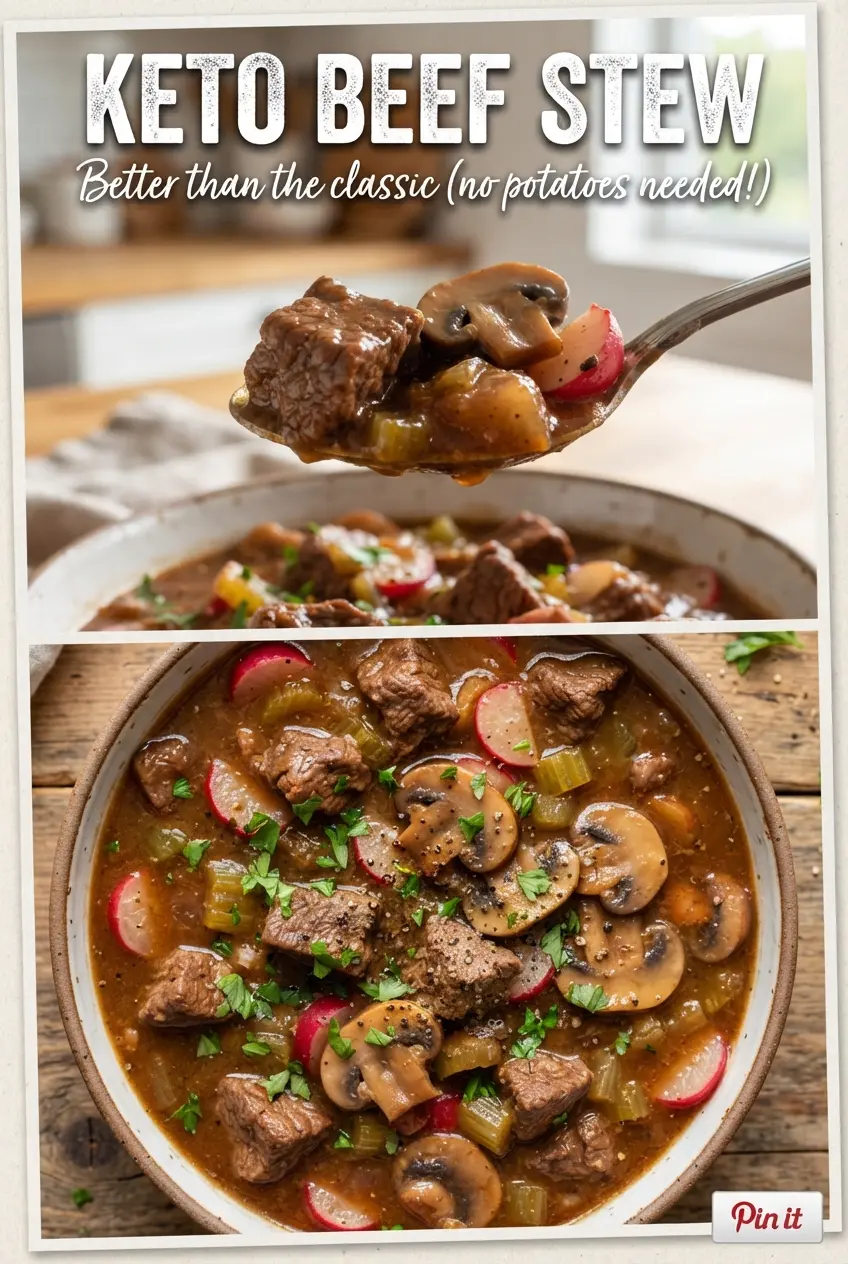
Rich, glossy beef stew doesn’t need potatoes to feel complete. When the broth reduces into a dark gravy and the radishes turn tender enough to soak it up, you get all the comfort of a classic stew with a deeper, cleaner finish than the heavy flour-thickened version. The beef stays front and center, and the vegetables hold their shape instead of dissolving into the pot.
What makes this version work is patience in the browning and restraint with the thickener. Chuck needs a hard sear in batches so the pot builds flavor instead of steaming the meat, and the tomato paste has to cook for a minute so it loses that raw edge. Radishes are the stand-in that earns their place here; they soften, mellow, and pick up the savory broth without turning starchy. Xanthan gum finishes the job at the end, giving the stew body without muddying the broth with flour or cornstarch.
Below you’ll find the small details that keep the stew from tasting flat, plus the easiest way to get a thick, spoon-coating texture without overcooking the vegetables.
The beef got perfectly tender and the broth thickened up without any weird gummy texture. I was skeptical about the radishes, but they tasted almost like little potatoes after simmering, and the leftovers were even better the next day.
Keto beef stew gets its deep gravy and potato-like radishes from one long simmer, so pin this one for the nights you want comfort food without the carbs.
The Sear That Builds the Whole Stew
If the beef goes into the pot crowded and pale, the stew will taste boiled no matter how long it simmers. Chuck needs space and heat so the surface browns instead of sweating. Those dark bits left behind are the backbone of the gravy, and they disappear into the broth once the onion and garlic go in.
The other place people go wrong is rushing the simmer. Tough cuts don’t turn tender from high heat; they tighten up. A covered, low simmer gives the collagen time to relax and turn silky, which is what makes the beef spoon-tender instead of stringy. Keep the pot at a gentle bubble, not a rolling boil.
What Each Ingredient Is Doing in This Stew
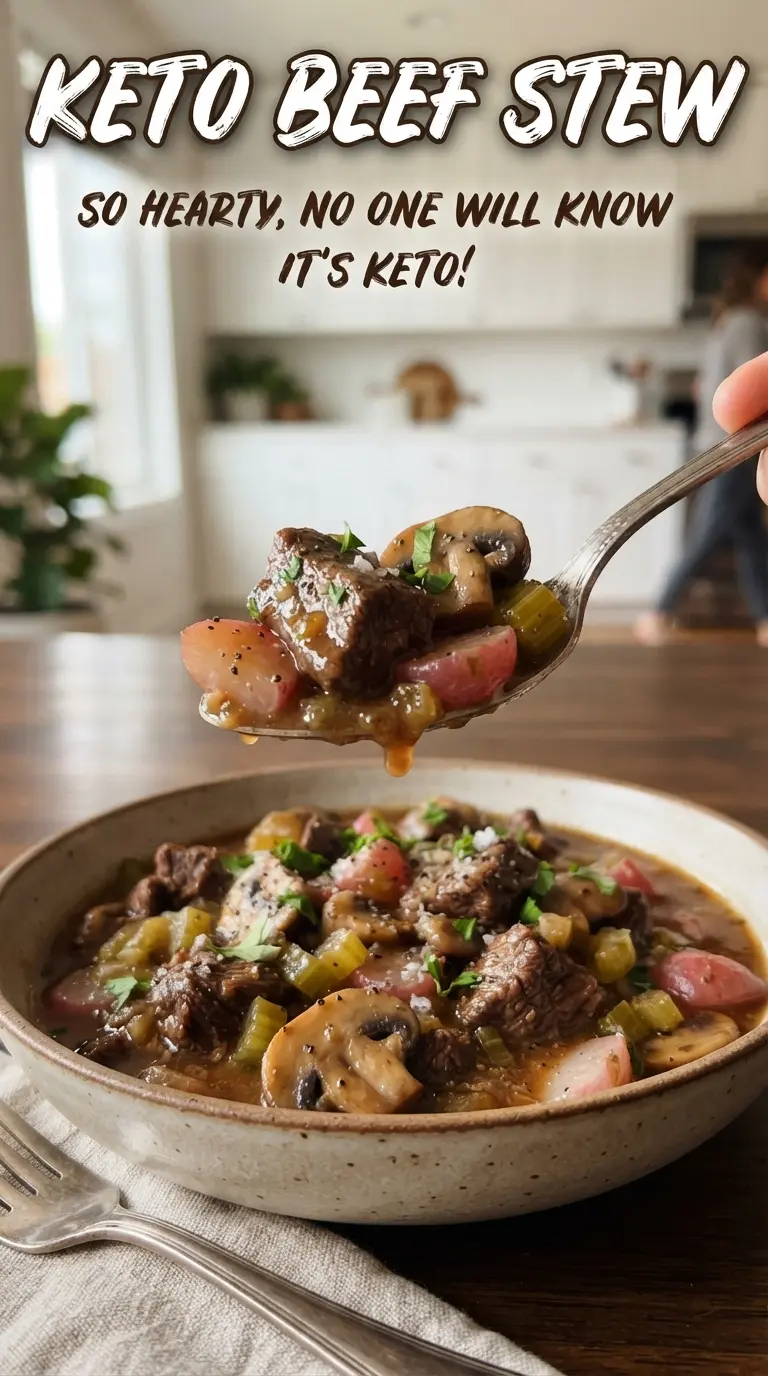
- Beef chuck — This is the cut that gives you real stew texture. It has enough connective tissue to turn tender during the long simmer, and leaner beef won’t give you the same richness or stay as forgiving.
- Avocado oil — The neutral flavor and high smoke point make it useful for browning the beef hard without burning. Any oil with a high smoke point works, but butter alone will scorch before the meat is properly seared.
- Tomato paste — A tablespoon doesn’t make the stew taste tomatoey; it deepens the color and adds a slow-cooked savoriness. Cook it briefly with the garlic so it loses the raw edge before the broth goes in.
- Radishes — These are the low-carb stand-in for potatoes, and they work because they soften and mellow as they simmer. Cut them in halves if they’re small, or quarters if they’re larger so they cook evenly without turning mushy.
- Xanthan gum — This is the thickener that gives the broth body without starch. Sprinkle it in slowly while whisking, because dumping it in all at once can make little clumps that don’t break up well.
Building the Stew in the Right Order
Brown the beef in real batches
Season the beef first, then sear it in hot avocado oil without crowding the pan. If the pieces touch too closely, they’ll steam and give you gray meat instead of a dark crust. You’re looking for deep brown edges on multiple sides, not just a quick color change. Move the browned beef to a plate and keep going until every piece has a proper sear.
Cook the aromatics until they smell sweet
Once the beef is out, add the onion and let it soften for about three minutes, scraping up the browned bits as it cooks. Garlic and tomato paste go in next and need only about a minute; any longer and the garlic can turn bitter. At this stage, the pot should smell rich and slightly sweet, not sharp or raw.
Let the simmer do the work
Add the broth, Worcestershire sauce, thyme, bay leaf, and beef, then cover the pot and hold it at a steady low simmer for about an hour and a half. A hard boil will pull moisture out of the meat and make it tougher. You want just enough movement on the surface that the liquid shivers, with the lid slightly ajar if the pot is bubbling too aggressively.
Finish with the vegetables and thicken at the end
Add the radishes, mushrooms, and celery only after the beef has started to tenderize. That keeps the vegetables from collapsing into the stew before the meat is ready. When everything is tender, whisk the xanthan gum into a small stream while the stew is simmering so the broth thickens evenly. Pull out the bay leaf, add parsley, and serve while the stew is glossy and still steaming.
How to Adapt This Stew Without Losing the Texture
Dairy-Free and Naturally Gluten-Free
This stew already fits both categories as written, which is part of why the broth stays clean and focused. Keep an eye on your Worcestershire sauce, though, since some brands include ingredients that don’t work for every dietary need. If you use a certified gluten-free version, the rest of the recipe stays the same.
Swap the Radishes for Turnips
Turnips give you a slightly earthier flavor and a firmer bite than radishes. They work well if you want a more traditional stew feel, but they don’t melt into the broth quite as softly, so cut them smaller and expect a little more texture in the finished bowl.
Use a Different Thaw-and-Serve Thickener
If you don’t keep xanthan gum on hand, you can reduce the stew uncovered for a little longer and let evaporation thicken the broth naturally. Cornstarch works in a pinch, but it isn’t keto and it can make the stew look a little cloudy. Xanthan gives a smoother finish with less effort.
Make It a Bigger Batch for Meal Prep
This stew scales well if you keep the pot spacious enough for browning. The flavor deepens after a day in the fridge, and the broth often thickens a little more as it sits, so it reheats like a meal you planned on purpose instead of leftovers you need to rescue.
Storage and Reheating
- Refrigerator: Store covered for up to 4 days. The broth thickens as it chills, and the radishes soften a bit more.
- Freezer: It freezes well for up to 3 months. Cool it completely first, then pack it in airtight containers with a little headspace for expansion.
- Reheating: Warm it gently on the stove over low heat, stirring now and then. A hard boil can push the beef from tender to dry and can make the thickener feel overly dense, so heat it just until steaming through.
Answers to the Questions Worth Asking
Keto Beef Stew
Ingredients
Equipment
Method
- Season the beef cubes with salt and black pepper, then heat the avocado oil in a Dutch oven over high heat until shimmering. Brown the beef in batches for color, transferring browned pieces to a plate as needed.
- Reduce heat to medium, add the diced onion, and cook for 3 minutes until softened. Add the minced garlic and tomato paste and cook for 1 minute, stirring to coat.
- Pour in the beef broth, then stir in the Worcestershire sauce, dried thyme, bay leaf, and the browned beef. Bring to a simmer, cover, and simmer for 1 1/2 hours until the beef is tender.
- Add the halved radishes, quartered cremini mushrooms, and sliced celery to the pot. Simmer covered for 30-40 minutes, until the beef and radishes are tender and the vegetables soften.
- While whisking continuously, sprinkle in the xanthan gum so it disperses evenly. Simmer for 2 minutes until the stew thickens to a glossy, gravy-like consistency.
- Remove the bay leaf and top the stew with chopped fresh parsley right before serving. Stir gently so the parsley stays bright.